
 Popular
Breakfast Cereal Boxes
A cereal carton looks simple until it reaches a filling line. If...
View Breakfast Cereal BoxesCereal packaging needs to protect the inner food bag while attracting attention on busy retail shelves. Our custom cereal packaging boxes combine food-safe materials, tailored structures and high-quality printing to deliver reliable product protection, efficient production and professional presentation for food brands across the UK.
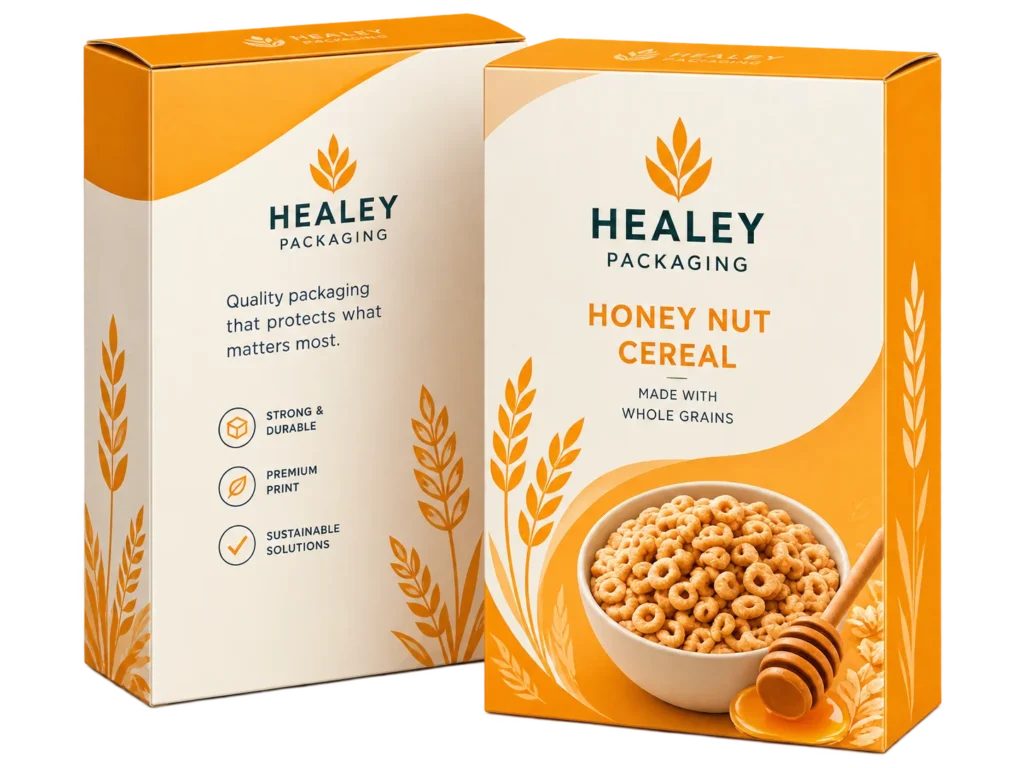
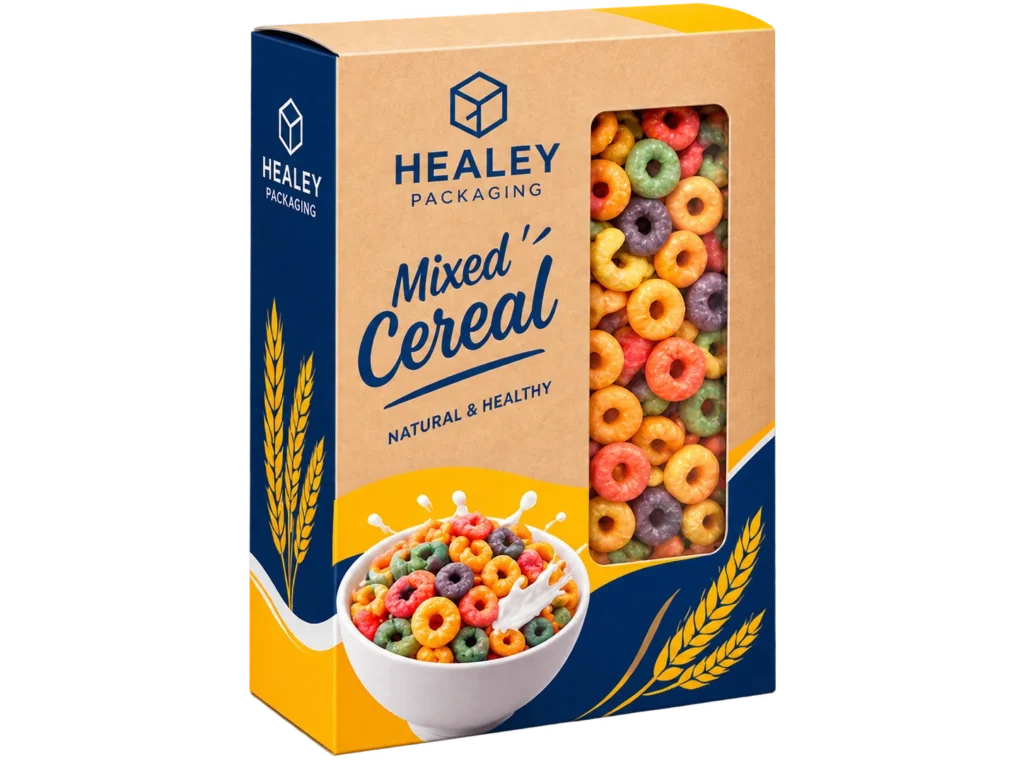
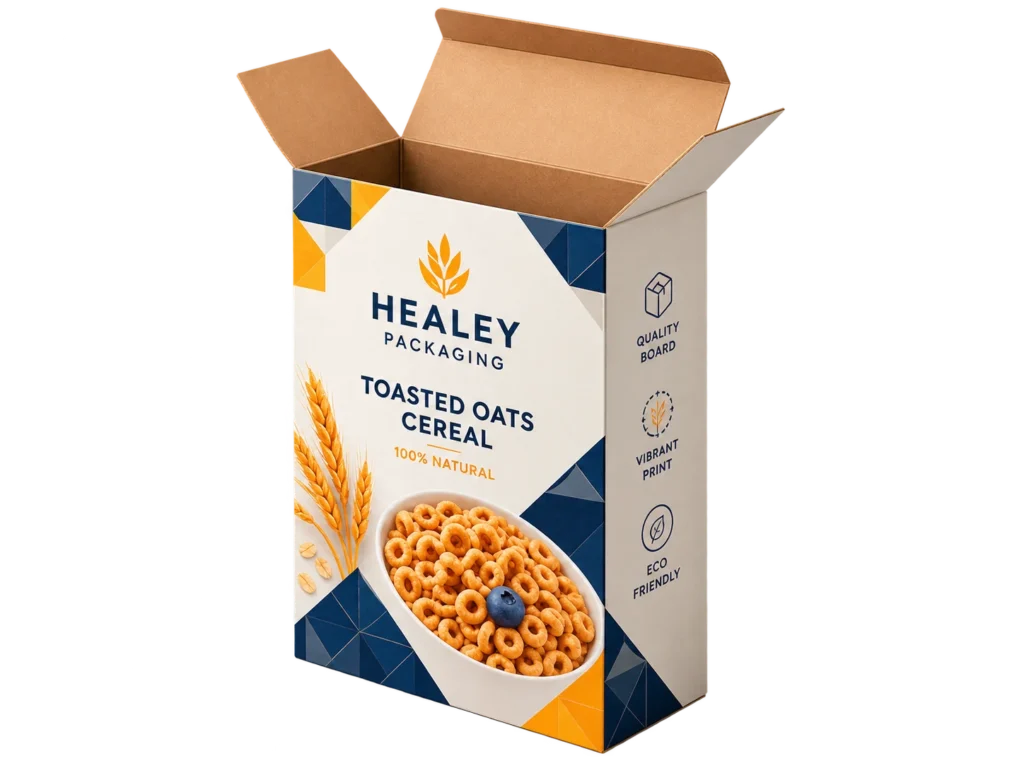
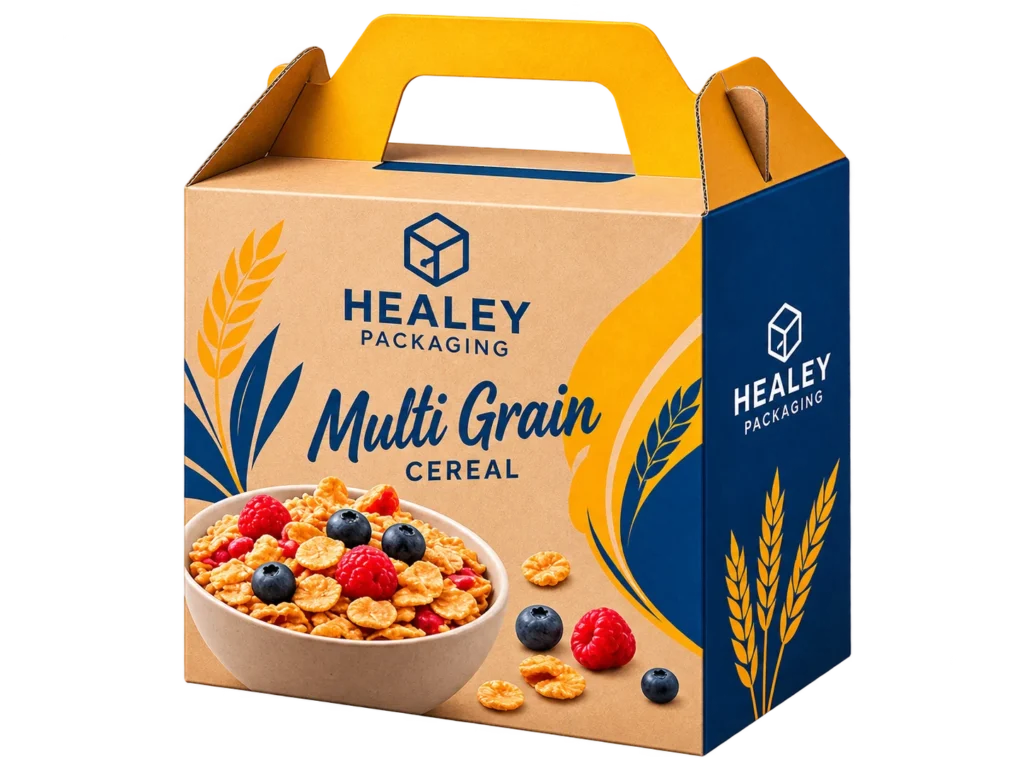
Browse cereal boxes and food cartons for dry goods, breakfast products and retail shelf display.
Popular
A cereal carton looks simple until it reaches a filling line. If...
View Breakfast Cereal Boxes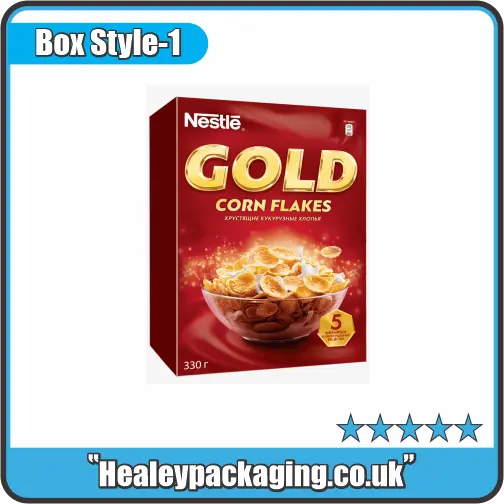 Best Seller
Cornflakes look light in a bowl, but they’re fragile in transit. If...
View Corn Flakes Cereal Boxes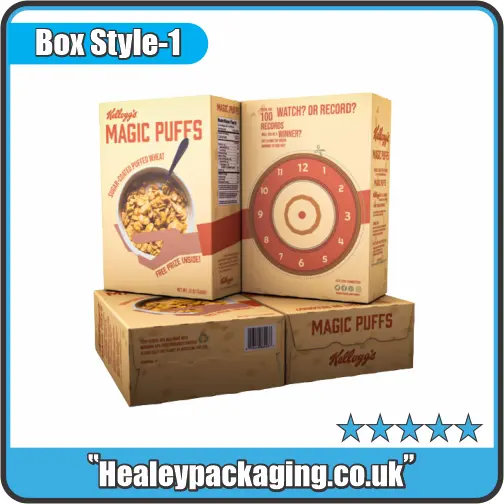 Most Ordered
Cereal boxes look simple, but anyone selling breakfast products knows they can...
View Custom Cereal Cardboard Boxes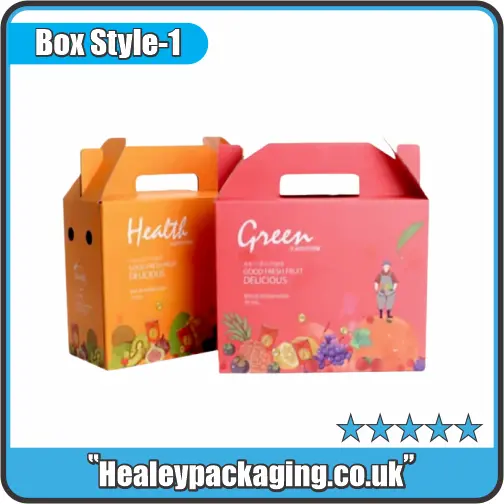 Custom
Cereal brands spend months refining recipes, flavours, and nutrition panels. The box...
View Custom Gable Cereal Boxes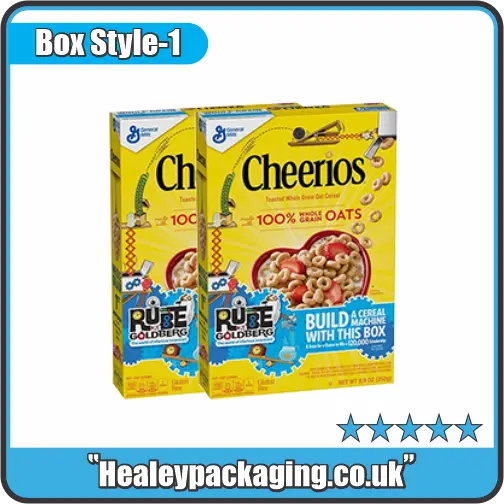 Premium
Rube Goldberg cereal boxes are not standard cartons. They are often made...
View Custom Rube Goldberg Cereal Boxes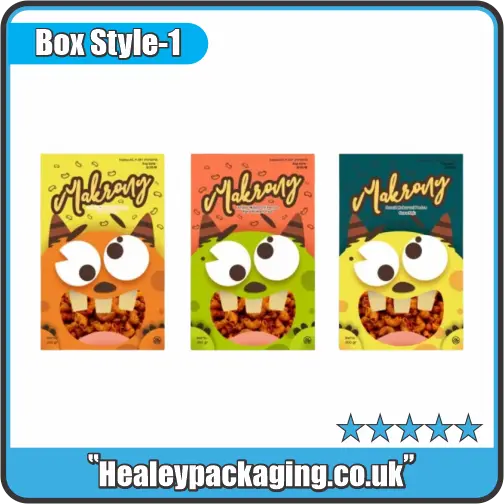
Most cereal boxes look fine on screen, then struggle once they hit...
View Custom Unique Cereal Boxes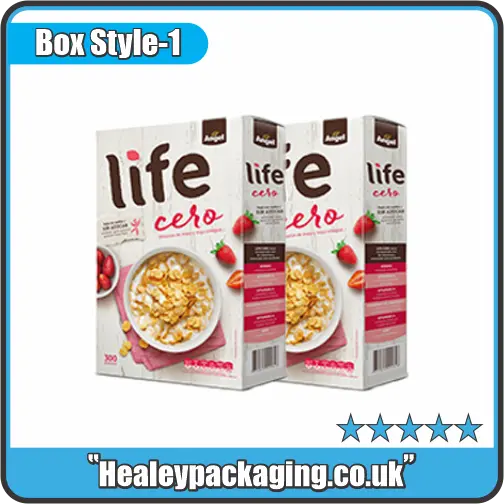
White cut cereal cartons are used when brands want a clean base...
View Custom White Cut Cereal Boxes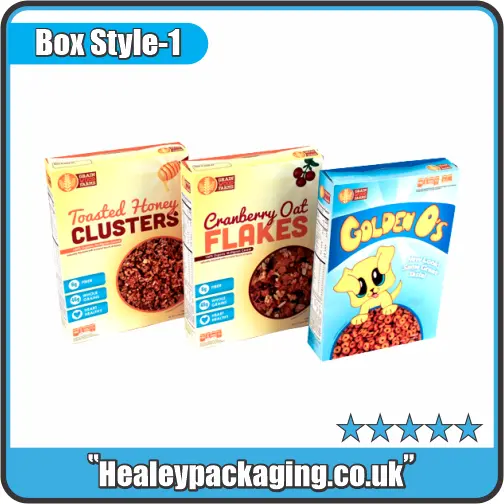
Some cereal cartons include cut sections instead of full panels. These are...
View Die Cut Cereal BoxesCereal ranges can vary from compact single-serve packs to large family cartons, premium granola and high-protein products. Each format needs enough internal volume, strong shelf presentation and a structure that suits the way the product is filled, stored and sold.
Standard breakfast cereal cartons need strong front-panel visibility and enough depth for the filled inner pack without creating unnecessary empty space.
Granola is often heavier and denser than traditional cereal, so the carton may need a more compact footprint and slightly stronger board depending on the pack weight.
Muesli packs often contain larger pieces, dried fruit and mixed ingredients. The carton should accommodate the filled inner bag while staying practical for retail storage.
High-protein cereals often compete in health-led retail, where clear product differentiation, nutritional messaging and a more premium front panel can matter as much as pack volume.
Children's cereal packaging usually relies on bold front panels, strong flavour separation and enough space for playful brand elements without making the pack difficult to read.
Organic and natural ranges often use a quieter visual language, with the carton helping communicate ingredient quality, sourcing and a less heavily processed brand position.
Oat products can be supplied as standard retail packs, portioned sachets or larger family formats, so the outer carton should follow the intended pack count and serving format.
Smaller cereal formats are useful for hospitality, sampling, travel and promotional campaigns where compact dimensions and efficient case packing become more important.
Larger cereal packs need enough depth for increased fill volume while maintaining board stability during pallet stacking, retail handling and home storage.
Where products share the same fill volume and inner bag, brands can often keep one carton structure while changing the artwork between flavours, recipes or nutritional variants.
Use one carton size where product volume allows.
Change flavour, recipe or colour identifiers.
Keep typography and layout recognisable across the range.
Fewer structural variations where they are not needed.
Cereal cartons are normally sized around the filled inner bag, not the loose product alone. Bag width, gusset depth, fill volume and the way the cereal settles all affect the final carton dimensions.
Cereal bags expand differently depending on product density, gusset construction and fill level. Those changes need to be accounted for before the outer carton dieline is finalised.
Side or bottom gussets can significantly increase the final packed footprint.
Allow enough room for sealing and filling without creating excessive empty carton volume.
Granola and muesli can settle differently from lighter flakes or puffed cereals.
These factors should be reviewed together because changing one often affects the others.
Use the widest point after filling rather than the flat film width.
Gussets create the usable volume that often determines the carton depth.
Dense granola may need less volume than light flakes at the same declared weight.
The pack needs enough clearance for filling, sealing and practical insertion into the carton.
Hand-packing and automated cartoning can require different tolerances and opening clearances.
Front-facing width, carton height and depth should support the intended retail presentation.
A practical carton fit allows the inner bag to load cleanly, remain upright and avoid repeated movement once the carton is closed.
The bag catches on panels, seams or top flaps during packing.
Enough room for filling without creating unnecessary internal movement.
Oversizing increases material use and can weaken shelf presentation.
A carton designed for manual packing may not use exactly the same clearance as one intended for high-speed automated cartoning.
Cereal cartons need enough stiffness to stay upright, enough print quality to compete on shelf, and a board grade that matches the finished pack weight. Lightweight flakes, dense granola and family-size cereal packs do not always need the same specification.
The best choice depends on carton size, print requirements, product density and whether the pack is designed mainly for retail display or distribution.
Smooth, bright and well suited to detailed cereal artwork, nutrition panels and strong brand colour.
Useful for organic, artisan and wellness-led cereal ranges where the fibre tone is part of the design.
Suitable for ranges where recycled content is a priority, provided print expectations and stiffness match the chosen grade.
Useful for ecommerce, grouped packs and outer cartons where transit strength matters more than a conventional folding-carton profile.
Cereal protection depends on the complete packaging system. The inner food-contact pack manages direct product protection, while the outer carton adds structure, branding and support during storage, distribution and retail handling.
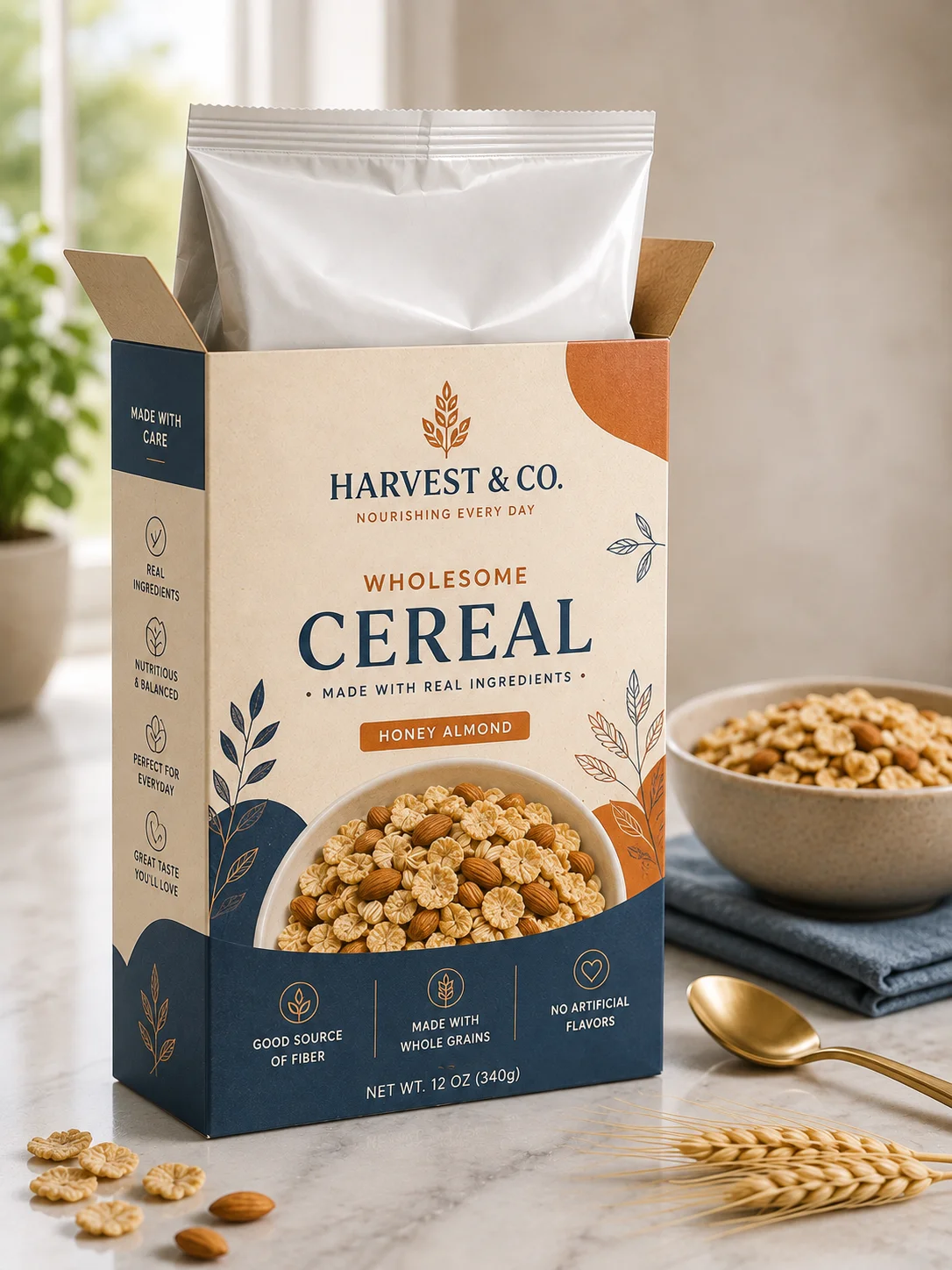 Complete Pack System
Each layer has a different job. Separating those functions helps avoid over-specifying the carton or expecting paperboard to perform a barrier role it was not designed to provide.
Product composition, density and sensitivity to moisture determine how much protection the food needs before it reaches the customer.
This layer normally manages direct contact, moisture control and protection from external contamination before opening.
The printed cereal box supports stacking, presentation, information display and handling around the sealed inner pack.
Good cereal packaging still needs suitable storage and distribution conditions. Moisture, excessive compression and poor handling can affect both the inner pack and the outer carton.
The sealed primary pack should provide the required moisture protection, while the carton should be stored away from damp environments.
Carton grade and case configuration should support the expected stacking load without excessive panel bowing or crushing.
The outer carton helps shield the inner pack from everyday handling, but the sealed food-contact layer remains the primary defence.
Warehousing and retail storage should protect cartons from water, excessive humidity and conditions that can reduce board stiffness.
Product formulation, inner packaging, seal integrity, filling conditions and storage all contribute to shelf-life performance. The carton supports that system but does not replace an appropriate food-contact barrier.
Recipe and moisture sensitivity.
Material and sealing performance.
Temperature and humidity control.
Protection through the intended shelf life.
Cereal packaging has to do several jobs at once. It needs to establish the brand, separate flavours or variants, support nutrition-led messaging and still remain easy to scan at retail distance. Print and finishing choices should strengthen that hierarchy rather than compete with it.
Cereal buyers often compare several products in a short time. The front panel should therefore make the brand, product type and variant easy to recognise before secondary information is introduced.
Keep the main identity consistent across the full cereal range.
Use controlled colour or naming systems to separate similar SKUs.
Give important product information enough room to remain legible.
Seasonal offers, QR codes or campaign panels should not disrupt the core hierarchy.
Front, side and rear panels should work together rather than competing for attention.
Mainstream family cereals, premium granola and organic ranges can all use the same carton structure but require very different print and surface treatments.
Useful for photography, illustrations and colourful retail artwork.
Helps maintain key brand colours across repeat production.
Creates a restrained surface suited to premium or health-led ranges.
Adds stronger reflectivity to colourful family or children's ranges.
Adds controlled gloss contrast to logos, graphics or selected claims.
Better suited to premium granola, gifting or limited-edition cereal ranges.
The inner panels can support campaign content without making the front of the pack busier. This works particularly well for family ranges, launches and digitally connected products.
A controlled workflow helps keep colour, panel orientation and specialist finishes consistent across several cereal SKUs.
Final range files.
Technical checks.
Review key colour.
Production run.
Surface effects.
Cut, crease and glue.
Box style should follow the way the cereal is filled, displayed and delivered. Standard retail cartons suit most supermarket ranges, while stronger bottoms, display formats or corrugated mailers may be more appropriate for heavier packs, multipacks or ecommerce orders.
Most cereal projects can be narrowed down quickly by deciding whether the pack is primarily for retail display, heavier product support, grouped merchandising or direct delivery.
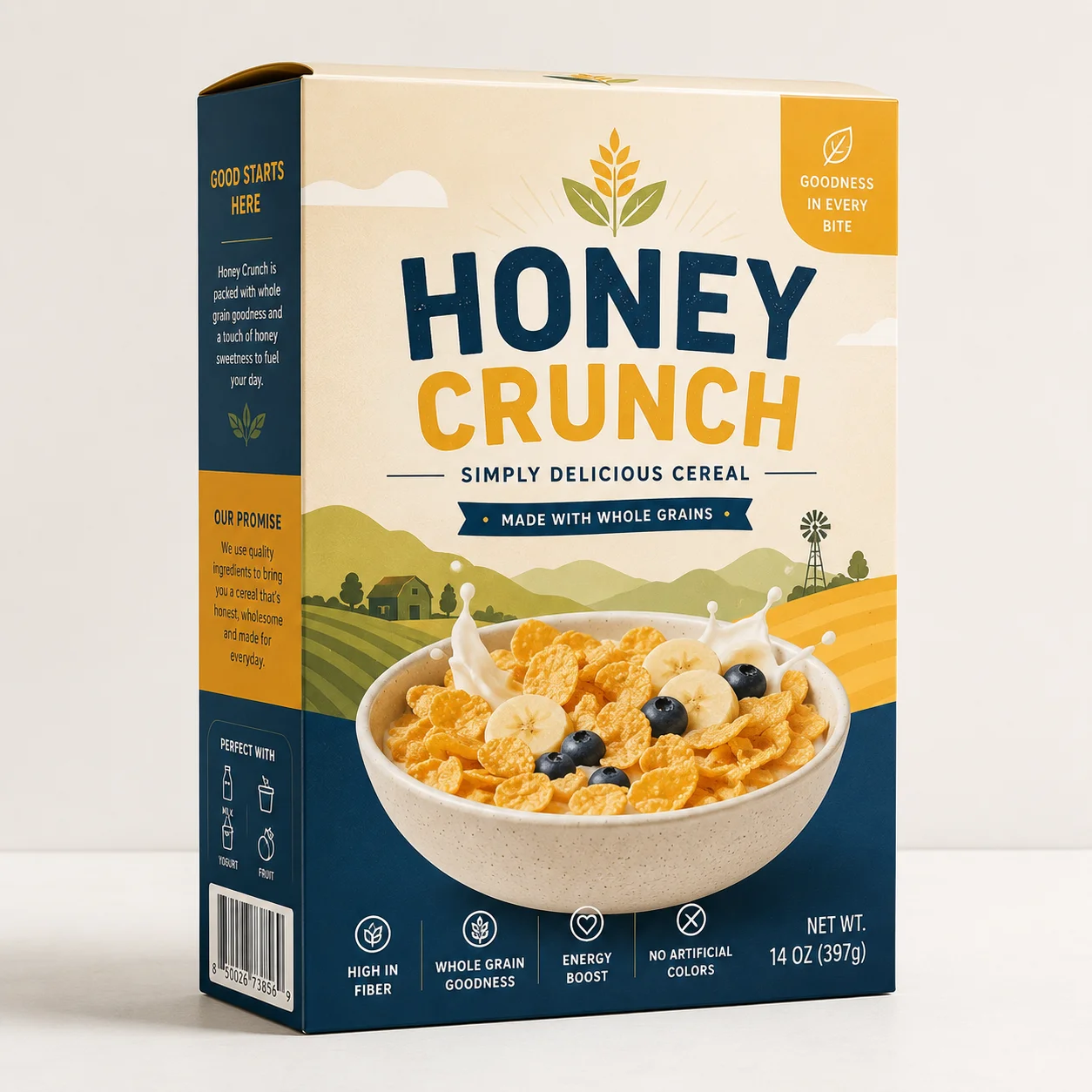
A familiar folding-carton structure with top and bottom closures aligned on the same side. It works well for lighter cereal packs where flat storage and simple assembly are important.
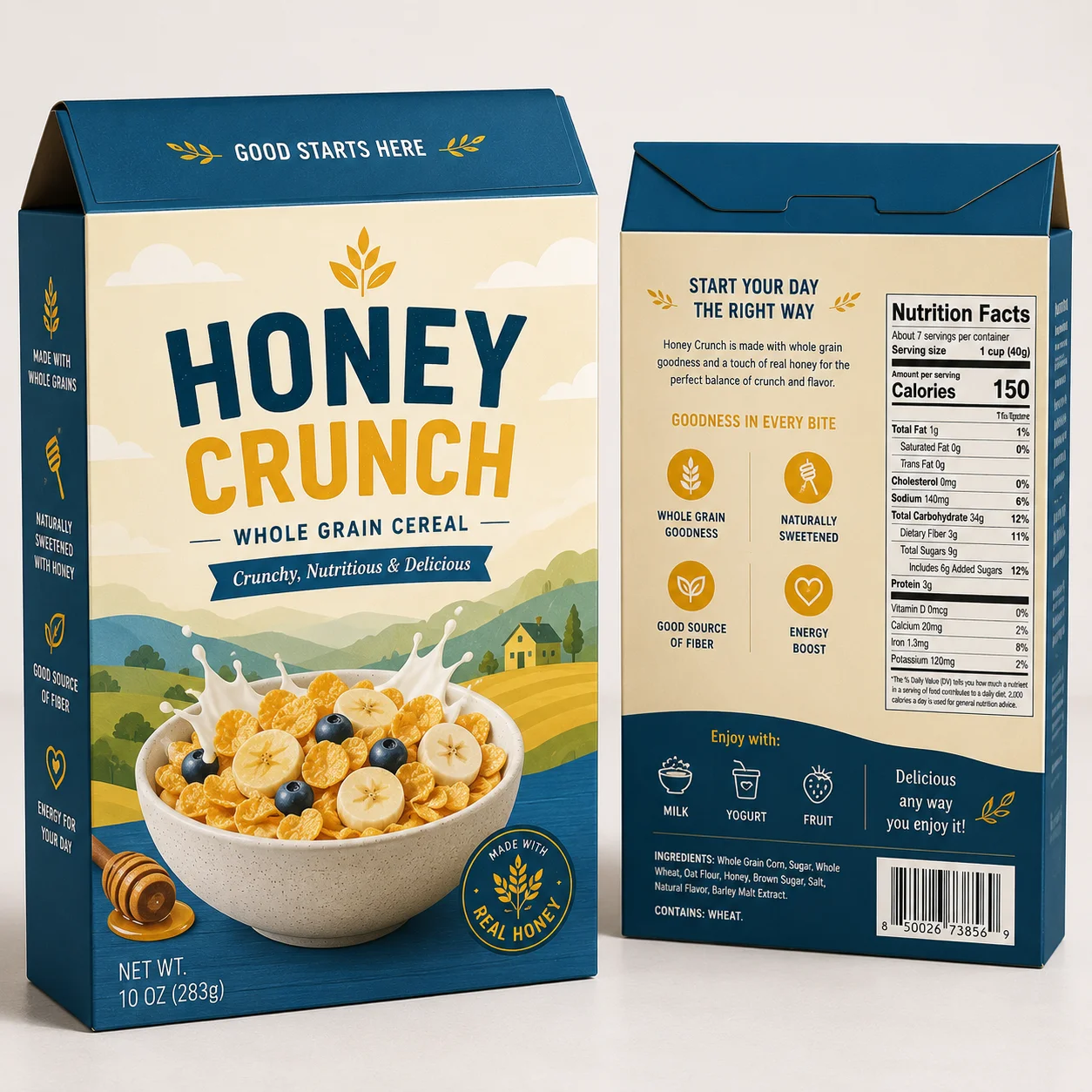
Top and bottom tuck flaps close in opposite directions. This structure can be useful for compact cereal packs, sample sizes and product formats where economical board usage matters.
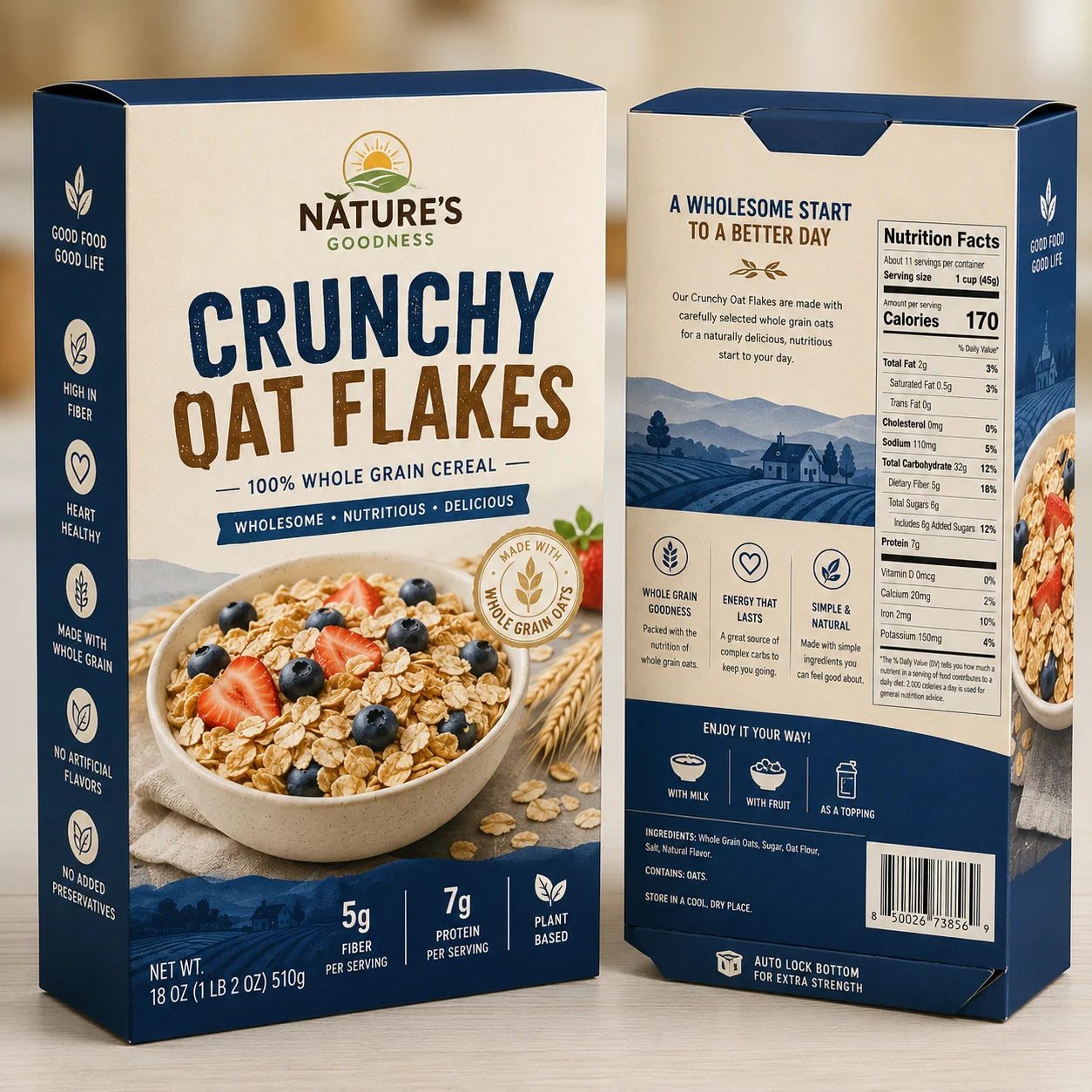
A pre-glued base opens into position during assembly, providing additional support for denser cereals, granola or larger pack formats.
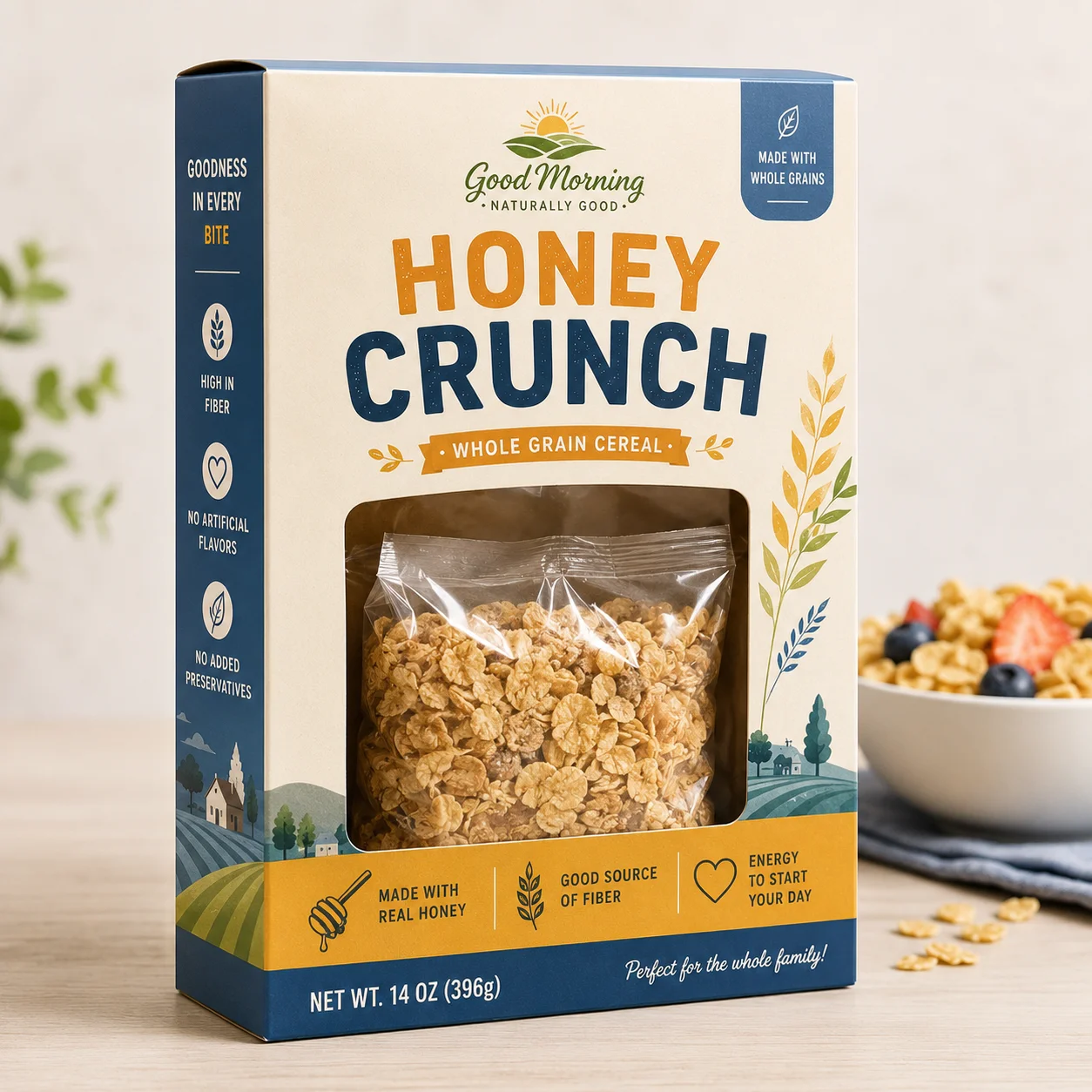
A die-cut opening can reveal part of the inner pack or product presentation where visibility supports the brand. Window material and food-contact considerations should be specified separately.
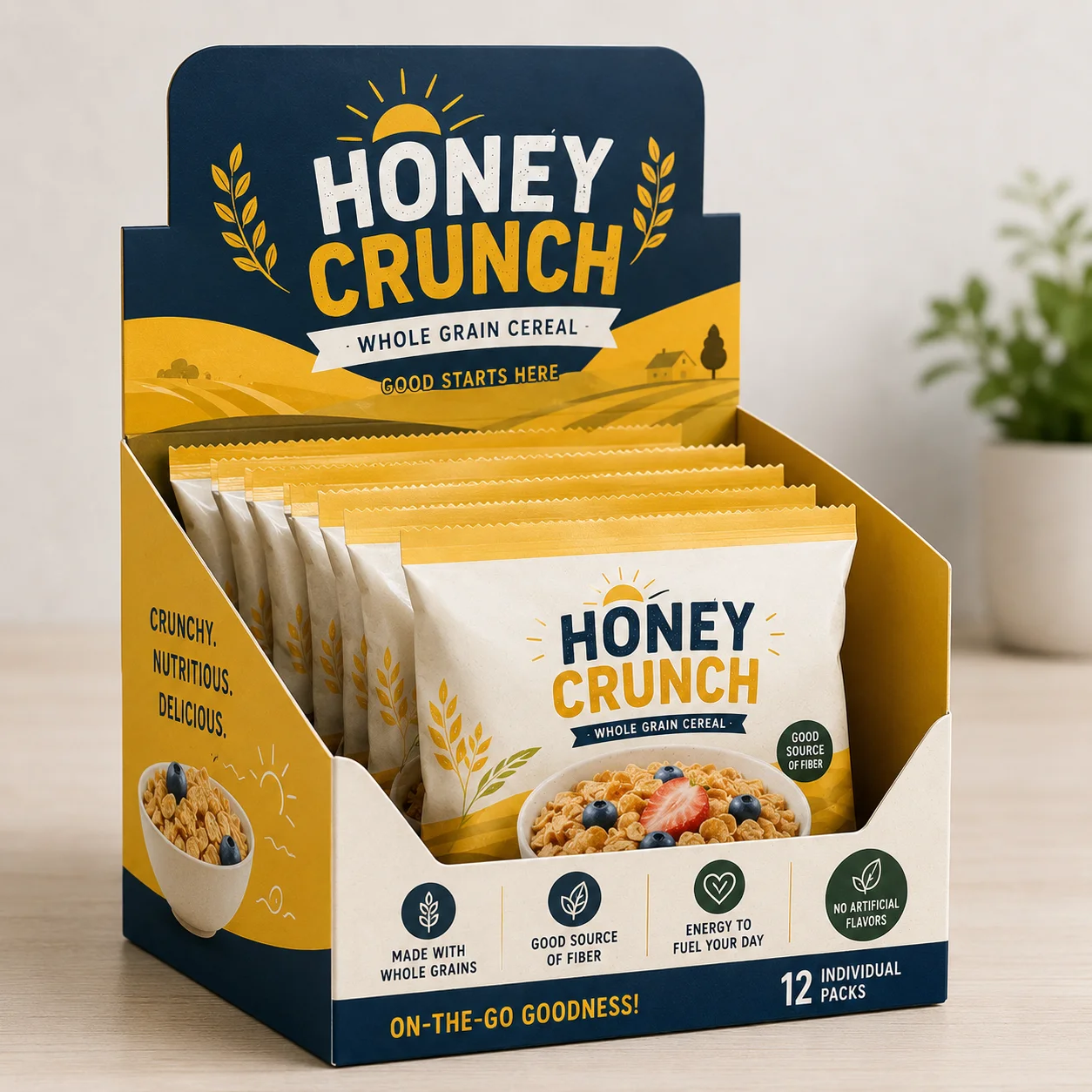
Display cartons organise multiple individual packs in one retail-ready format, making them useful for mini cereals, bars, sachets or promotional cereal products.
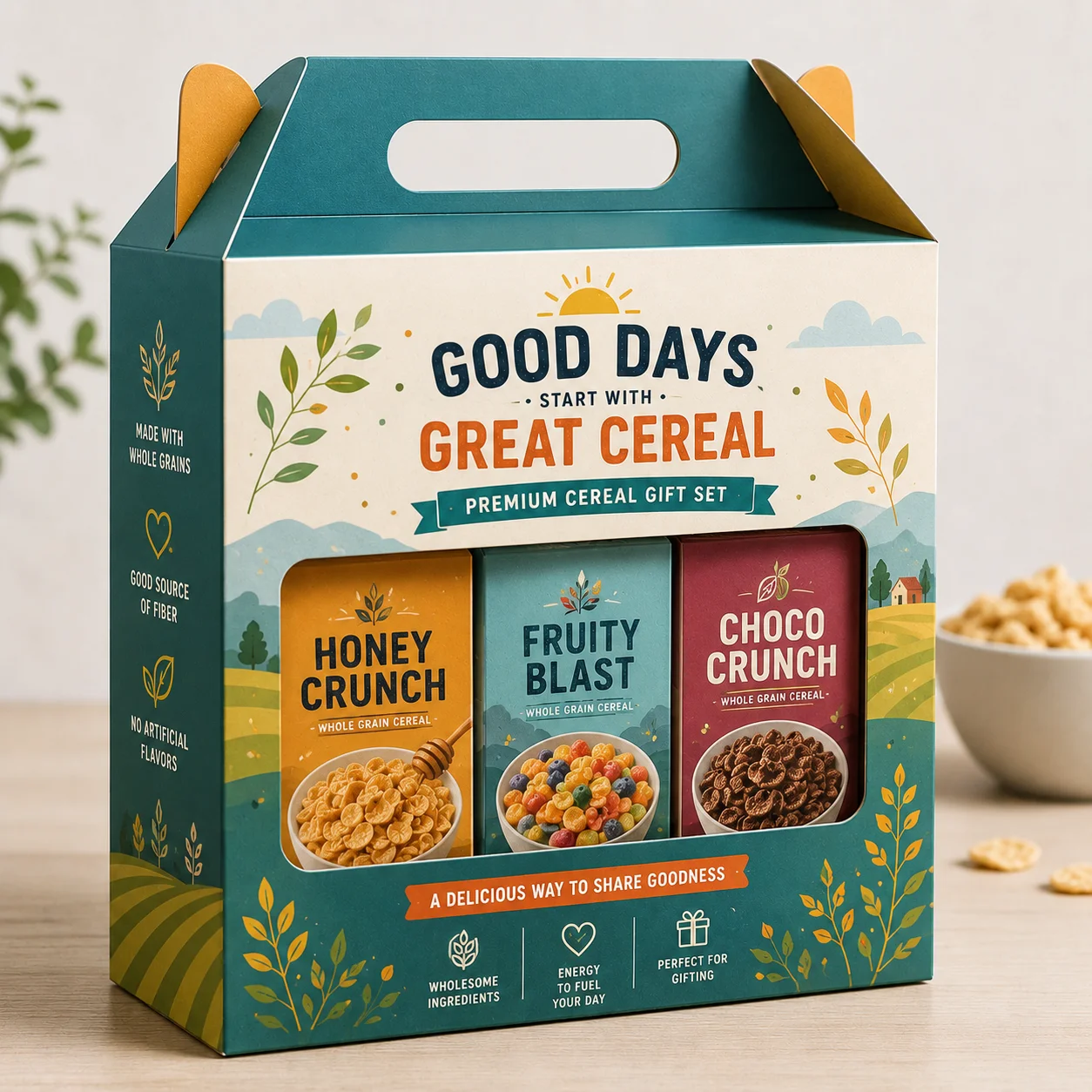
Handle-top cartons can work for promotional breakfast kits, cereal gift packs or mixed product bundles where portability forms part of the presentation.
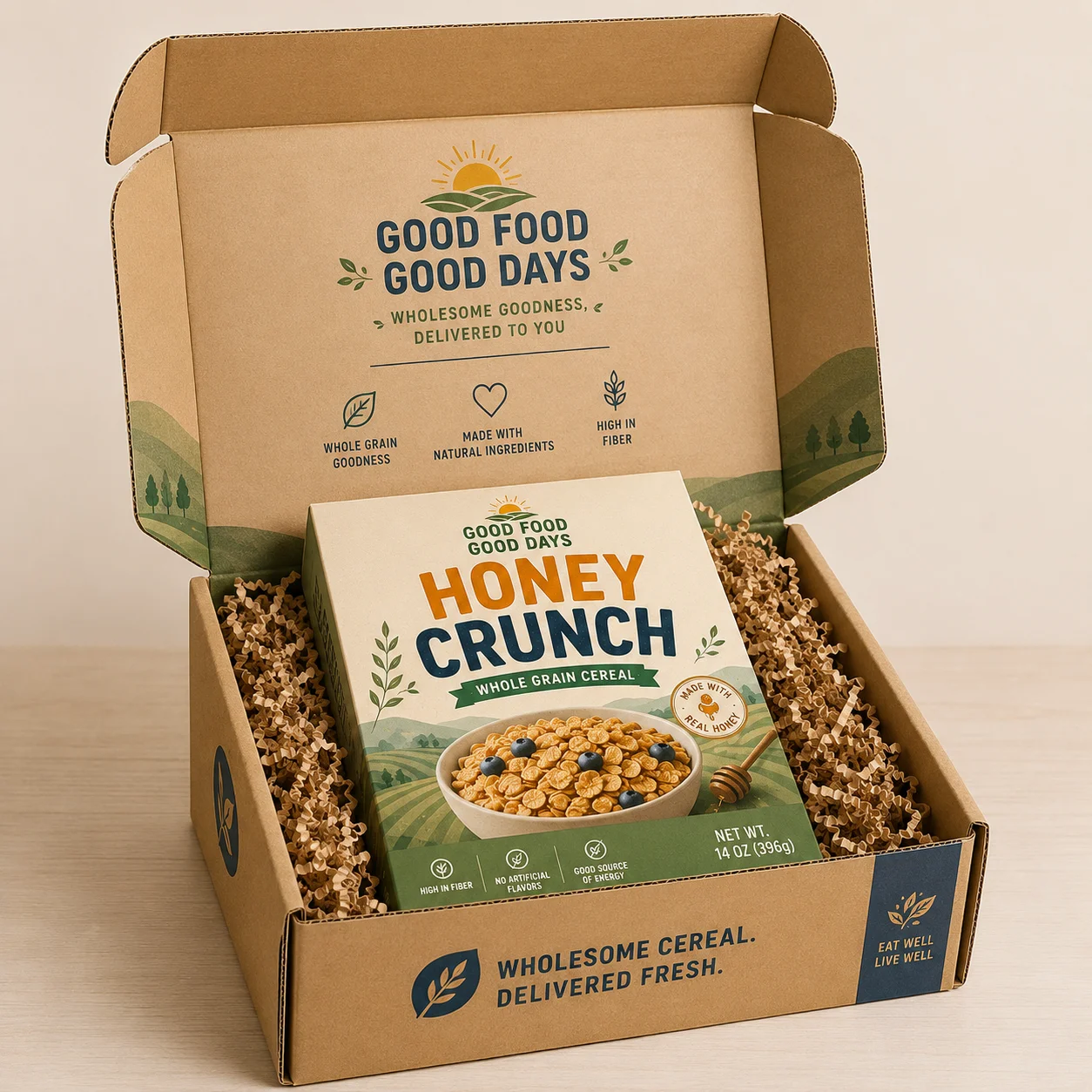
Corrugated mailers are better suited to direct delivery, subscription packs and cereal bundles where parcel handling requires more protection than a standard retail carton alone.
These are useful starting points rather than fixed rules. The final dieline should still be checked against the filled pack, board grade and production method.
Sustainable cereal packaging starts with reducing unnecessary material while keeping the carton strong enough for filling, stacking and retail handling. Recyclable paperboard, responsibly sourced fibre and simpler finishes can support lower-impact packaging without weakening shelf presentation.
Explore our sustainability approachResponsibly sourced fibre can be specified for suitable folding-carton and corrugated applications.
Standard cereal boxes can often remain straightforward paperboard structures with clear recycling routes.
Matching the carton closely to the filled inner bag can reduce board use and unnecessary transport volume.
Use laminates, foil and specialist coatings selectively rather than adding layers that do not improve performance.
Cereal packaging has to work beyond the shelf. It needs to fit the packed product, run smoothly through production, maintain consistent branding across several SKUs and arrive ready for retail or distribution.
Confirm dimensions, inner bag, quantity and selling route.
Develop the carton and check fit where sampling is required.
Align panels, variants, print layers and production files.
Print, finish, cut, crease and glue to the approved specification.
Maintain a clear reference for reorders and new cereal variants.
Built around the filled pack.
Designed for shelf presentation.
Coordinate flavours and variants.
Check fit before production.
Suitable for growing ranges.
Direct project communication.
Real packaging work produced for customer brands.
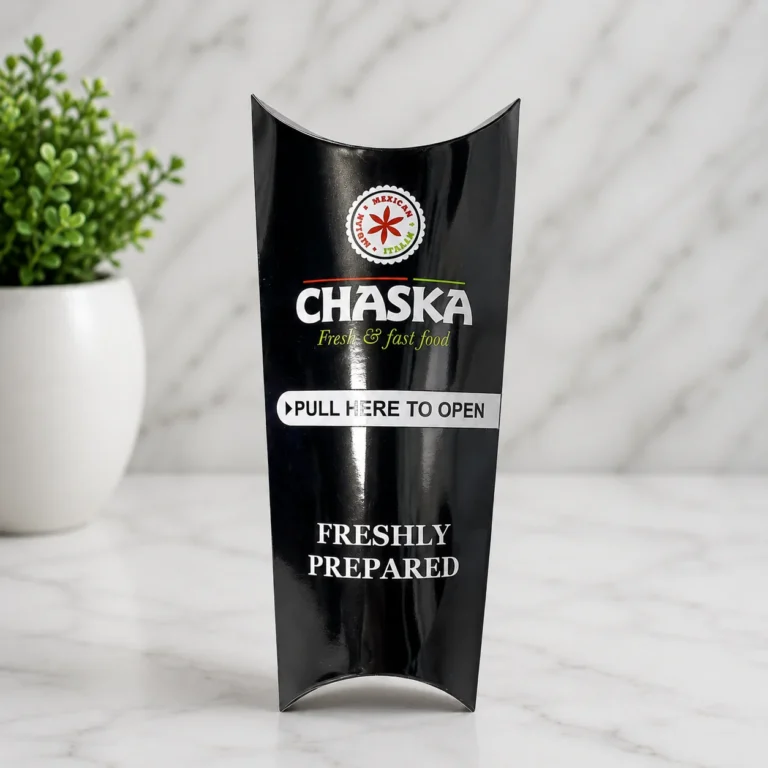
Healey Packaging produced custom pillow-style shawarma sleeves for CHASKA using 300gsm food-safe BSB card, full-colour CMYK...
View Case Study
Healey Packaging produced 1,200 luxury reverse tuck boxes for JAMONYX across two black-and-white designs, three sizes,...
View Case Study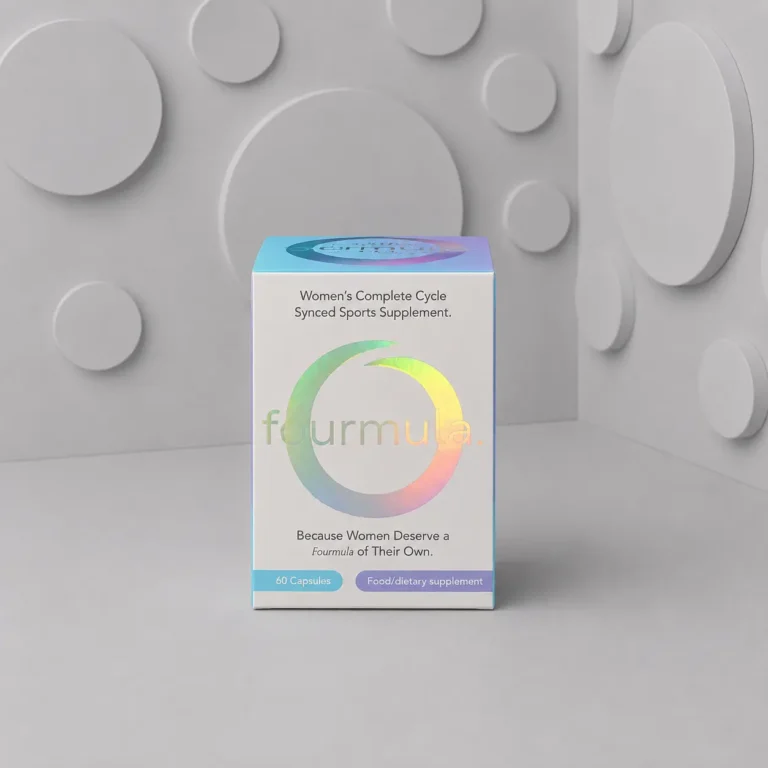
Fourmula started with 10 physical sample boxes for a compact supplement product, then moved toward a...
View Case StudyShare product size, quantity, use case and artwork status.
The right size, board and box style are reviewed.
A digital proof is prepared before production begins.
Boxes are printed, cut, folded and finished to specification.
Finished packaging is checked for structure and print quality.
Completed packaging is packed and delivered to your business.
We have been using Healey for years and are always impressed by the service, quality and speed.
Harry GeorgeThe packaging is of high quality, strong cardboard. I will definitely be using them again.
Amanda NewmanGreat communication, quick and good product. I really recommend.
JOON Plant Based AtelierCustom cereal packaging boxes can be manufactured for breakfast cereals, granola, muesli, oats, cornflakes, protein cereals, children's cereals and other dry food products. Each box is produced around the product size, inner food bag and retail requirements.
Cereal packaging is commonly manufactured using SBS paperboard, recycled paperboard and kraft board. The choice of material depends on the product weight, required print finish, shelf presentation and distribution method.
Yes. Cereal boxes are manufactured using food-grade materials suitable for secondary packaging. Where required, packaging can be specified to work with approved inner liners or sealed food bags that protect the cereal from moisture and contamination.
Yes. Every cereal box can be customised with your logo, colours, product information, nutritional panels, ingredient lists, barcodes, QR codes and promotional artwork, along with premium printing and finishing options.
Straight tuck end and reverse tuck end cartons are among the most popular choices for cereal packaging. Depending on your product range, window boxes, display cartons and promotional packaging can also be produced for retail or marketing campaigns.
Yes. A consistent box structure can be used across an entire cereal range while changing the artwork, colours and product information for different flavours, recipes or pack sizes to maintain a consistent brand identity.
We offer CMYK and Pantone printing, matte and gloss lamination, soft-touch finishes, foil blocking, embossing, debossing and Spot UV. The most suitable finish depends on your branding, retail environment and desired shelf impact.
Yes. We provide recyclable paperboard, FSC®-certified board options, recycled materials and plastic-free packaging solutions where appropriate, helping brands reduce environmental impact while maintaining packaging performance.
Yes. We manufacture cereal packaging for food manufacturers, private-label brands, retailers and wholesalers, with flexible production volumes, custom sizing and packaging tailored to different product ranges.
The correct size is determined by the dimensions of the filled inner food bag, the required pack weight, filling process and shelf presentation. Designing the box around the finished product helps minimise empty space while maintaining efficient packing and stacking.
Share your product, size, material and quantity requirements. Our team will help you choose the right structure, print and finish.
Tell us your product, target look, and how you ship. We'll recommend the right board, print, and finish for performance.
 Apparel Packaging
 Bakery Packaging Boxes
 Bottle Packaging Boxes
 Candle Boxes
 CBD Packaging Boxes
 Christmas Boxes