
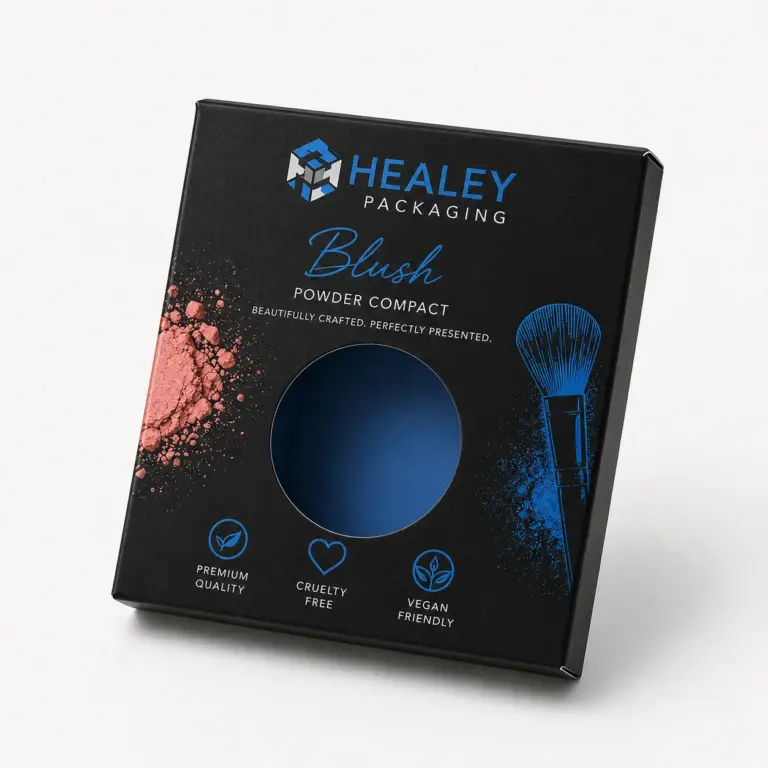
Blush Packaging Boxes
Blush is a small product, but customers notice the box straight away....
Customise NowWe manufacture custom cosmetic packaging boxes for beauty brands, retailers and contract manufacturers across the UK. Designed around your products and branding, our packaging combines premium materials, custom sizing and professional printing to create retail-ready presentation and a memorable unboxing experience.
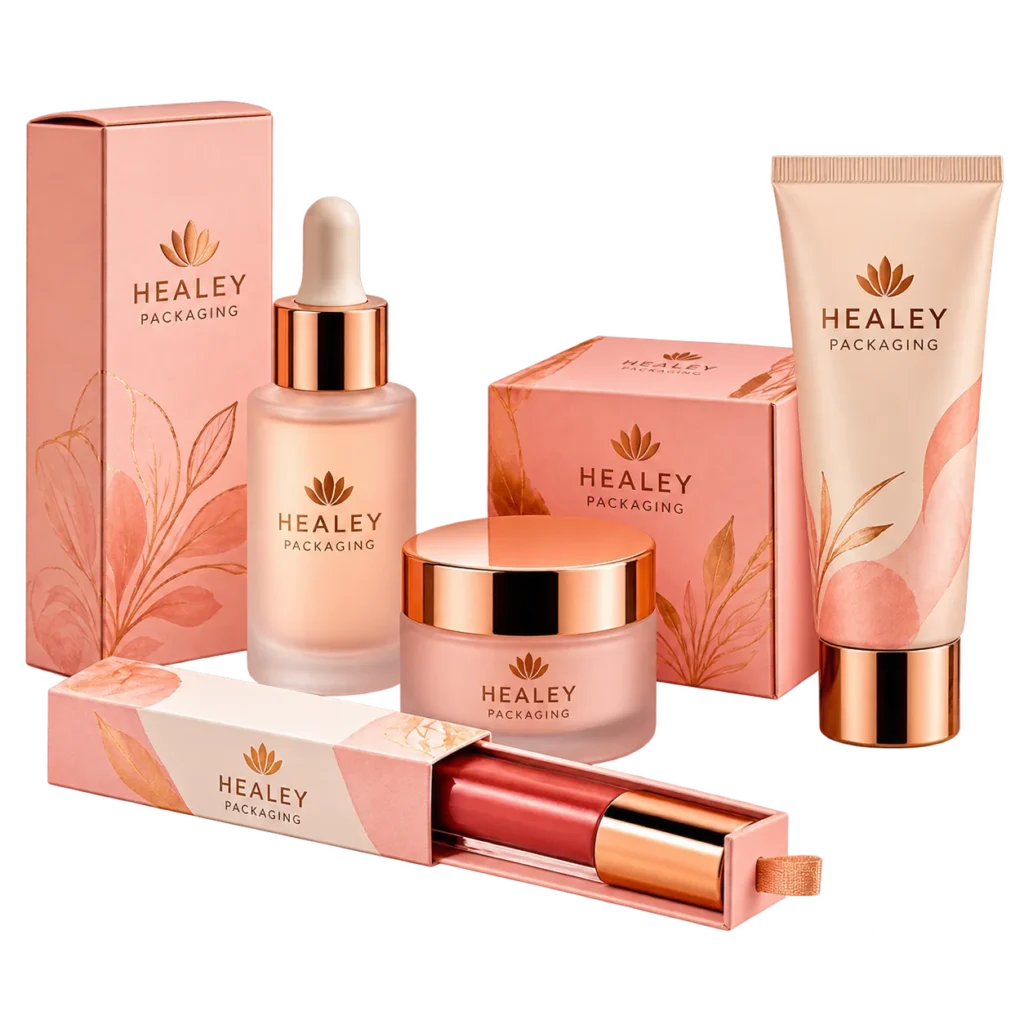
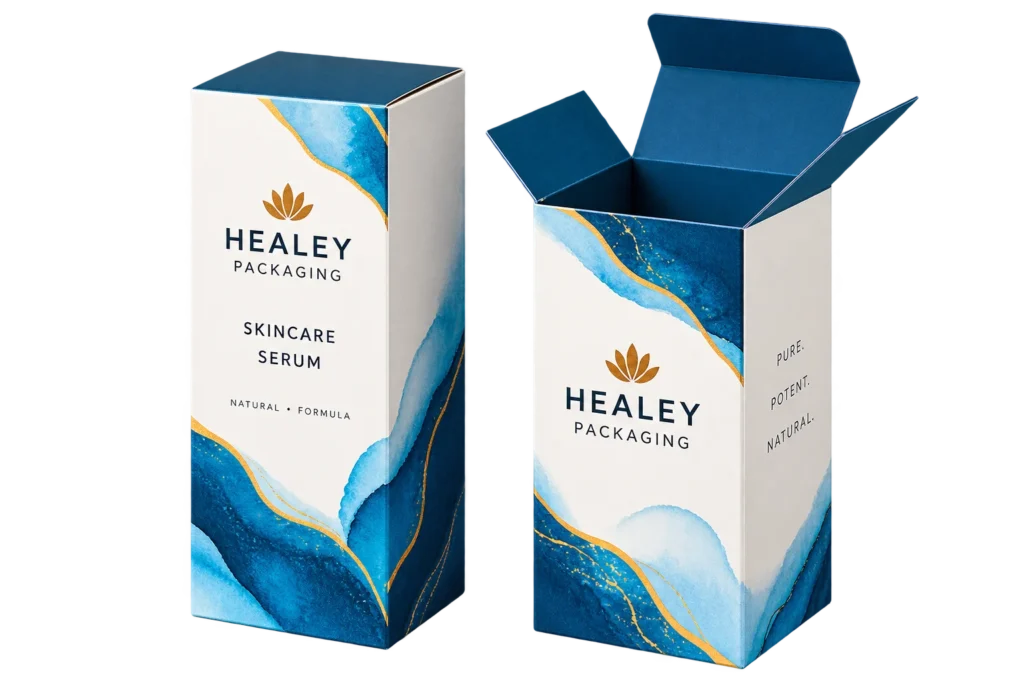
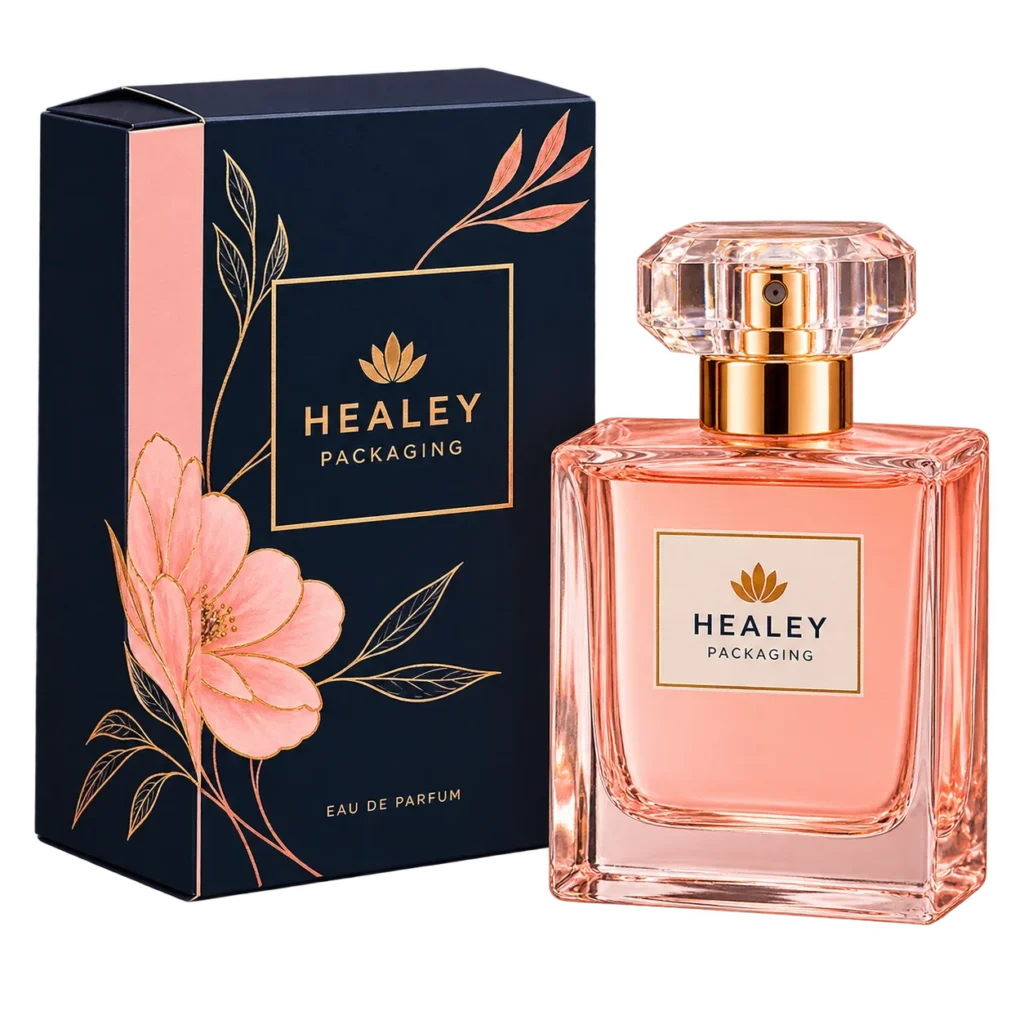
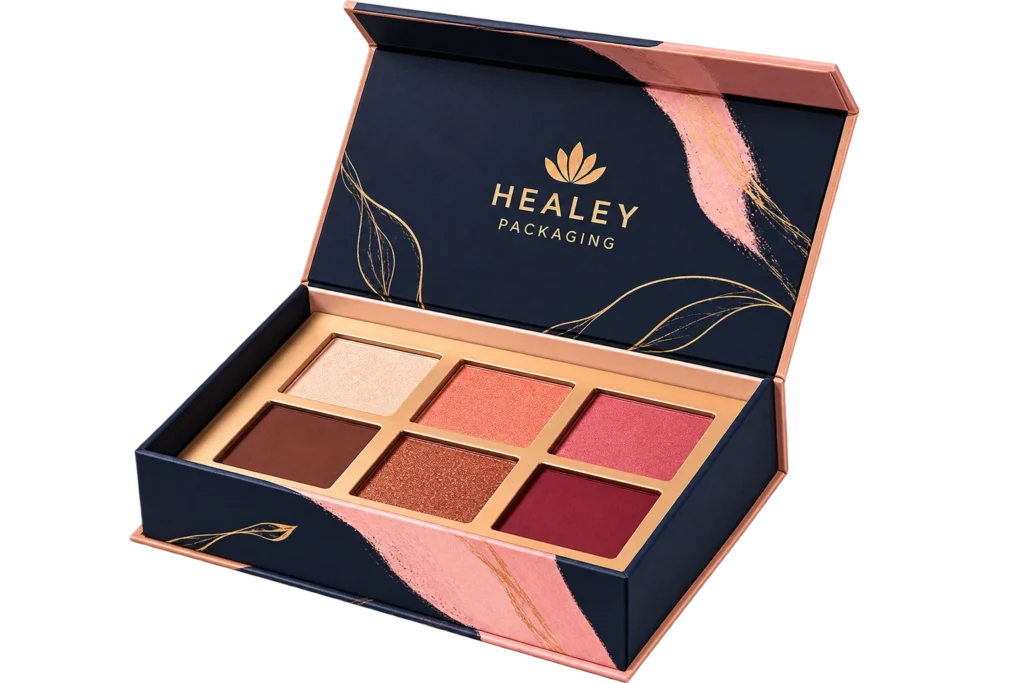
Browse beauty packaging for skincare, makeup, fragrance, retail shelves and premium unboxing.
Blush is a small product, but customers notice the box straight away....
Customise Now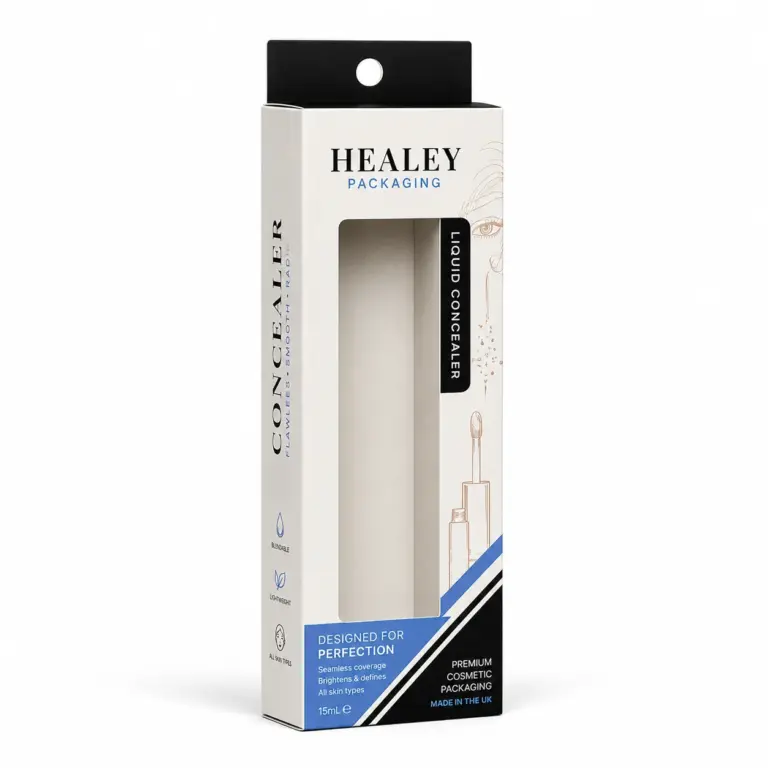
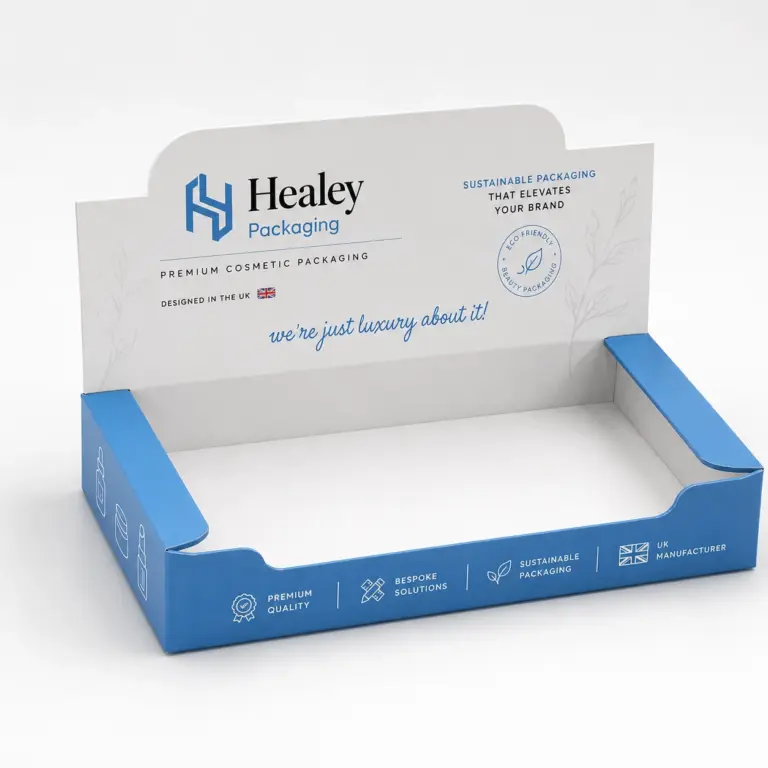
Cosmetic products are often displayed in small retail areas where visibility matters...
Customise Now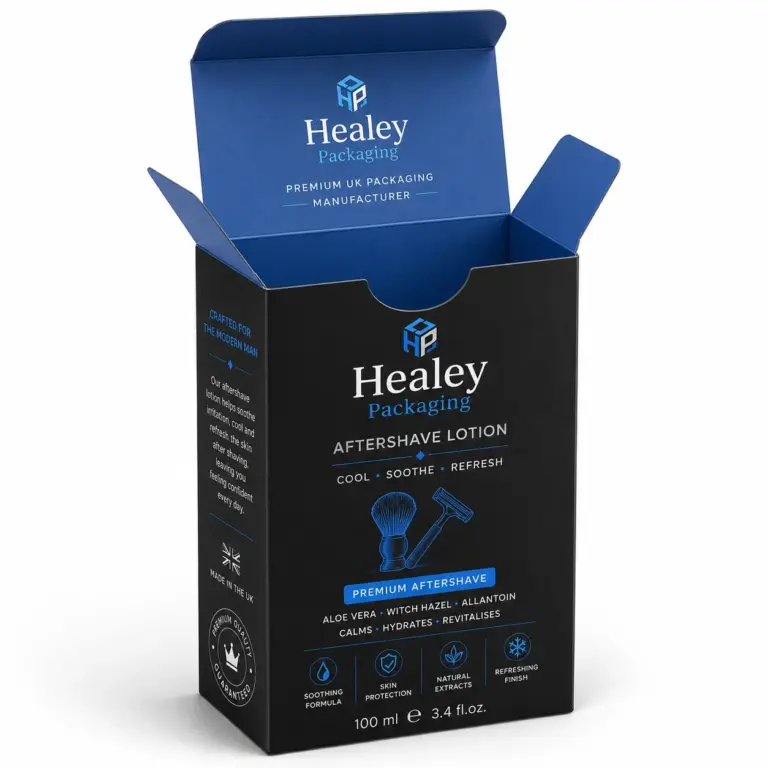
Aftershave bottles are unforgiving when packaging is wrong. Glass chips, caps loosen,...
Customise Now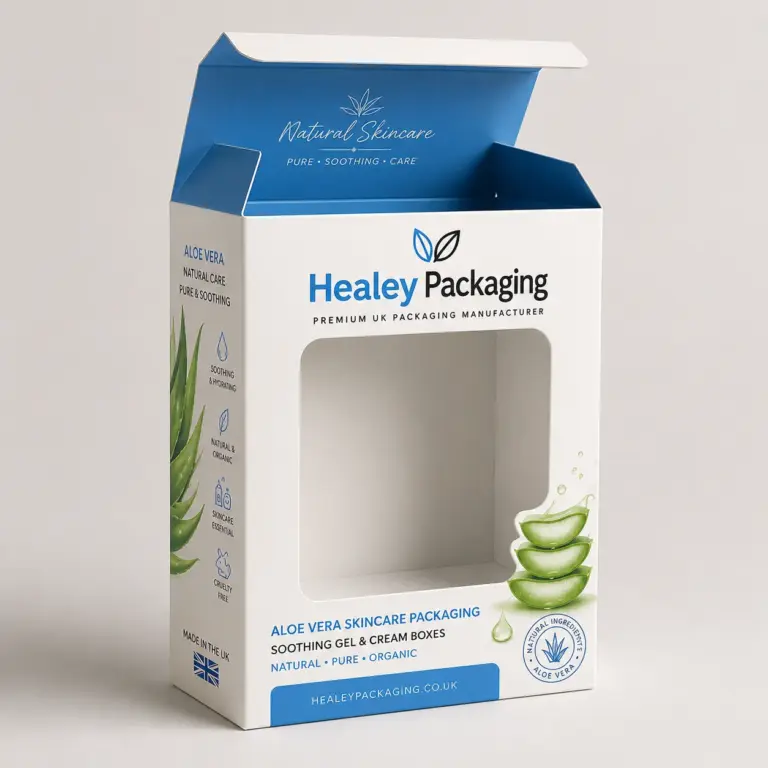
Ever had someone rave about your aloe vera product… then never order...
Customise Now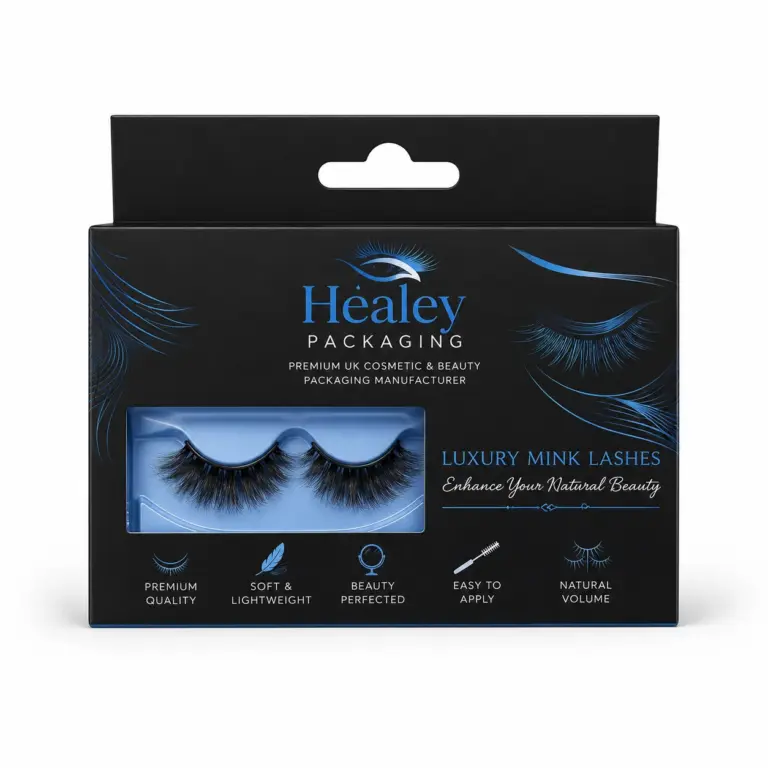
Great lashes deserve more than a basic box. At Healey Packaging, we...
Customise Now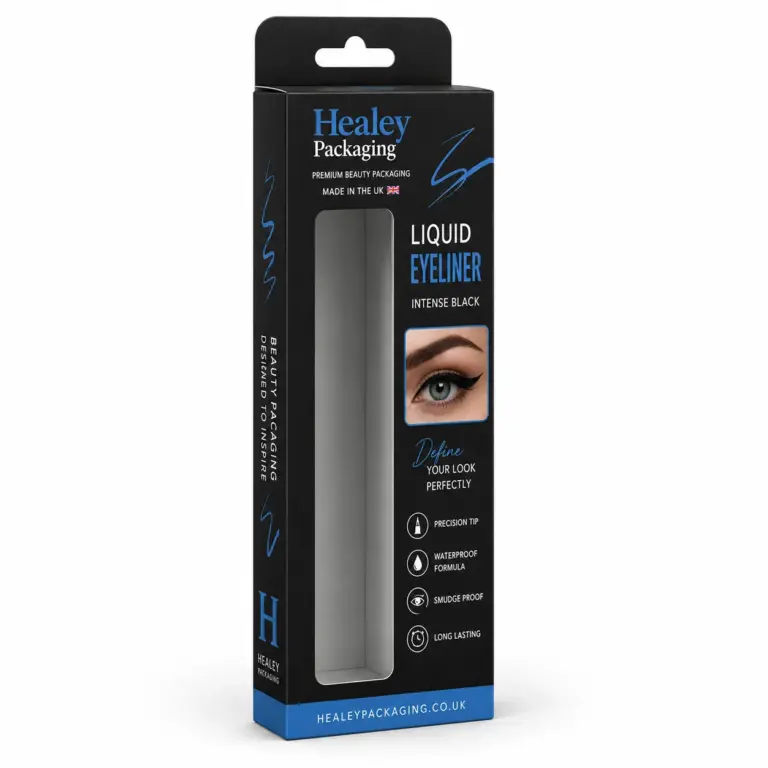
Eyeliner packaging seems simple until you try getting the fit, finish, and...
Customise Now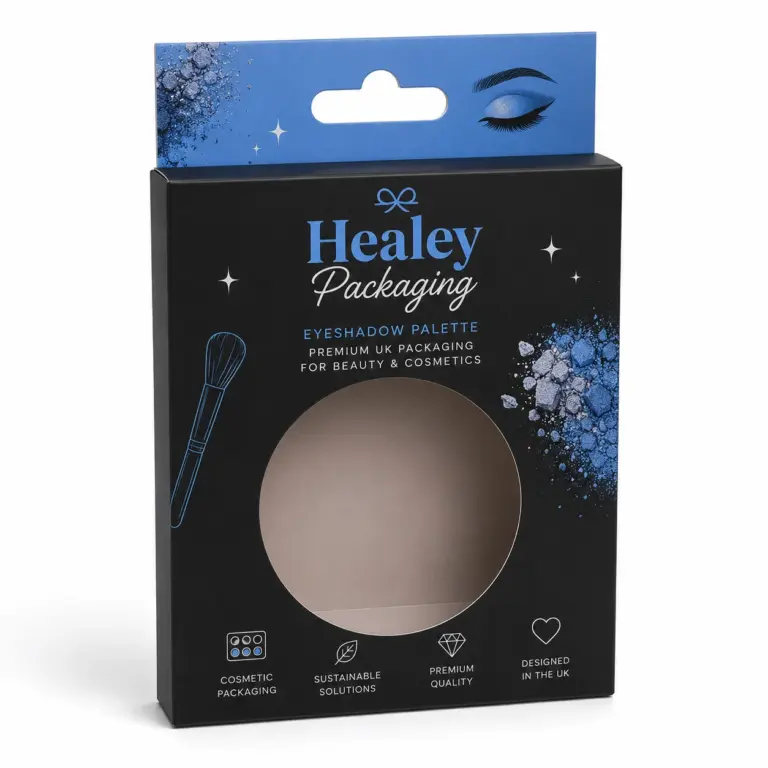
Eyeshadow packaging has to do more than look pretty. It needs to...
Customise Now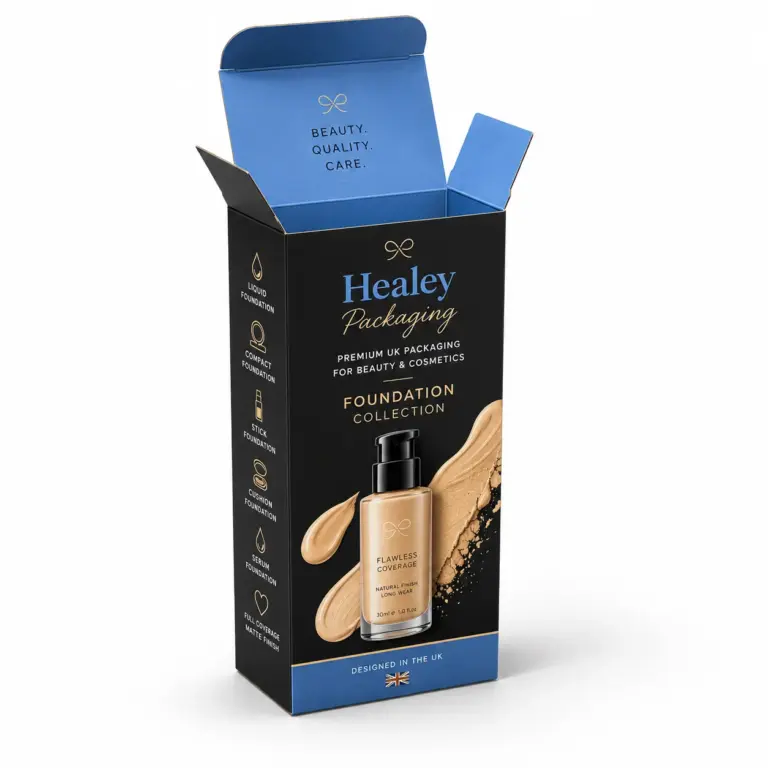
Foundation packaging can quickly become a problem if the box isn’t doing...
Customise Now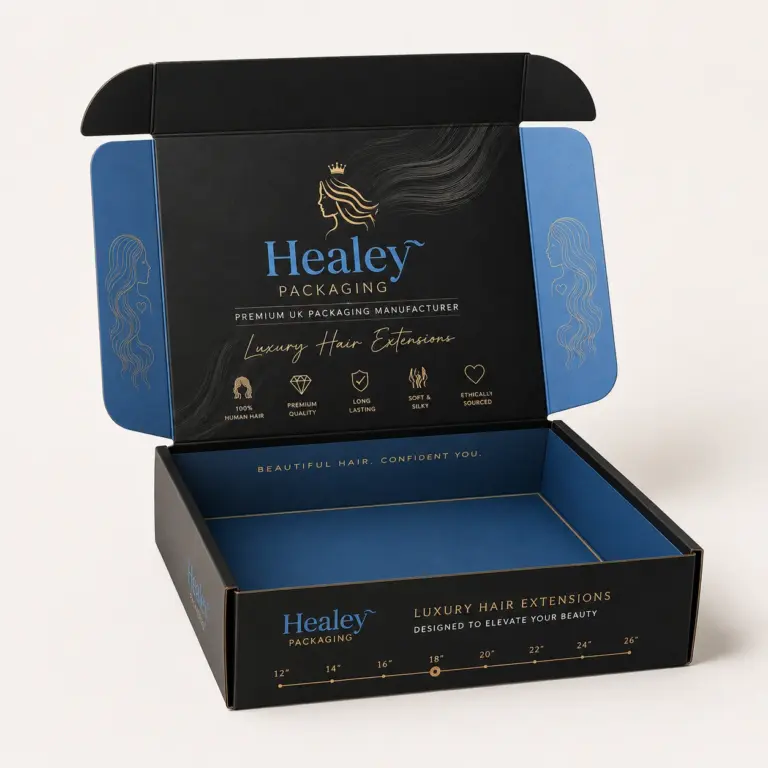
Your hair extensions are more than a product — they’re an investment...
Customise Now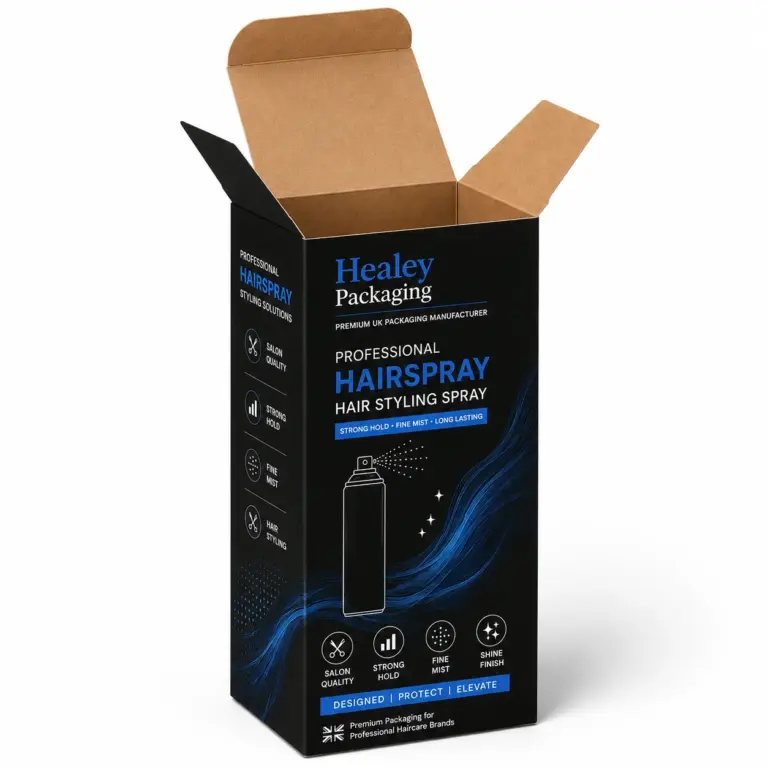
Hairspray packaging has to deal with pressure, weight, and regulation all at...
Customise Now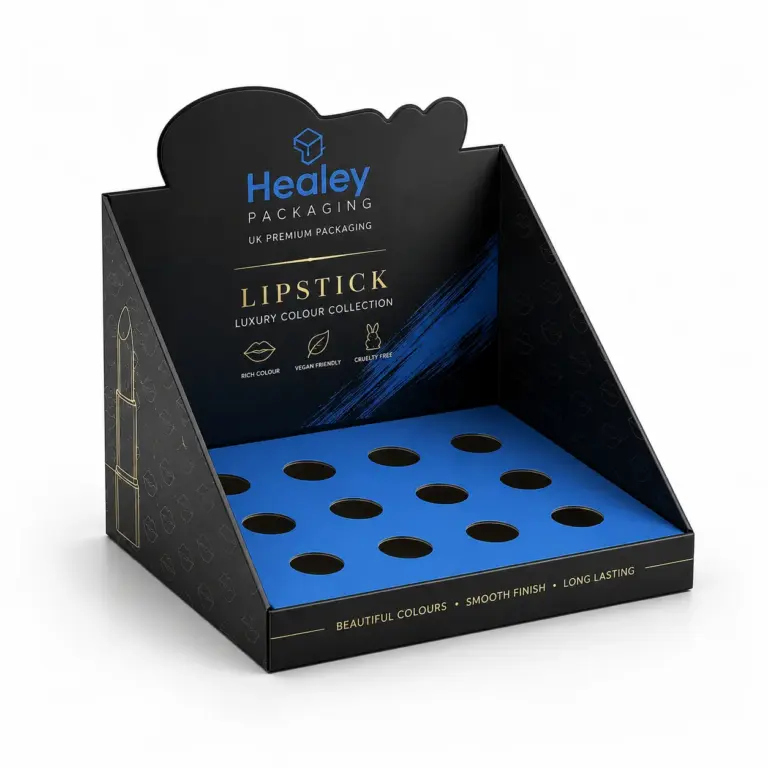
Your lipstick deserves more than generic packaging. Whether you’re selling a bold...
Customise Now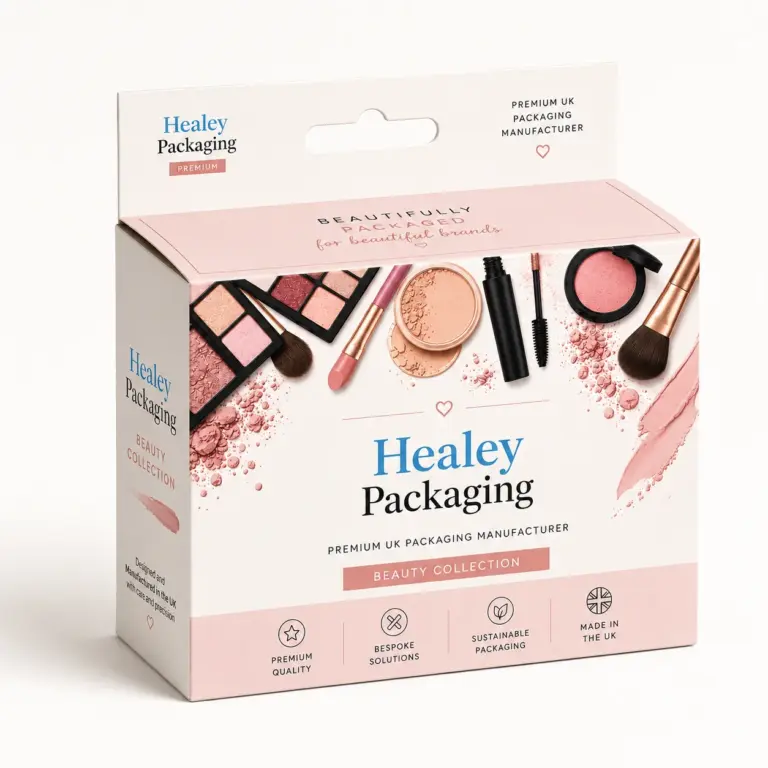
Ever notice how people judge a lipstick before they’ve even twisted the...
Customise Now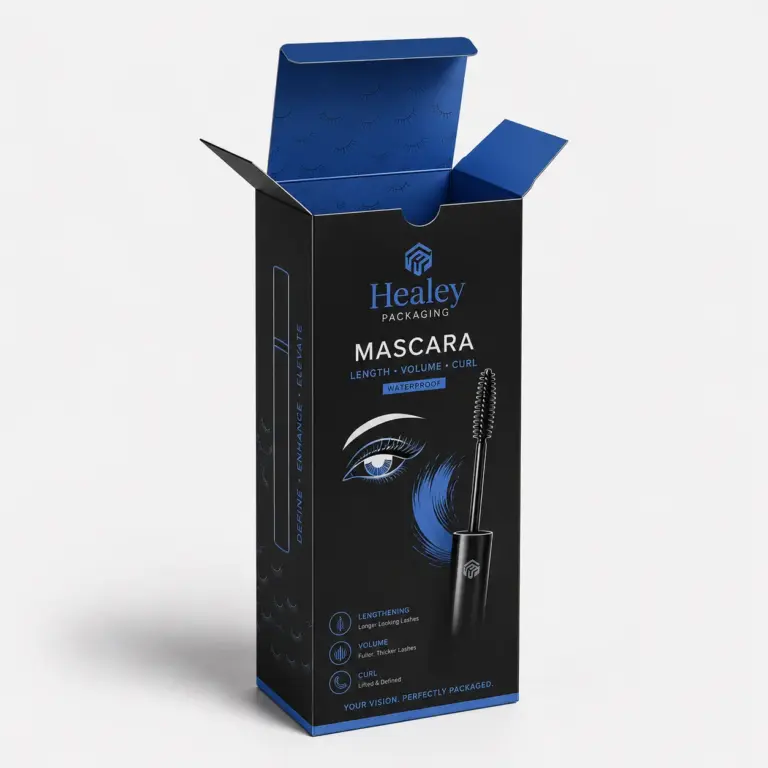
You’ve got the formula—now let’s box it up right. Our custom mascara...
Customise Now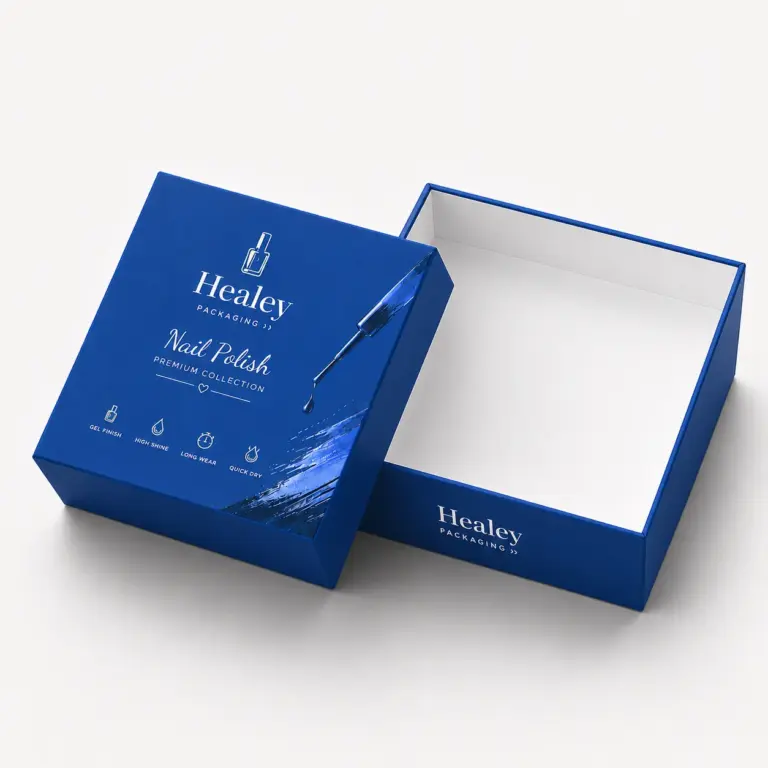
Nail polish bottles are tiny, colourful, and notoriously easy to chip or...
Customise Now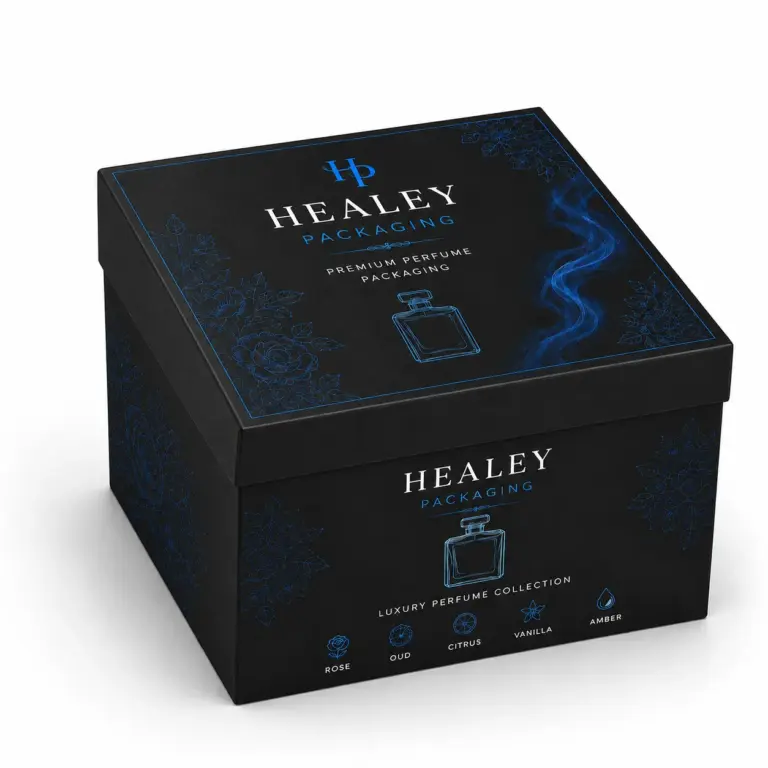
You’ve poured your creativity into that scent — it’s personal, it’s premium,...
Customise Now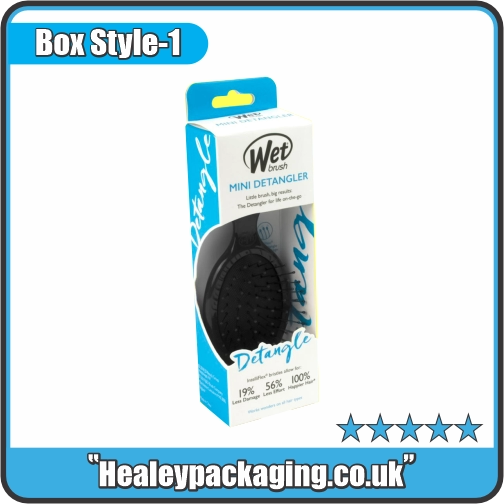
A loose brush can arrive with bent bristles, scratched handles or damaged...
Customise Now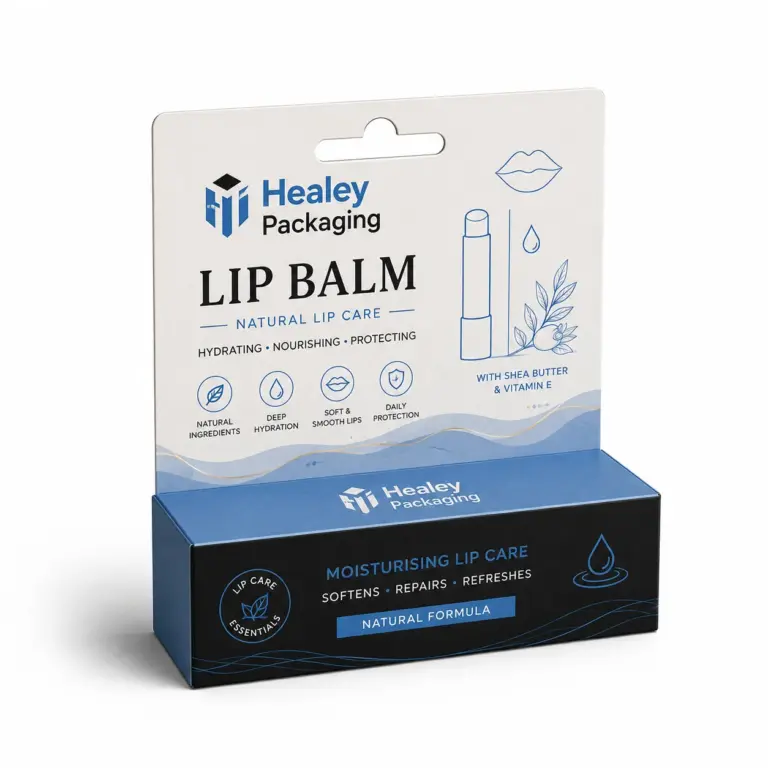
When it comes to lip balm packaging, precision matters. Your boxes don’t...
Customise Now
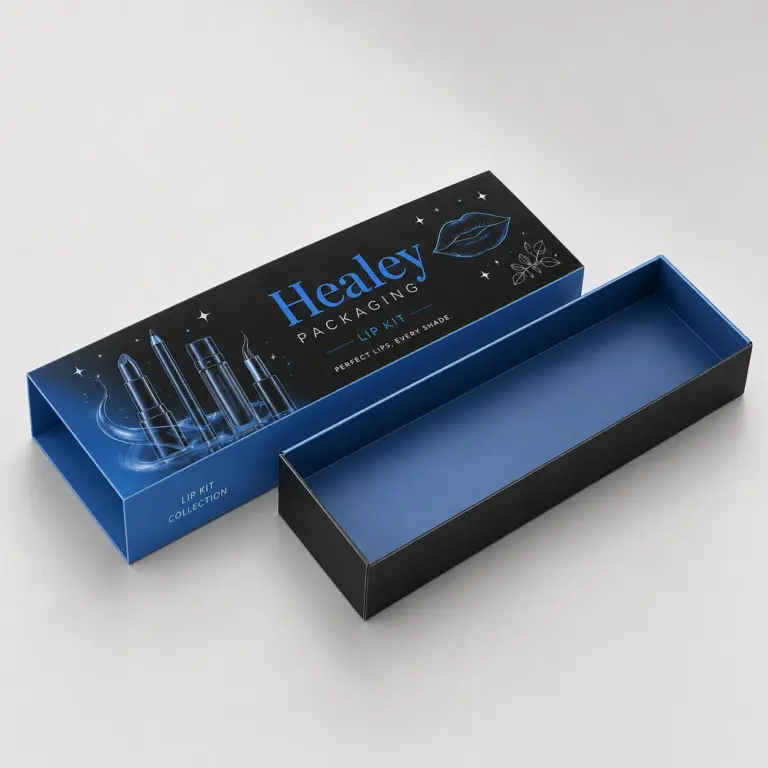
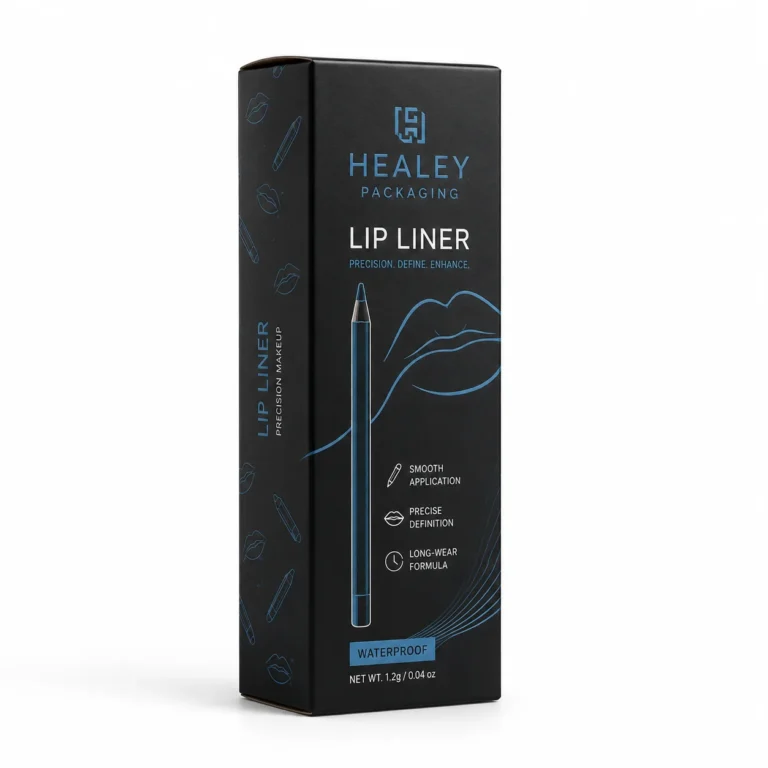
A slim lip product, glass serum bottle, mirrored compact and multi-product beauty set create different structural demands. Start with the finished primary container, then choose the board, internal support and box style around its weight, shape and route to market.
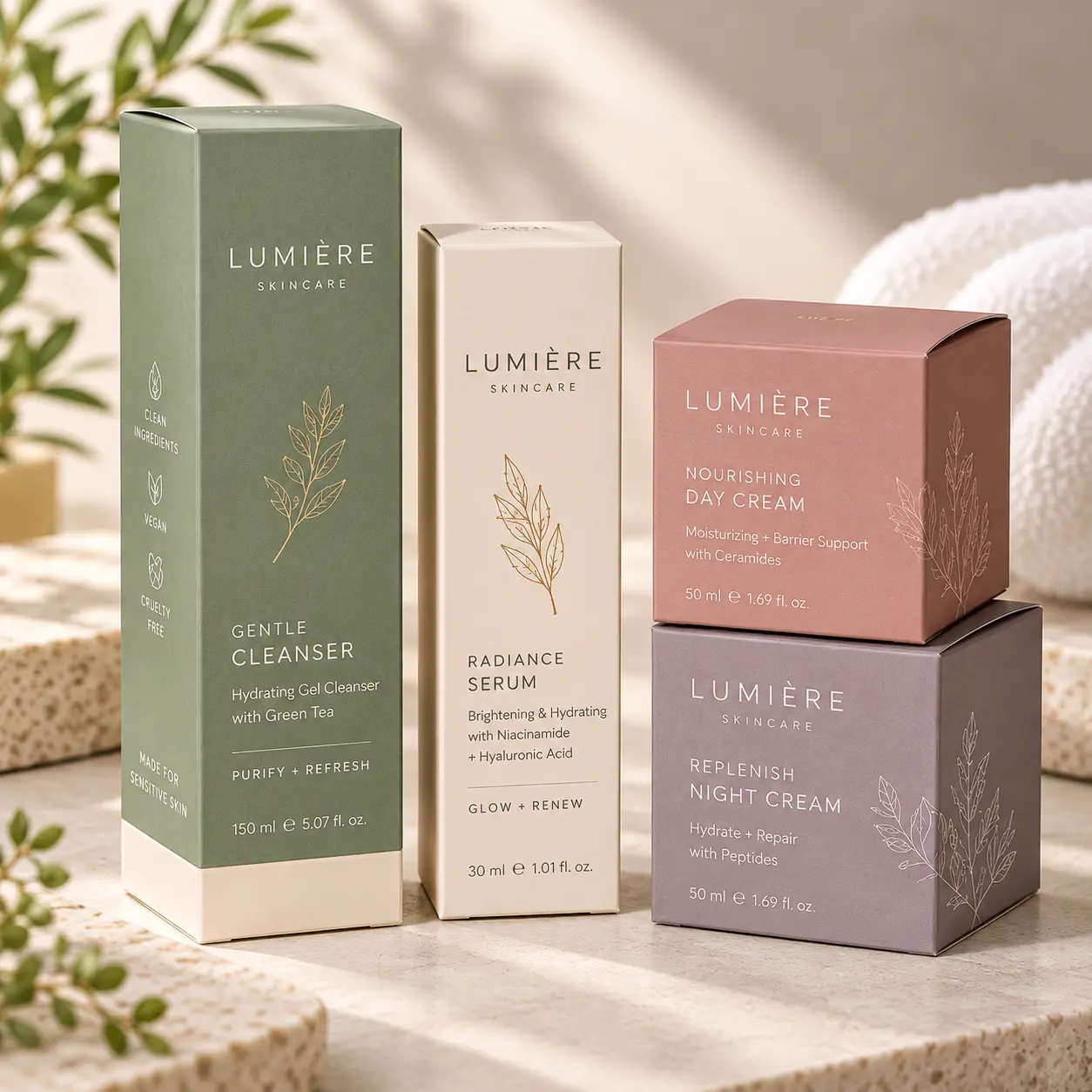
Bottles, droppers, pumps, tubes and jars need accurate fit so closures stay protected and the product remains upright during packing, storage and display.
Explore skincare packaging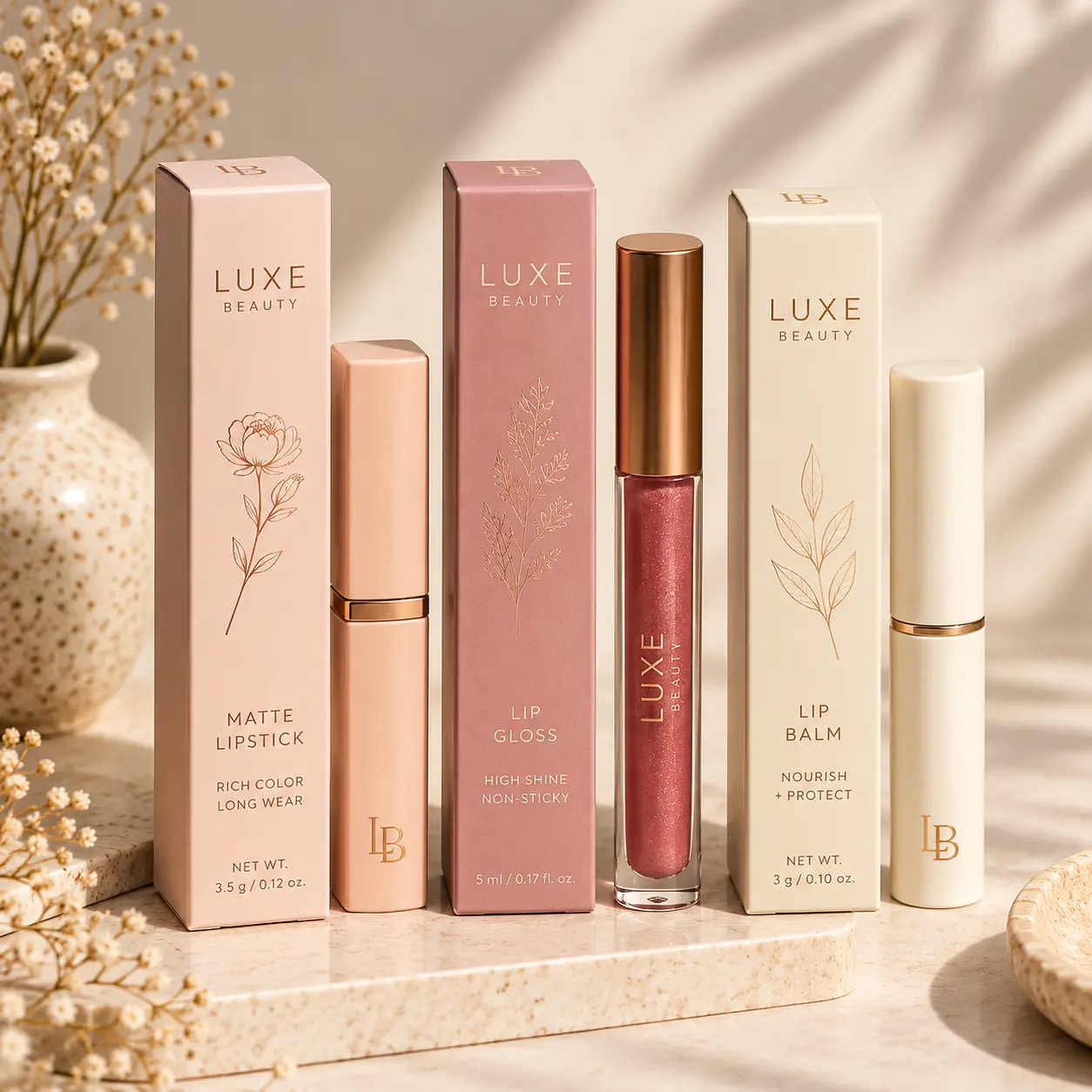
Small cosmetic packs need close internal tolerances. Too much clearance causes rattling; an over-tight carton can slow filling and mark corners during closing.
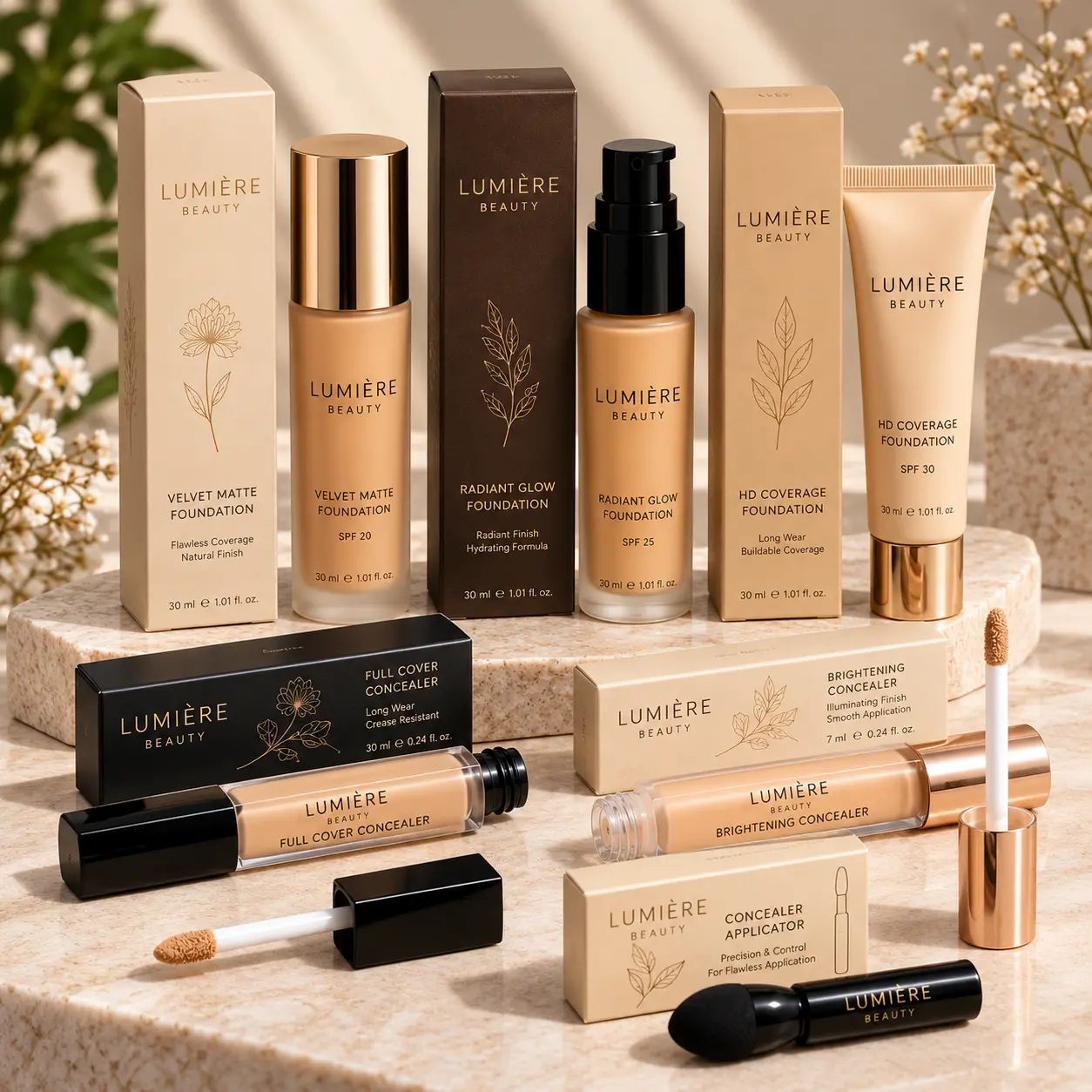
Glass bottles and pump formats may need stronger board or support around the neck and base, particularly where the product is narrow or top-heavy.
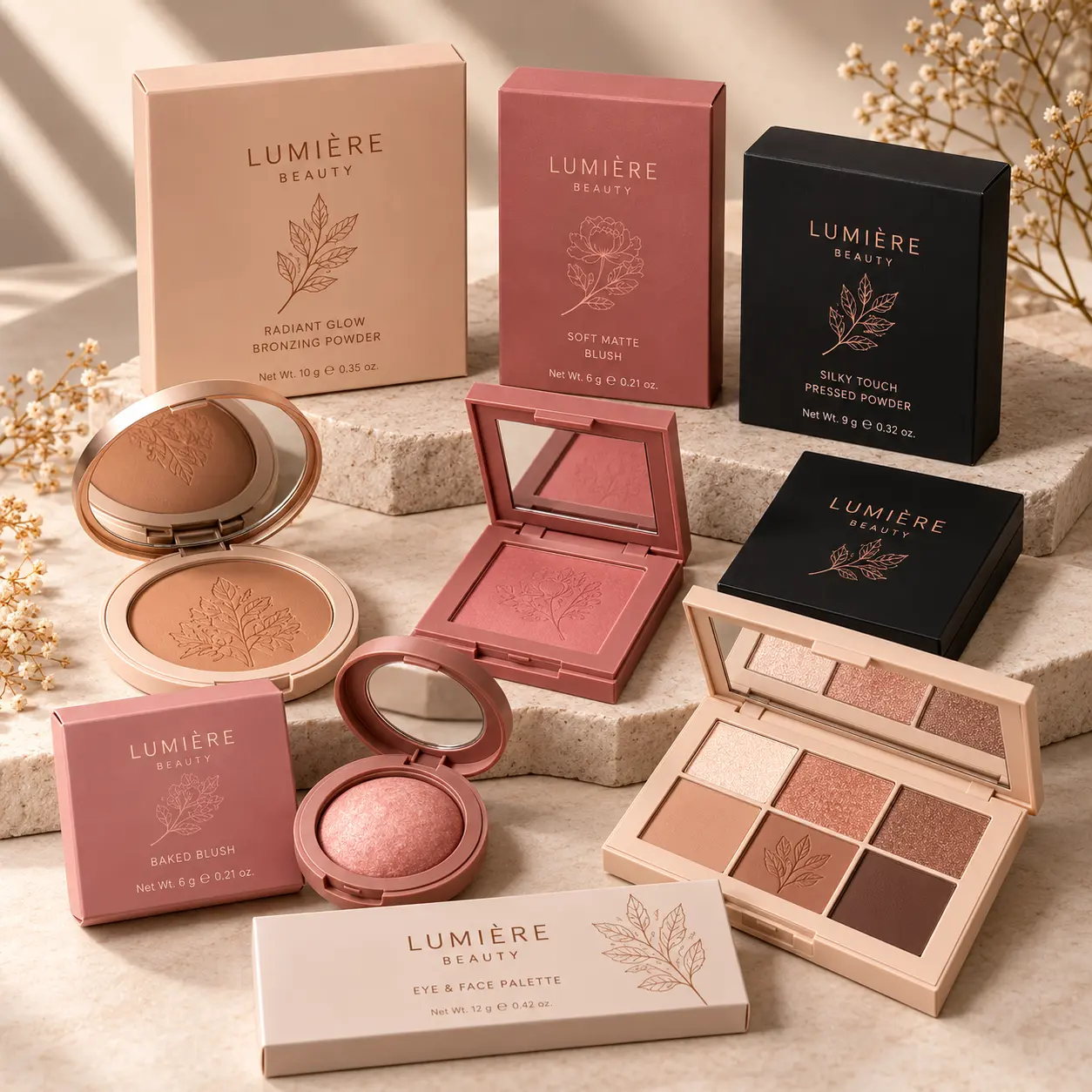
Flat cosmetic products are vulnerable to edge impact and localised pressure. Shallow trays or fitted cavities can restrain movement without loading the centre of the product.
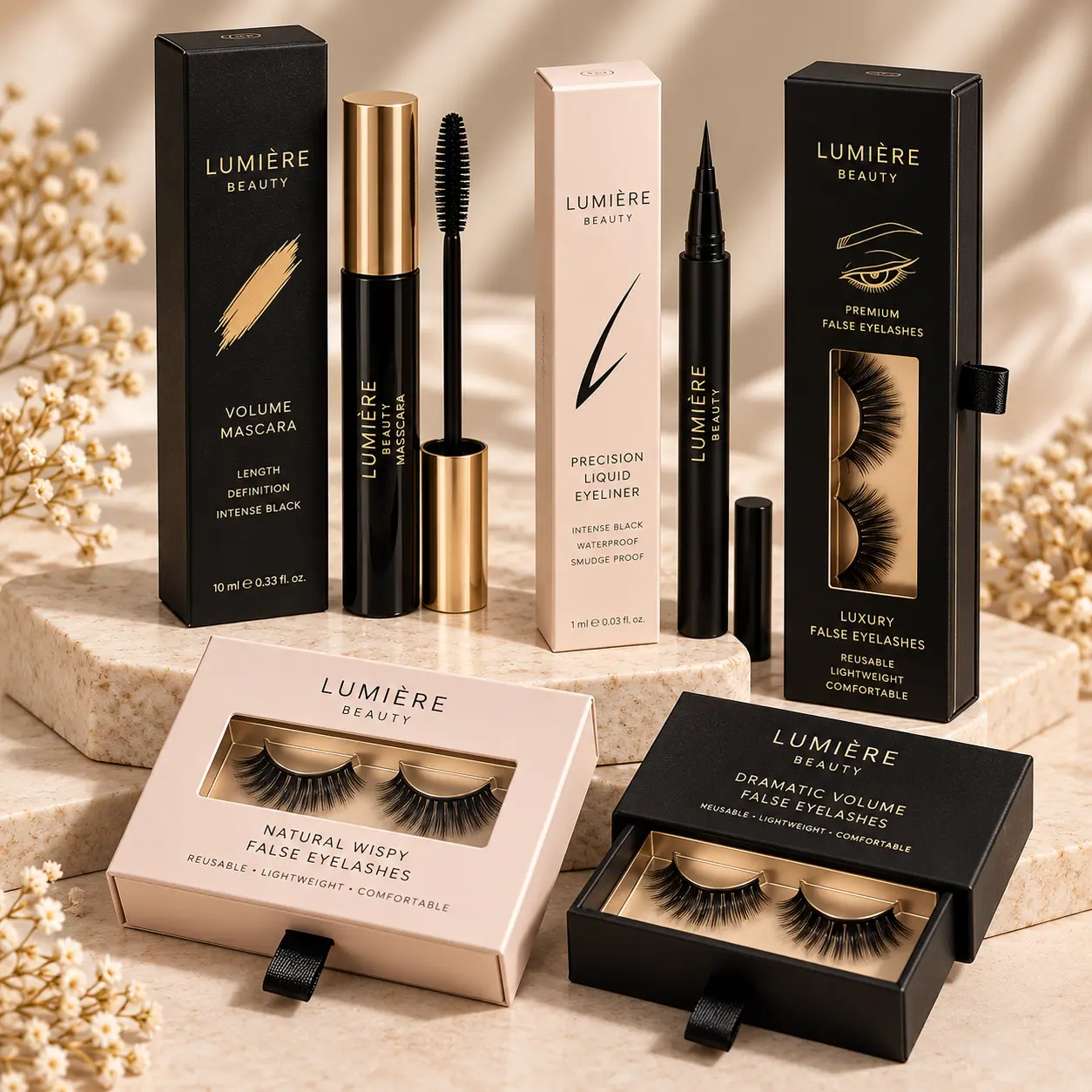
Narrow containers need side-wall stability, while eyelash products may benefit from wider trays or windows where visibility supports the retail sale.
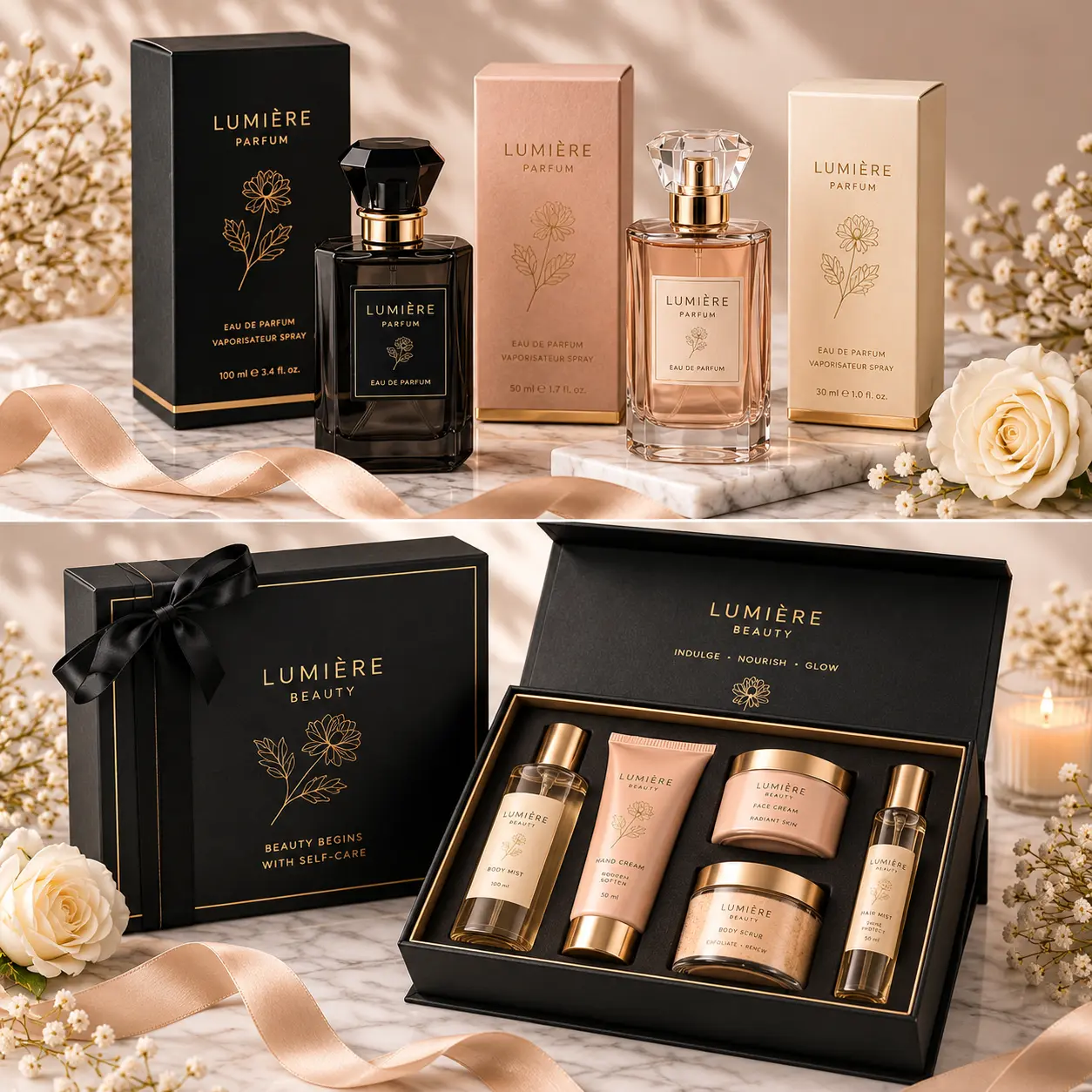
Fragrance bottles and multi-product sets often need stronger structures and accurately cut inserts so glass containers remain controlled when the pack is carried and opened.
Explore rigid packagingDimensions alone do not describe how a product behaves inside a carton. Shape determines where weight, movement and pressure are transferred during ordinary handling.
Serums, foundation and fragrance may need neck/base restraint and protected headroom.
Priority: upright positioningCream and balm jars transfer more load through the base and lower carton panels.
Priority: base rigidityCompacts and palettes need edge restraint without pressure on mirrors or pressed product.
Priority: edge controlInternal support should solve a defined movement or presentation problem. The aim is to keep the product stable without pressing on pumps, droppers, mirrors or other vulnerable components, and without making routine packing unnecessarily slow.
A tall bottle is commonly controlled near the neck and base. The support should stop lean and rotation while retaining enough access for straightforward loading and removal.
Useful where the product must remain in a fixed position and movement needs control on several sides.
Two controlled support points can stabilise pumps, serums and fragrance bottles without a full-depth cavity.
Partitions help stop different containers from colliding and maintain an organised layout through handling.
A shallow tray can align compacts, palettes and collections while providing finger cut-outs or lifting access.
Retail support should stabilise the primary container without making customer removal difficult.
A presentation carton may still require a corrugated outer pack where fragile products travel through parcel networks.
Board selection affects print quality, corner strength, storage efficiency and surface durability. Choose it around the primary container, packed weight, required finish and whether the box is for retail presentation, gifting or transit protection.
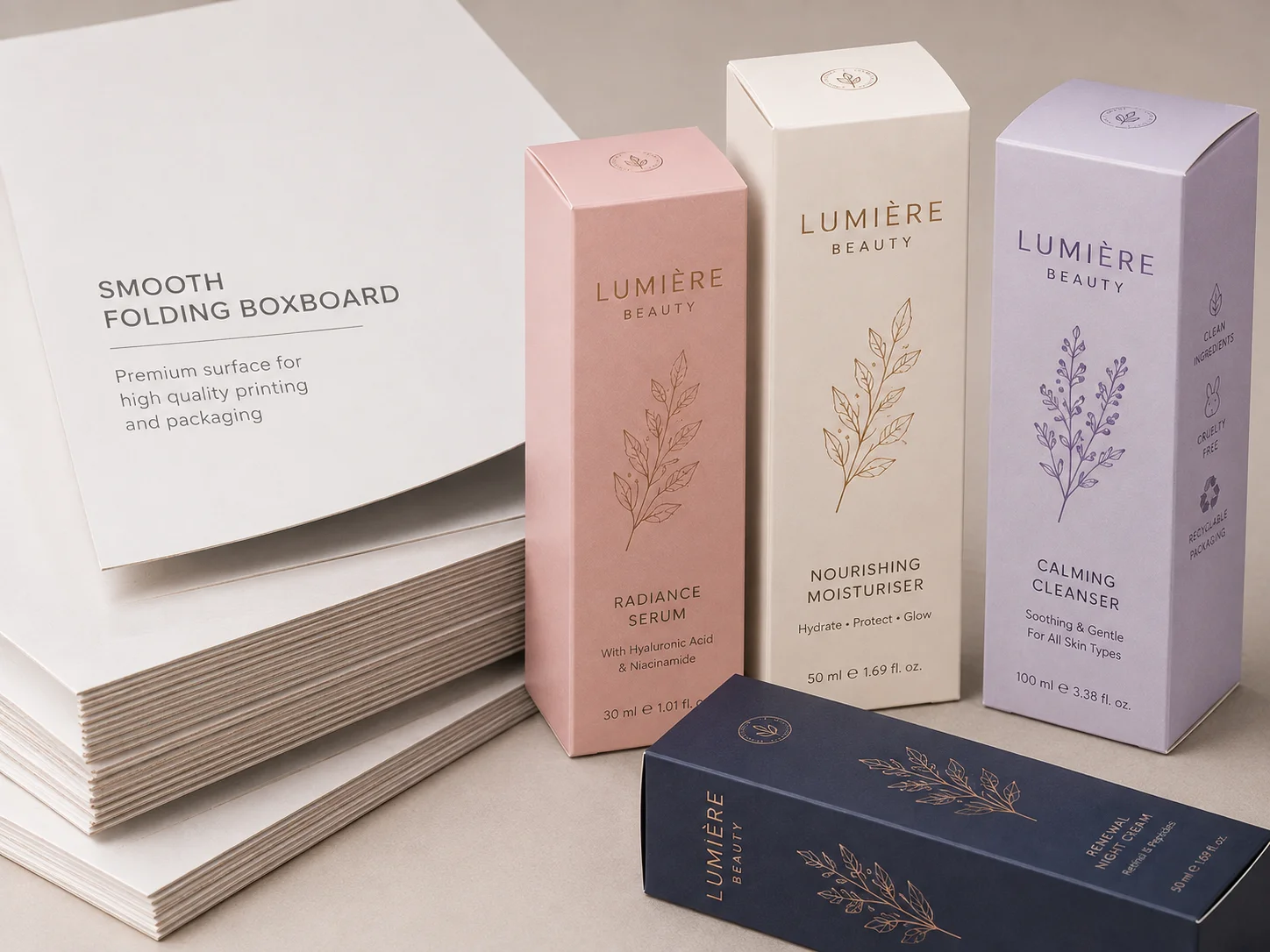
A versatile choice for skincare, makeup and personal-care cartons. The smooth surface supports detailed artwork and specialist finishing while the carton can normally be supplied flat.
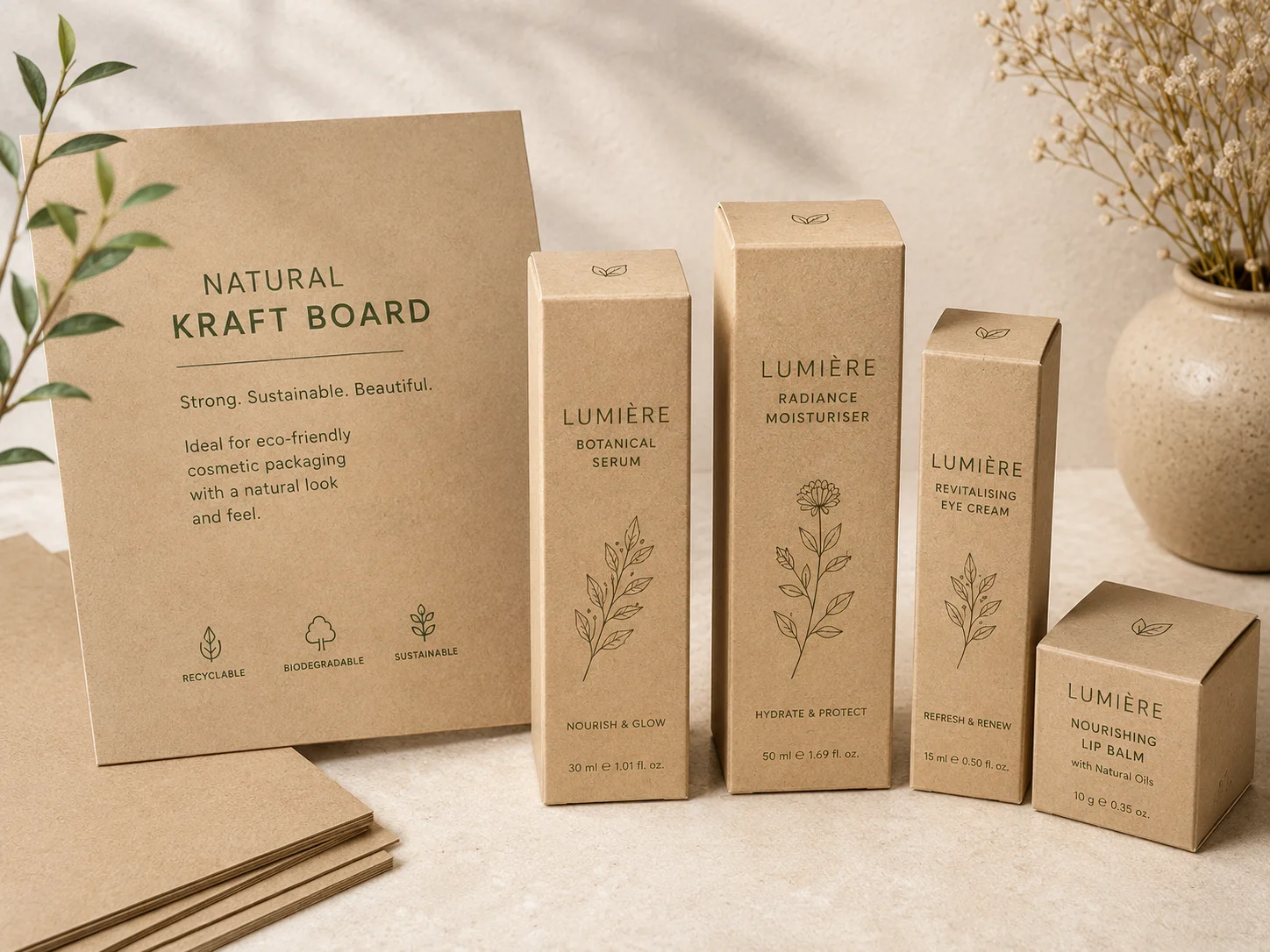
Kraft board suits botanical, handmade and understated beauty ranges where the visible fibre tone is part of the design. Artwork should be prepared for the brown substrate rather than copied from white board.
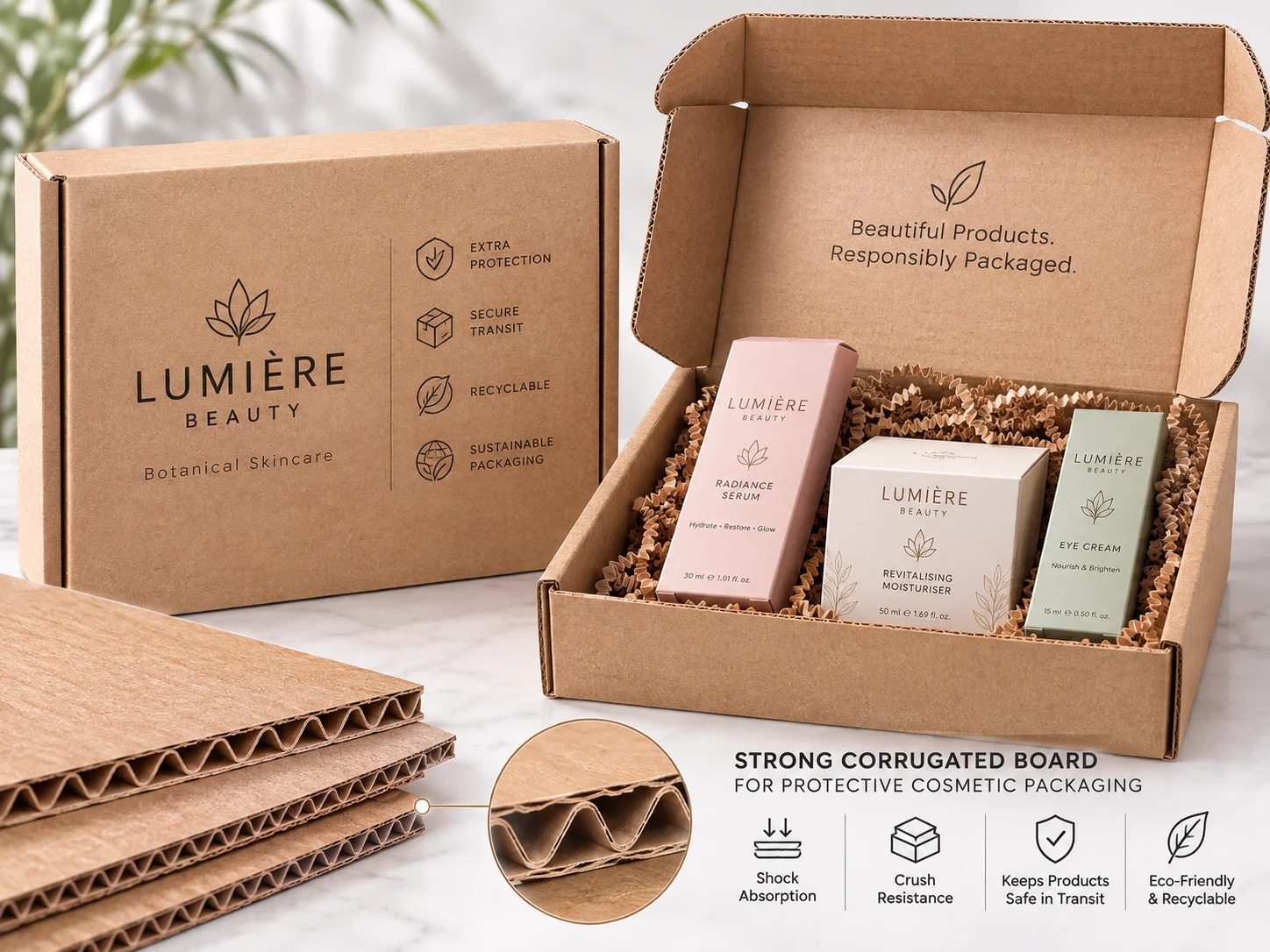
Corrugated board adds compression resistance for ecommerce delivery, subscription fulfilment and wholesale distribution. It can act as a customer-facing mailer or protective outer layer.
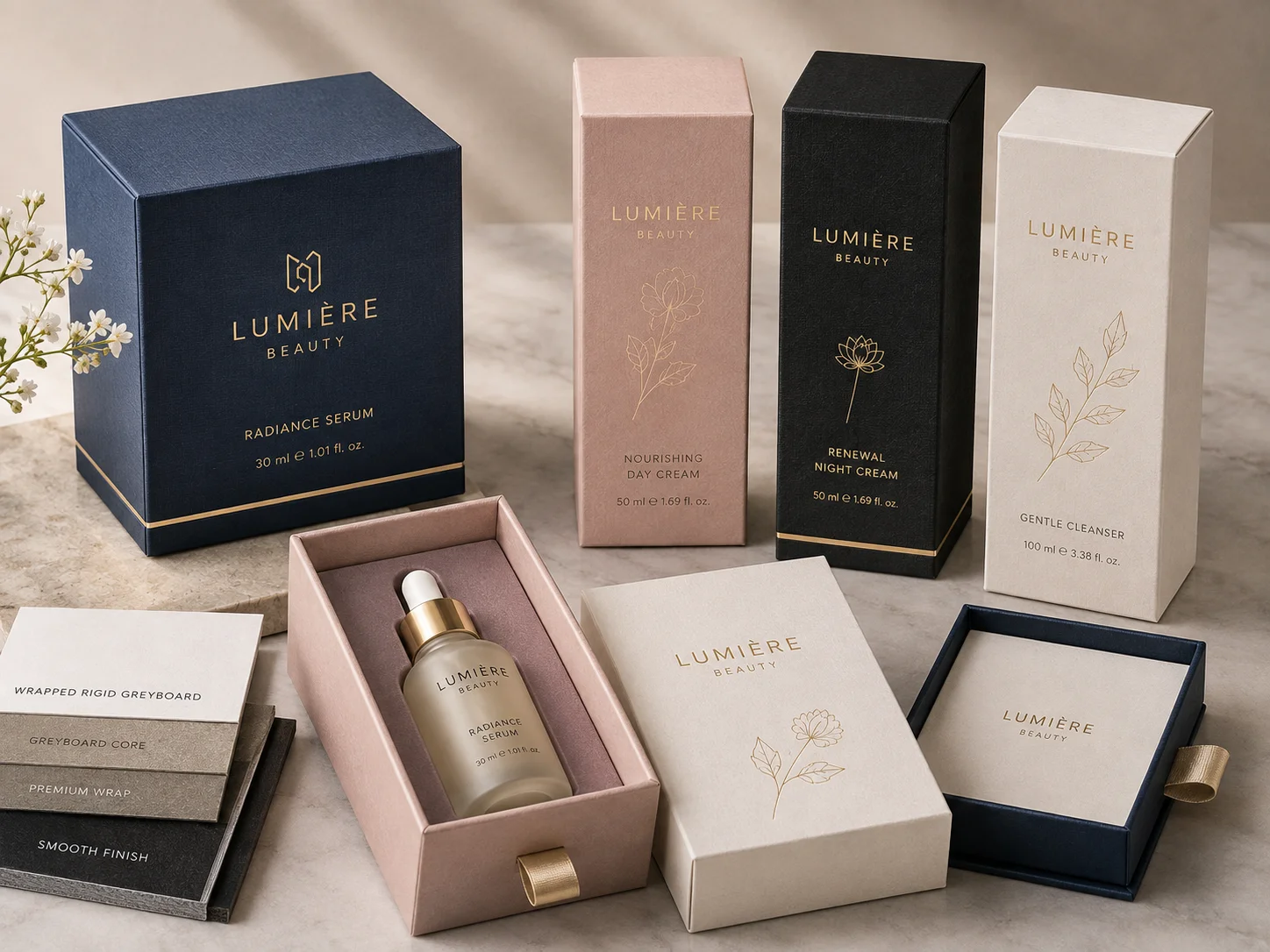
Rigid greyboard creates firm walls and a more substantial opening experience. It is best used where fragrance, premium skincare, gifting or launch presentation justifies the additional material and storage space.
A retail carton and a transit carton perform different jobs. Consider packed weight, print finish, storage, filling and distribution together instead of selecting a board from appearance alone.
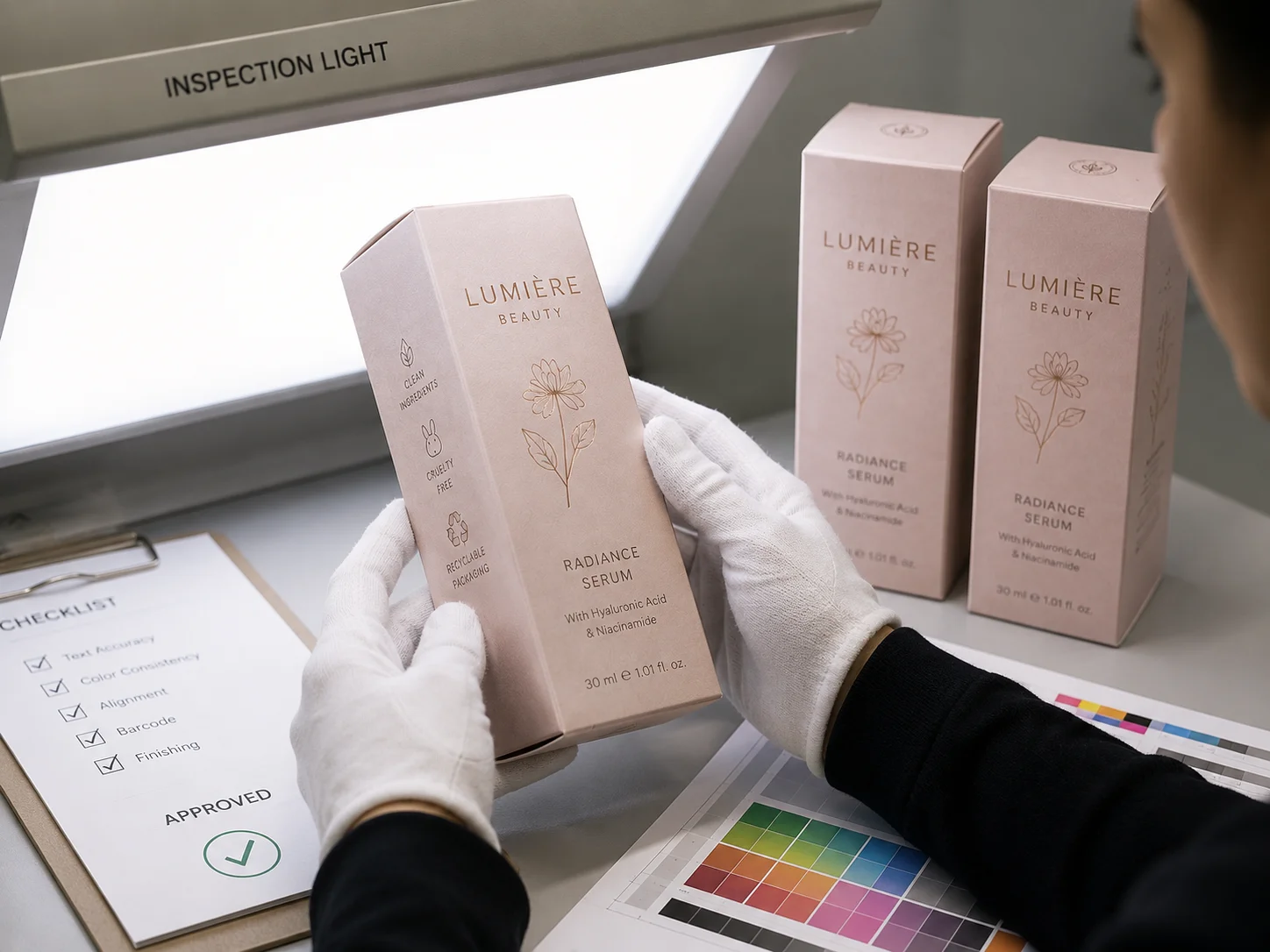
Cosmetic cartons are handled close to the customer and often viewed under bright retail lighting. Fine text, colour consistency, foil registration and surface durability therefore matter more than simply adding a premium effect.
Dark print, fine copy and specialist finishes can expose small production variations. Review how the assembled carton looks at normal viewing distance, under direct light and after ordinary handling.
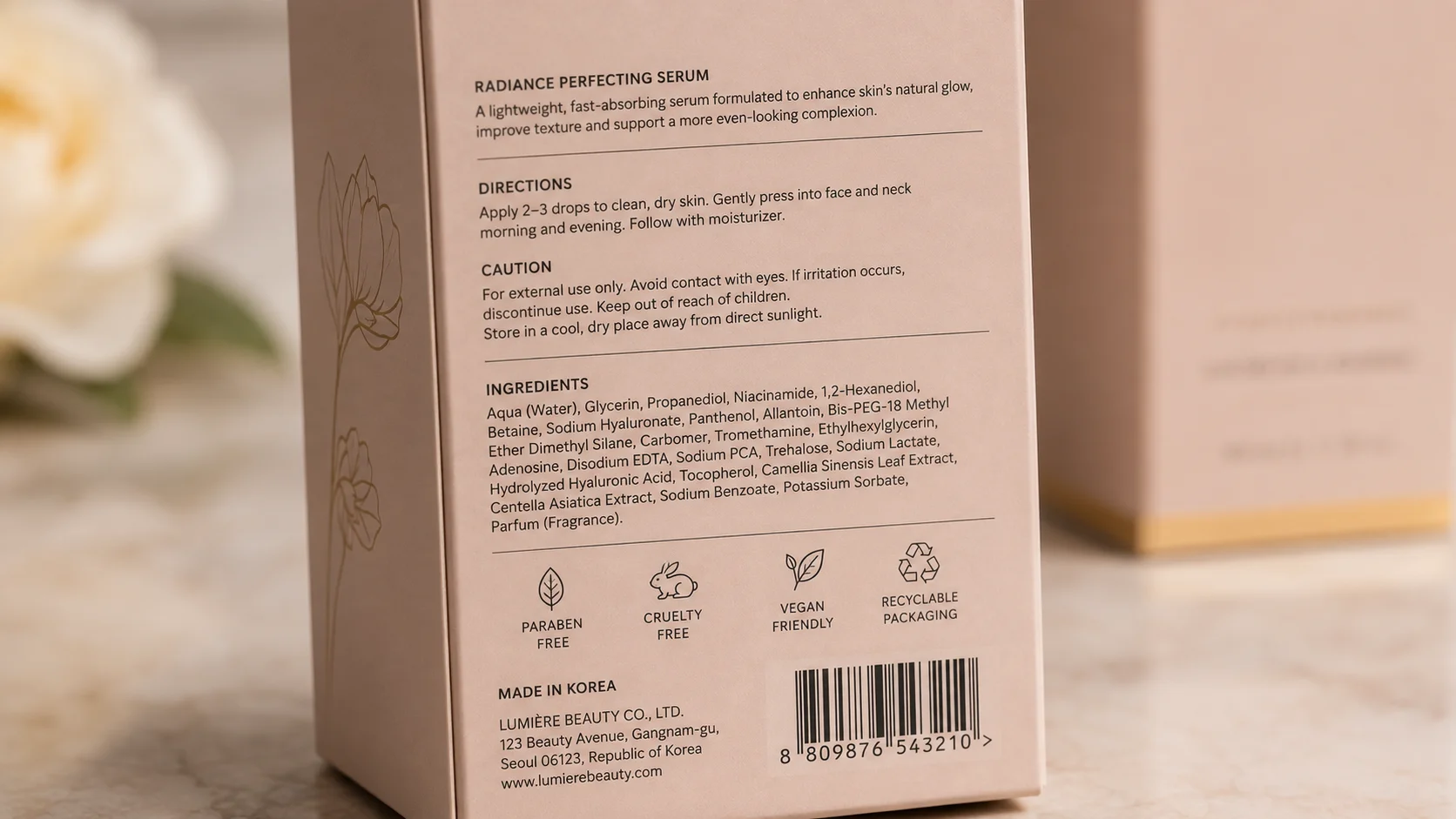
Ingredients, directions and warnings should remain sharp with sufficient contrast and line weight.
Check: type size, contrast and fine detail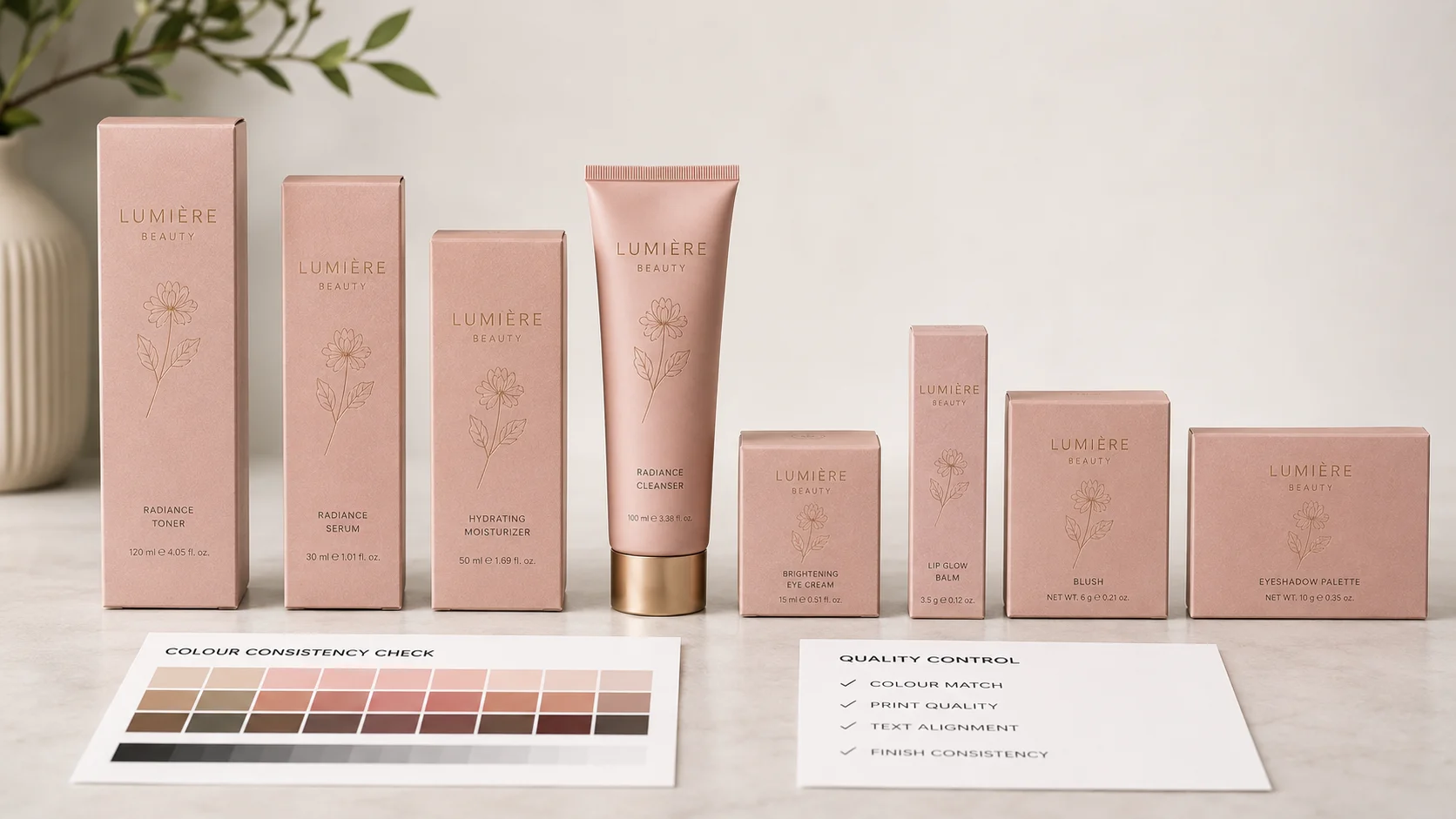
Shared colours should remain recognisable when carton size, artwork coverage and board area change.
Check: approved colour references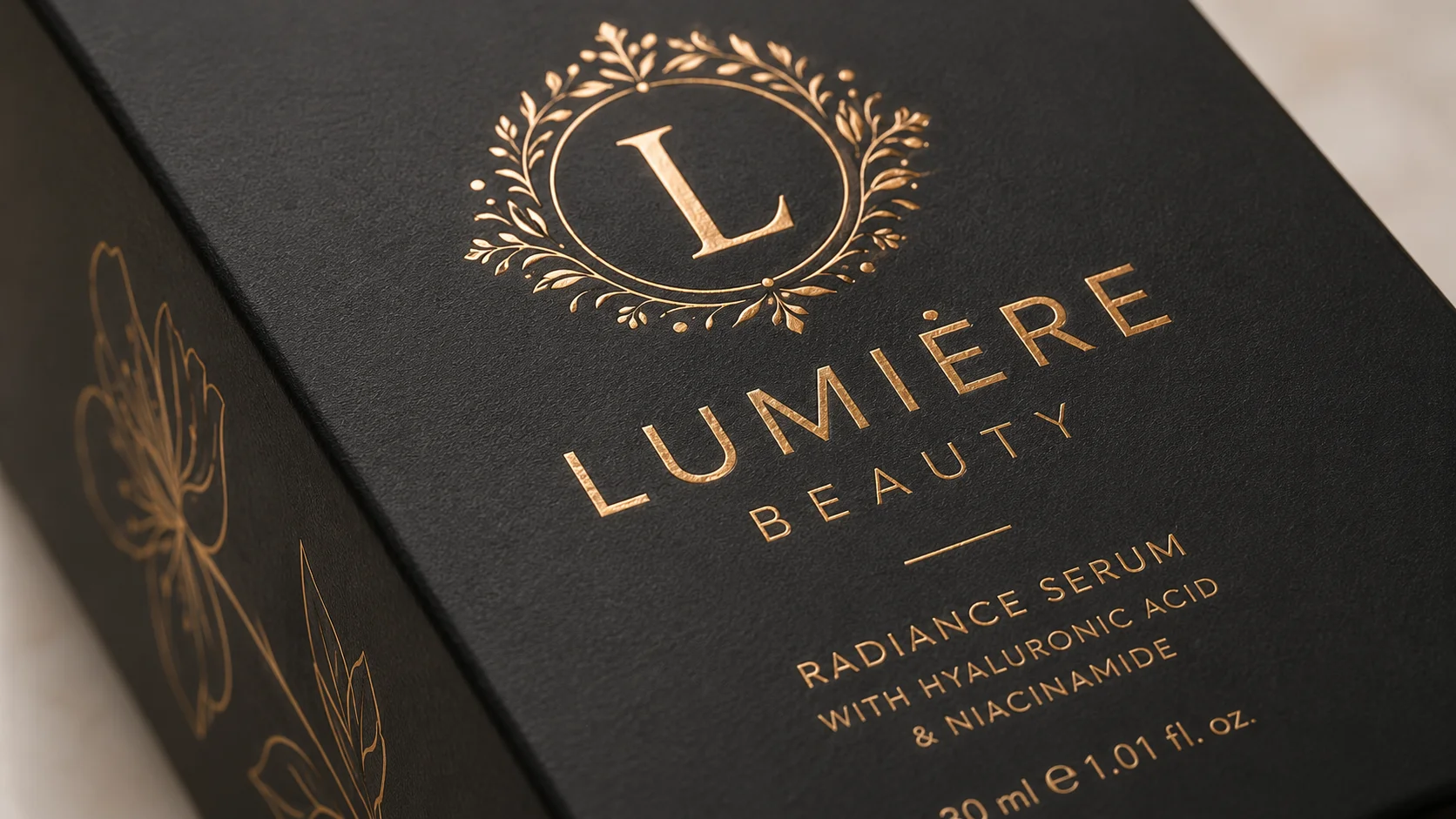
Foil should align cleanly with logos and borders; very fine metallic detail needs practical spacing.
Check: alignment and edge quality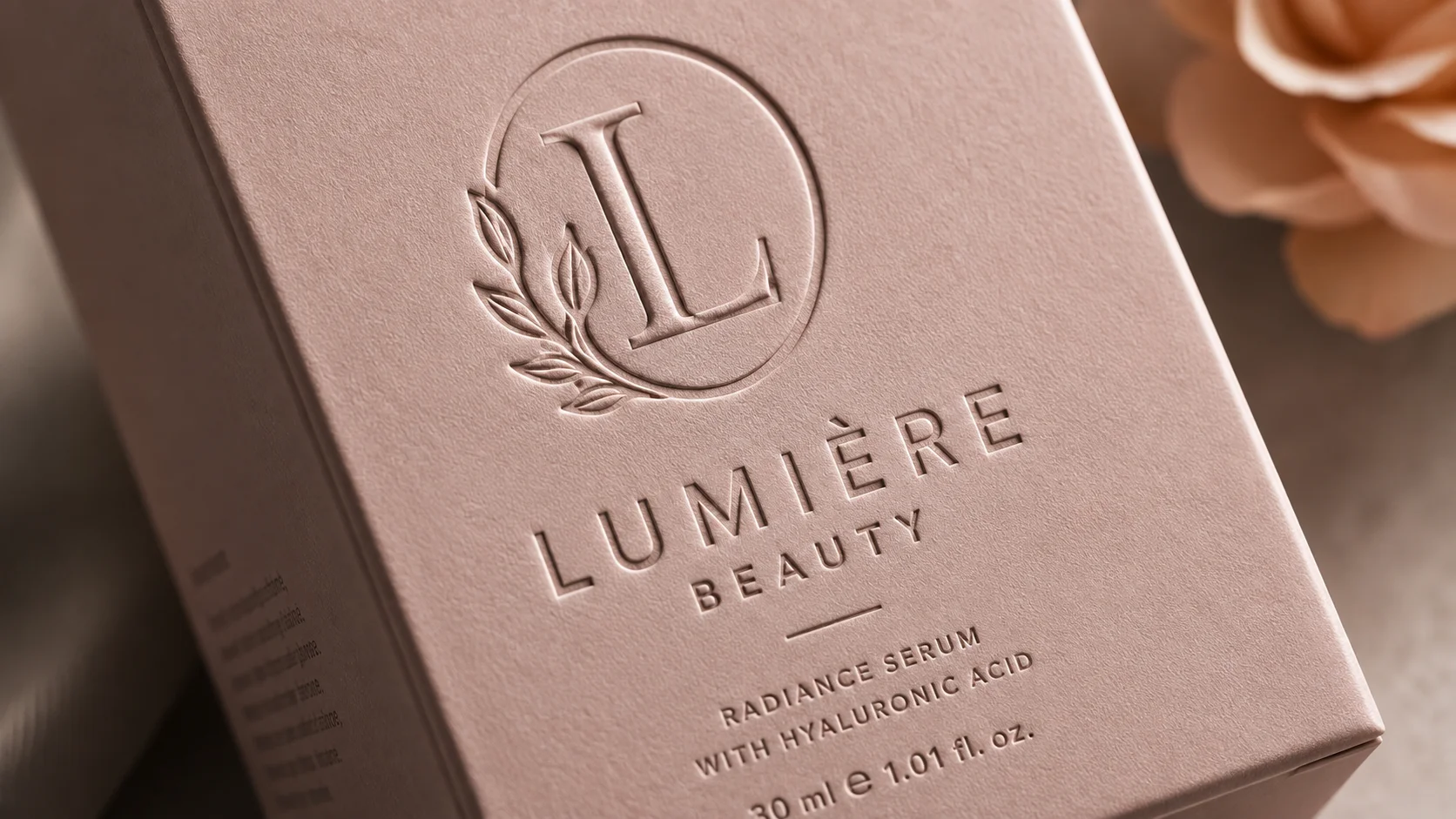
Raised or recessed detail should remain crisp without weakening creases or distorting nearby print.
Check: depth and board response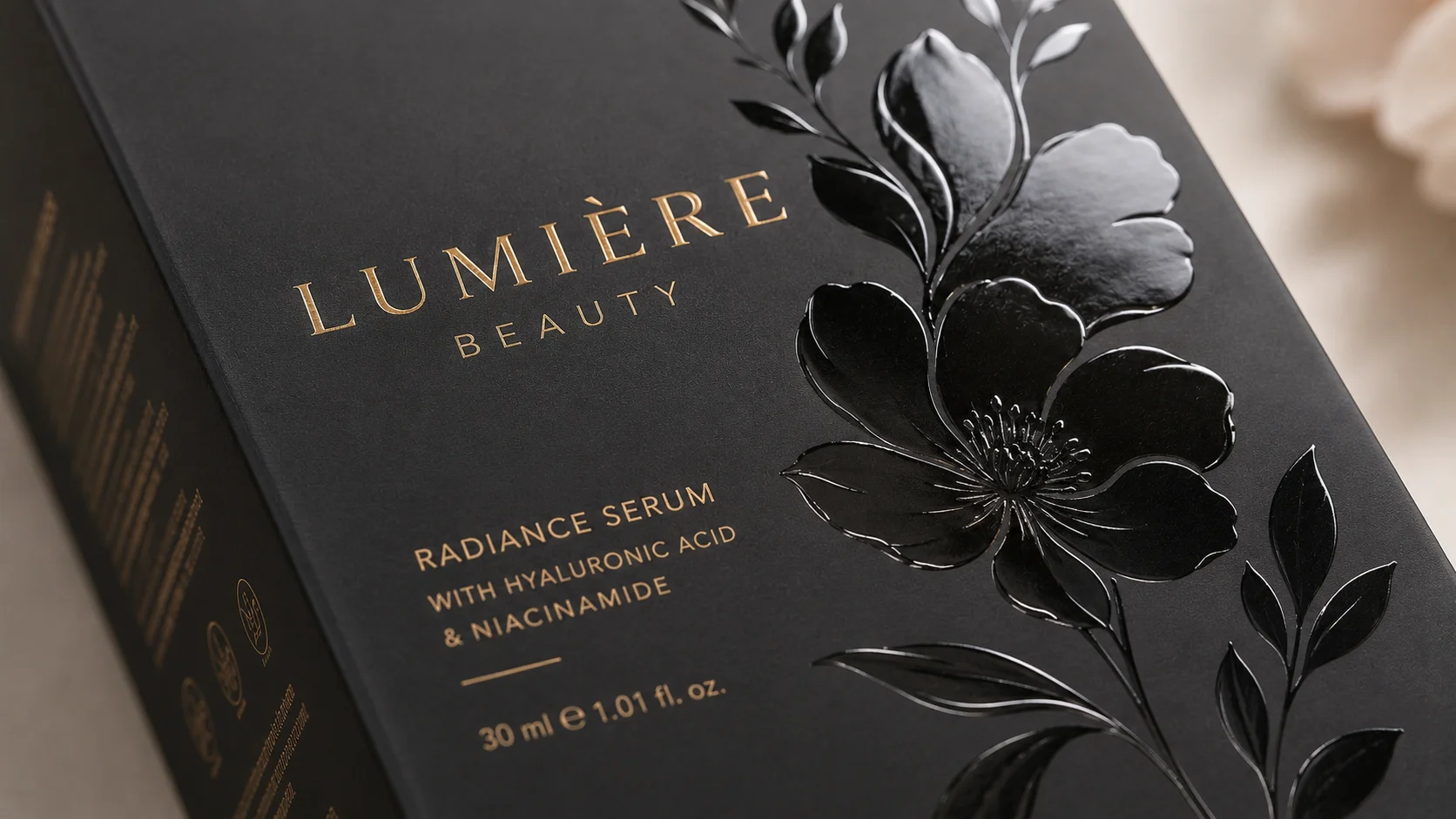
Selective gloss is most convincing where it follows a clear logo, image or pattern rather than tiny detail.
Check: separated artwork and tolerance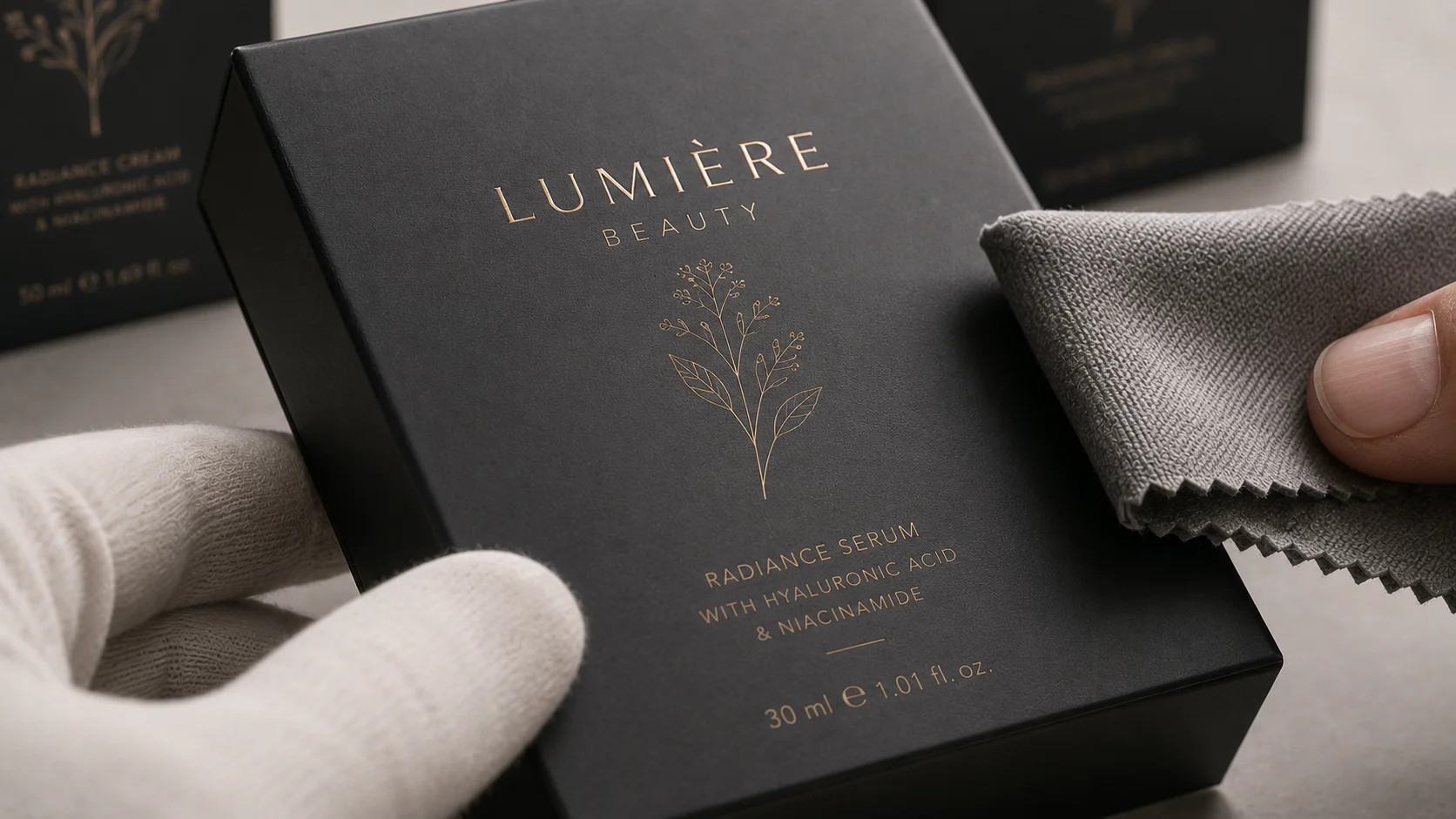
Dark matt, gloss and soft-touch surfaces can react differently to friction, stacking and skin contact.
Check: rubbing, stacking and handlingFoil, embossing, Spot UV and lamination should reinforce the visual hierarchy rather than compete with product names, shade information or essential copy.
Box style affects packing speed, product access, storage, delivery performance and presentation. Compare each format by what it suits, the practical advantage it provides and the structural point that needs checking before approval.
Compact folding cartons for individual products where efficient storage and repeat packing are priorities.
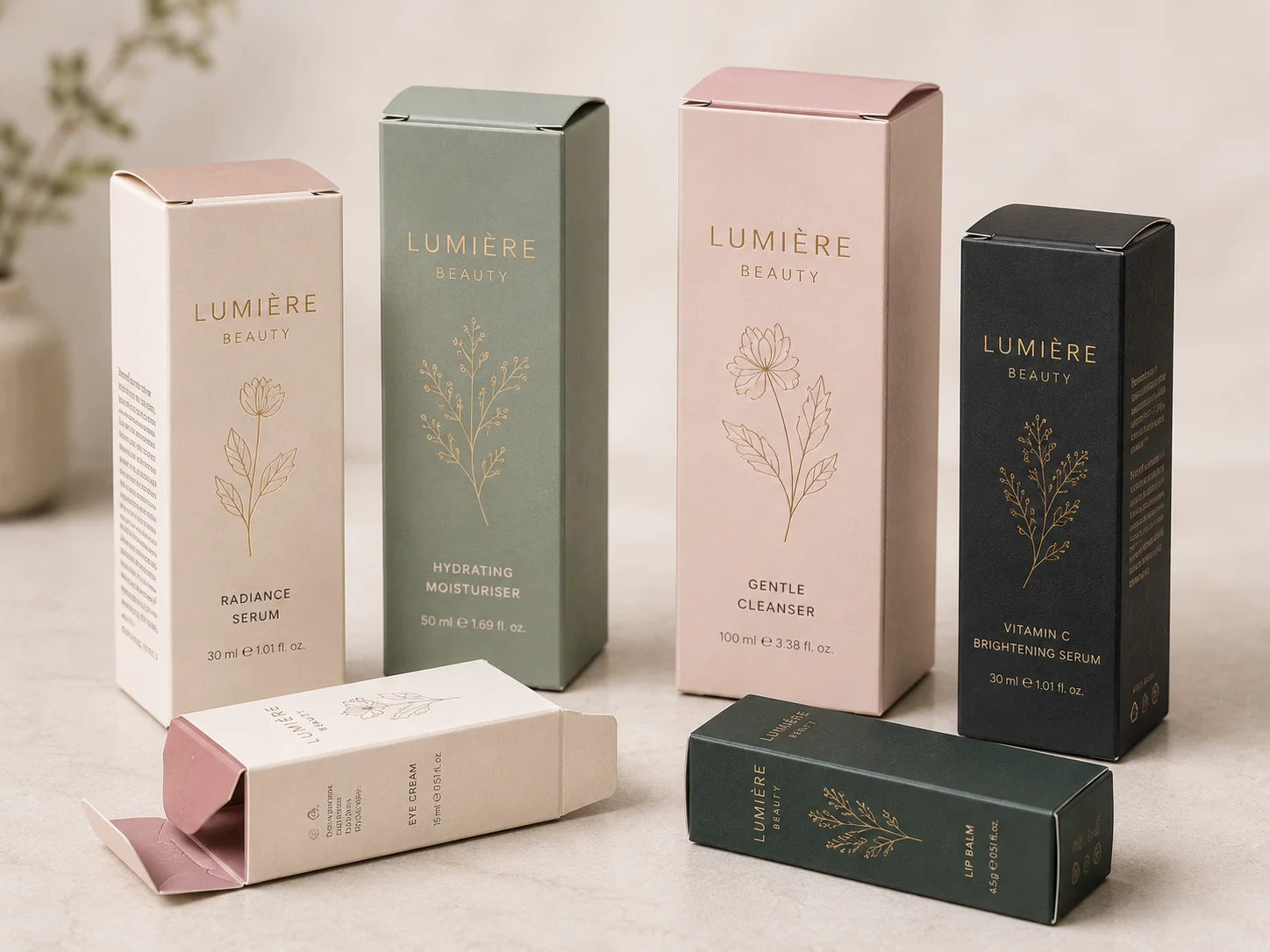
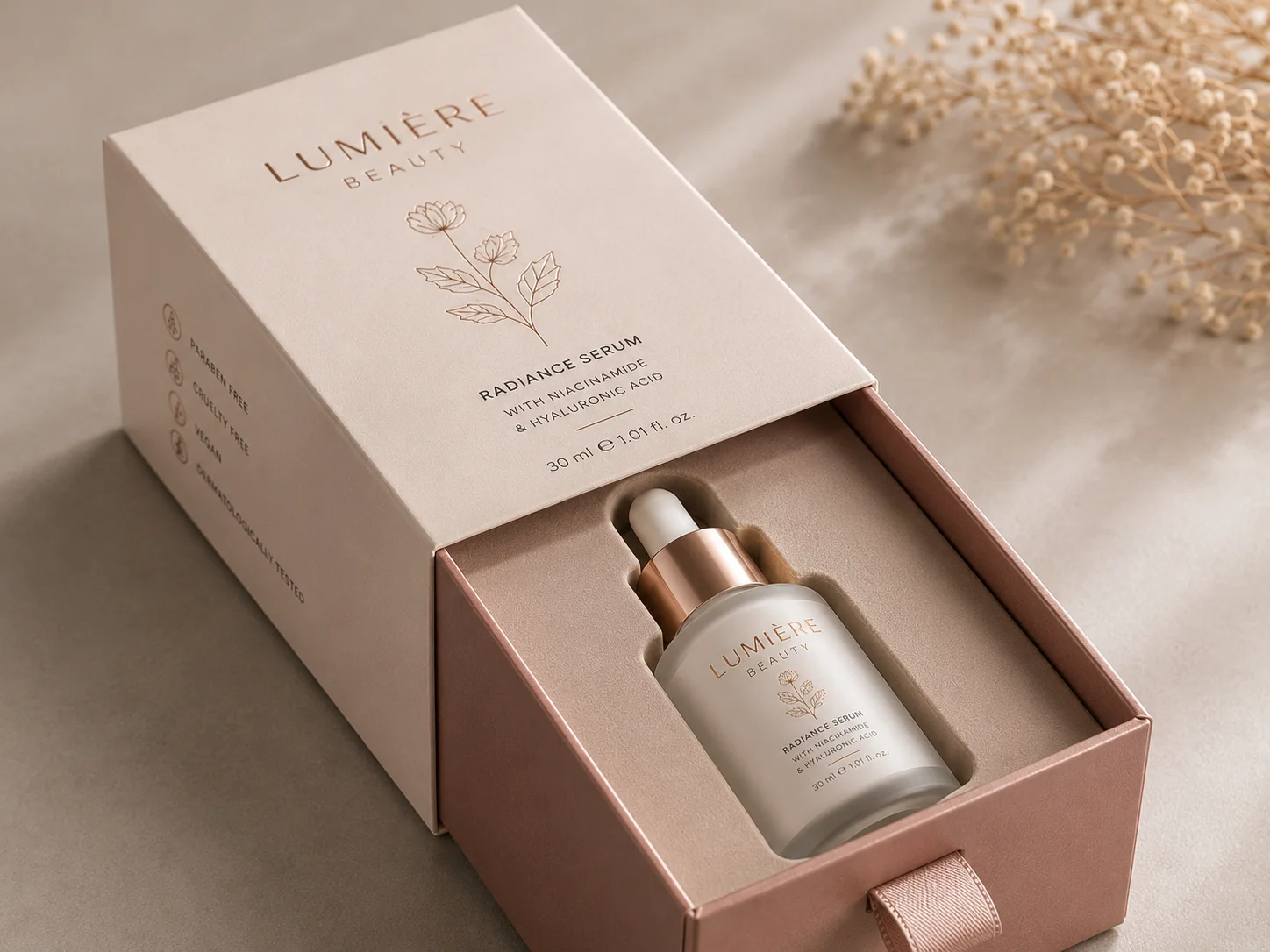
A printed sleeve around an inner tray or carton creates a deliberate reveal without a full rigid construction.
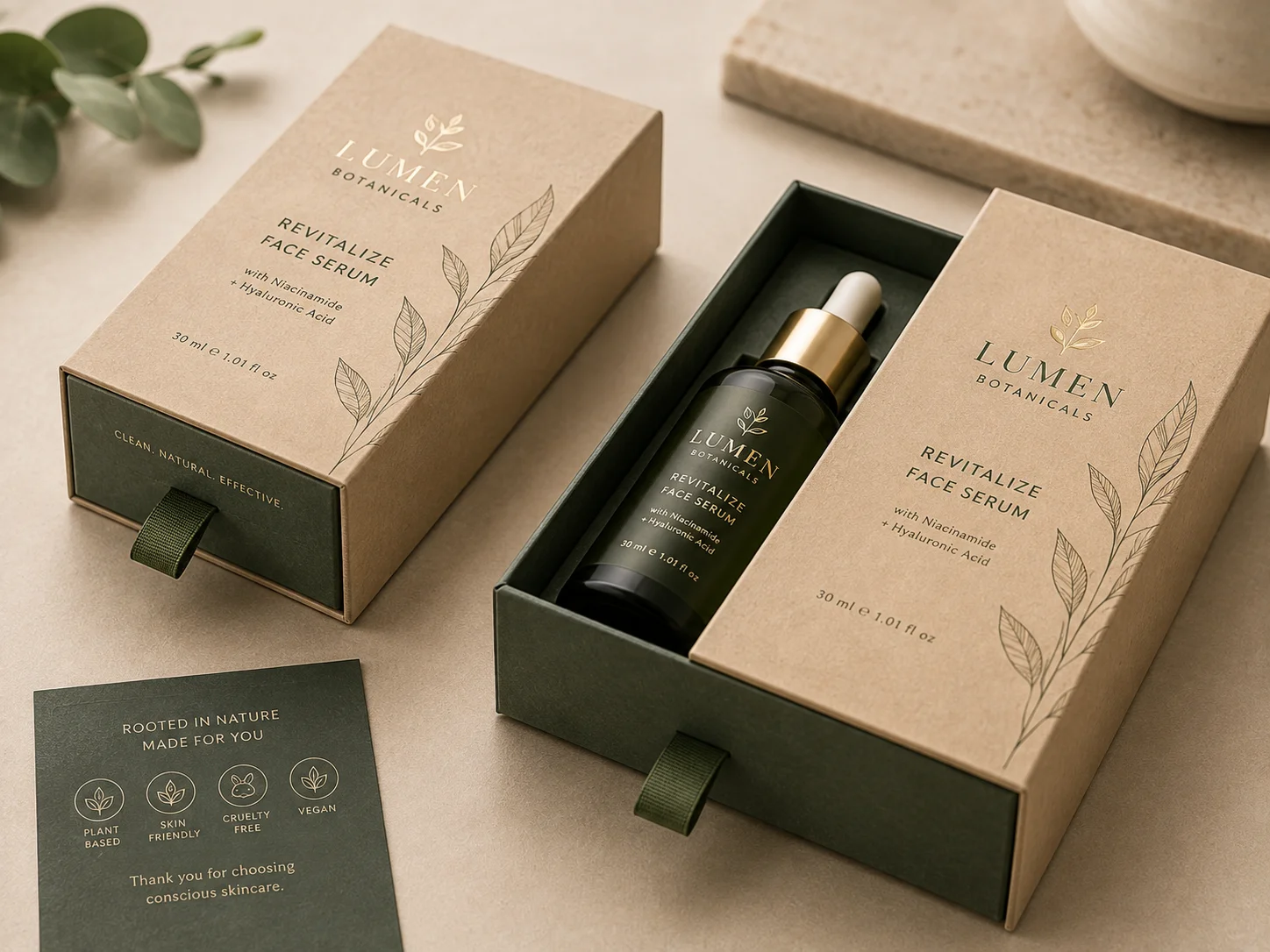
A sliding tray supports organised presentation for fitted cavities, kits and launch collections.
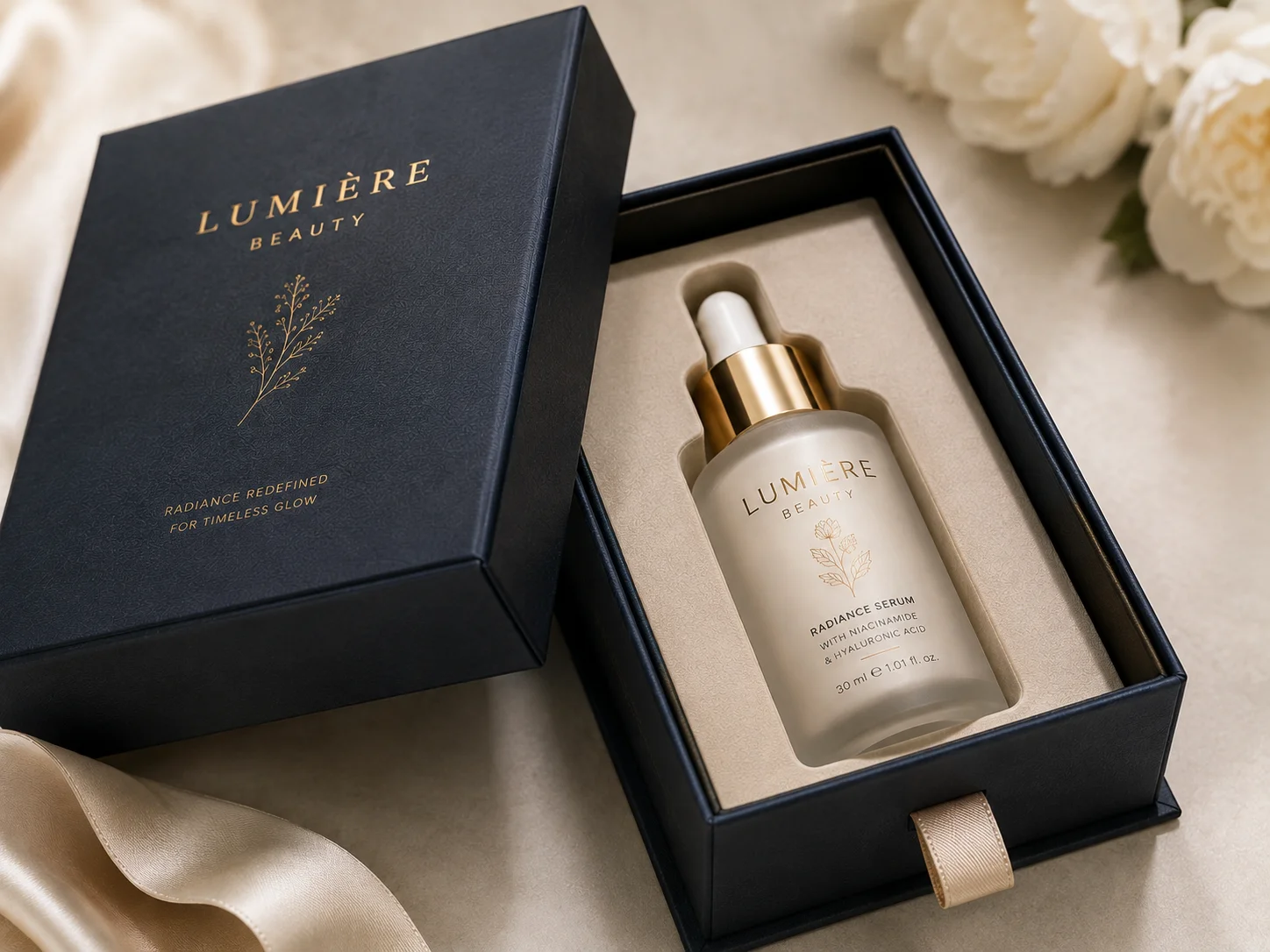
Firm wrapped structures for higher-value products where the packaging experience supports the product positioning.
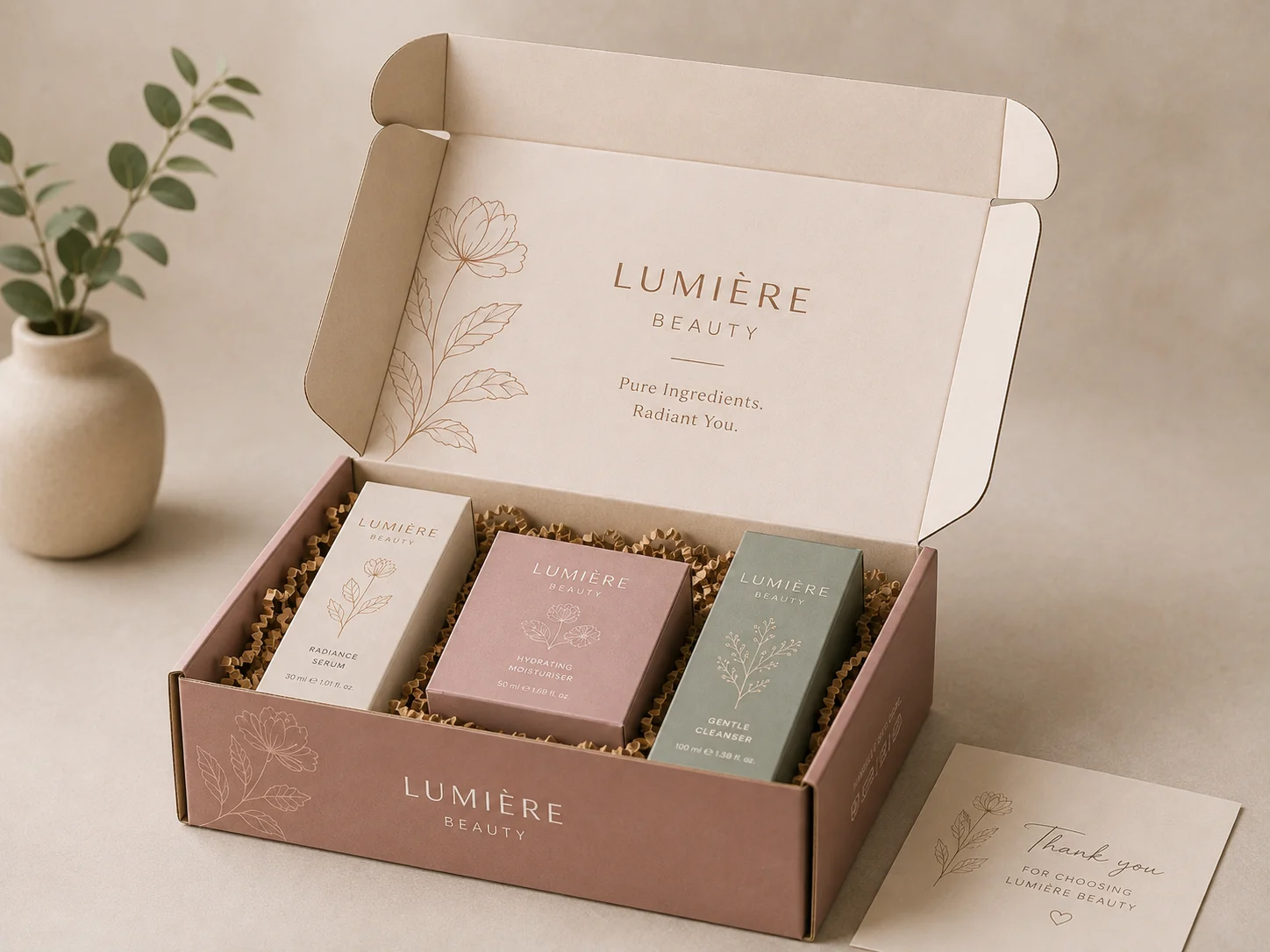
Protective corrugated formats for online orders, subscription packs and grouped cosmetic deliveries.
Beauty ranges often expand across container sizes, shades and product types. A controlled packaging system keeps the brand recognisable while allowing dimensions, inserts and structures to change where the product requires it.
Record the approved structure, board, dimensions, artwork and finish requirements for the first format.
Useful for: initial launchesUse consistent colour references, logo zones, typography and finish hierarchy across different carton sizes.
Useful for: multi-SKU rangesDo not force one box construction onto every product. Change support, board or format when container behaviour changes.
Useful for: range extensionsApproved dielines and artwork provide a clear reference for repeat production and controlled future changes.
Useful for: repeat supplyA serum carton, palette sleeve and fragrance rigid box do not need identical construction to feel related. Consistency comes from controlled brand rules applied to each suitable structure.
Real packaging work produced for customer brands.
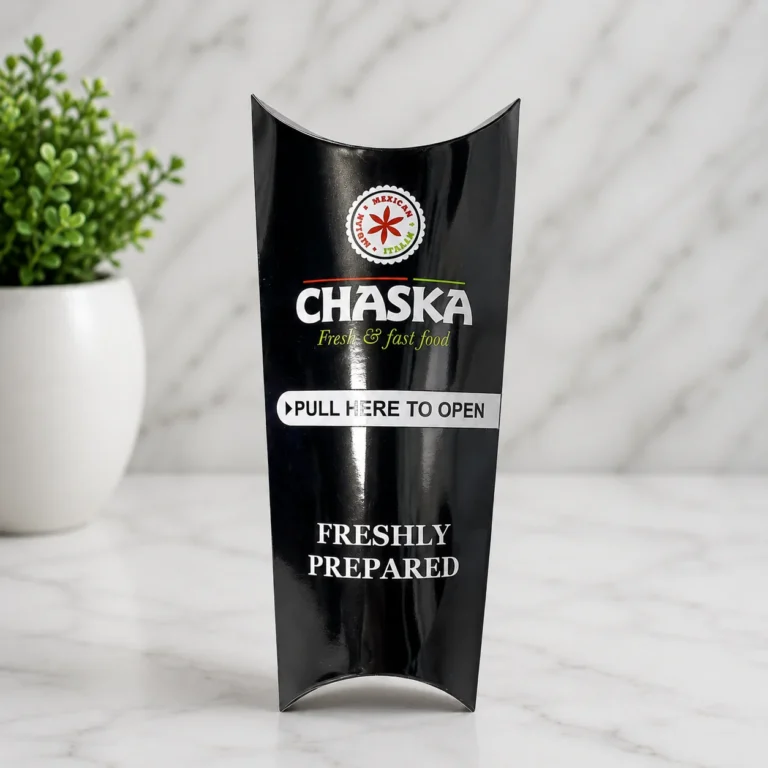
Healey Packaging produced custom pillow-style shawarma sleeves for CHASKA using 300gsm food-safe BSB card, full-colour CMYK...
View Case Study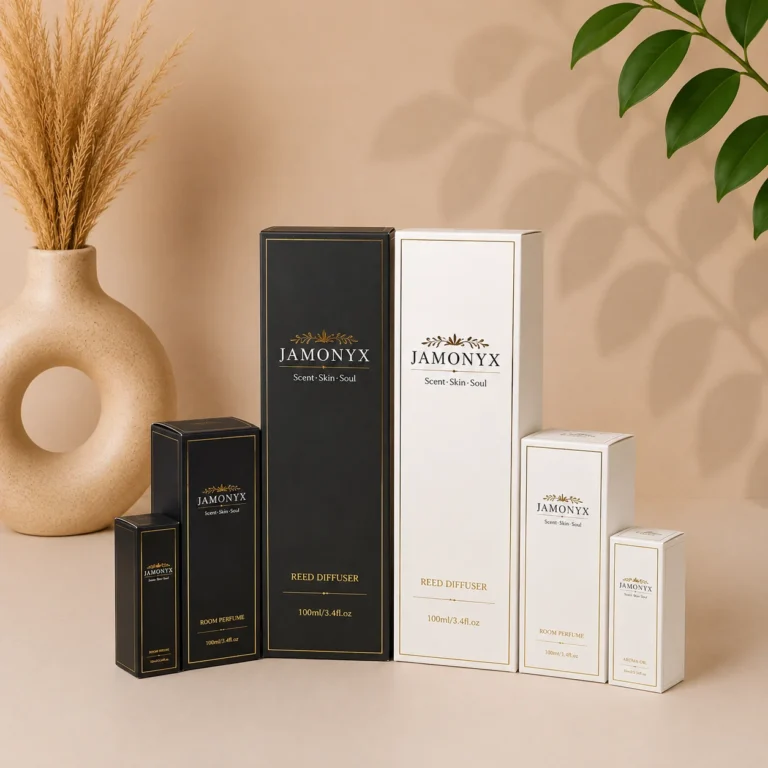
Healey Packaging produced 1,200 luxury reverse tuck boxes for JAMONYX across two black-and-white designs, three sizes,...
View Case Study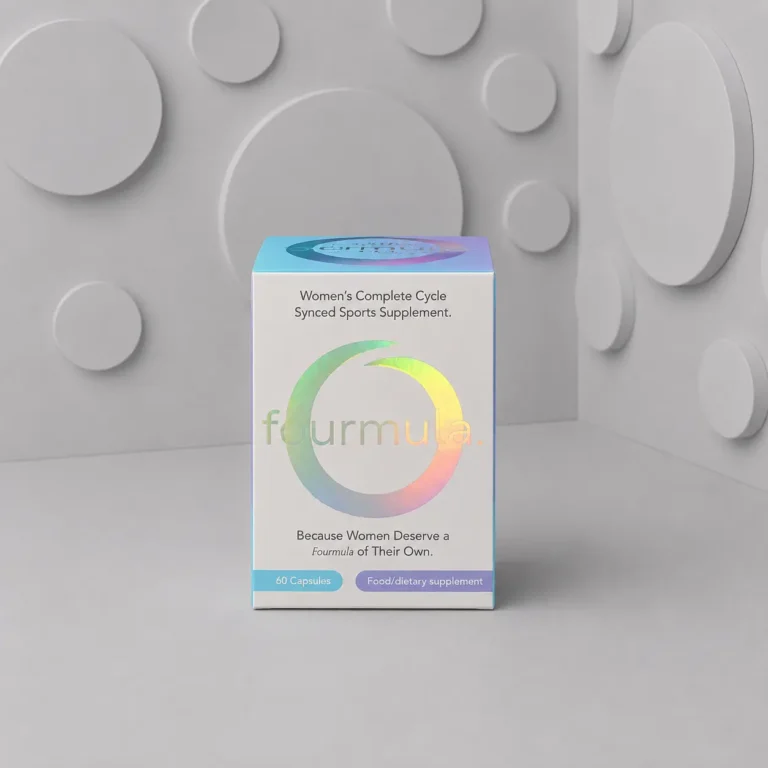
Fourmula started with 10 physical sample boxes for a compact supplement product, then moved toward a...
View Case Study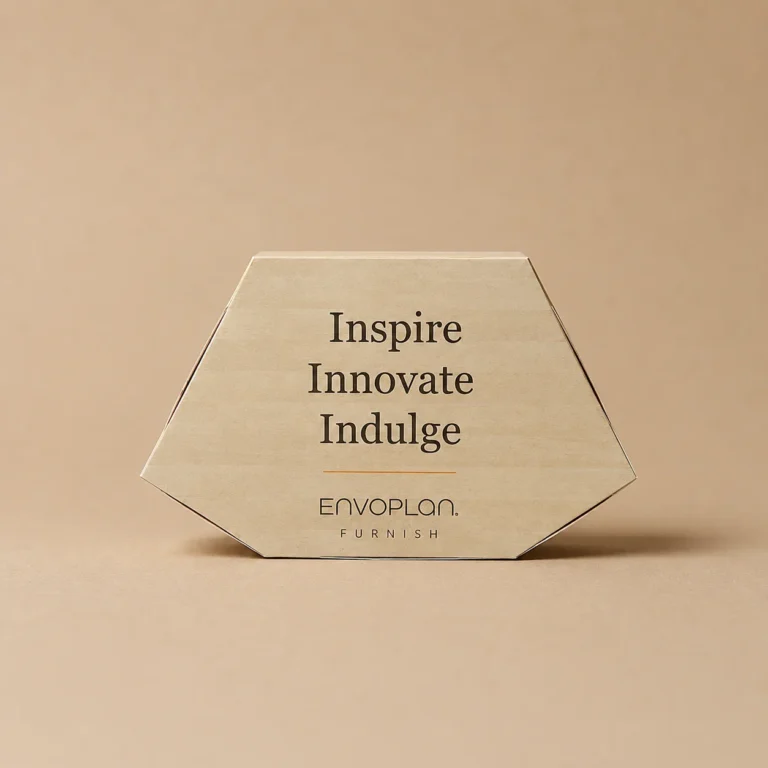
A bespoke shaped sweet box created for Envoplan Furnish events, produced across two 300-box runs with...
View Case StudyShare product size, quantity, use case and artwork status.
The right size, board and box style are reviewed.
A digital proof is prepared before production begins.
Boxes are printed, cut, folded and finished to specification.
Finished packaging is checked for structure and print quality.
Completed packaging is packed and delivered to your business.
From our customers
In our customers’ own words. Selected excerpts from company reviews on Trustpilot.
Review excerpt
Can’t recommend the company enough, especially Alex who worded with me patiently all the way.…
Review excerpt
Quick and thorough responses from Alex. Delivery was also fast, and within the lead time they gave, I would recommend.
Review excerpt
I had a great experience working with Healey Packaging, I love my new candle boxes.…
Review excerpt
We had a deadline they needed to meet for me and they did.…
Review excerpt
Had a very good experience with Healey. This is the second time we have used them…
Review excerpt
Great customer service, needed a quick turn around and assistance for custom packaging for my brand,…
Review excerpt
I looked through about 100 unhelpful suppliers, then found Healey Packaging.…
Review excerpt
Great quality product and excellent service from Alex.
Feedback relates to Healey Packaging and its service, rather than a rating of an individual product.
Custom cosmetic boxes can be designed for skincare, makeup, perfumes, haircare and beauty gift sets. Common applications include serums, creams, lip glosses, foundations and palettes, with box dimensions and structures tailored to each product.
Common materials include folding boxboard, kraft board, rigid board and corrugated cardboard. Folding boxboard suits retail cartons, rigid board works well for premium gift sets, and corrugated board provides additional protection during shipping.
Yes. We produce bespoke cosmetic boxes sized around bottles, jars, tubes and compacts, including caps, pumps and applicators. Suitable internal clearance helps products fit securely while keeping packing and removal practical.
Yes. Custom inserts made from paperboard, corrugated board or other suitable materials can hold products in position and reduce movement. They are particularly useful for glass bottles, fragile cosmetics and multi-product gift sets.
Tuck-end cartons suit individual retail cosmetics, while sleeves and drawer boxes offer different presentation styles. Rigid boxes work well for premium gift sets, and corrugated mailers provide additional protection for ecommerce orders.
Cosmetic boxes can feature full-colour printing, logos and brand artwork. Available finishes may include matt or gloss lamination, foil stamping, embossing, debossing and Spot UV, depending on the selected material and production method.
Yes. Cosmetic cartons can display ingredients, usage instructions, barcodes and other product details. Brands should confirm applicable UK cosmetic labelling requirements and allow sufficient space for clear, legible printing.
Yes, provided the packaging is designed for the distribution requirements. Fragile cosmetics and glass containers may need protective inserts, cushioning and a corrugated outer box to reduce movement and damage during shipping.
No. Healey Packaging offers no minimum order requirement for custom cosmetic boxes. You can request packaging for product launches, smaller collections or repeat orders, with pricing based on your specifications and quantity.
Standard production typically takes 7–10 working days after artwork approval. Complex structures, specialist materials or finishes may affect the schedule. UK-wide delivery is available, with shipping time calculated separately from production.
Share your product, size, material and quantity requirements. Our team will help you choose the right structure, print and finish.
Tell us your product, target look, and how you ship. We'll recommend the right board, print, and finish for performance.
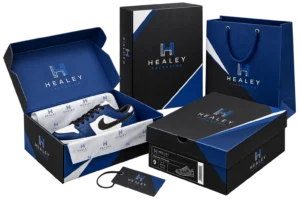 Apparel Packaging
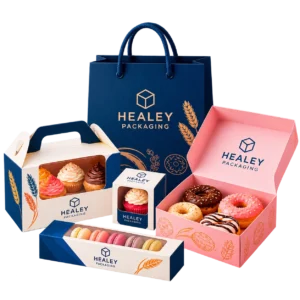 Bakery Packaging Boxes
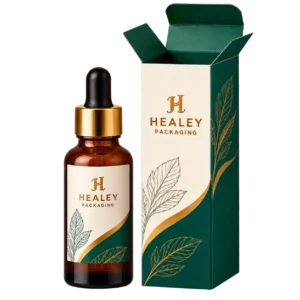 Bottle Packaging Boxes
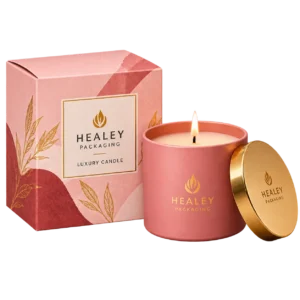 Candle Boxes
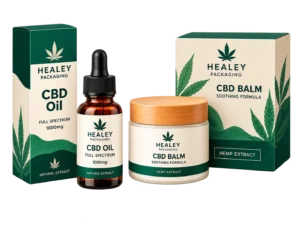 CBD Packaging Boxes
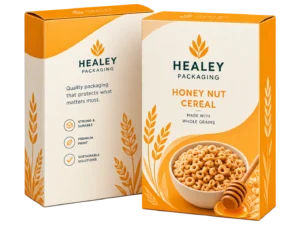 Cereal Packaging Boxes