
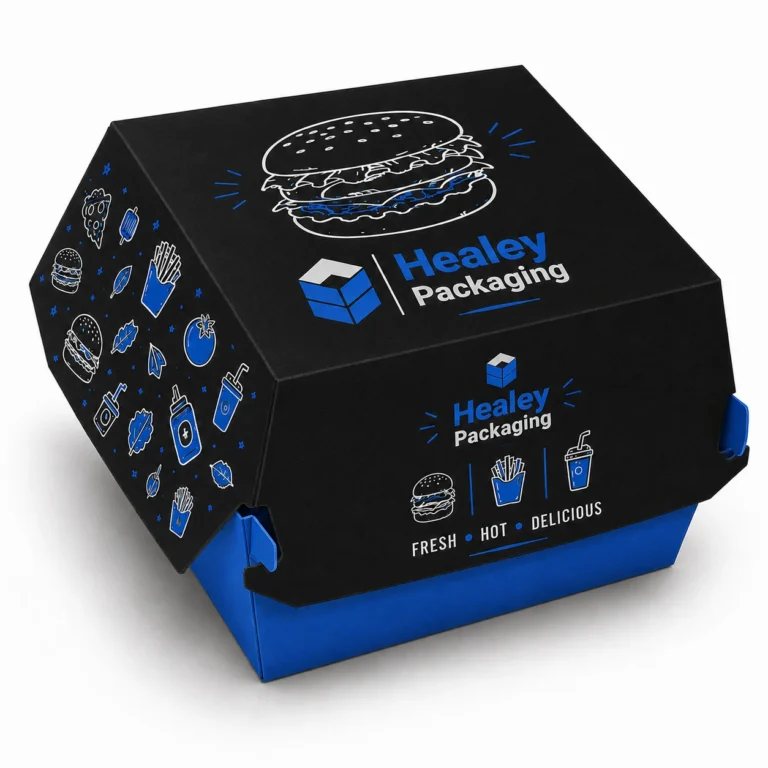
 Popular
FOOD BOXES Packaging Solutions
Custom Food Packaging Boxes for UK Food Brands
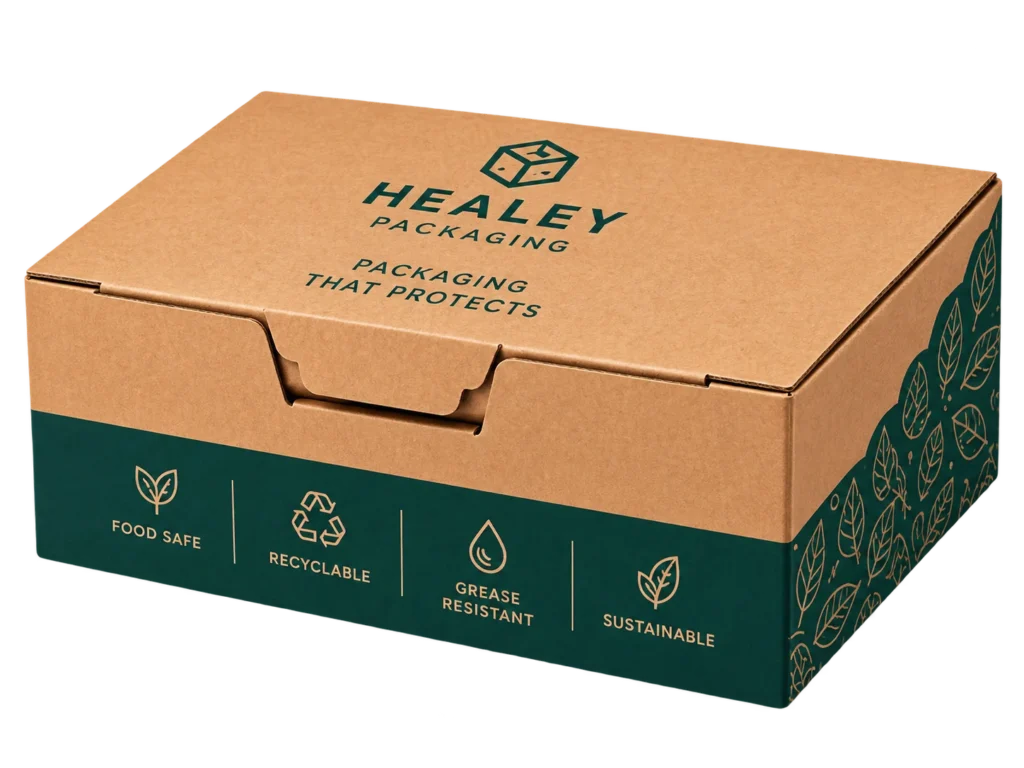
Custom food packaging designed for takeaway, retail, bakery and food service applications. We produce boxes around your product, portion size and packing requirements, with options for food-safe materials, grease-resistant barriers, custom printing and recyclable board.
Protects ProductsSecure structure for packing and delivery
SustainableRecyclable and responsible options
High Quality PrintCMYK, Pantone and premium finishes
Strong & ReliableDurable materials for safe delivery
Healey Packaging company reviews on Trustpilot
23+
Packaging
Solutions
Solutions
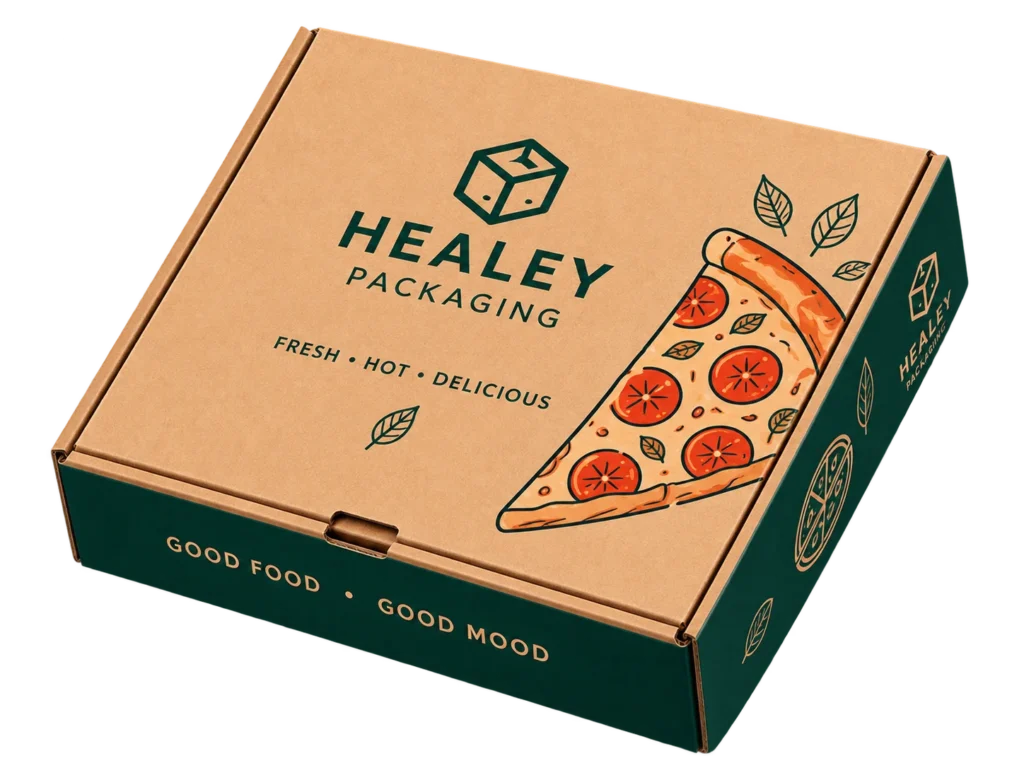
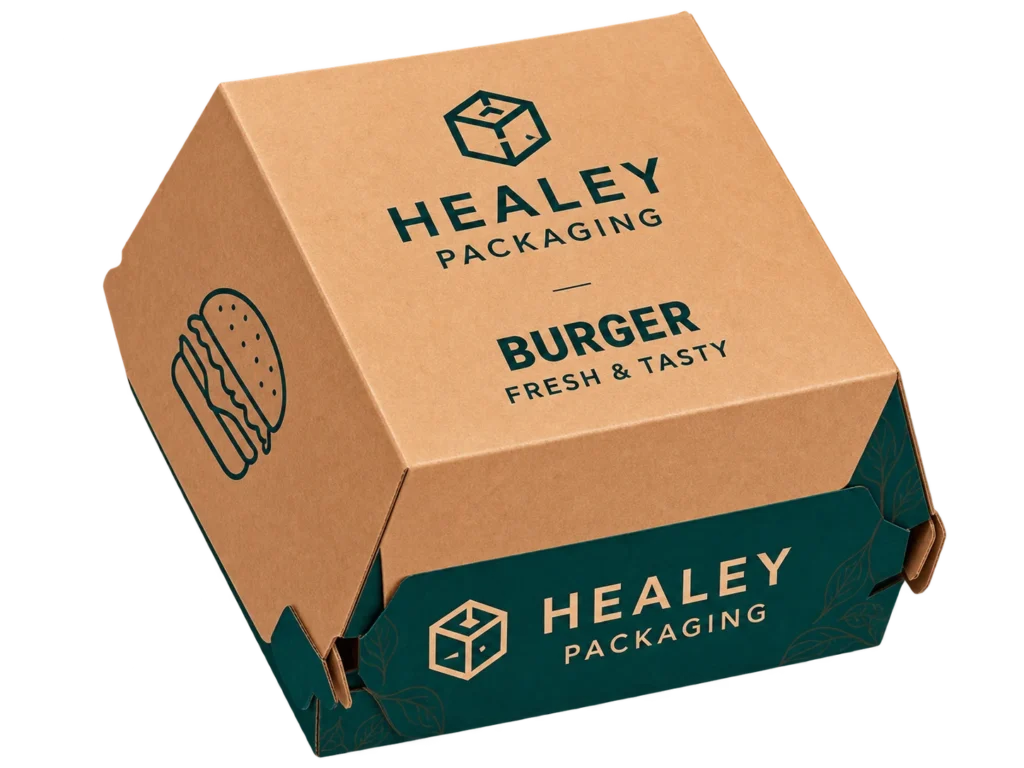
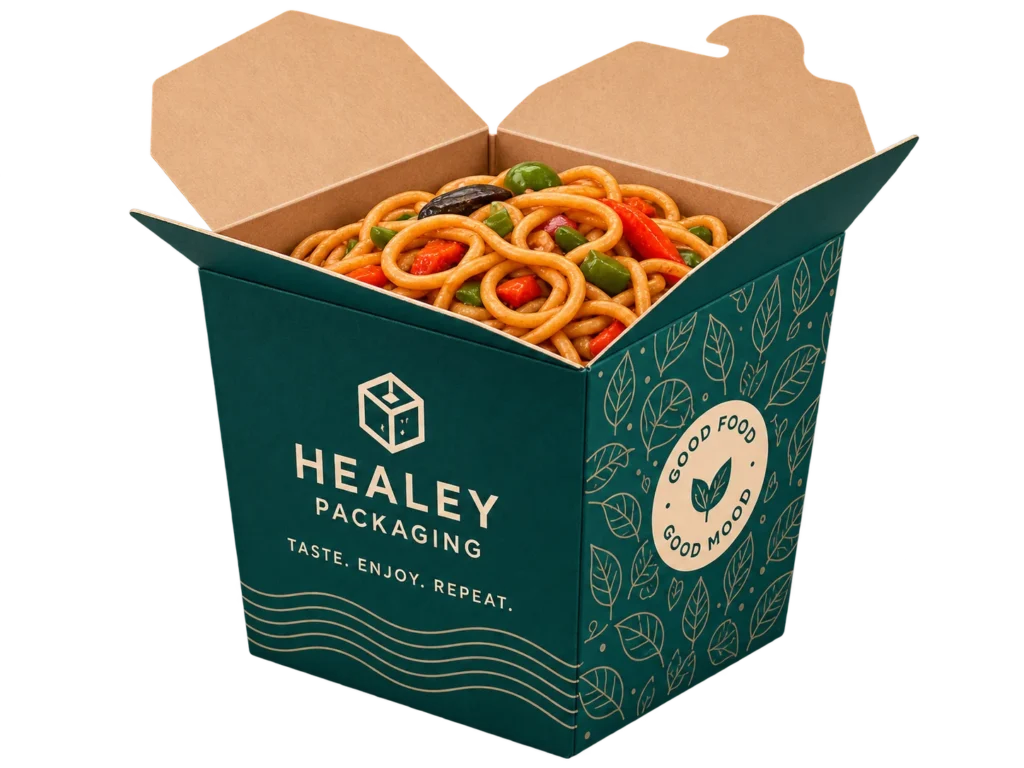
Not sure which packaging is right for you?
Our team can help match the structure to your product, brand and budget.
Speak to an Expert
Custom DimensionsMade to fit your product precisely.
No Minimum OrderNo minimum order quantity.
Printed to Your BrandCMYK, Pantone and specialist finishes.
Fast Turnaround7-10 working days after artwork approval.
Food Packaging Range
Explore Food Packaging by Product Type
Browse food boxes for takeaway, bakery, retail, hot food, cold food and delivery applications.
Popular
 Best Seller
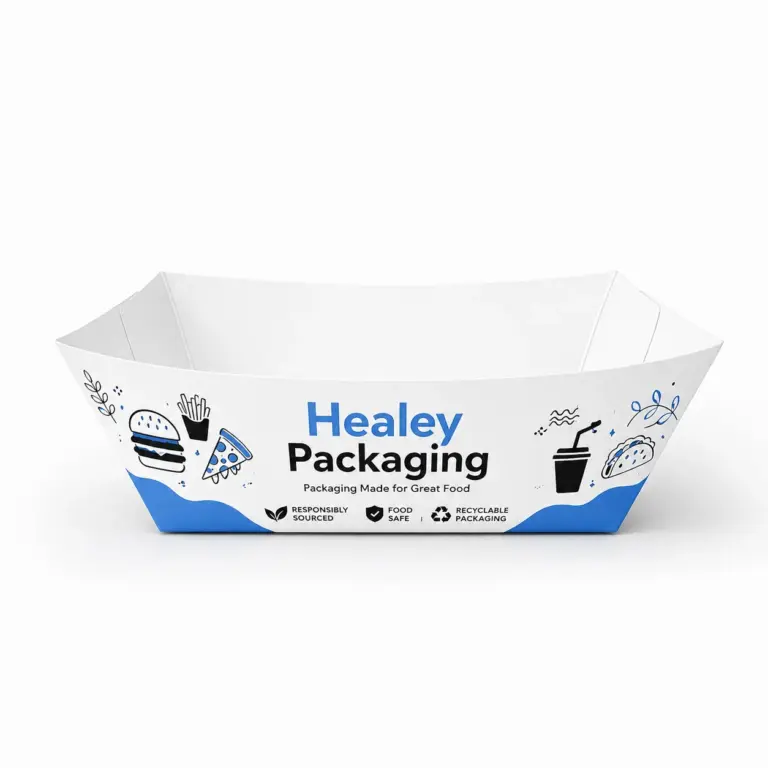
Cardboard Food Trays
Cardboard food trays are made for quick serving. Fries, pastries, burgers, snacks,...
View Cardboard Food Trays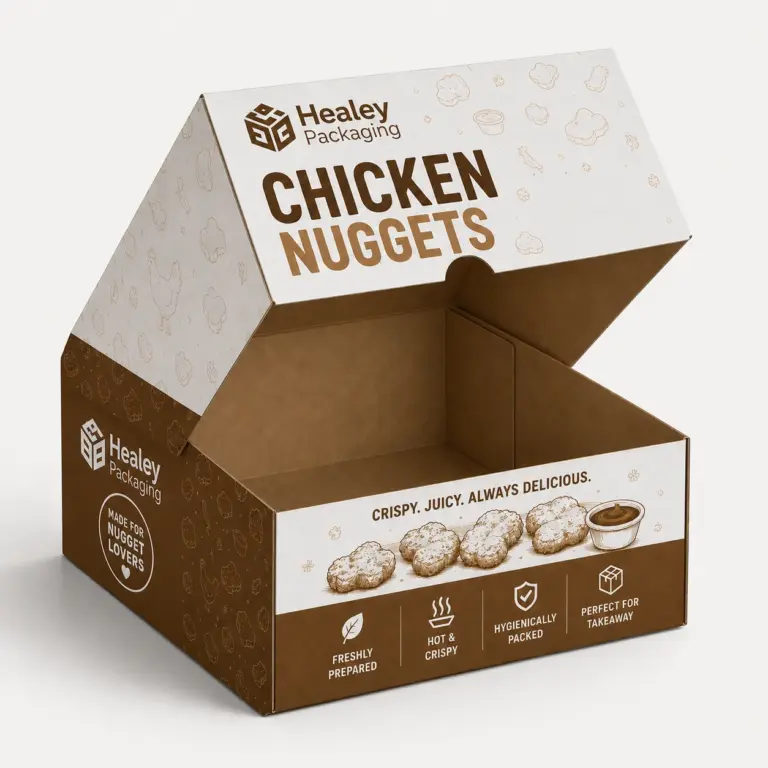 Most Ordered
Chicken Nuggets Boxes
A chicken nugget box is usually thrown away a few minutes after...
View Chicken Nuggets Boxes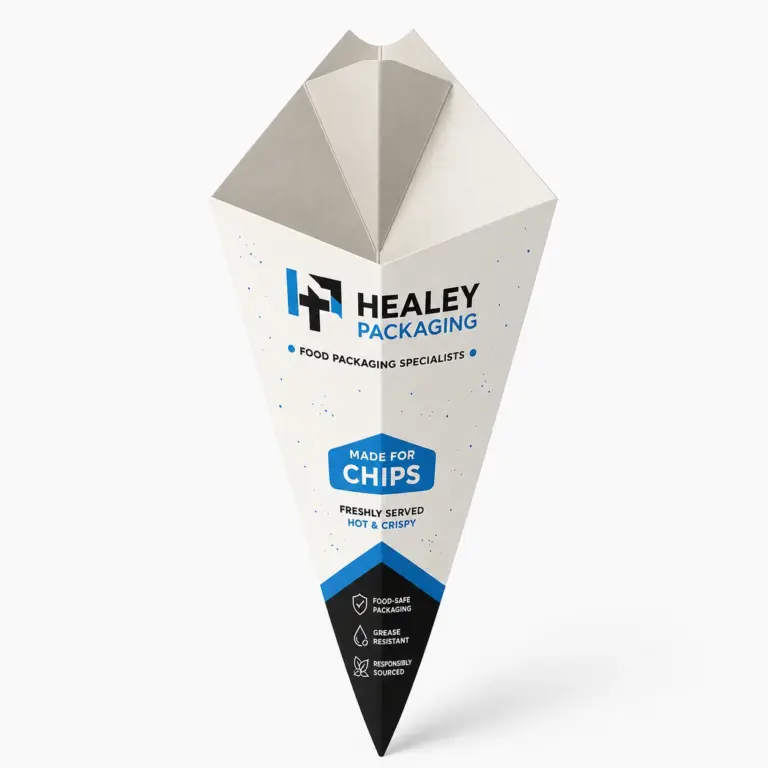 Custom
 Premium
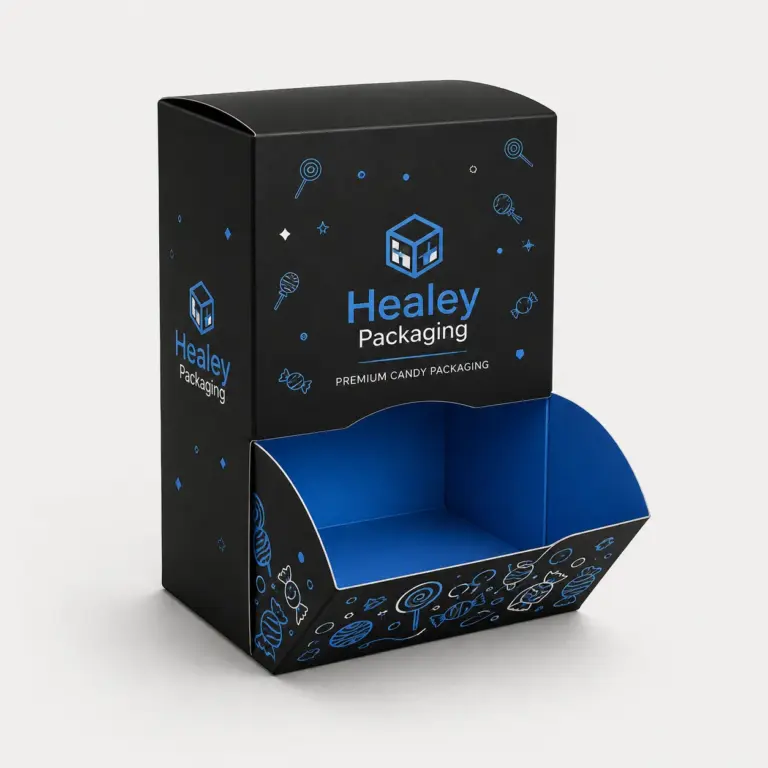
Custom Candy Boxes
When it comes to candy, presentation is half the joy. Whether you’re...
View Custom Candy Boxes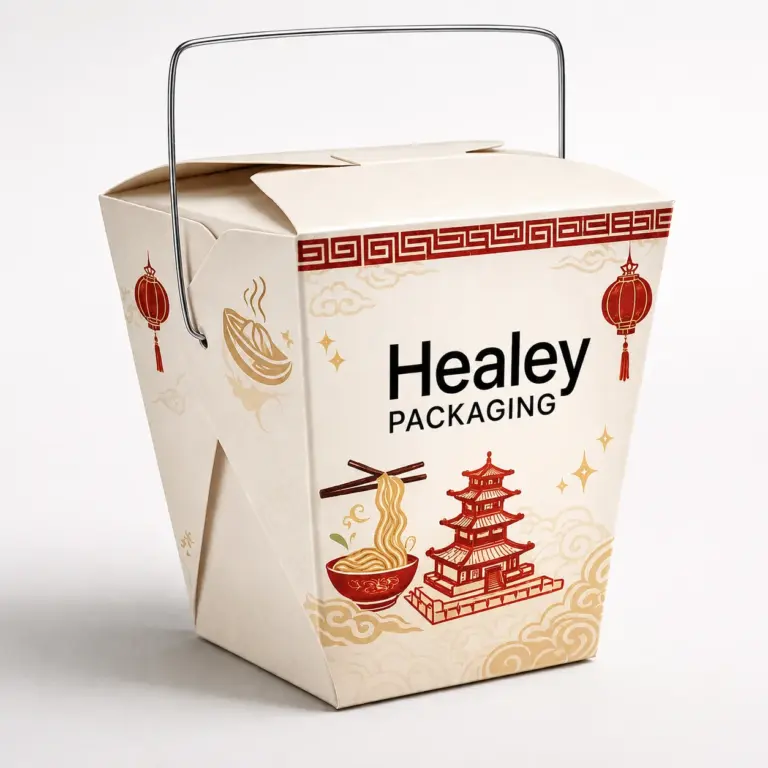
Custom Chinese Food Boxes
From stir-fry and noodles to rice dishes and fusion meals, our custom...
View Custom Chinese Food Boxes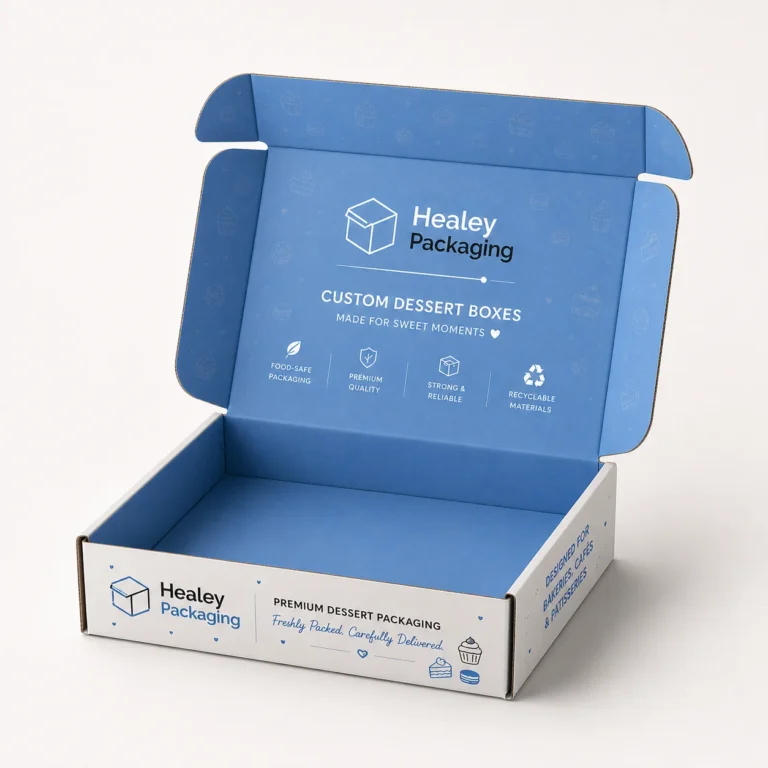
Custom Dessert Boxes
Dessert boxes usually become an issue after packing has already happened. Lids...
View Custom Dessert Boxes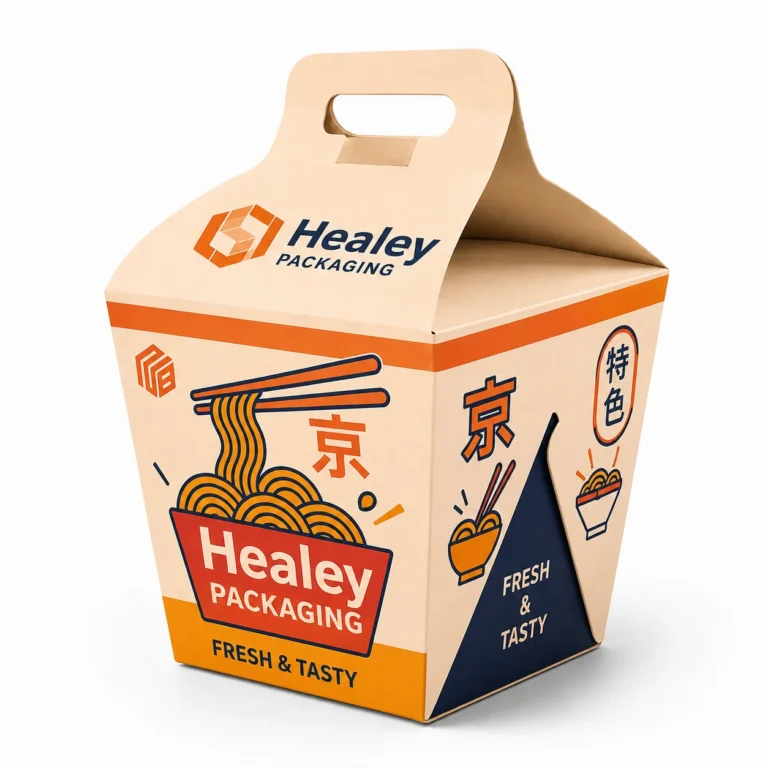
Custom Noodle Boxes
Hot noodles are tricky to package — too much steam and the...
View Custom Noodle Boxes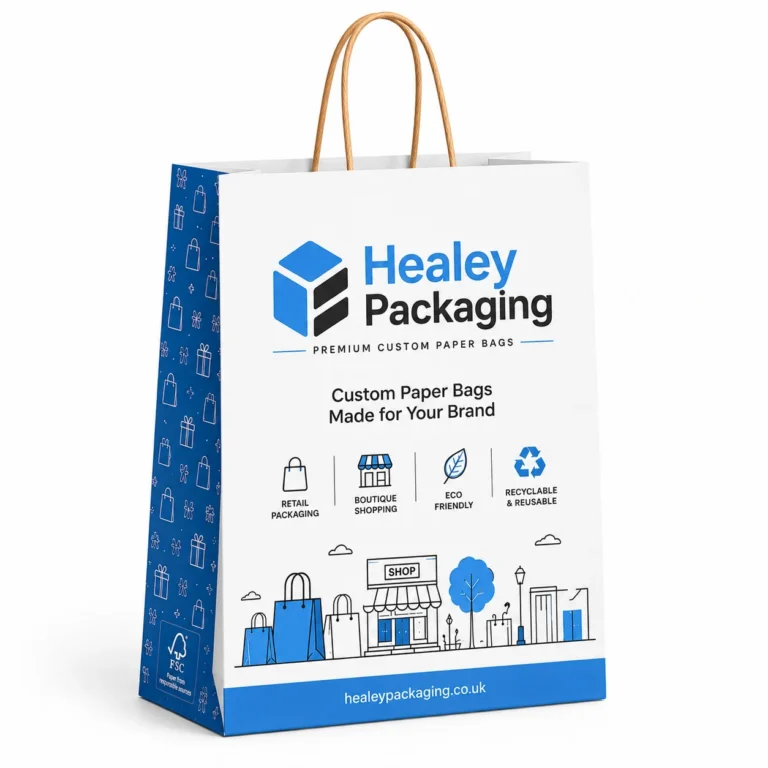
Custom Paper Bags
A bag might seem small, but it’s the first thing your customer...
View Custom Paper Bags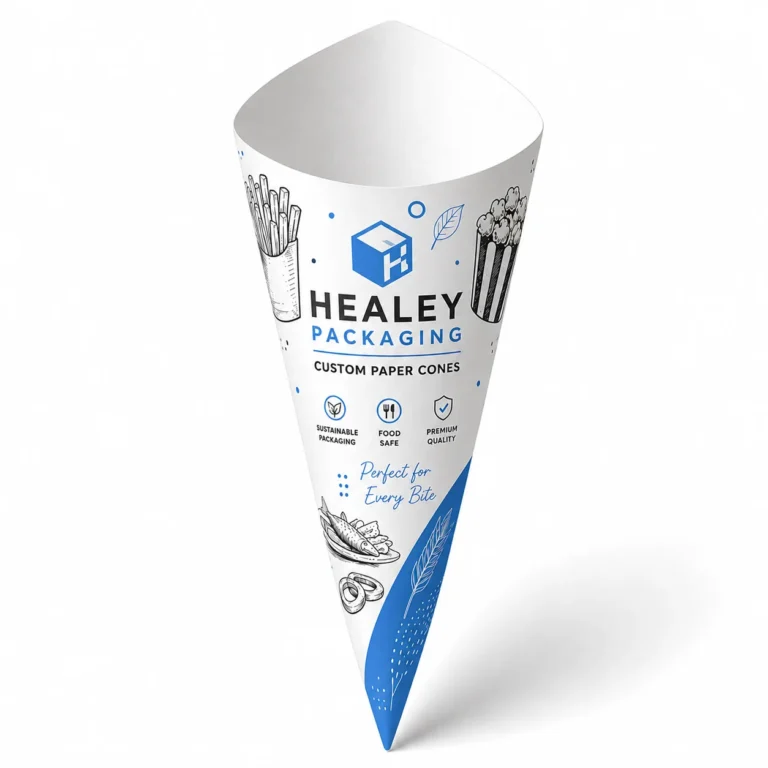
Custom Paper Cones
Paper cones are often treated as simple disposables, but that is where...
View Custom Paper Cones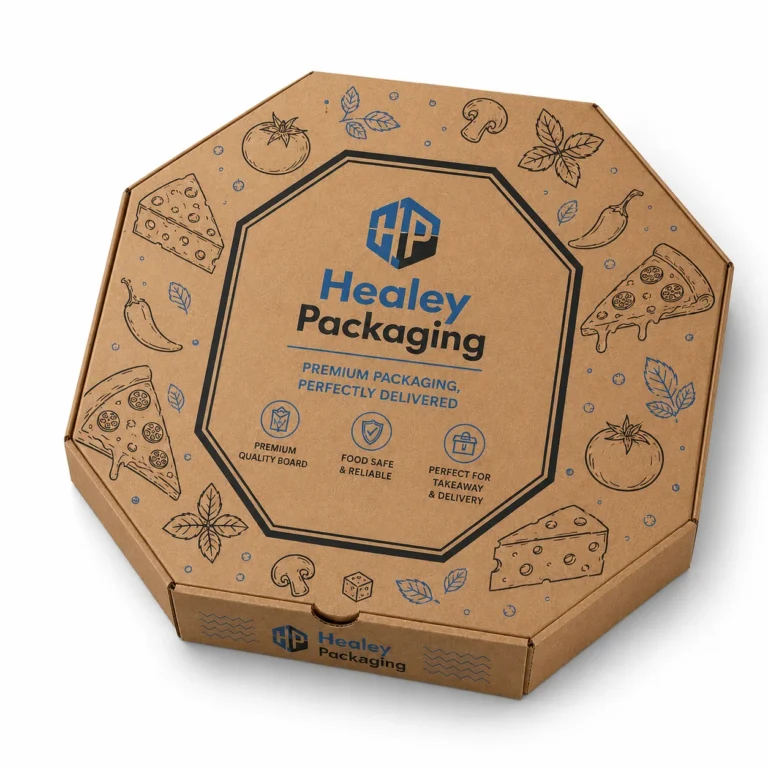
Custom Pizza Boxes
Whether it’s a single slice or a 16-inch deep-dish, your pizza deserves...
View Custom Pizza Boxes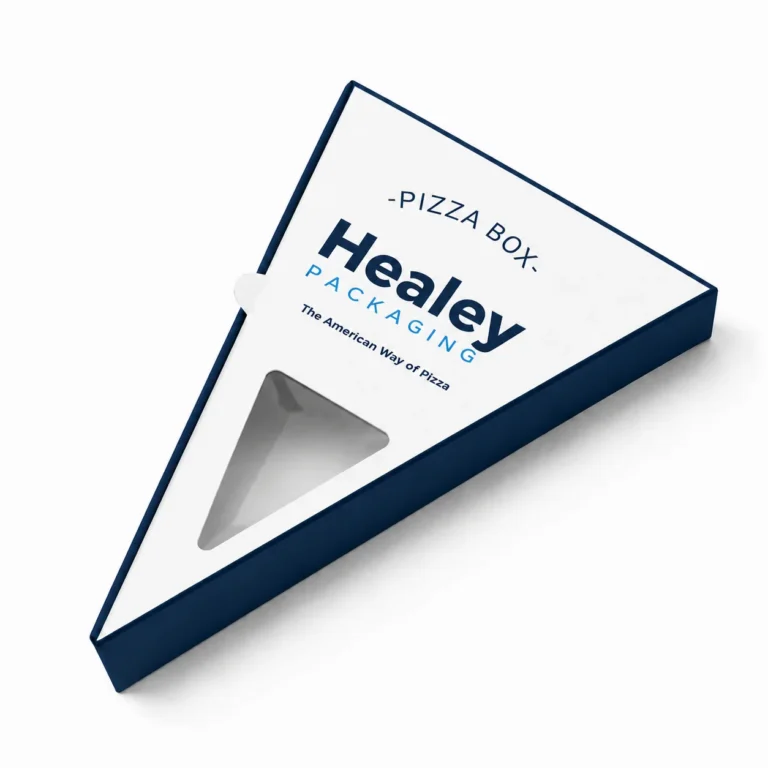
Custom Pizza Slice Boxes
Create a lasting impression with Healey Packaging’s custom pizza slice boxes –...
View Custom Pizza Slice Boxes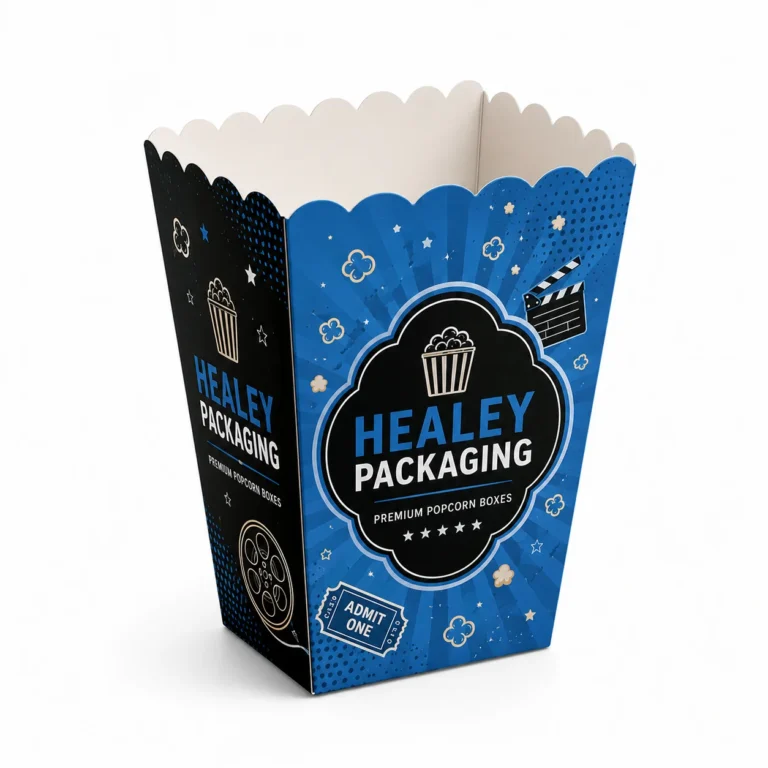
Custom Popcorn Boxes
Whether it’s the smell of fresh popcorn at a cinema, the excitement...
View Custom Popcorn Boxes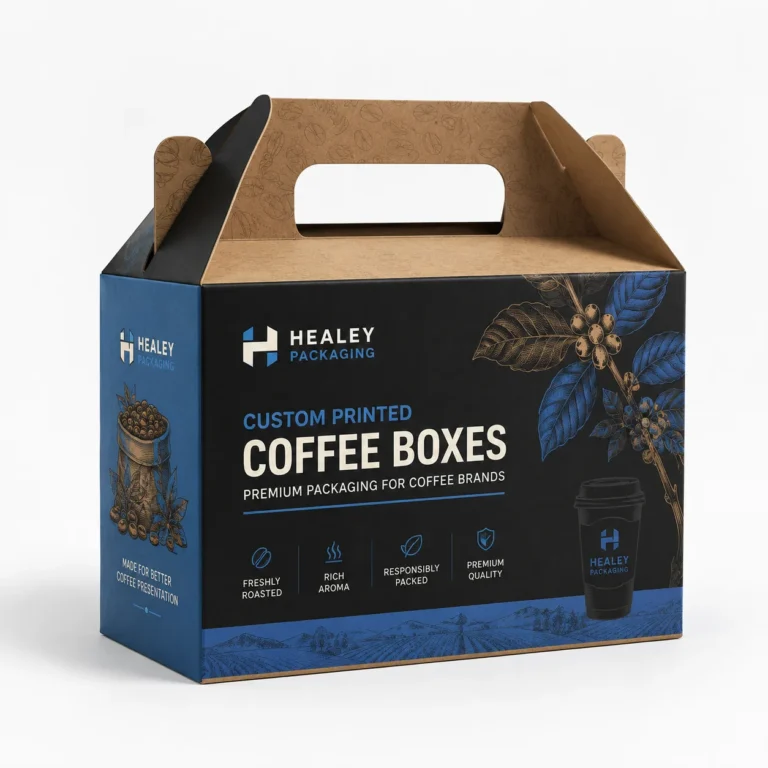
Custom Printed Coffee Boxes
Still packing your coffee in plain old boxes? That first impression matters....
View Custom Printed Coffee Boxes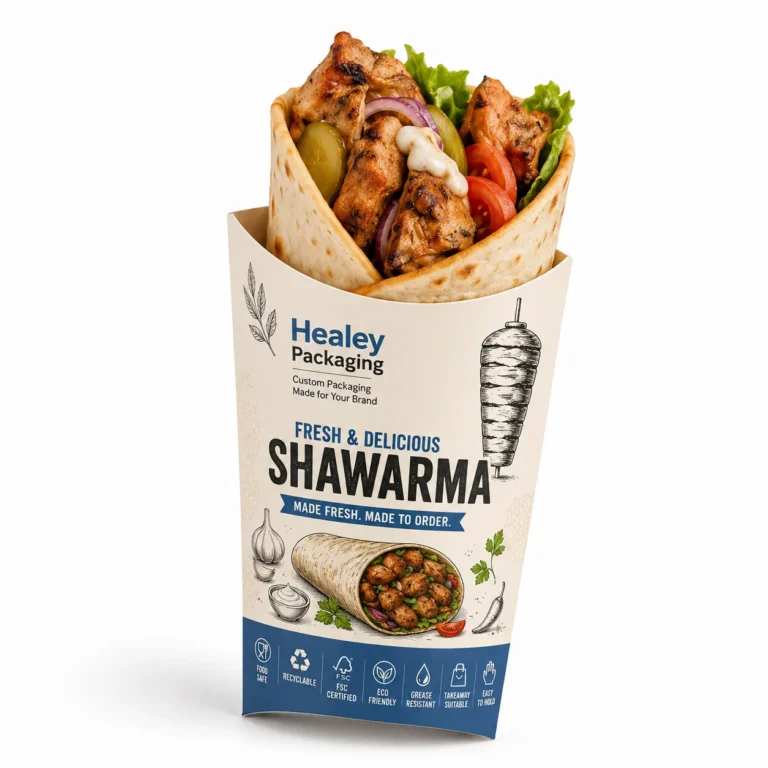
Custom Shawarma Packaging
We know that a great shawarma isn’t just about what’s inside —...
View Custom Shawarma Packaging
Custom Takeaway Boxes
Takeaway packaging has to do more than just carry food — it...
View Custom Takeaway Boxes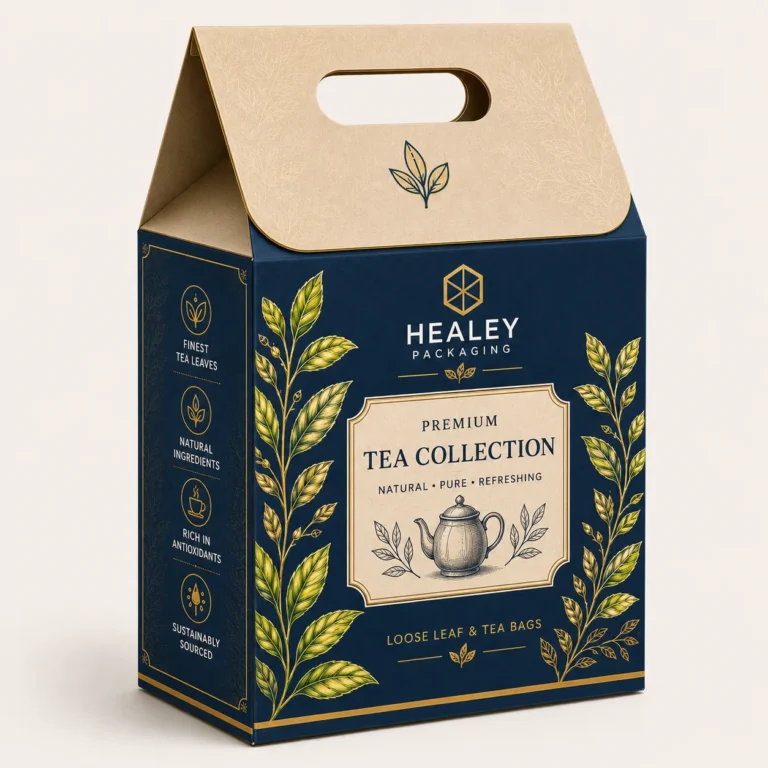
Custom Tea Boxes
Your tea deserves more than a stock box. We help brands create...
View Custom Tea Boxes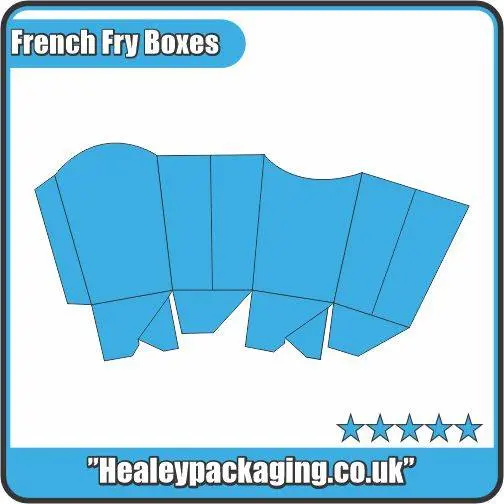
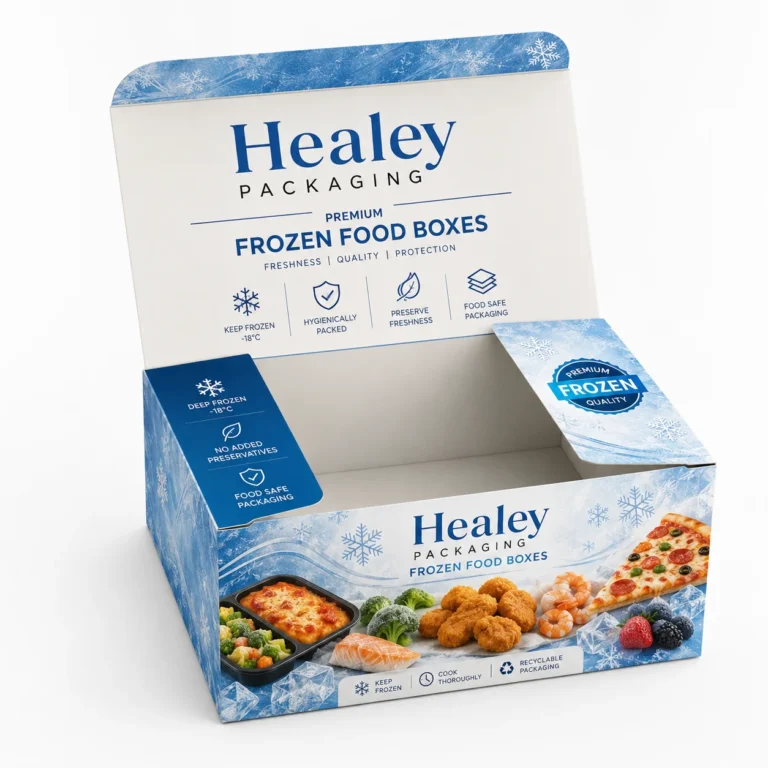
Frozen Food Boxes
A frozen product can spend weeks in storage before anyone buys it....
View Frozen Food Boxes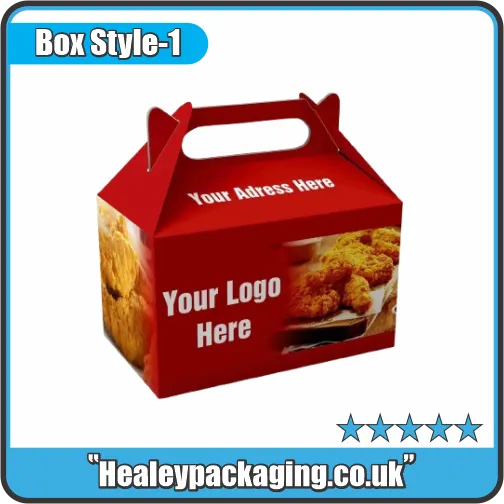
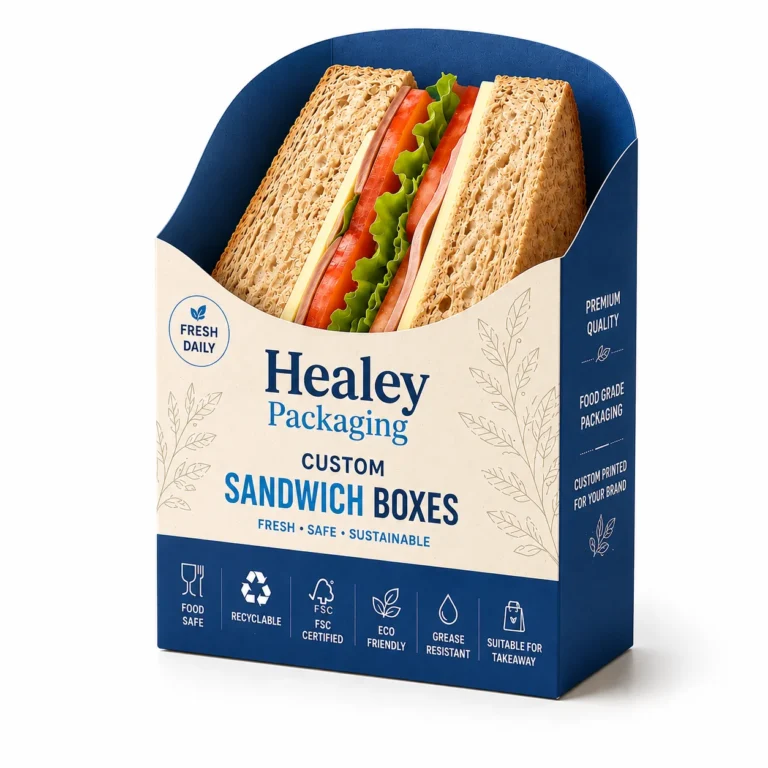
Sandwich Boxes
Sandwich packaging has a simple job on paper, keep the food together....
View Sandwich Boxes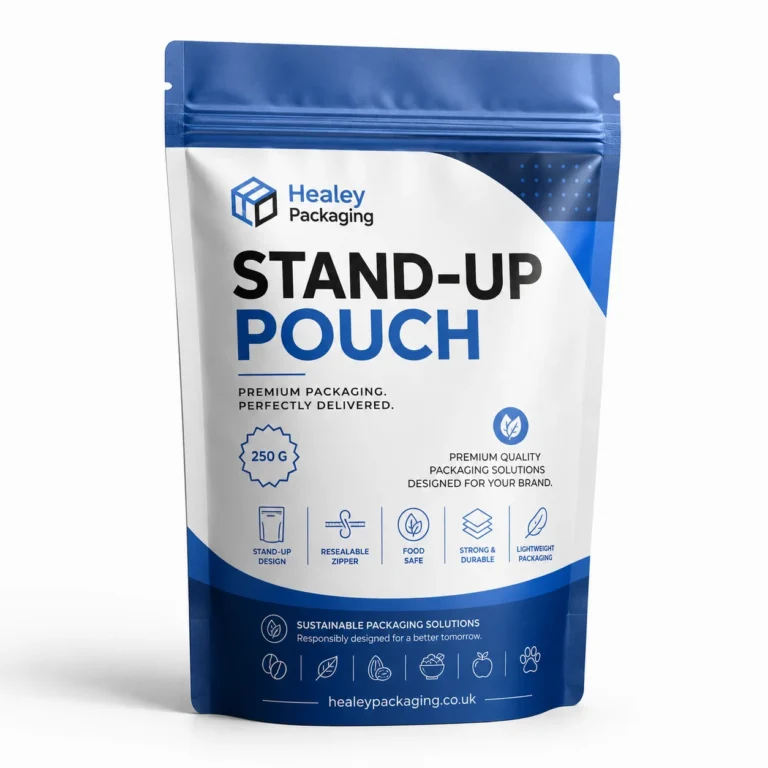
Stand Up Pouches
A pouch might look simple from the outside, but a lot depends...
View Stand Up Pouches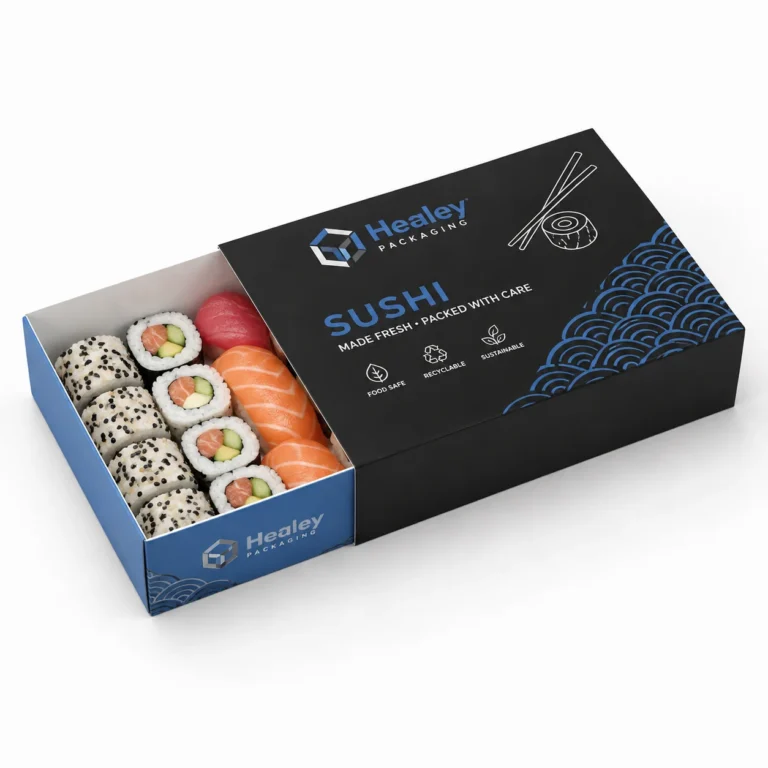
Sushi Boxes
Sushi packaging has to deal with moisture, movement and presentation at the...
View Sushi Boxes
Food Packaging by Application
Food Packaging Built Around the Product and Service Route
Hot meals, chilled products, frozen foods and retail lines do not place the same demands on a box. The structure, board and surface treatment should be specified around the food, packing method, storage conditions and journey to the customer.
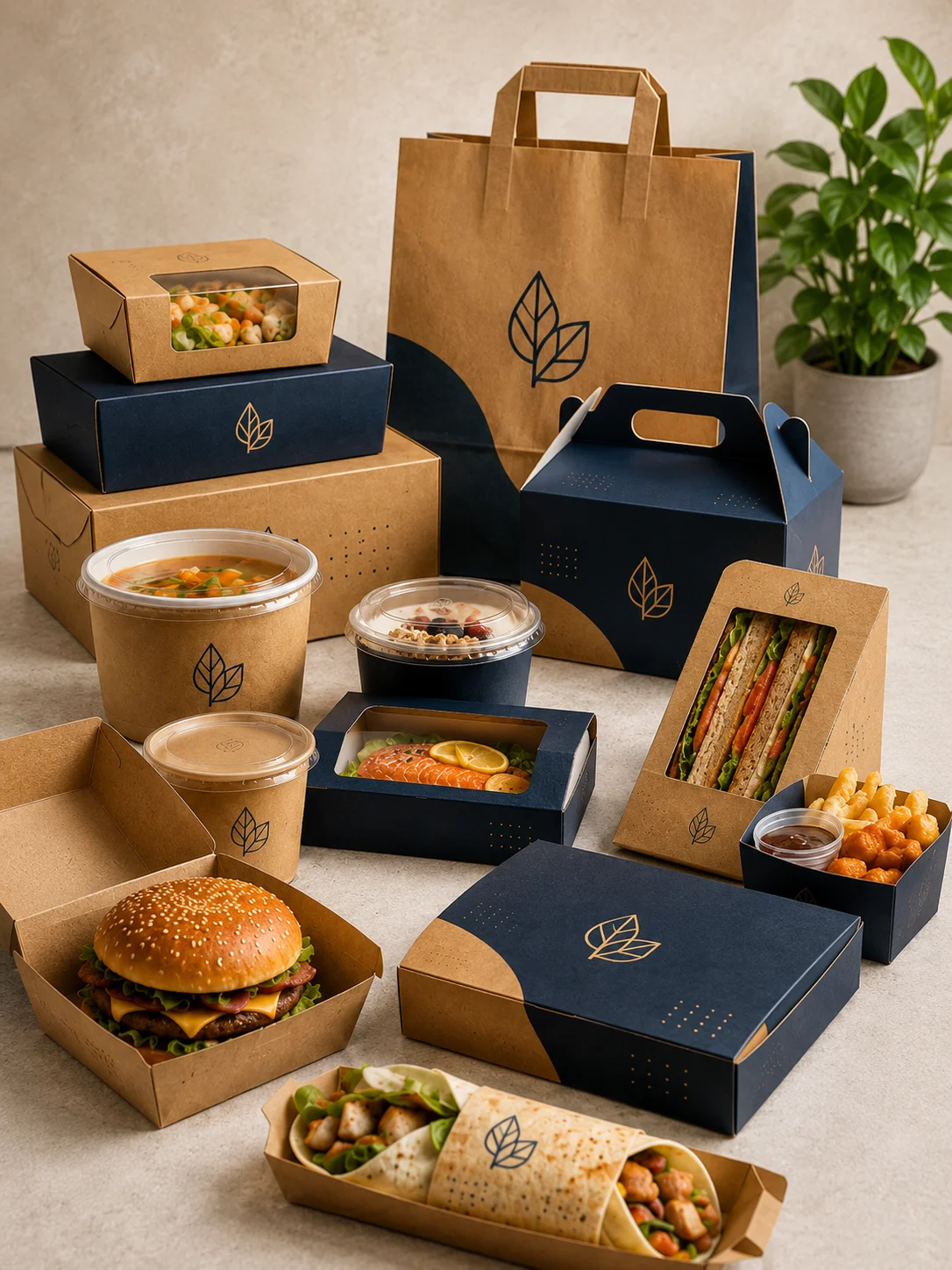
Specify the pack around the product rather than forcing every food into the same construction.
Hot Food
Burgers, pizza, noodles and freshly prepared meals may need heat tolerance, grease control and managed ventilation.
Chilled Food
Sushi, sandwiches, salads and prepared foods need packaging that accounts for moisture, refrigeration and display.
Frozen Food
Frozen retail products require board and print specifications that remain suitable through low-temperature storage.
Takeaway & Delivery
Closures, stacking strength and internal fit become more important when food travels between kitchen and customer.
Retail Food Products
Retail cartons need enough printable area for branding and product information while retaining the required structure.
Catering & Food Service
High-volume operations benefit from straightforward assembly, repeatable sizing and structures that suit routine handling.
Technical Specification
How Food Conditions Change the Packaging Specification
Board grade alone does not determine performance. Heat, oil, moisture, cold storage and delivery conditions can change the material, barrier, ventilation, closure and structural requirements.
01
Heat
Freshly prepared food can trap heat and steam after packing.
- Main risk
- Softening, condensation and trapped steam
- Packaging response
- Suitable board, closure and ventilation where needed
02
Grease
Oil and fat can stain untreated fibres and reduce board performance.
- Main risk
- Staining, fibre weakening and visible marks
- Packaging response
- Appropriate barrier treatment or food-suitable liner
03
Moisture
Steam, sauces and condensation can affect both appearance and rigidity.
- Main risk
- Surface softening and loss of stiffness
- Packaging response
- Board, barrier and airflow selected around contact conditions
04
Cold Storage
Chilled and frozen environments can change moisture exposure and board behaviour.
- Main risk
- Condensation, storage stress and changing stiffness
- Packaging response
- Material selected for the intended storage environment
05
Stacking & Delivery
Transport adds compression, movement and repeated handling to the pack.
- Main risk
- Panel collapse, opening or product movement
- Packaging response
- Stronger structure, secure closure and accurate dimensions
Specification principle
Performance Should Be Based on the Complete Food Application
The product recipe, filled weight, packing temperature, storage duration and delivery method provide a more reliable basis for specification than choosing a box by appearance alone.
Product condition
Packed weight
Contact arrangement
Storage route
Delivery method
Closure needs
Materials & Board Options
Choose Food Packaging Materials Around Performance and Print
Material choice should reflect the food, packed weight, direct or indirect contact arrangement, storage conditions, print requirements and the strength needed during service or delivery.
Retail Food Material
White Paperboard
A smooth white board is suitable where detailed branding, food imagery, fine text and strong colour contrast are important. Board weight should be matched to the pack size and filled product.
Best forRetail cartons, sleeves and lighter takeaway formats
PrintDetailed CMYK, Pantone and product information
CheckBoard weight, contact arrangement and surface finish
Natural Food Material
Kraft Board
Kraft board provides a natural fibre appearance for food-to-go, café and retail applications. Artwork should be prepared for the brown substrate because it changes the way lighter colours reproduce.
Best forFood-to-go, trays, carriers and natural-looking cartons
PrintBold graphics and controlled colour palettes
CheckColour shift, grease exposure and required rigidity
Protective Food Material
Corrugated Board
Corrugated constructions provide greater compression resistance for larger portions, pizza, catering packs and delivery applications. Flute and liner selection should follow the filled weight and use.
Best forPizza, delivery, catering and larger food formats
StructureFlute selected around weight, size and stacking
CheckPrint requirement and complete transport configuration
Specialist Food Material
Barrier-Treated Board
Where grease, sauces or moisture would penetrate untreated board, a suitable barrier can help maintain appearance and structural performance. The treatment must be selected around the actual contact conditions.
Best forGreasy, moist and selected chilled applications
PerformanceHelps limit oil or moisture penetration
CheckFood contact, temperature, duration and end-of-life needs
Print, Information & Presentation
Printing Food Packaging for Branding and Product Information
Food packaging often has to carry branding and operational information on the same pack. Artwork should reserve practical space for product details, barcodes, coding and required consumer information.
Review the Pack as an Assembled Carton
Important text and machine-readable information should remain clear of cuts, locking tabs, glue areas and heavily creased zones. Variable information should also have a usable coding area where required.
Brand panelsLogo, colour and product imagery
Information areasIngredients, storage or preparation information
Operational spaceBarcode, date or batch coding where required
CMYK Printing
Suitable for food imagery, illustrations and multi-colour branded packaging.
Pantone Matching
Useful where an established brand shade needs closer consistency across a range.
Barcode & Coding Areas
Leave adequate contrast, quiet zones and clear panel space for scanning and changing data.
Window Cut-Outs
Plan the opening around the product while retaining enough board for structural support.
Matt or Gloss
Select surface finishes according to the artwork, handling and end-of-life requirements.
Foil, Embossing & Spot UV
Use specialist finishes where they add commercial value without reducing information clarity.
Material Efficiency
Lower-Impact Food Packaging That Still Performs
Sustainability decisions should account for material use, barriers, packed volume and the actual performance the food requires. A lighter-looking pack is not automatically the lower-impact option.
Right-Sized Packaging
Reduce unnecessary board and empty space by specifying dimensions around the packed product.
Fibre-Based Options
Use suitable paperboard or corrugated constructions where the food application allows.
Barrier Selection
Specify only the grease or moisture performance the product and contact conditions genuinely require.
Performance First
Food suitability, strength and product protection remain part of responsible material planning.
Review fibre, coatings and end-of-life considerations together.
Explore Healey Packaging's sustainability approach →
B2B Packaging Planning
Food Packaging Designed for Repeat Operations
Once a format works, repeatability becomes as important as presentation. Clear dimensions, board, artwork and closure specifications make routine purchasing and range changes easier to control.
Packing Efficiency
Structures should be practical to erect, load and close during normal food-service or fulfilment routines.
Focus: assembly, loading access and closureDelivery Performance
Stacking, movement and compression should be considered where packaged food travels beyond the point of sale.
Focus: fit, strength and transport routeRange Consistency
Shared colour, information and artwork rules help different flavours, sizes and formats remain recognisable.
Focus: brand and information standardsRepeat Specifications
Approved dimensions, material and artwork provide a clearer reference when the same pack is ordered again.
Focus: controlled repeat purchasing
Useful quotation brief
Share the Information That Changes the Specification
Product type, packed dimensions, quantity, temperature, contact arrangement, sales route and artwork status are the most useful starting points for a food packaging quotation.
Recent Packaging Projects
Real packaging work produced for customer brands.
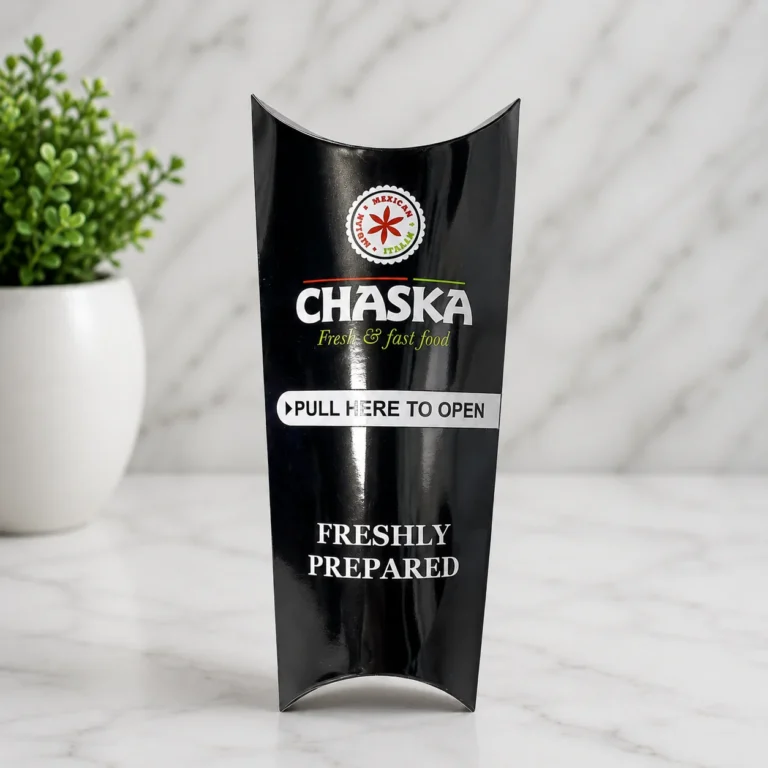
CHASKA Custom Pillow-Style Shawarma Sleeves with Food-Safe 300gsm Card
Healey Packaging produced custom pillow-style shawarma sleeves for CHASKA using 300gsm food-safe BSB card, full-colour CMYK...
View Case Study
JAMONYX Custom Reverse Tuck Boxes in 350gsm SBS Card with Gold Foil
Healey Packaging produced 1,200 luxury reverse tuck boxes for JAMONYX across two black-and-white designs, three sizes,...
View Case Study
Fourmula Custom Supplement Boxes with Lamination and Holographic Finish
Fourmula started with 10 physical sample boxes for a compact supplement product, then moved toward a...
View Case StudyHow Your Packaging Is Produced
Requirements
Share product size, quantity, use case and artwork status.
Structural Planning
The right size, board and box style are reviewed.
Artwork and Proofing
A digital proof is prepared before production begins.
Production
Boxes are printed, cut, folded and finished to specification.
Quality Control
Finished packaging is checked for structure and print quality.
Delivery
Completed packaging is packed and delivered to your business.
What Customers Say
We have been using Healey for years and are always impressed by the service, quality and speed.
Harry GeorgeThe packaging is of high quality, strong cardboard. I will definitely be using them again.
Amanda NewmanGreat communication, quick and good product. I really recommend.
JOON Plant Based AtelierFrequently Asked Questions
The right material depends on the food, serving or storage temperature, grease or moisture exposure, packed weight and how the product will be handled. Folding paperboard suits many dry and retail food products, while corrugated board provides greater strength for delivery and larger packs. Suitable barriers or liners may also be required where the food directly contacts the packaging.
They can be, provided the board, inks, coatings and other components are suitable for the intended food-contact application. Direct-contact requirements differ from packaging where food is already sealed in a wrapper, pouch or inner container, so the intended use should be confirmed before the material specification is finalised.
Yes. Suitable barrier treatments and material combinations can improve resistance to grease, moisture and condensation. The specification should be matched to the product because packaging for burgers, bakery goods, chilled foods and dry products can experience very different conditions.
Yes. Custom food packaging can include your logo, brand colours, product information, preparation instructions, barcodes, QR codes and other graphics. CMYK and Pantone printing can be considered depending on the artwork, board surface and level of colour consistency required.
Many paperboard and corrugated food packs can be recyclable when they are sufficiently clean and use compatible coatings and components. Heavy food contamination, plastic laminates and some barrier treatments can affect recyclability, so end-of-life requirements should be considered when the material specification is developed.
Start with the finished product or portion dimensions rather than a standard box size. Allow enough clearance for practical packing and secure closure without creating unnecessary empty space. For takeaway and delivery packaging, also consider stacking, product movement and the way the pack will be handled during transport.
Yes. Takeaway and delivery packaging should be specified around the food and the journey it will make. Closure security, grease resistance, heat, ventilation, stacking and movement during delivery can all influence the most suitable board grade and structure.
Provide the food type, finished product or portion dimensions, approximate packed weight, quantity, serving or storage temperature, whether the food directly contacts the packaging and whether it is intended for retail, takeaway or delivery. Artwork status and any required printing, windows, barriers or specialist finishes are also useful.
Healey Packaging offers no minimum order requirement for custom food packaging. Standard production is typically 7–10 working days after artwork approval, although more complex structures, materials or specialist finishes can affect the final schedule.
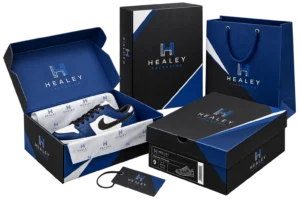 Apparel Packaging
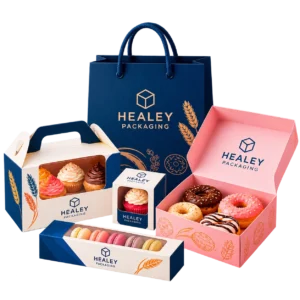 Bakery Packaging Boxes
 Bottle Packaging Boxes
 Candle Boxes
 CBD Packaging Boxes
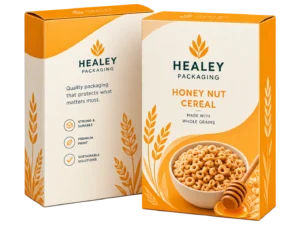 Cereal Packaging Boxes
Ready to Create Packaging Built Around Your Product?
Share your product, size, material and quantity requirements. Our team will help you choose the right structure, print and finish.
Artwork Checking Included
No Minimum
Digital Proof
UK Delivery