
Description
Custom Reverse Tuck Boxes: Compact, Economical, Easy Packing
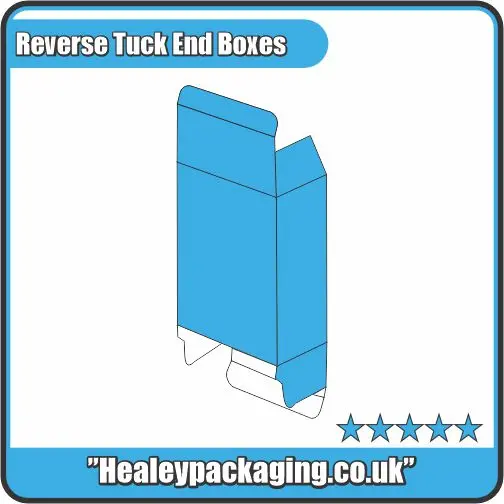
Reverse tuck end boxes are folding cartons with top and bottom closure flaps attached to opposite main panels. One flap tucks from the front while the other enters from the rear, creating the reversed closure pattern that gives the structure its name.
Often shortened to reverse tuck end RTE boxes, this style is widely used for compact retail products that require an economical carton, straightforward hand packing and plenty of printable panel space. The cartons are supplied flat, formed into shape when needed and closed without a complicated base-locking sequence.
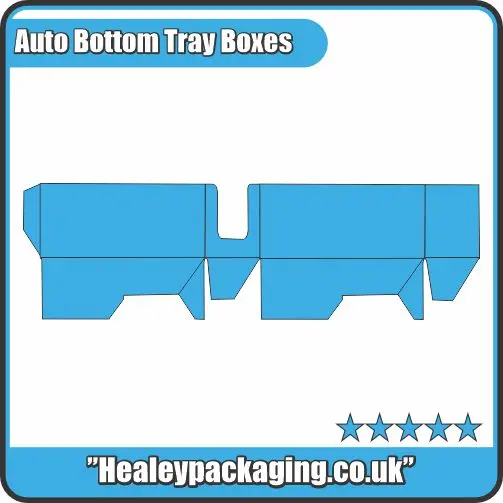
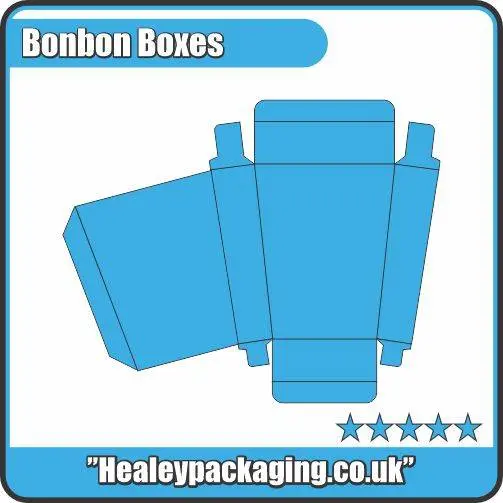
Businesses comparing structural options can browse our complete box templates and packaging styles collection, which includes tuck-end cartons, trays, display structures, auto-bottom formats and reinforced designs.
How the Reverse Tuck End Structure Works
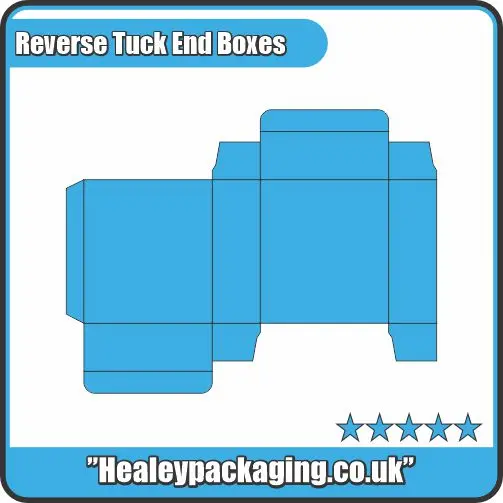
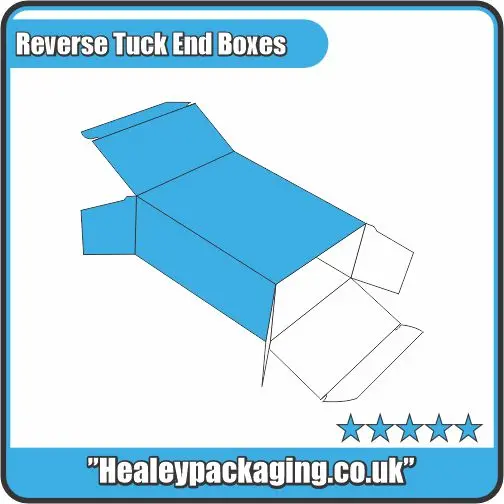
A typical RTE carton is converted from one die-cut sheet. Four main body panels form the front, back and sides, while a narrow glue flap joins the carton body during production. At each end, dust flaps fold in before the principal tuck flap closes the opening.
The defining difference is the flap orientation:
- The upper tuck flap is attached to one main panel.
- The lower tuck flap is attached to the opposite panel.
- Both ends can be opened and reclosed without tearing the carton.
- The box remains collapsible until it is erected for filling.
This arrangement can use the sheet efficiently during production and creates a familiar structure for fast-moving retail lines. However, the opposing flaps mean the artwork must be planned carefully so that the intended top, front and rear panels appear in the correct orientation after assembly.
What Products Suit Reverse Tuck End Boxes?
The structure is normally chosen for lightweight or moderately weighted products with regular dimensions. It works particularly well for bottles, tubes, jars, sticks and compact accessories that can be loaded through either end.
Common applications include:
- Cosmetics, serums and personal care products
- Pharmaceutical and wellness items
- Small candles and fragrance products
- Confectionery and dry packaged foods
- Electronic accessories and replacement parts
- Stationery and craft products
- Small household goods
- Promotional and retail merchandise
A close-fitting carton helps restrict unnecessary movement, but the tuck flaps alone are not intended to support unusually heavy contents. Where the product places significant pressure on the base, an interlocking or automatically forming bottom may be more dependable.
Why Packing Teams Use the RTE Format
The appeal of custom reverse tuck end boxes lies in their simplicity. The carton does not require an elaborate folding sequence, and large quantities can be stored flat beside a packing line until needed.
Fast manual erection
The operator opens the carton body, closes one end, inserts the product and tucks the remaining flap into place. This short sequence is useful where packing is completed by hand.
Efficient flat storage
Unfilled cartons take up considerably less warehouse space than pre-assembled packaging. They can be bundled and moved to the packing area according to production demand.
Reclosable access
A customer can normally open the upper flap and close it again without destroying the entire pack. This is useful for products that may remain in their original carton between uses.
Clear retail-facing panels
The rectangular body provides defined surfaces for product names, instructions, barcodes and regulatory information. The dieline should still be checked in assembled form because the top and bottom flaps originate from opposite faces.
Reverse Tuck End Box Template and Dieline Planning
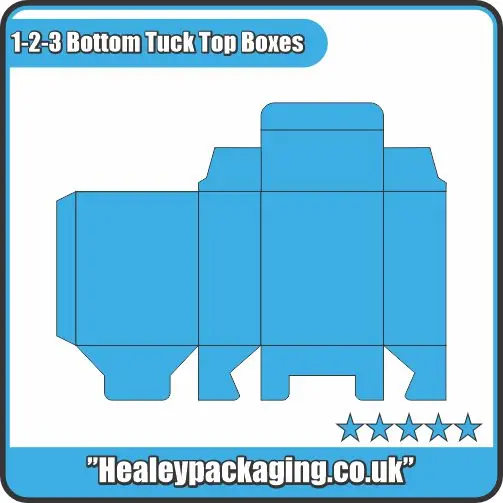
A reverse tuck end box template is the flat structural drawing used to cut, crease, glue and print the carton. It shows the main panels, dust flaps, tuck flaps, glue area, cut lines, folds, bleed and artwork-safe zones.
The reverse tuck end box dieline must be produced around the finished internal dimensions rather than copied from a generic file. Even small differences in bottle diameter, cap width or product height can affect loading clearance and flap performance.
Before artwork is applied, confirm:
- The exact length, width and depth of the packed product
- The panel that will face forward on the shelf
- Which closure customers will open first
- The position of the glue seam
- Barcode orientation and scanning space
- Clearance around creases and flap edges
- Whether an insert, window or hang tab is required
Artwork should extend through the specified bleed area, while logos and small text need to remain within safe zones. Healey Packaging’s packaging dieline guidelines explain the production marks and artwork boundaries used when preparing structural files.
Structural Changes Available for Custom RTE Boxes
The basic reverse-tuck arrangement can be adapted without losing its core identity. Useful changes may include:
- Custom internal dimensions
- Longer or shorter tuck flaps
- Friction-lock or slit-lock closures
- Thumb notches for easier opening
- Product-viewing cut-outs
- Hanging tabs for peg displays
- Folded-board inserts
- Internal platforms or dividers
- Perforated opening features
- Reinforced panels for selected applications
For products that need visibility on the shelf, a die-cut aperture can be added where the panel dimensions permit it. A comparable ready-made structural option is available through our straight tuck boxes with window page.
Reverse Tuck End vs Straight Tuck End Boxes
Both structures use tuck closures at the top and bottom, but the flap arrangement differs.
With an RTE carton, the two main flaps are attached to opposite panels. With a straight tuck structure, both are connected to the same side of the carton and close in the same direction.
Choose a reverse tuck design when:
- Opposing closures suit the intended production layout
- Fast, familiar hand assembly is important
- The product is lightweight or moderately weighted
- A simple retail carton is required
Consider straight tuck end boxes when aligned closures, uninterrupted panel presentation or same-direction opening is a stronger priority.
Neither structure is automatically better. Product weight, shelf orientation, artwork flow, filling method and closure preference should determine the final choice.
Are Reverse Tuck End Mailer Boxes Suitable for Shipping?
The phrase reverse tuck end mailer boxes is sometimes used for cartons intended to be posted or dispatched. Structurally, however, a standard RTE folding carton is not the same as a corrugated mailer box.
An RTE carton may be suitable for protected fulfilment when placed inside an outer shipping container. It should not automatically be treated as the sole transit pack for fragile, heavy or high-value goods. The board specification, packed weight, courier handling and amount of empty internal space all affect performance.
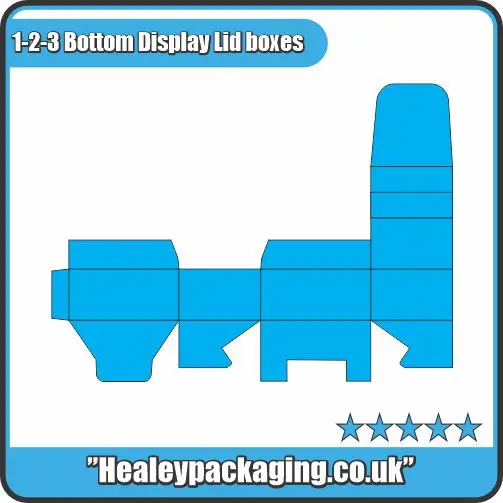
For direct shipping, a stronger corrugated mailer or locking-base structure may be more appropriate. Where the product needs greater support underneath while retaining a folding-carton format, compare the RTE style with lock cap 1-2-3 bottom boxes.
When White Reverse Tuck End Cardboard Boxes Work Best
White reverse tuck end cardboard boxes are useful when a clean, neutral presentation is required or when the carton will carry detailed colour artwork. They are commonly specified for cosmetics, health products, electronics and professional retail ranges.
A white exterior also makes small text, shade coding and product photography easier to reproduce clearly. For an understated appearance, the same structure may instead be produced with natural kraft-style surfaces or minimal single-colour branding.
The important decision is not colour alone. Board stiffness, carton dimensions and product weight must work together so the pack retains clean corners and the tuck flaps remain secure.