
✨ Quick Takeaways
- Seasonal packaging = limited edition designs tied to holidays or seasons
- It helps your product stand out, create urgency, and deepen emotional connection
- Use eco‑friendly materials and don’t stray too far from core branding
- Plan early & limit run sizes to avoid excess inventory
- At Healey Packaging, we design seasonal box ranges that balance impact and sustainability
Related: Explore our all Packaging Industries | Get a Custom Quote
What Is Seasonal Packaging, Really?
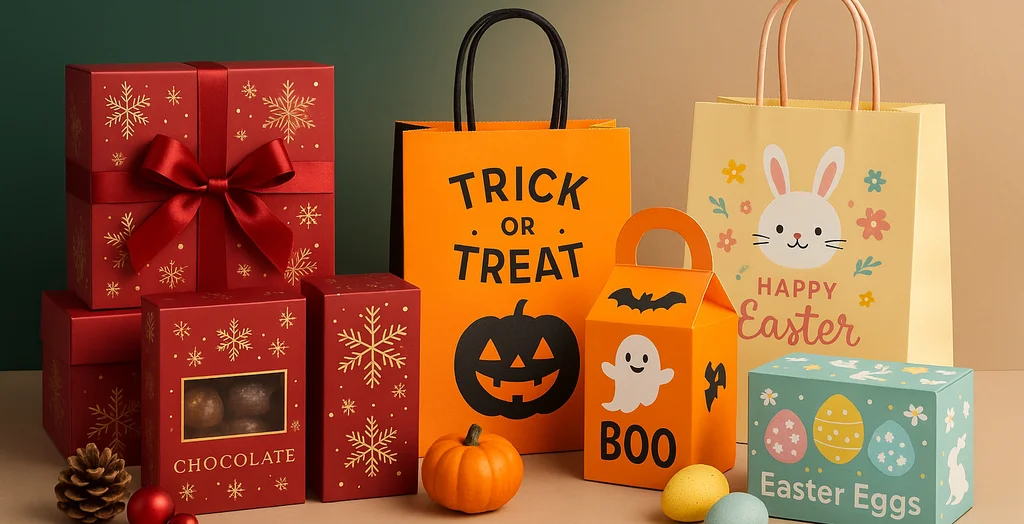
Seasonal packaging means giving your usual product packaging a festive twist—think Christmas editions, Valentine’s motifs, summer themes, back-to-school visuals, Diwali, Eid, Halloween, and more. According to the Wikipedia definition, seasonal packaging is a marketing strategy to spark interest in periods when a product might otherwise see lower demand.
It’s not just about slapping on snowflakes or hearts. Good seasonal packaging ties into emotions, cultural cues, and timely relevance—while still aligning with your brand identity.
Why Seasonal Packaging Still Matters?
Stand Out In A Crowded Market
Adding seasonal visuals can boost shelf appeal significantly. One packaging trade article notes that premium seasonal packaging can increase shelf visibility by up to 30%. In a sea of identical products, limited edition seasonal designs act like attention magnets.
Create Urgency & Boost Impulse Sales
Limited runs create urgency—consumers feel like they “must get it before it’s gone.” That psychological push can drive higher conversion and average order value.
Emotional Connection & Brand Loyalty
Seasonal packaging taps nostalgia, anticipation, and celebration. A blog post by PIP calls this “wrapping emotions” — designs tied to holidays evoke joy, memories, and warmth.
When customers feel emotionally connected, they’re more likely to keep, reuse, or talk about your packaging.
Test New Ideas Risk‑Managed
Seasonal packaging lets you experiment—try a bold pattern, new material, or surprise add-ons. Because it’s limited-edition, you can test without committing long-term.
How to Design Seasonal Packaging That Works
Here’s a hands‑on guide to doing seasonal packaging right (so it sells and doesn’t just sit in storage).
1. Stay On‑Brand
Even when adding festive elements, keep your logo treatment, font, or core colours recognizable. Don’t stray so far from your baseline brand that customers don’t see it’s you. Many guides warn against losing brand identity in the seasonal shift.
2. Choose Themes Thoughtfully
- Use universal seasonal motifs (snowflakes, leaves, stars) rather than exclusively religious symbols
- Consider non-denominational themes (lights, winter, nature) to appeal across audiences. The AMA calls this a move toward inclusive seasonal design.
3. Layer Subtle Surprises
Don’t overdo. Add foil detail, spot UV, embossing, or interior prints (e.g. a hidden message inside the box flap). These “little reveals” delight customers without overwhelming.
4. Use Eco-Friendly Materials
Seasonal packaging, especially if temporary, must consider waste. Use recyclable, compostable, and reusable materials. Limit excessive inserts or plastic. GWP’s guide especially emphasises sustainability as a “don’t” to ignore.
5. Plan Run Sizes & Timing
Start early. Seasonal runs require extra lead time. Don’t over-order—leftover holiday packaging becomes stale. GWP warns against overstocking and overspending.
6. Coordinate Promotion
Seasonal packaging works best when supported by marketing: social media teasers, email campaigns, influencer unboxing videos.
What Are Common Mistakes to Avoid?
- Going too far off-brand — your loyal customers might not recognize the product
- Neglecting sustainability — festive packaging often gets thrown away; avoid damaging your brand image
- Overcomplicated design — cluttered visuals dilute impact
- Underestimating lead times — delays kill holiday season momentum
- Ignoring leftover stock — unsold seasonal packs can become a cost burden
How to Measure the Success & ROI of Seasonal Packs?
- Incremental sales uplift during seasonal periods vs baseline
- Conversion rate for themed vs non-themed products
- Social engagement: shares, user-generated content with seasonal boxes
- Repeat purchase rates: whether customers return after the season
- Survey feedback: “Did the packaging influence your purchase?”
Also track waste and overstock costs to ensure the seasonal boost doesn’t lead to losses.
FAQ: Your Top Seasonal Packaging Questions
Is seasonal packaging just a gimmick?
When done right, it’s more than that. It can act as a silent salesperson and shift buying behaviour—especially in retail or gifting occasions.
Is seasonal packaging expensive to produce?
It can be, but limiting design changes and ordering modest runs helps. Reusing structural templates also cuts cost.
Which seasons or events should I focus on?
Choose ones your customers care about—Christmas, Valentine’s, Eid, Diwali, summer, Halloween. Don’t try them all at once unless you have scale.
Can seasonal packaging be sustainable?
Yes—use recyclable materials, minimal inserts, and consider reusable boxes or limited embellishments.
When should I start designing seasonal packaging?
At least 3–4 months ahead for printing, proofing, and logistics buffer.
Launch a Standout Seasonal Campaign Now
Seasonal packaging isn’t just “pretty boxes” — it’s a powerful marketing tool that can increase visibility, boost emotional connection, and drive sales. But only when thoughtfully designed, on-brand, and sustainable.
At Healey Packaging, we specialise in creating seasonal box ranges that balance impact and cost. We can help you choose themes, materials, and print options that elevate your brand during key periods—and without waste.
👉 Ready to design a standout seasonal packaging campaign? Get a quote today or browse our seasonal box styles on HealeyPackaging.co.uk.