UK-Wide Delivery
Custom Packaging From 100 Units Flexible quantities for launches, growing brands and repeat orders.
Free Artwork Check Your artwork is reviewed before production begins.
Need Custom Packaging? Request a Quote
APPAREL Packaging Solutions

Custom Apparel Packaging Boxes for Fashion Brands & Retailer

Designed for clothing brands, retailers and online stores, our custom apparel packaging boxes combine durable materials, premium printing and tailored sizing to protect garments, strengthen presentation and create a consistent brand experience from warehouse to customer.

Protects ProductsSecure structure for packing and delivery
SustainableRecyclable and responsible options
High Quality PrintCMYK, Pantone and premium finishes
Strong & ReliableDurable materials for safe delivery
Excellent customer feedback on Trustpilot
★★★★★ 4.7/5 Trustpilot reviews
8+ Packaging
Solutions
Not sure which packaging is right for you? Our team can help match the structure to your product, brand and budget.
Speak to an Expert
Custom DimensionsMade to fit your product precisely.
Low Minimum OrderMOQ from 100 units per design.
Printed to Your BrandCMYK, Pantone and specialist finishes.
Fast Turnaround7-10 working days after artwork approval.
Apparel Packaging Range

Explore Apparel Packaging by Product Type

Browse apparel boxes for clothing, accessories, ecommerce, retail and premium fashion presentation.

Product Group 01

Clothing & Garment Boxes

Packaging that keeps garments folded, organised and presentable.

4 products
Product Group 02

Fashion Ecommerce Mailers

Mailer formats for online clothing orders and branded delivery.

4 products
Apparel Packaging Applications

Apparel Packaging for Clothing, Footwear, Hats and Accessories

Apparel packaging must protect the product while keeping it organised, presentable and ready for retail, storage or customer delivery. The structure should reflect how each item is folded, handled, displayed and transported.

Healey Packaging develops custom formats around product size, weight, packing method and route to market rather than relying on one standard box for every fashion product.

Product fit Custom dimensions
Protection Board matched to use
Presentation Retail-ready finishes
01
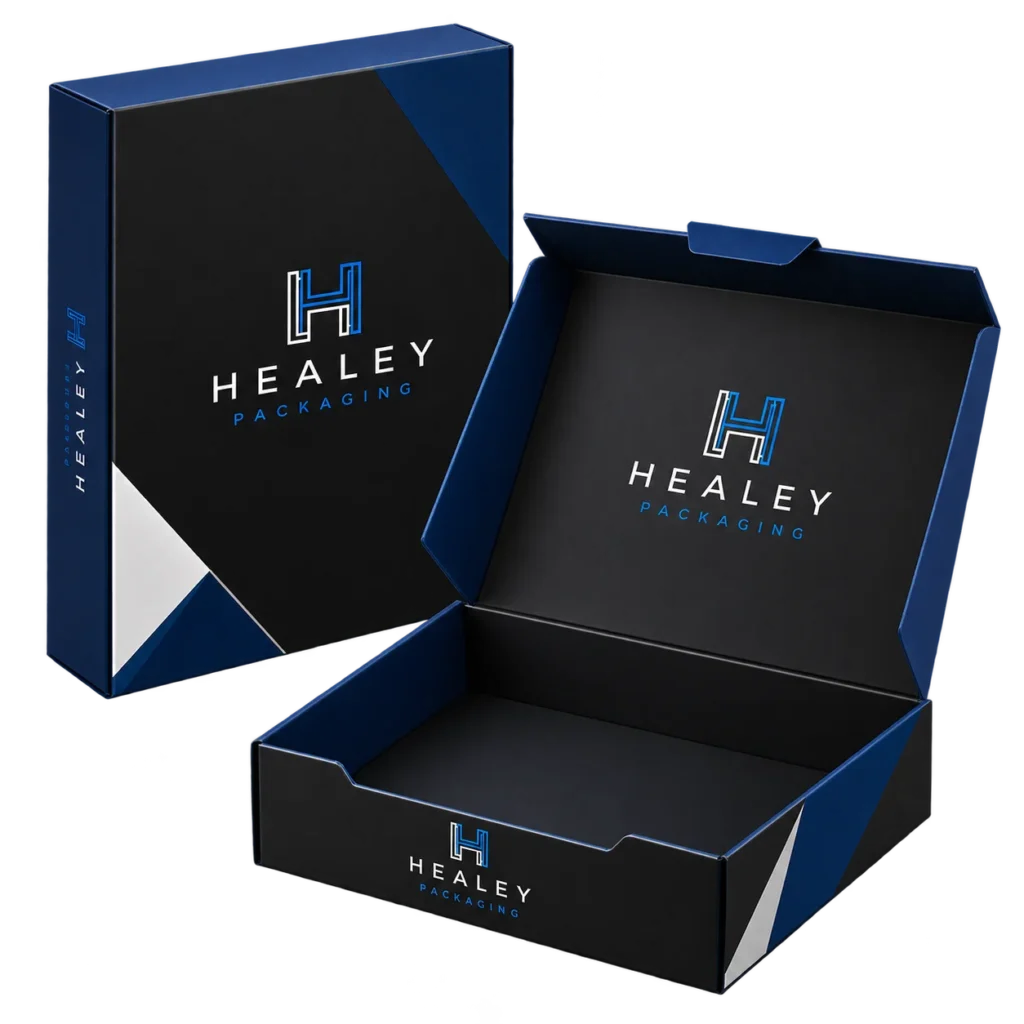
Garment Packaging

Clothing Packaging Boxes

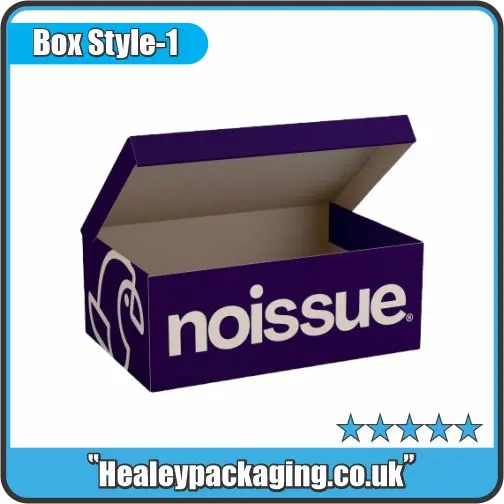
Custom clothing cartons help shirts, trousers, dresses, knitwear and outerwear remain folded, protected and ready for presentation. Formats can be adapted for retail, ecommerce, subscription ranges and gift collections.

Common applications
  • Folded garments
  • Outerwear
  • Fashion gift sets
02
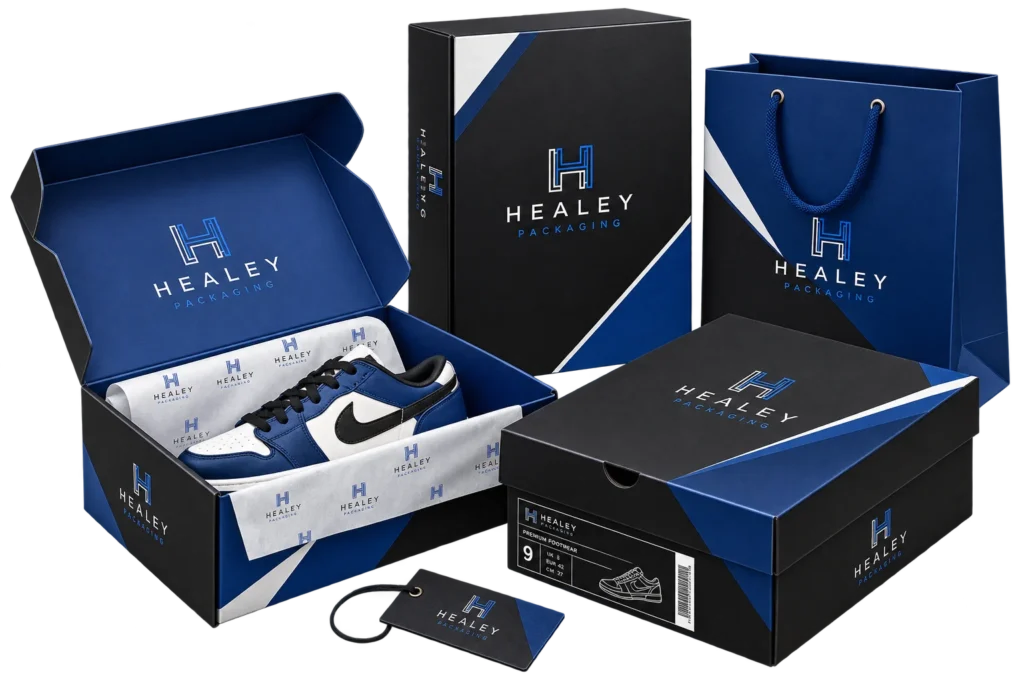
Footwear Packaging

Shoe and Footwear Boxes

Footwear boxes need enough strength for stacking, storage and repeated handling while maintaining a clean retail or unboxing presentation. Options include folding, corrugated, rigid and two-piece formats.

Common applications
  • Shoes and trainers
  • Boots
  • Premium footwear
03
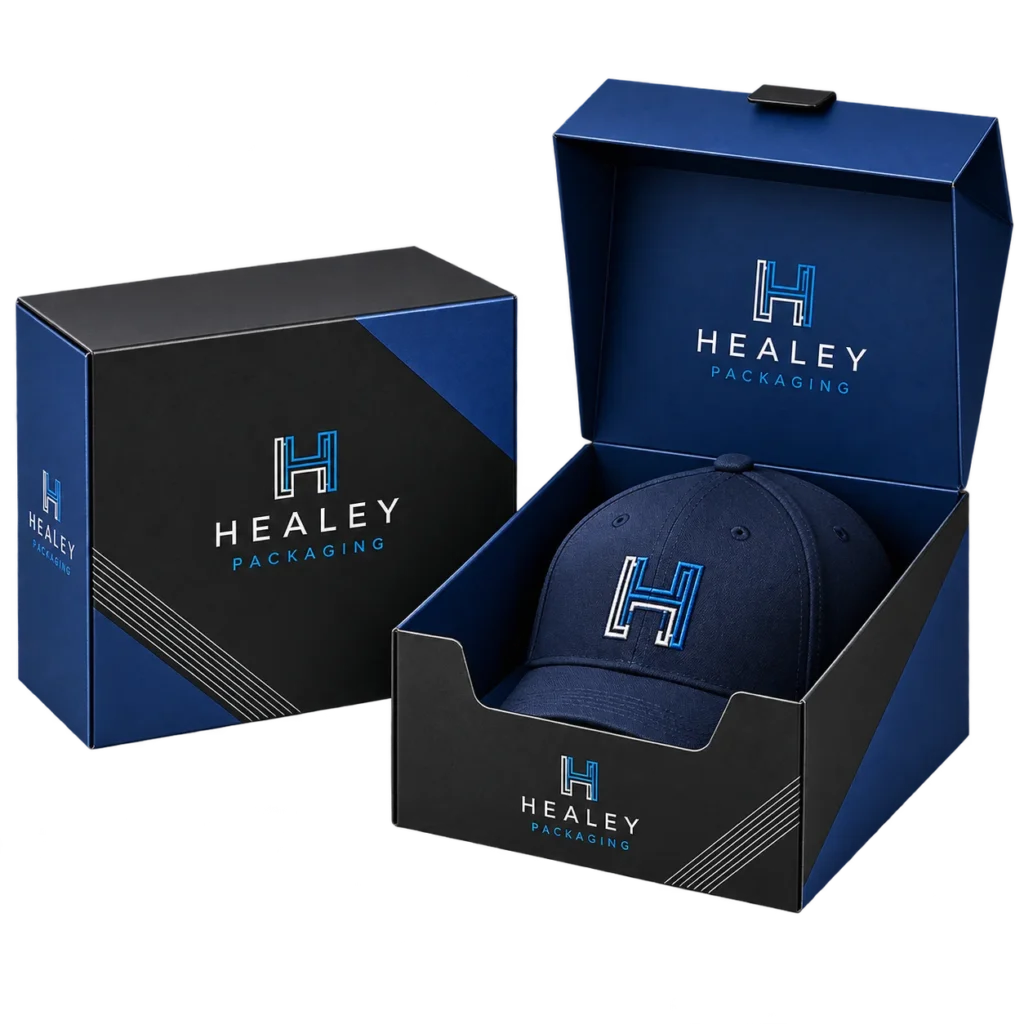
Headwear Packaging

Hat Packaging Boxes

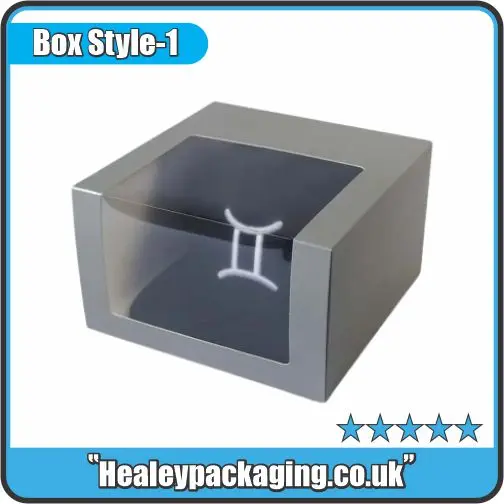
Hat packaging should protect crowns, brims and delicate fabrics without compressing the product. Bespoke dimensions provide suitable clearance while limiting unnecessary movement during storage and delivery.

Common applications
  • Structured caps
  • Formal headwear
  • Luxury hats
04
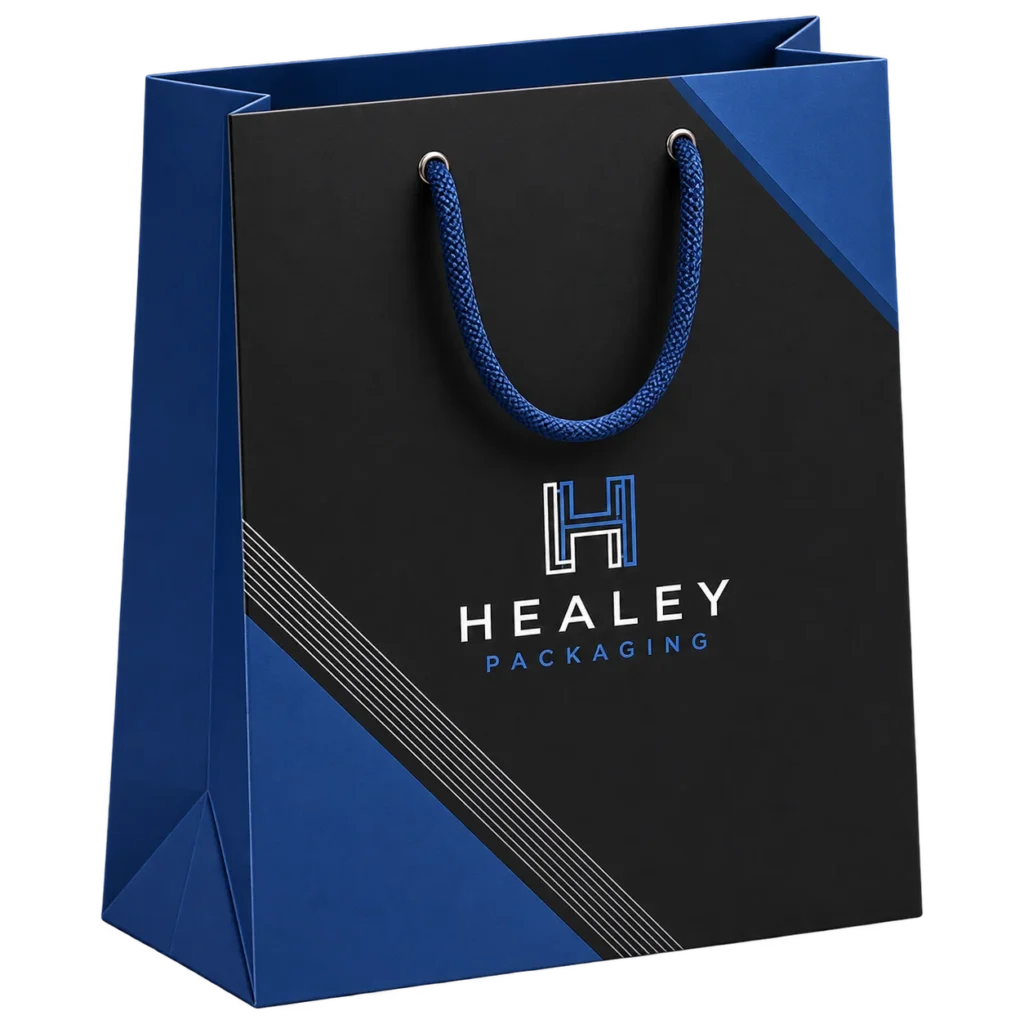
Accessory Packaging

Accessory and Gift Boxes

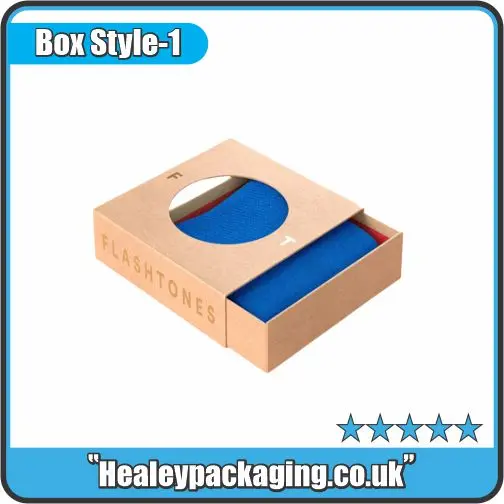
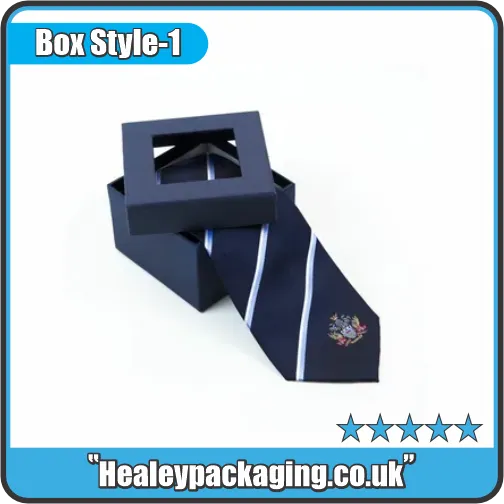
Slim cartons, drawer boxes and rigid presentation formats can be produced for ties, belts, scarves, wallets and other accessories. Inserts, sleeves and windows can improve organisation and product visibility.

Common applications
  • Ties and belts
  • Scarves and wallets
  • Seasonal gifting
Premium Apparel Presentation

Luxury Packaging for High-Value Fashion Ranges

Luxury apparel gift boxes can combine rigid board, fitted inserts, drawer structures, magnetic closures and internal printing. The final specification should reflect both the value of the product and the experience expected when the packaging is opened.

Suitable for Designer clothing, footwear and gift collections
Structural options Rigid lids, drawers and magnetic closures
Presentation options Inserts, tissue, sleeves and inside printing
Sales Channel Planning

Packaging Designed Around How You Sell

Apparel packaging should reflect where the product is sold, how it is handled and what the customer expects when it arrives. A carton intended for a retail shelf will not always need the same structure as packaging travelling through a courier network or warehouse.

Core principle Specify the box around the complete product journey

Packing speed, storage, display, transit and unboxing should all be considered before board and structure are selected.

01 · Retail Stores

Packaging for Shelf and Counter Presentation

Retail apparel packaging should keep garments neatly arranged while presenting colour, branding and product information clearly. Printed cartons, sleeves, windows and two-piece boxes can help create a consistent range across shops and concessions.

Plan for
  • Front-facing brand visibility
  • Consistent dimensions across ranges
  • Easy product access and repacking
02 · Ecommerce

Protection for Delivery and Unboxing

Garment packing boxes used for ecommerce need to control movement, reduce creasing and withstand handling through fulfilment centres and courier networks. A branded inner pack can also be combined with a protective outer carton.

Plan for
  • Compact dimensions with less empty space
  • Protection from compression and handling
  • Clean product presentation on arrival
03 · Wholesale Distribution

Efficient Packing for Larger Product Volumes

Wholesale apparel cartons are normally specified around stacking strength, warehouse handling and efficient use of storage space. Corrugated outer cases and grouped inner packs can help protect larger quantities during distribution.

Plan for
  • Stackable warehouse formats
  • Clear product and size identification
  • Repeatable packing for larger runs
04 · Luxury and Gifting

Presentation for Higher-Value Fashion Products

Luxury apparel packaging can use rigid board, drawer formats, fitted inserts, tissue and internal print to create a more deliberate opening experience. The structure should support the product without adding unnecessary bulk.

Plan for
  • Premium materials and tactile finishes
  • Internal organisation and presentation
  • Gift-ready opening and closing
Packaging Journey

One specification should support every stage

  1. 01
    Pack Fast and repeatable product loading
  2. 02
    Store Efficient use of shelf and warehouse space
  3. 03
    Protect Movement and compression control
  4. 04
    Present Consistent branding at customer handover
Material Selection

Choosing the Right Material for Apparel Packaging

Material choice affects box strength, print quality, storage efficiency and the way the finished packaging feels in the customer’s hands.

The right specification depends on the packed product, sales channel and presentation required. Explore our packaging materials for further technical guidance.

Compare Materials

Select a material to review its practical strengths, print suitability and common apparel applications.

Retail Packaging Material

Folding Boxboard

Folding boxboard is a practical choice for printed clothing cartons, accessory boxes and lightweight footwear packaging. It offers a smooth surface for detailed graphics while remaining efficient to store, transport and assemble.

Smooth coated surface Clean print reproduction
Best for Shirts, scarves, ties, accessories and retail garments
Print performance Strong colour reproduction and detailed artwork
Structural profile Lightweight, foldable and space-efficient
Suitable options
Specification note

Board thickness should be increased where the garment is heavy, the box has a large footprint or products will be stacked during storage.

Natural Packaging Material

Kraft Board

Kraft board gives apparel packaging a natural, understated appearance. It is often selected by independent labels, outdoor brands and fashion businesses that prefer minimal graphics and fibre-based packaging presentation.

Natural uncoated fibre Warm, understated finish
Best for Organic clothing, casualwear and eco-led ranges
Print performance Best for bold graphics and limited colour palettes
Structural profile Lightweight with a natural uncoated surface
Suitable options
  • One or two-colour printing
  • White ink detailing
  • Embossed branding
  • Paper-based sleeves
Specification note

Printed colours can appear more muted on brown kraft than on coated white board. Artwork should be planned around the natural surface rather than treated as a direct substitute for white board.

Protective Packaging Material

Corrugated Board

Corrugated board is used where apparel packaging must withstand courier handling, warehouse stacking or bulk distribution. Fluted construction provides greater resistance to pressure than standard folding cartons.

Fluted protective core Improved stacking strength
Best for Ecommerce, shoe shipping, storage and wholesale
Print performance Suitable for direct print or printed outer liners
Structural profile Strong, stackable and resistant to compression
Suitable options
  • Ecommerce mailer boxes
  • Shipping cartons
  • Grouped wholesale cases
  • Protective outer packaging
Specification note

The flute profile and board combination should be selected according to packed weight, stacking height and the distance the packaging will travel.

Luxury Packaging Material

Rigid Greyboard

Rigid greyboard creates a substantial box with firm walls and a premium opening experience. It is commonly wrapped with printed or textured paper and used for designer apparel, footwear and gift collections.

Dense structural board Firm premium construction
Best for Luxury clothing, shoes and high-value gift sets
Print performance Printed wraps, textured papers and premium finishes
Structural profile Firm, durable and designed to retain its shape
Suitable options
  • Lift-off lid boxes
  • Drawer-style packaging
  • Magnetic closures
  • Fitted internal inserts
Specification note

Rigid packaging occupies more storage space and carries a higher unit cost, so it is most suitable where premium presentation supports the product’s price and positioning.

Print and Brand Presentation

Printing and Finishing for Apparel Packaging

Apparel packaging is often one of the first physical brand touchpoints a customer handles. Print, colour and finish choices should support recognition without weakening the structure or making the pack difficult to manufacture consistently.

The right combination depends on the board surface, artwork, production volume and level of presentation required.

Colour and Artwork Planning

Build Consistency Across Every Apparel Range

Clothing, footwear and accessory collections often use several box sizes, materials and structures. Colour values, logo placement and finish areas should be planned as one system so the brand remains recognisable across the complete packaging range.

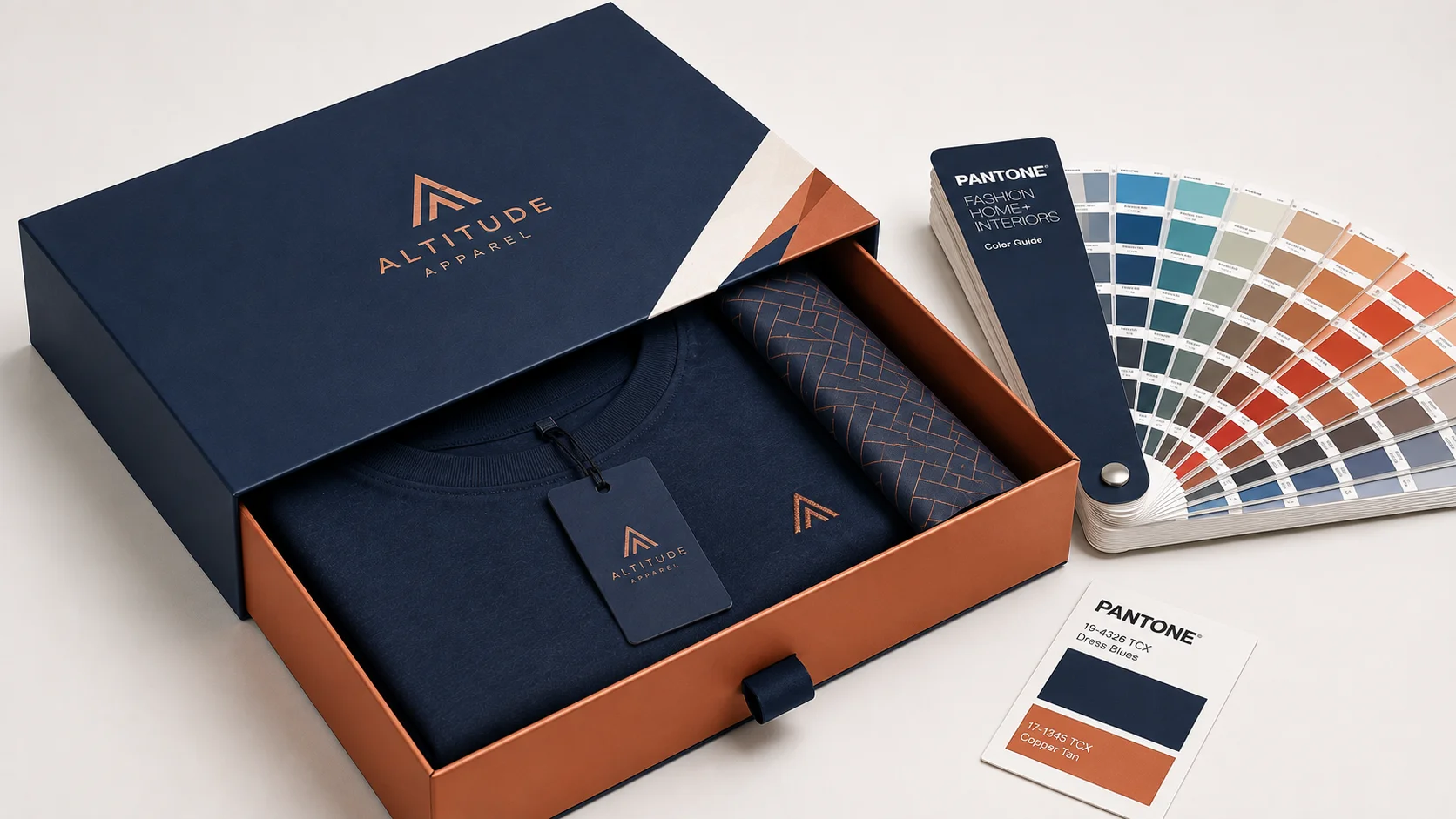
Premium apparel box with print colour swatches
Colour system

CMYK, Pantone or a controlled combination

Artwork control

Defined bleed, safe areas and separate finish layers

Range consistency

Repeatable placement across multiple box sizes

Production-ready files should follow our artwork guidelines before proofing and manufacture.
Printing and Finishing Options
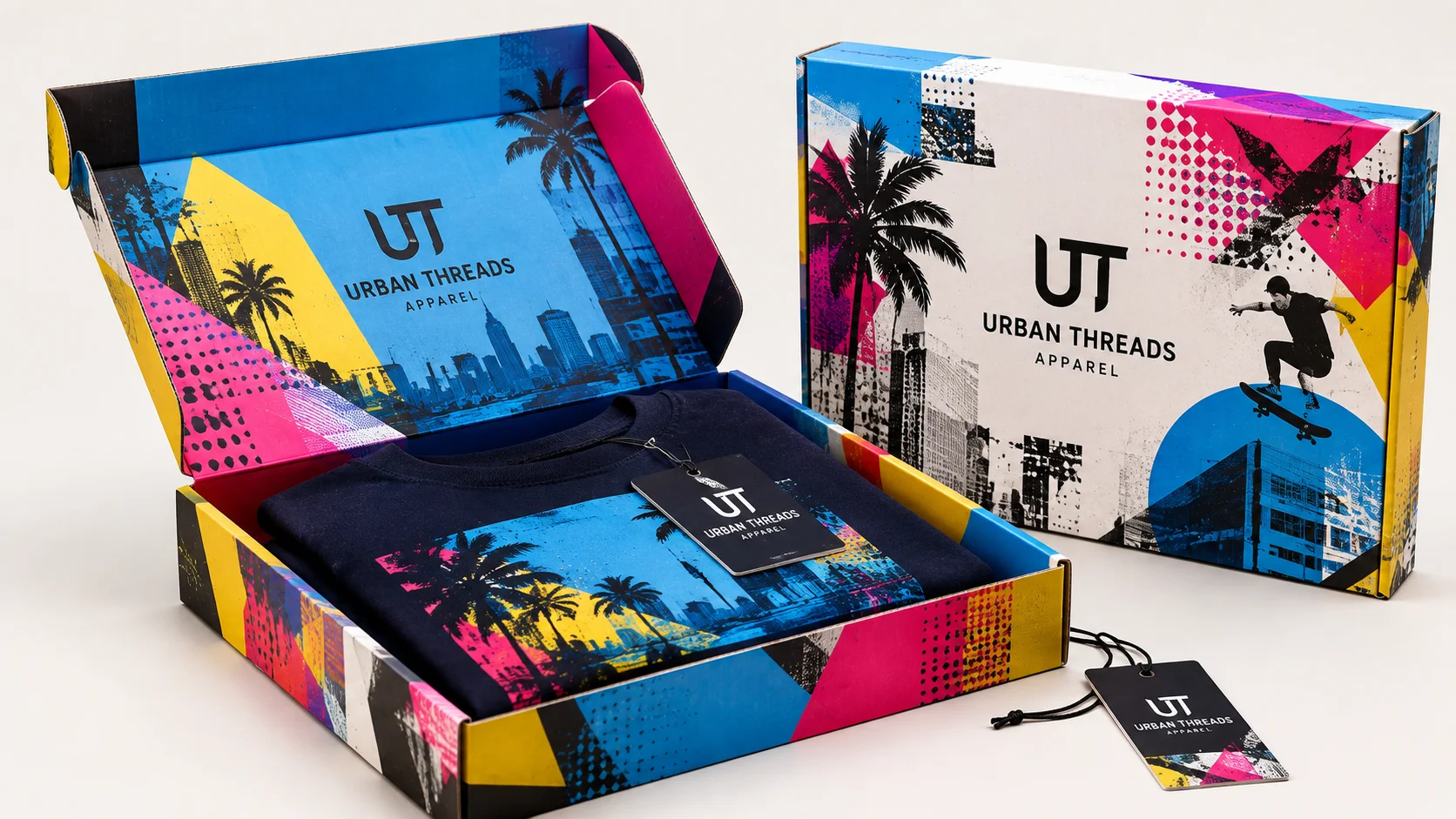
Full-colour CMYK print on apparel packaging
Full-Colour Printing

CMYK Printing

Suitable for photographic artwork, illustrated graphics and packaging that uses several colours or tonal detail.
Best used for Retail collections and campaign artwork
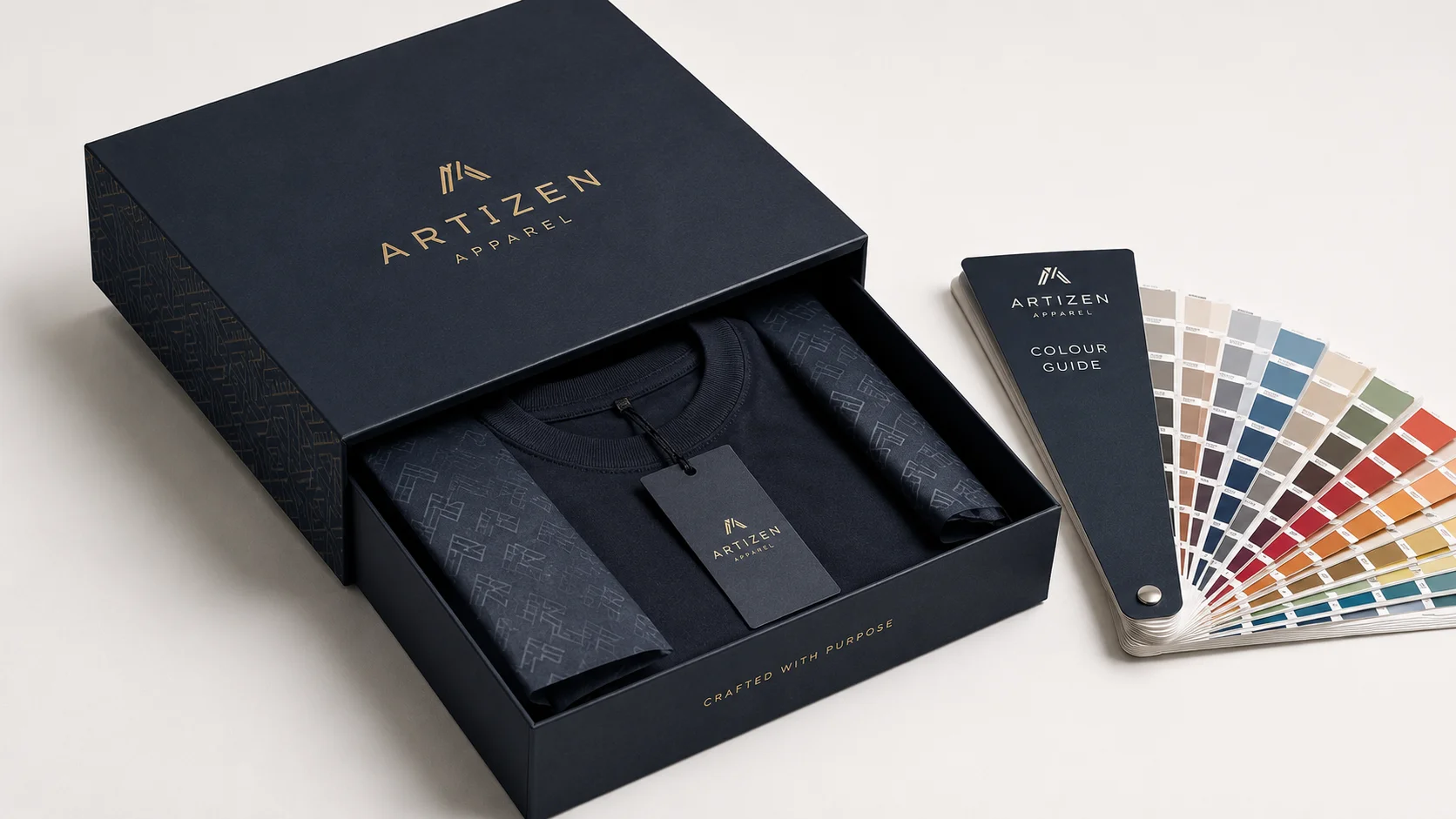
Pantone colour matched apparel packaging
Brand Colour Control

Pantone Matching

Helps maintain closer colour consistency where a fashion brand relies on a specific corporate shade across multiple packaging formats.
Best used for Logos, brand colours and repeat production
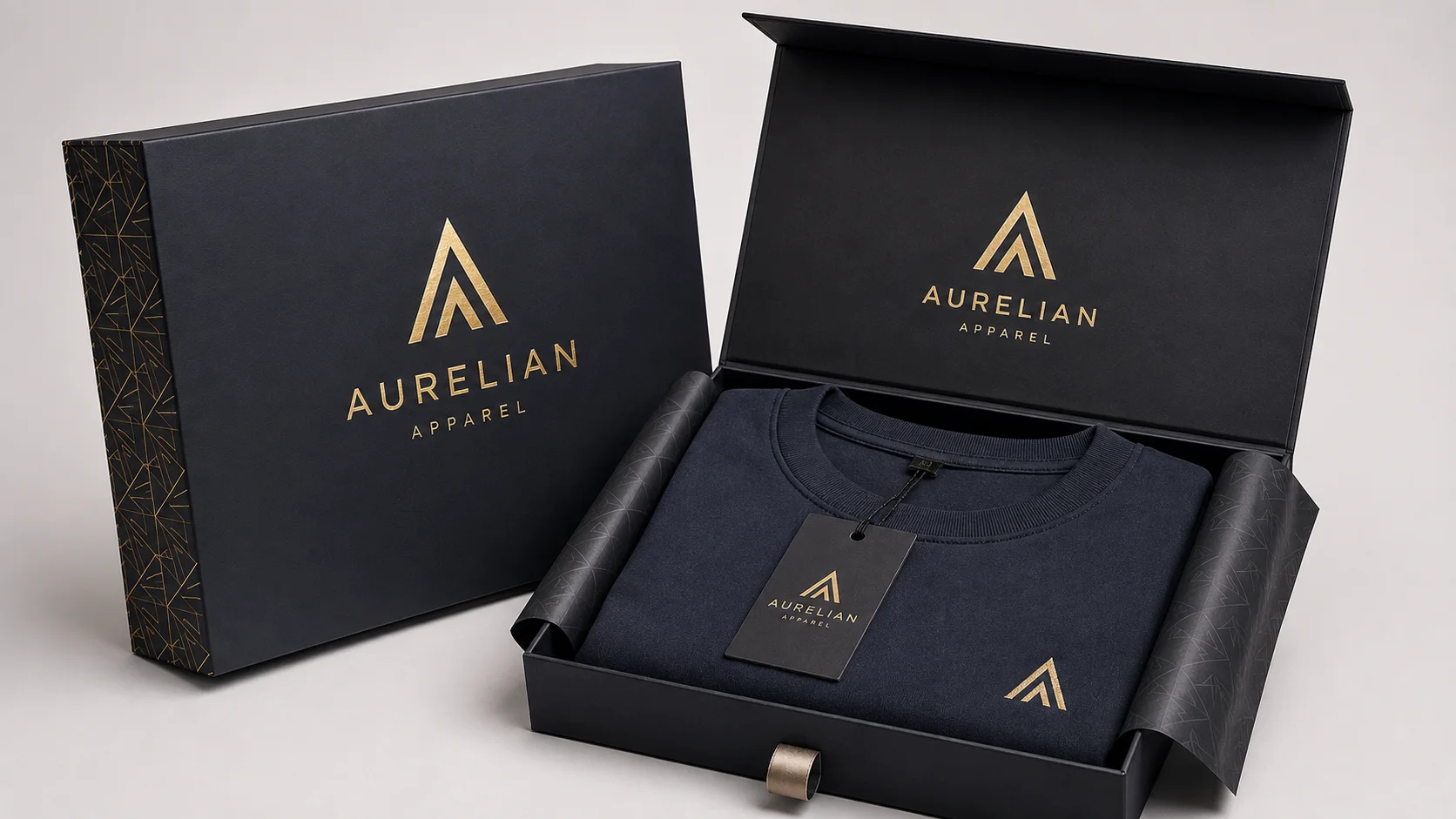
Metallic foil logo on premium apparel packaging
Metallic Detail

Foil Stamping

Adds metallic or coloured foil to logos, borders and collection names for premium apparel and gift packaging.
Best used for Premium logos and limited-edition ranges
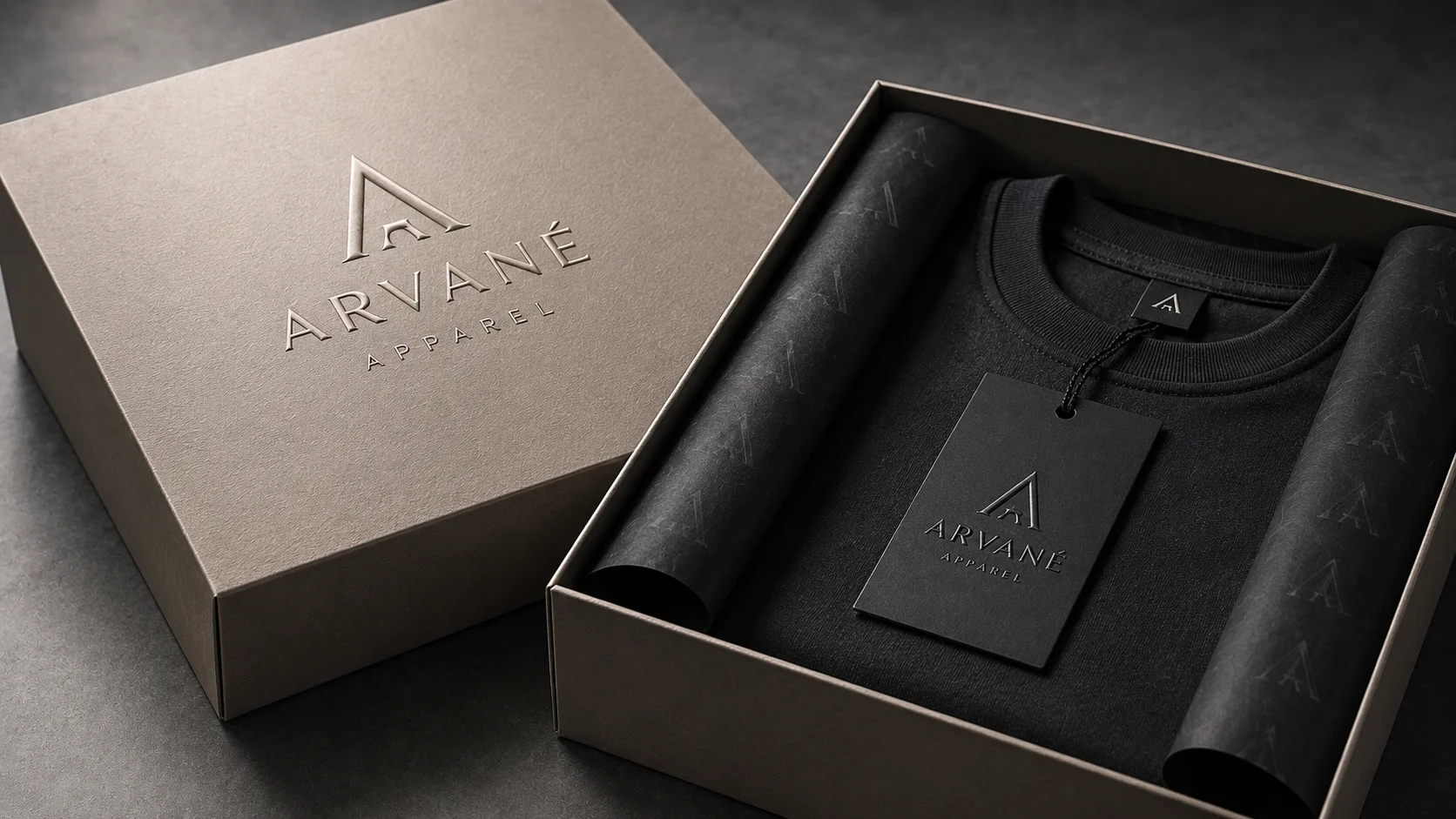
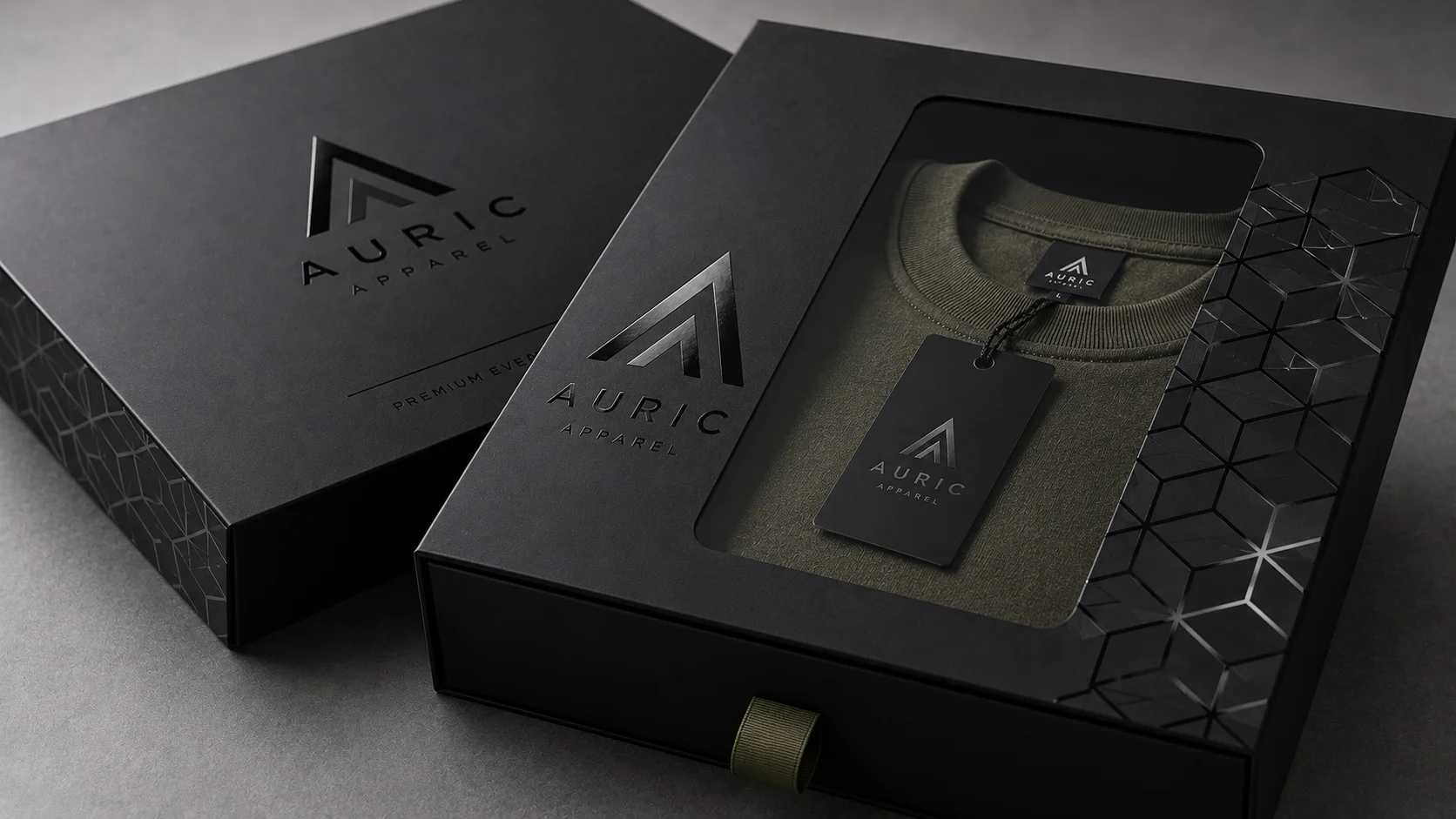
Embossed logo detail on apparel packaging
Tactile Branding

Embossing and Debossing

Creates raised or recessed detail without relying on colour alone, making it ideal for restrained apparel branding.
Best used for Logos, monograms and subtle brand detail
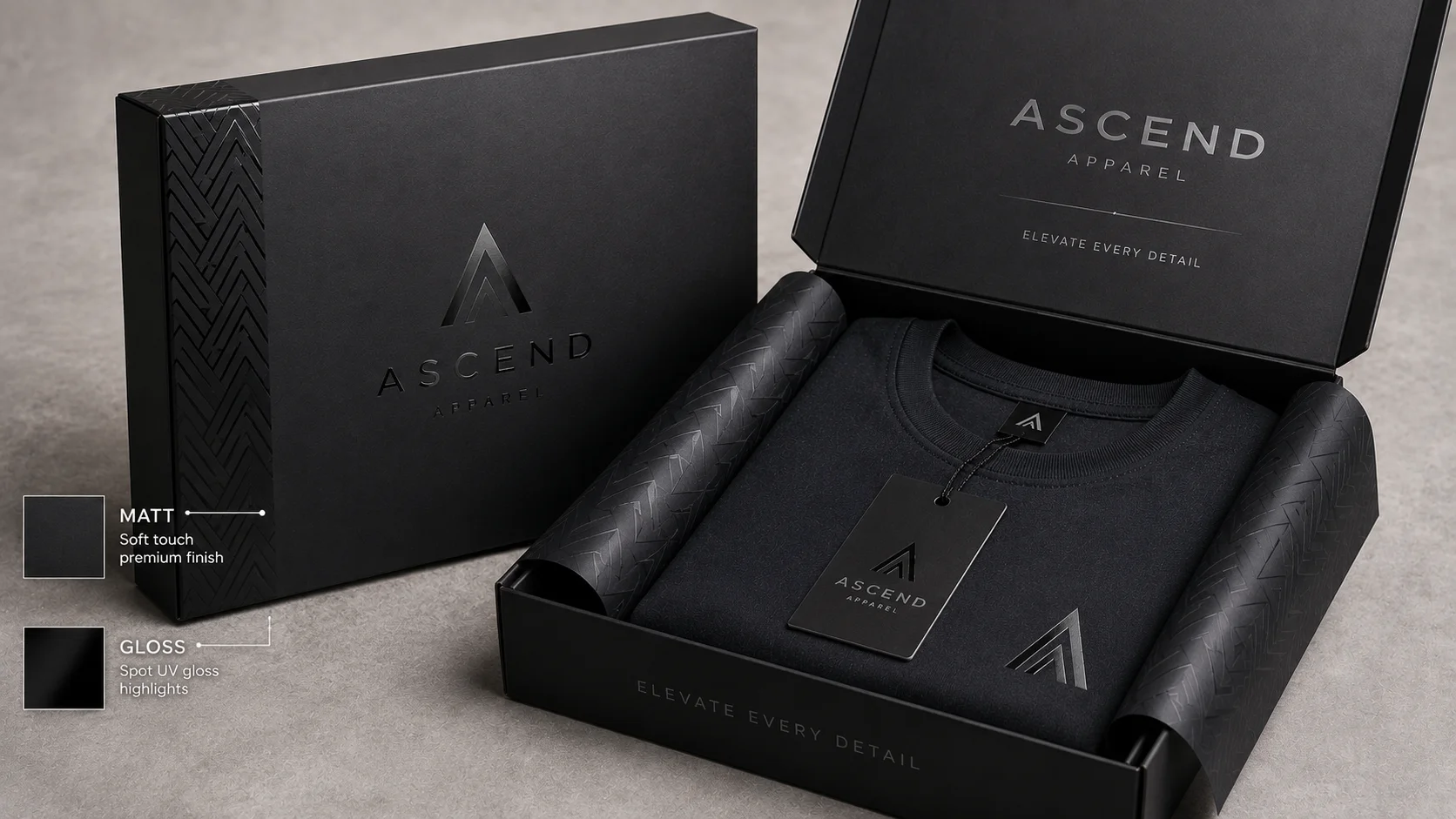
Matt and gloss laminated apparel packaging surfaces
Surface Protection

Matt, Gloss and Soft-Touch

Lamination protects printed surfaces from scuffing while changing the appearance and tactile character of the box.
Best used for Retail handling and premium unboxing
Spot UV and window detail on apparel packaging
Contrast and Visibility

Spot UV and Window Cut-Outs

Spot UV highlights selected artwork, while die-cut windows reveal ties, scarves, accessories or selected footwear.

Best used for Feature details and visible product display
Before Production

Print and Finish Decisions Should Be Confirmed Early

Colour, finish areas and artwork layers should be agreed before tooling and production begin. This helps reduce revisions and confirms that the specification suits the selected material.

  1. 01
    Prepare Artwork Set bleed, safe zones and separate finish layers.
  2. 02
    Confirm Colour Approve CMYK values, Pantone references and proofs.
  3. 03
    Check Compatibility Confirm coatings and finishes suit the board.
  4. 04
    Release for Production Manufacture from the approved specification.
Scalable Apparel Packaging

Packaging That Grows With Your Brand

Packaging requirements change as a fashion business develops. A new label may begin with one garment box, while an established retailer may need multiple sizes, repeat colour standards and coordinated packaging across several product ranges.

The strongest approach is to build a packaging system that can expand without losing structural consistency or brand control.

01
Launch

Establish the First Packaging Specification

New apparel brands often need one dependable structure that presents the product professionally without creating an unnecessarily complex packaging range. The first box should be flexible enough to support early product variations.

Typical need One adaptable box format
Priority Product fit and clear branding
Planning focus Simple artwork and efficient assembly
Useful at this stage

Early packaging design support can help confirm the structure, dimensions and presentation before production.

02
Grow

Add New Products Without Fragmenting the Brand

As the range expands, clothing, footwear and accessories may require different box sizes or structures. Shared colours, logo placement and finish rules help each format feel part of the same packaging family.

Typical need Additional sizes and product formats
Priority Consistent print and presentation
Planning focus Reusable artwork and finish standards
Useful at this stage

Standardised artwork preparation makes it easier to adapt branding across several box sizes.

03
Scale

Prepare for Larger Runs and Wider Distribution

Growing retailers and wholesalers need packaging that can be packed, stored and reordered consistently. Specifications should support efficient production, warehouse handling and reliable presentation across multiple locations.

Typical need Repeat production across larger ranges
Priority Consistency, storage and packing speed
Planning focus Production-ready specifications
Useful at this stage

A controlled packaging manufacturing process helps maintain repeatable output across ongoing orders.

04
Repeat

Manage Seasonal Ranges and Ongoing Reorders

Established apparel businesses often run core packaging alongside seasonal launches, limited editions and campaign updates. A stable base specification allows artwork and finishes to change without redesigning the structure each time.

Typical need Seasonal updates and repeat orders
Priority Reliable colour and structural consistency
Planning focus Controlled revisions and version management
Useful at this stage

Approved dielines and archived artwork reduce avoidable changes when packaging returns to production.

Build for Continuity

What Makes an Apparel Packaging System Scalable?

Scalability is not simply about increasing order quantities. It depends on creating clear specifications that can support more products, more locations and repeated production without unnecessary redesign.

Controlled specifications

Dimensions, board grades and finish details should be recorded clearly for future production.

Modular sizing

Related box dimensions make it easier to expand a packaging range without losing consistency.

Repeatable branding

Shared artwork rules help logos, colours and finish areas stay consistent across different structures.

Production continuity

Approved files and structured records make reorders faster and reduce avoidable specification drift.

Why Healey Packaging

Why Fashion Brands Choose Healey Packaging

Apparel packaging has to balance product protection, presentation, production efficiency and repeat consistency. Healey Packaging supports fashion brands with practical advice at each stage, from selecting a structure to preparing artwork and managing repeat production.

Our role is to help businesses develop packaging that works for the product, the packing team and the customer receiving it.

Apparel Packaging Support

One Supplier From Structural Planning to Production

A successful apparel box is not created through print alone. Dimensions, board strength, opening style, inserts, artwork and finishing all need to work together. We help coordinate those decisions so the final pack is suitable for handling, display and distribution.

Structure Material Artwork Production
01 · Product-led planning

Packaging Designed Around the Item

Dimensions, board strength and internal support are considered according to the garment, footwear or accessory being packed.

Practical benefit Better fit with less unnecessary movement
02 · Structural support

Production-Ready Dieline Planning

Box structures can be checked for folds, closures, glue areas, inserts and assembly before artwork is released for manufacture.

Practical benefit Fewer avoidable structural revisions View dieline guidance
03 · Artwork support

Clear Files for Print and Finishing

Bleed, safe areas, colour values and separate finish layers can be reviewed before the packaging enters production.

Practical benefit Cleaner proofing and production preparation Review artwork guidance
04 · Repeat consistency

Specifications Built for Reorders

Approved dimensions, materials, print values and finish details provide a clearer reference for seasonal updates and repeat production.

Practical benefit More consistent packaging across repeat runs
05 · Scalable support

Suitable for Growing and Established Brands

Packaging ranges can be expanded with new sizes, structures and seasonal artwork while maintaining common brand and specification standards.

Practical benefit Packaging that can develop with the product range
06 · Clear communication

Practical Guidance Before Production

Material, structure, artwork and finish decisions are discussed before manufacturing, helping reduce late changes and unclear expectations.

Practical benefit Clearer decisions and fewer production surprises
Coordinated Delivery

A Clear Route From Brief to Finished Packaging

Each stage should build on an approved decision rather than being treated as a separate task.

  1. 01
    Product Brief Review dimensions, weight and route to market.
  2. 02
    Structure and Material Select the box style, board and internal support.
  3. 03
    Artwork and Proofing Prepare print files and approve visual details.
  4. 04
    Manufacture and Delivery Produce packaging to the confirmed specification.
Production and Quality Control

From Approved Specification to Finished Apparel Packaging

Once the structure, material, artwork and finishes are approved, the packaging moves into controlled production. Each stage should follow the agreed specification so box dimensions, colour, finish placement and assembly remain consistent.

Clear production checks are especially important where an apparel range includes several box sizes or recurring orders.

Production Release Key approvals should be complete before manufacturing begins
Structure approved Dimensions, folds and closures confirmed
Artwork approved Print files and finish layers checked
Material confirmed Board grade and surface selected
Production released Final specification ready for manufacture
Production Route

A Controlled Process From Files to Delivery

Each stage builds on the previous approval. This helps reduce avoidable changes once printing, cutting and finishing have started.

  1. 01

    Final File Check

    Confirm the approved dieline, artwork, bleed, safe areas, colour references and finish layers before production.

    Output: production-ready files
  2. 02

    Material and Print Setup

    Prepare the selected board, print process and colour settings according to the approved packaging specification.

    Output: confirmed production setup
  3. 03

    Printing, Cutting and Finishing

    Print the packaging, cut and crease the structure, then apply approved finishes such as foil, embossing or lamination.

    Output: formed packaging components
  4. 04

    Quality Inspection

    Check dimensions, colour, print alignment, finish placement, folding performance and closure operation.

    Output: inspected finished packaging
  5. 05

    Packing and Delivery

    Pack the finished boxes to protect print surfaces, corners and closures during storage and onward transport.

    Output: packaged order ready for dispatch
Quality Control

What Should Be Checked Before Apparel Packaging Leaves Production?

Inspection should focus on the details that affect product fit, brand presentation and day-to-day packing performance.

Dimensional accuracy

Confirm the box size, crease positions and product clearance against the approved structure.

Colour and print alignment

Review printed colour, logo positioning and registration across panels and folds.

Finish placement

Check that foil, Spot UV, embossing and other effects align with the approved artwork.

Folding and closure performance

Test lids, tuck flaps, drawers, magnets or locking features to confirm smooth assembly and operation.

Packing consistency

Confirm cartons are packed in a way that protects finished surfaces and supports efficient handling.

Repeat-order reference

Retain approved specifications and production details to support future reorders and seasonal revisions.

Production Guidance Review structural and manufacturing requirements before approval

Learn more about our dieline guidelines and packaging manufacturing process before releasing your apparel packaging for production.

Recent Packaging Projects

Real packaging work produced for customer brands.
View All Case Studies
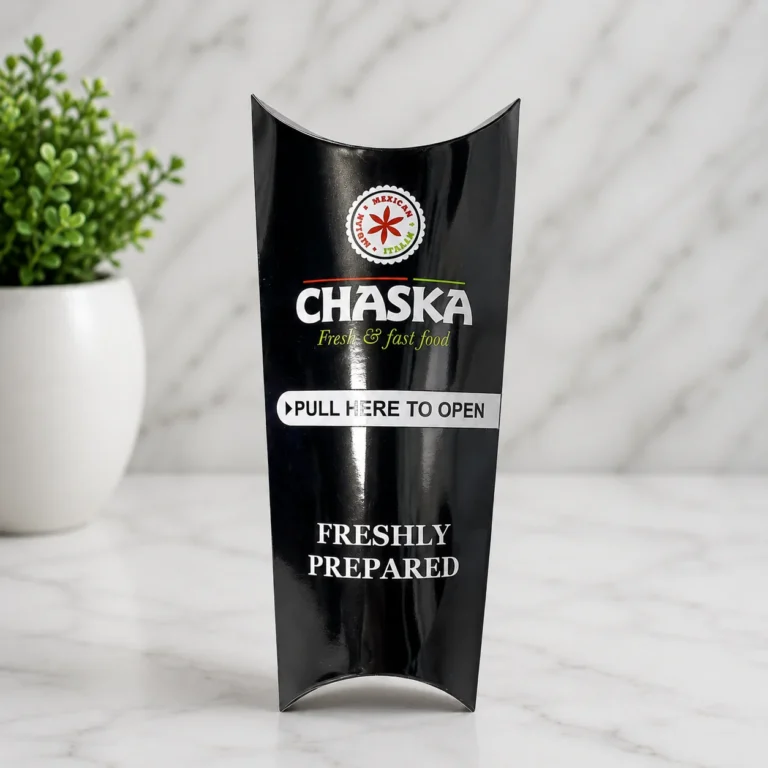
CHASKA Custom Pillow-Style Shawarma Sleeves with Food-Safe 300gsm Card

CHASKA Custom Pillow-Style Shawarma Sleeves with Food-Safe 300gsm Card

Healey Packaging produced custom pillow-style shawarma sleeves for CHASKA using 300gsm food-safe BSB card, full-colour CMYK...

View Case Study
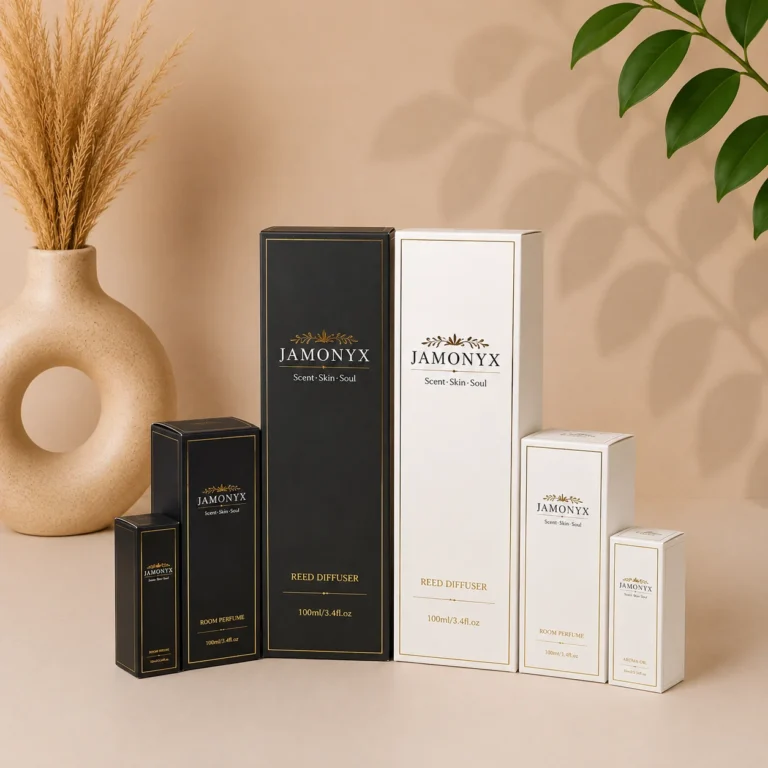
JAMONYX Custom Reverse Tuck Boxes in 350gsm SBS Card with Gold Foil

JAMONYX Custom Reverse Tuck Boxes in 350gsm SBS Card with Gold Foil

Healey Packaging produced 1,200 luxury reverse tuck boxes for JAMONYX across two black-and-white designs, three sizes,...

View Case Study
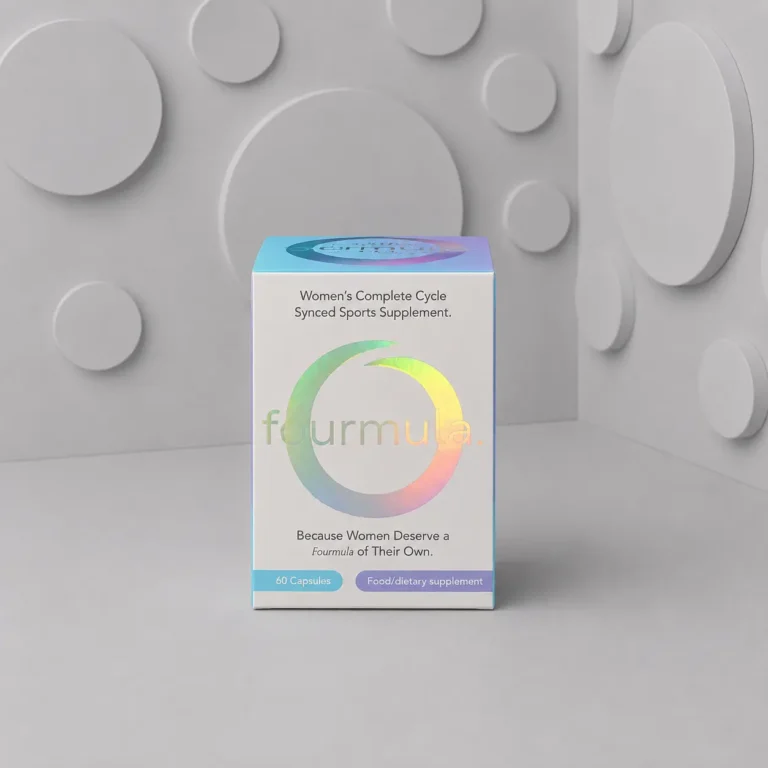
Fourmula Custom Supplement Boxes with Lamination and Holographic Finish

Fourmula Custom Supplement Boxes with Lamination and Holographic Finish

Fourmula started with 10 physical sample boxes for a compact supplement product, then moved toward a...

View Case Study

How Your Packaging Is Produced

1

Requirements

Share product size, quantity, use case and artwork status.

2

Structural Planning

The right size, board and box style are reviewed.

3

Artwork and Proofing

A digital proof is prepared before production begins.

4

Production

Boxes are printed, cut, folded and finished to specification.

5

Quality Control

Finished packaging is checked for structure and print quality.

6

Delivery

Completed packaging is packed and delivered to your business.

What Customers Say

We have been using Healey for years and are always impressed by the service, quality and speed.

Harry George

The packaging is of high quality, strong cardboard. I will definitely be using them again.

Amanda Newman

Great communication, quick and good product. I really recommend.

JOON Plant Based Atelier

Frequently Asked Questions

Apparel packaging can be designed for T-shirts, shirts, hoodies, dresses, trousers, knitwear, sportswear, underwear, baby clothing, fashion accessories and complete clothing collections. The box size and structure are tailored to the folded dimensions of the product.

Ready to Create Packaging Built Around Your Product?

Share your product, size, material and quantity requirements. Our team will help you choose the right structure, print and finish.

Free Design Support Low MOQ Digital Proof UK Delivery

Need custom sizing or a premium finish?

Tell us your product, target look, and how you ship. We'll recommend the right board, print, and finish for performance.
Scroll to Top