
 Popular
Custom Kraft Soap Boxes
Every handmade soap deserves packaging that feels as natural as the product...
View Custom Kraft Soap BoxesReduce unnecessary packaging without compromising product protection. Healey Packaging supplies custom eco-friendly packaging in recyclable paperboard, kraft and corrugated materials, with responsibly sourced options including FSC®-certified board where required. We tailor the size, structure and print to your product so UK brands can build more efficient packaging for retail, ecommerce and distribution.
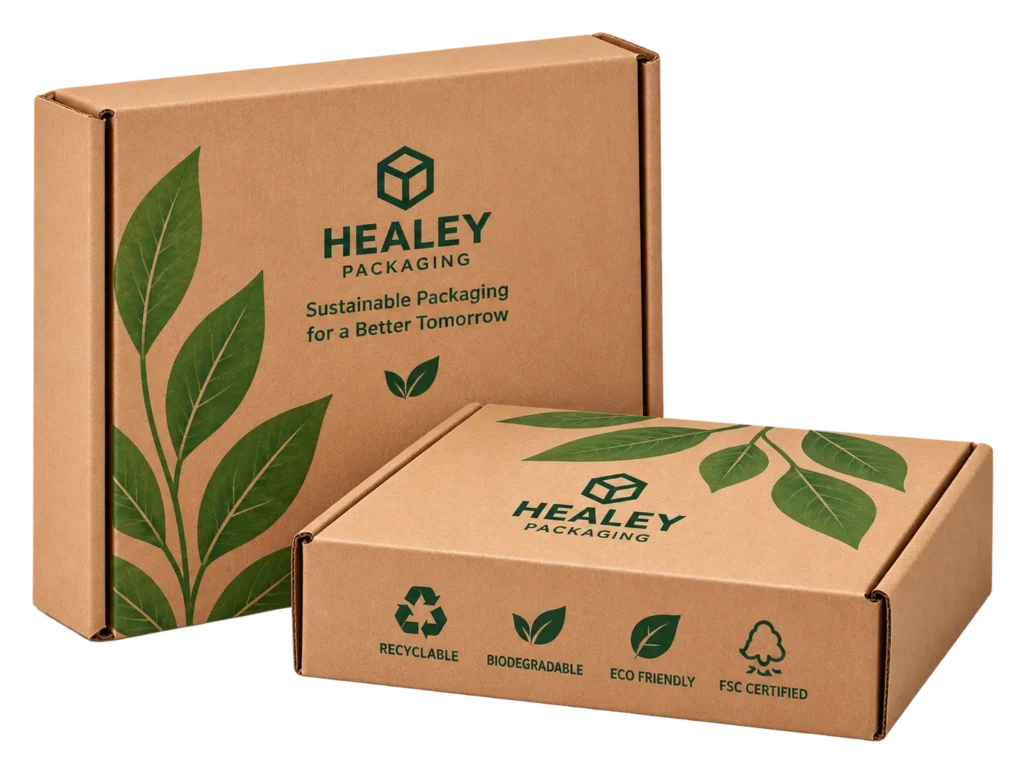
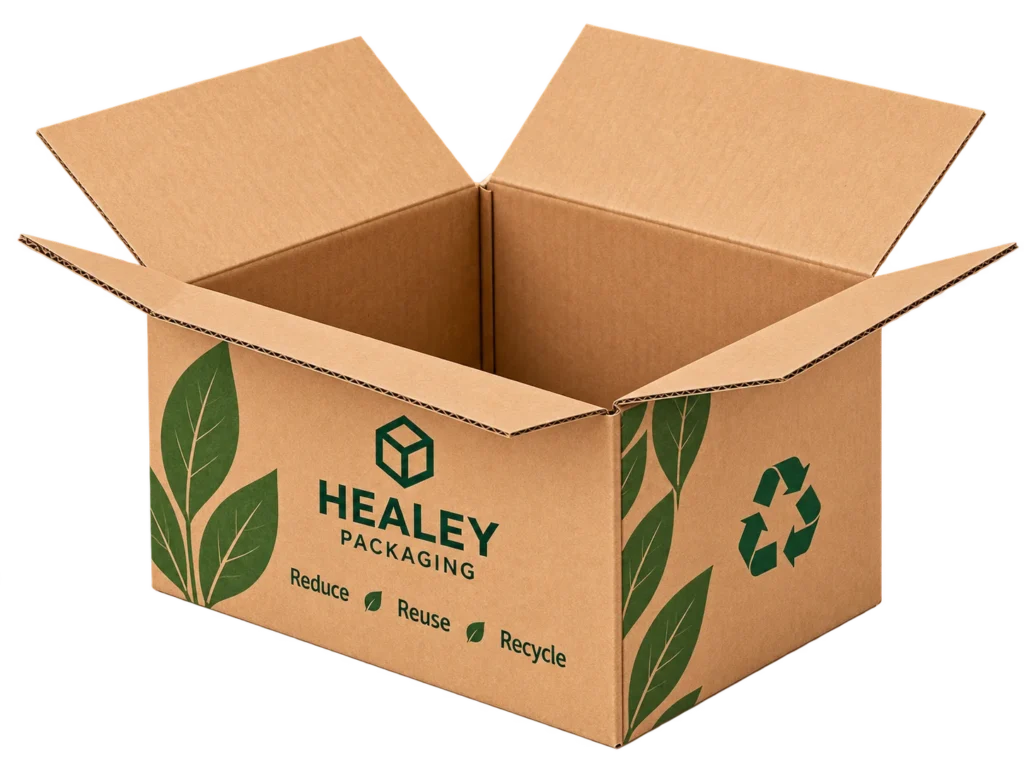
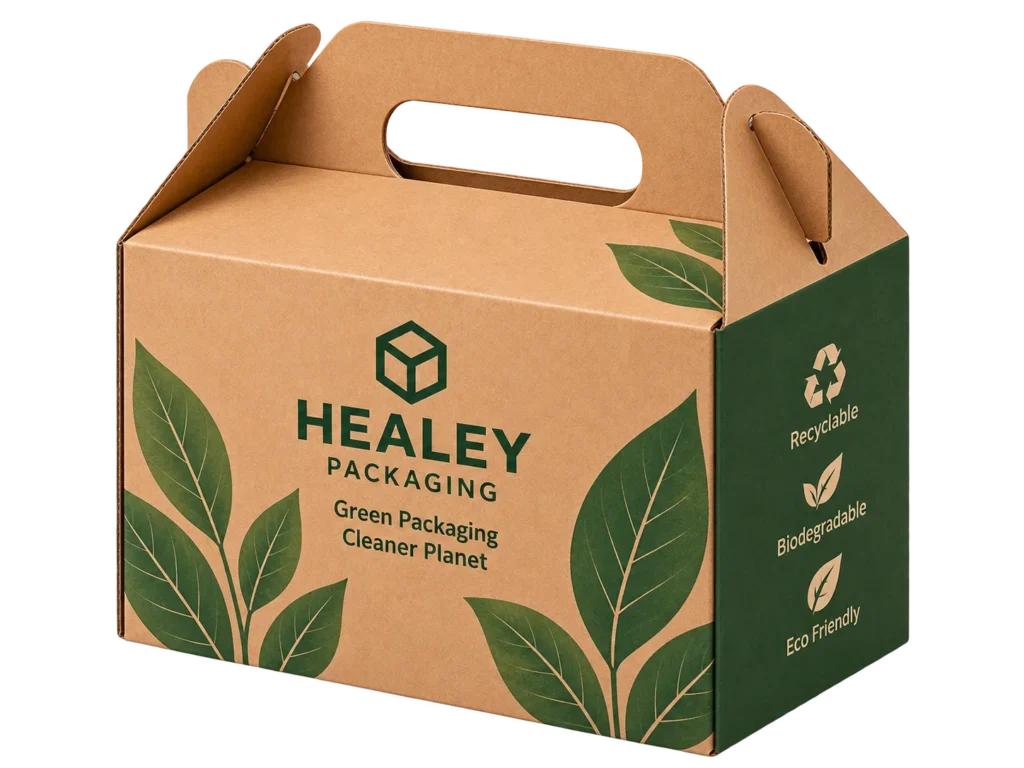
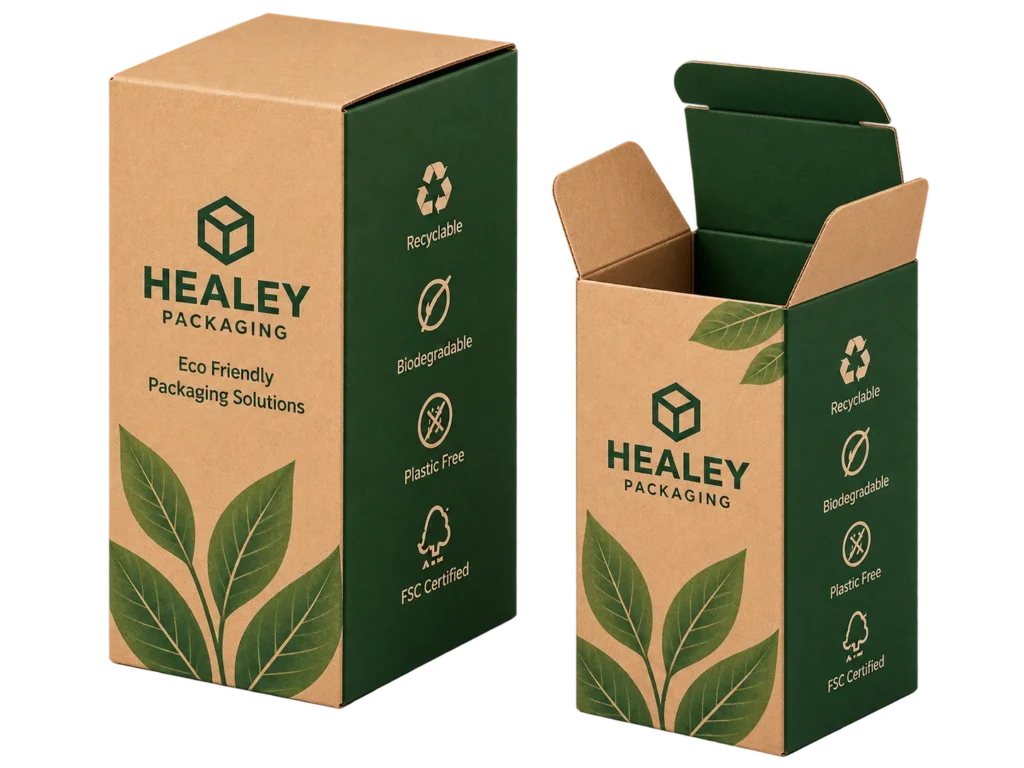
Browse recyclable, right-sized and kraft packaging options for responsible product presentation.
Popular
Every handmade soap deserves packaging that feels as natural as the product...
View Custom Kraft Soap Boxes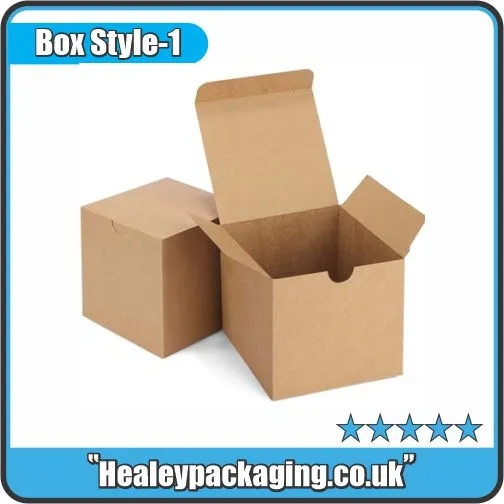 Best Seller
Kraft packaging has been around for years, but it’s anything but boring....
View Kraft Boxes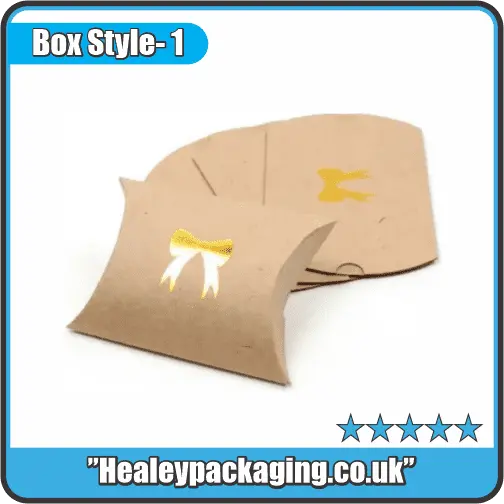 Most Ordered
Kraft pillow packaging looks simple at first glance. A curved fold, two...
View Kraft Paper Pillow Boxes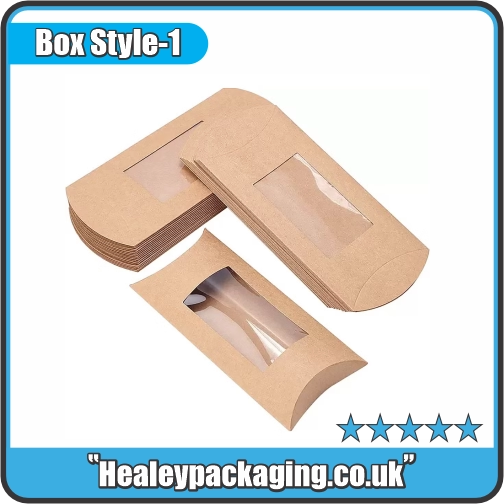 Custom
Eco-friendly packaging is not one board, colour or box style. Start by defining the improvement you want to make, then select a structure and material that can still protect the product through packing, storage, distribution and customer use.
Right-size the pack and remove layers, void space or components that do not perform a useful protection or presentation job.
Where suitable grades are available, recycled fibre can be specified without assuming that every recycled board performs the same way.
Review the whole construction, including coatings, windows, inserts and adhesives, rather than judging the outer board in isolation.
Certified or responsibly sourced fibre claims should only be used where the selected material and supporting supply-chain evidence permit them.
Define what the packaging has to protect and how it will be handled first. Then identify where material, empty space or mixed components can be reduced without undermining the required packaging performance.
A lower-material specification is only useful if the pack still performs its job. Product condition, packed weight, handling, temperature, moisture and delivery route can all change what the packaging needs to do.
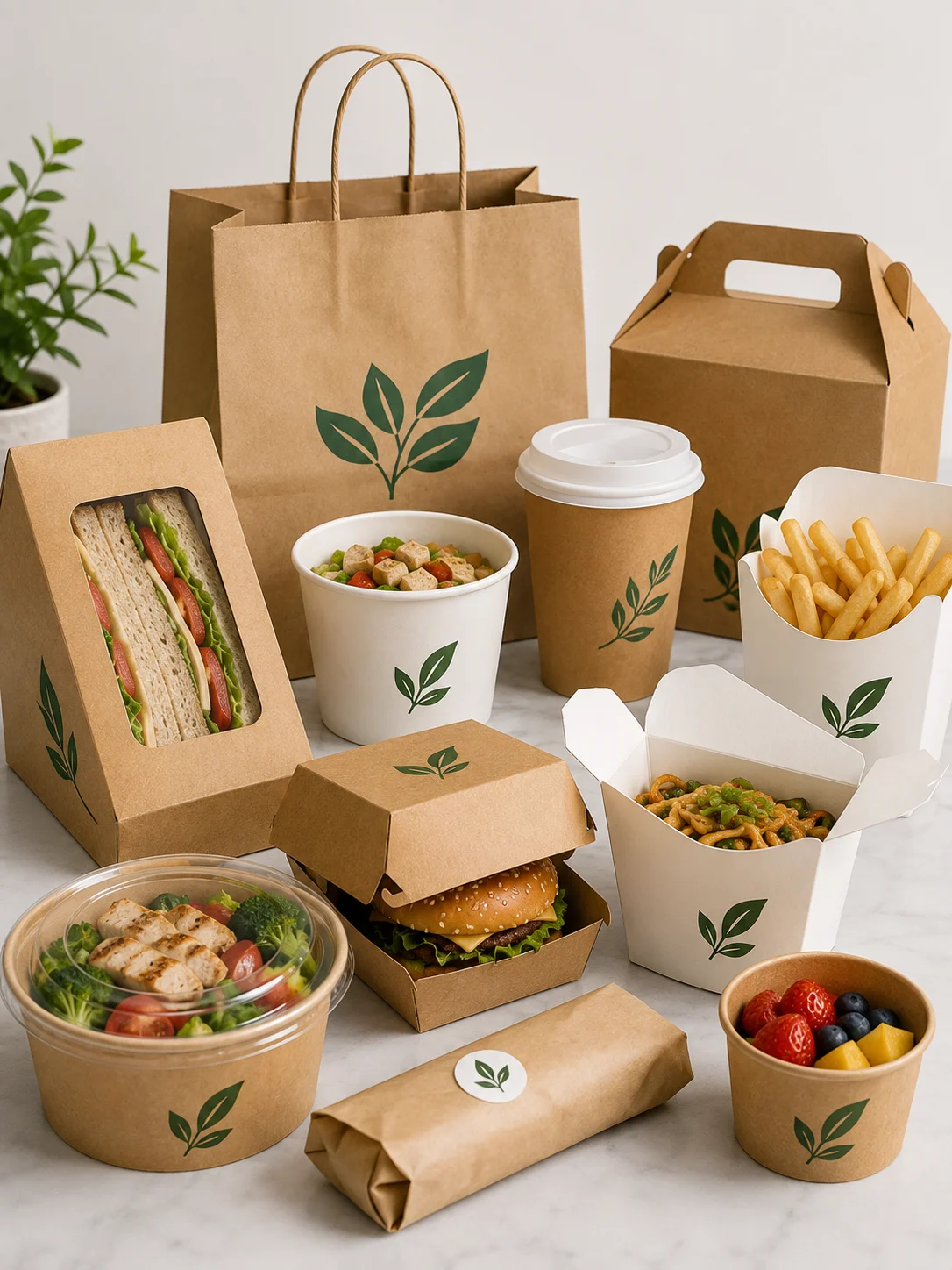
Grease, moisture, heat and direct food contact can require a different material or barrier specification from a dry secondary carton.
Check: product condition · contact type · temperature · barrier need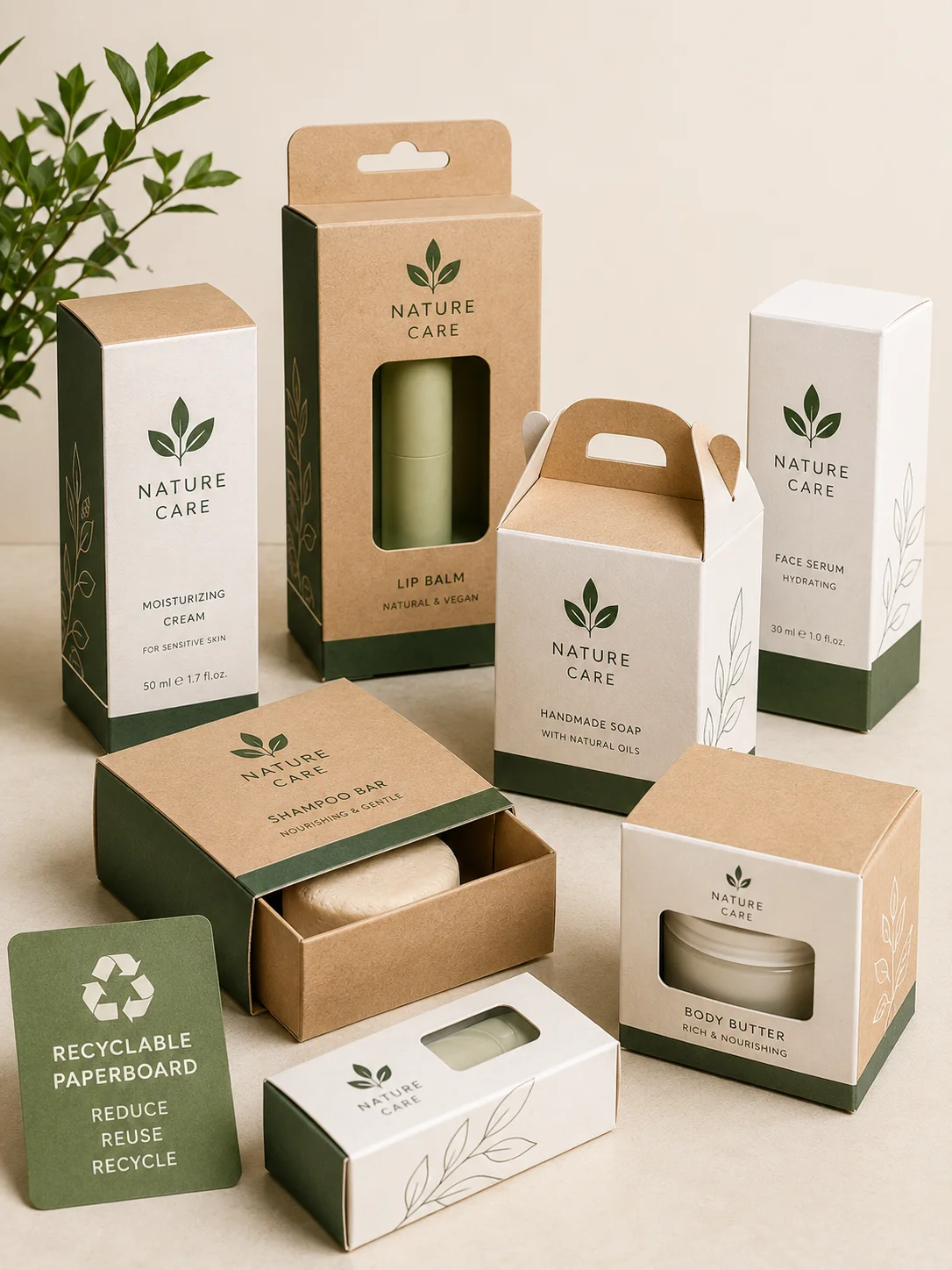
Retail cartons need enough structure for repeated handling while providing the required surface for branding, information and display.
Check: packed weight · shelf handling · print area · added components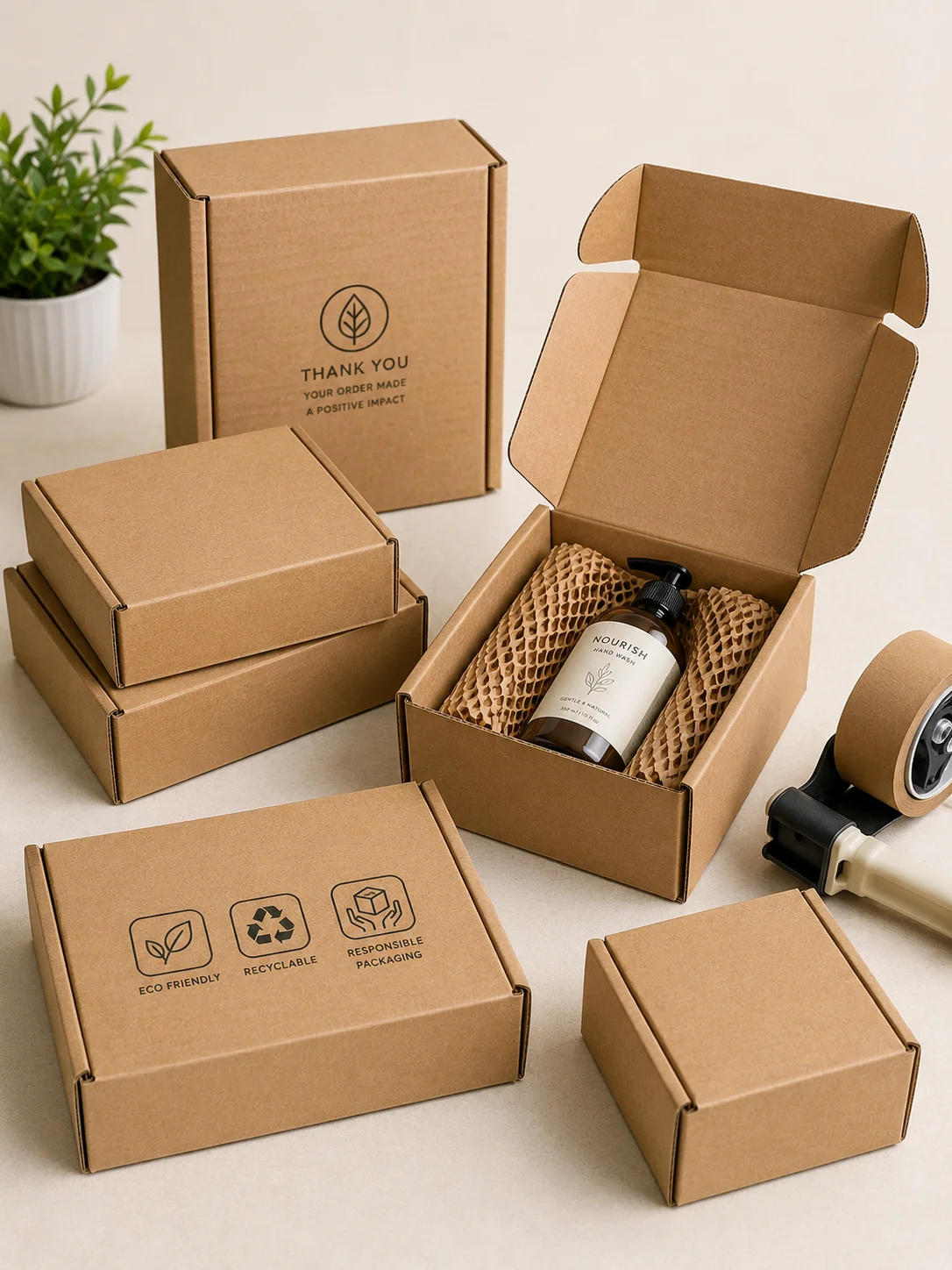
Right-sized corrugated formats can reduce unnecessary packed volume, but board strength and internal fit still need to match courier handling.
Check: transit load · movement · void fill · outer dimensions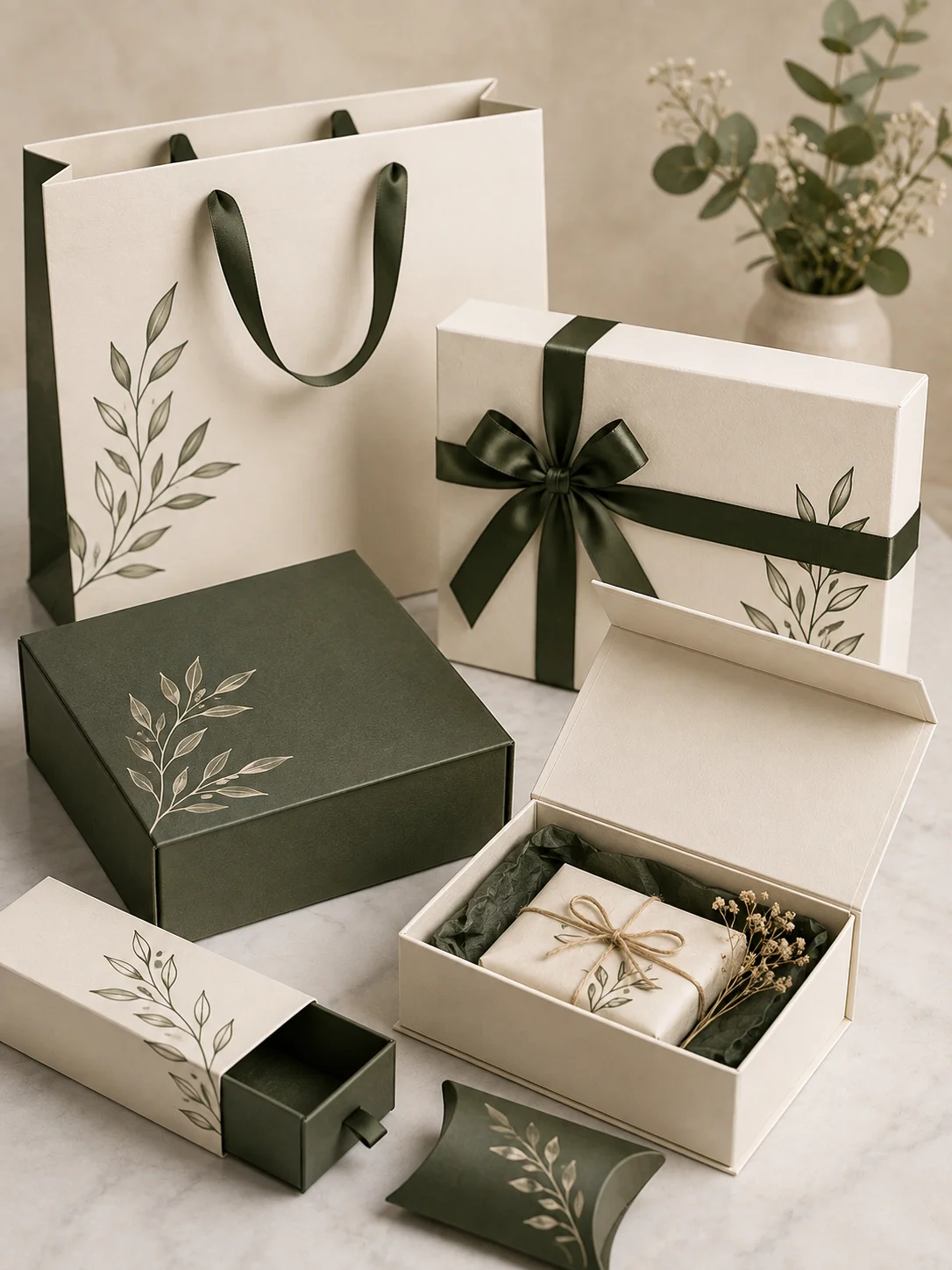
Inserts, wraps, windows, magnets or decorative finishes should support presentation or product control rather than being added automatically.
Check: presentation goal · reuse intent · inserts · mixed materialsThese terms describe different material attributes or end-of-life routes. They should not be used interchangeably, and none of them automatically proves that the finished pack has a lower overall environmental impact.
The material contains fibre or other content recovered from previous use.
Check the actual grade and percentage where a quantified claim is required.The finished construction can enter an appropriate recycling route where suitable collection and processing exist.
Check coatings, windows, adhesives, inserts and local collection conditions.Certification relates to sourcing and chain-of-custody requirements rather than the complete pack’s end-of-life performance.
Confirm the exact certified material and permitted claim for the project.A material or pack is intended to break down under specified composting conditions.
Confirm the applicable standard, complete construction and realistic disposal route before making the claim.The term describes biological breakdown under certain conditions but does not by itself explain timing or disposal method.
Avoid using the term without clear evidence and conditions.See the dedicated guide to recyclable, compostable and biodegradable packaging terminology.
Kraft appearance, recycled fibre and paper-based construction are not interchangeable sustainability claims. Select the board around product weight, structure, print, distribution and the environmental attribute you actually need.
Suitable for many retail cartons and sleeves where accurate folding, compact construction and detailed print are priorities.
Review: board grade · packed weight · coating · end-of-life routeKraft can support a natural visual direction, but its brown appearance is not evidence of a particular environmental outcome.
Review: fibre source · grade · print contrast · complete constructionUseful where a verified recycled-content attribute is required and the selected grade still provides the necessary surface and strength.
Review: actual content · grade performance · product requirementsAppropriate for ecommerce, shipping and heavier products where flute and board construction need to manage stacking and transit loads.
Review: flute/build · packed weight · void space · coatingsEnd-of-life and material-efficiency decisions depend on the finished construction. A paper-based outer carton can still include windows, laminates, coatings, adhesives, inserts or decorative elements that change how the pack should be assessed.
Choose enough strength for the product and route without automatically over-specifying thickness or layers.
Add surface protection only where the pack requires it, and review how the selected treatment changes disposal options.
Decide whether product visibility genuinely requires a transparent component or whether a die-cut opening can achieve the goal.
Use inserts where they control movement or presentation; simplify the fitment where empty structure or unnecessary material can be removed.
Glue, tapes, magnets and other closures should be specified around the structural need and complete-pack construction.
Foil, Spot UV, embossing or other effects should support the brand brief without being assumed neutral to end-of-life performance.
A finish or barrier can be justified when it performs a required job. The key is to understand the complete construction before describing the pack with a broad environmental claim.
Environmental wording should describe a specific, supportable attribute of the finished packaging. Avoid treating “eco-friendly” as proof of recyclability, recycled content, compostability or certified sourcing.
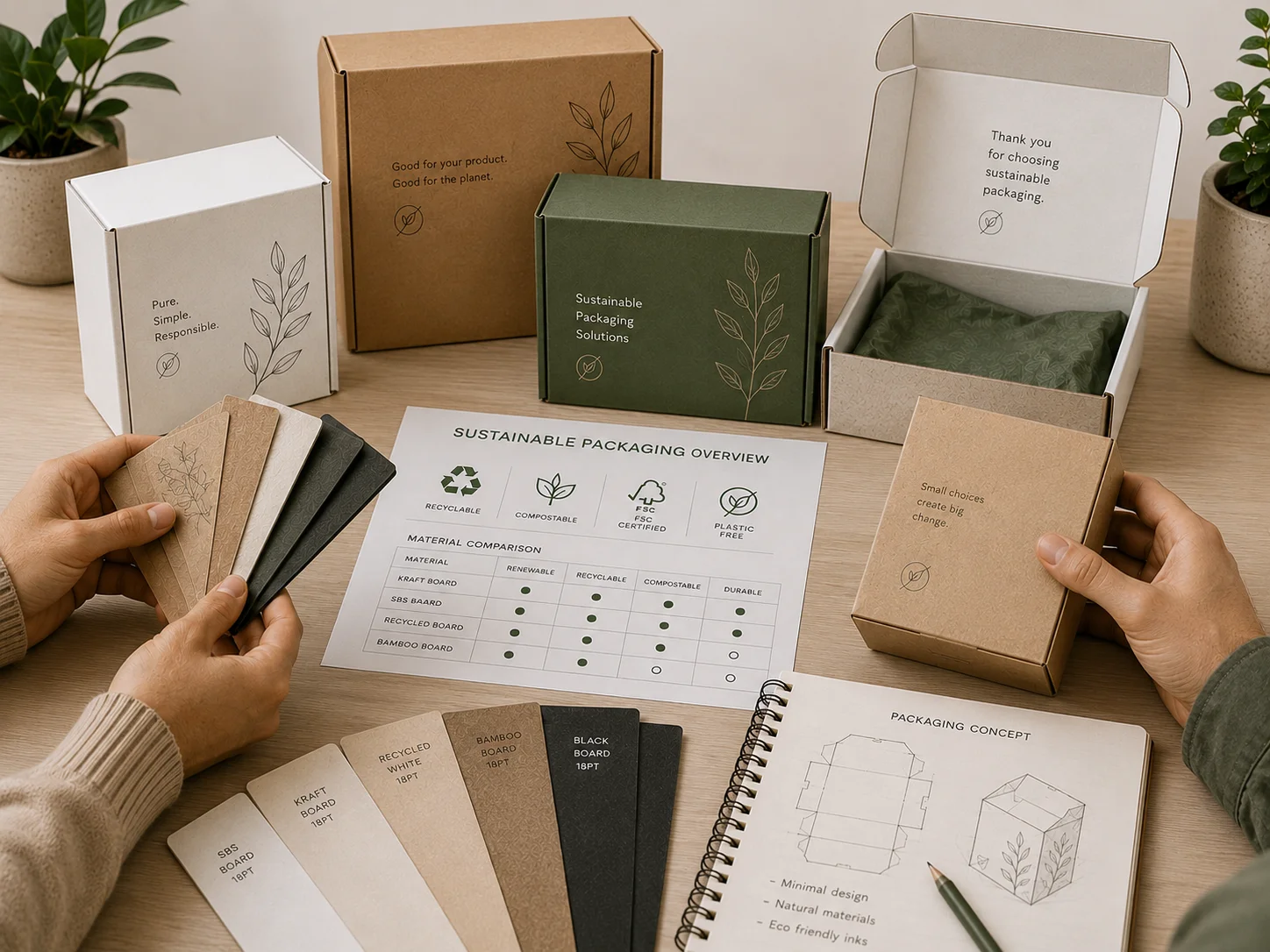
Assess the board together with windows, coatings, inserts, adhesives and any other components that form the final construction.
Use only where the relevant recycling route and pack construction support the claim.Do not confuse recycled content with recyclability. If a percentage is stated, it should correspond with the selected material specification.
Keep the claim tied to the actual board or component being supplied.These claims depend on the exact material, complete construction and the conditions in which breakdown is expected to occur.
Avoid applying the claim to the whole pack when only one component supports it.Certification relates to the relevant sourcing and supply-chain requirements; it does not automatically establish recyclability or overall impact.
Confirm the selected certified stock and permitted claim before artwork approval.One of the most practical improvements is to remove material the product does not need while retaining the strength and fit required for real use. Once the specification works, keeping it controlled helps repeat orders and related SKUs stay consistent.
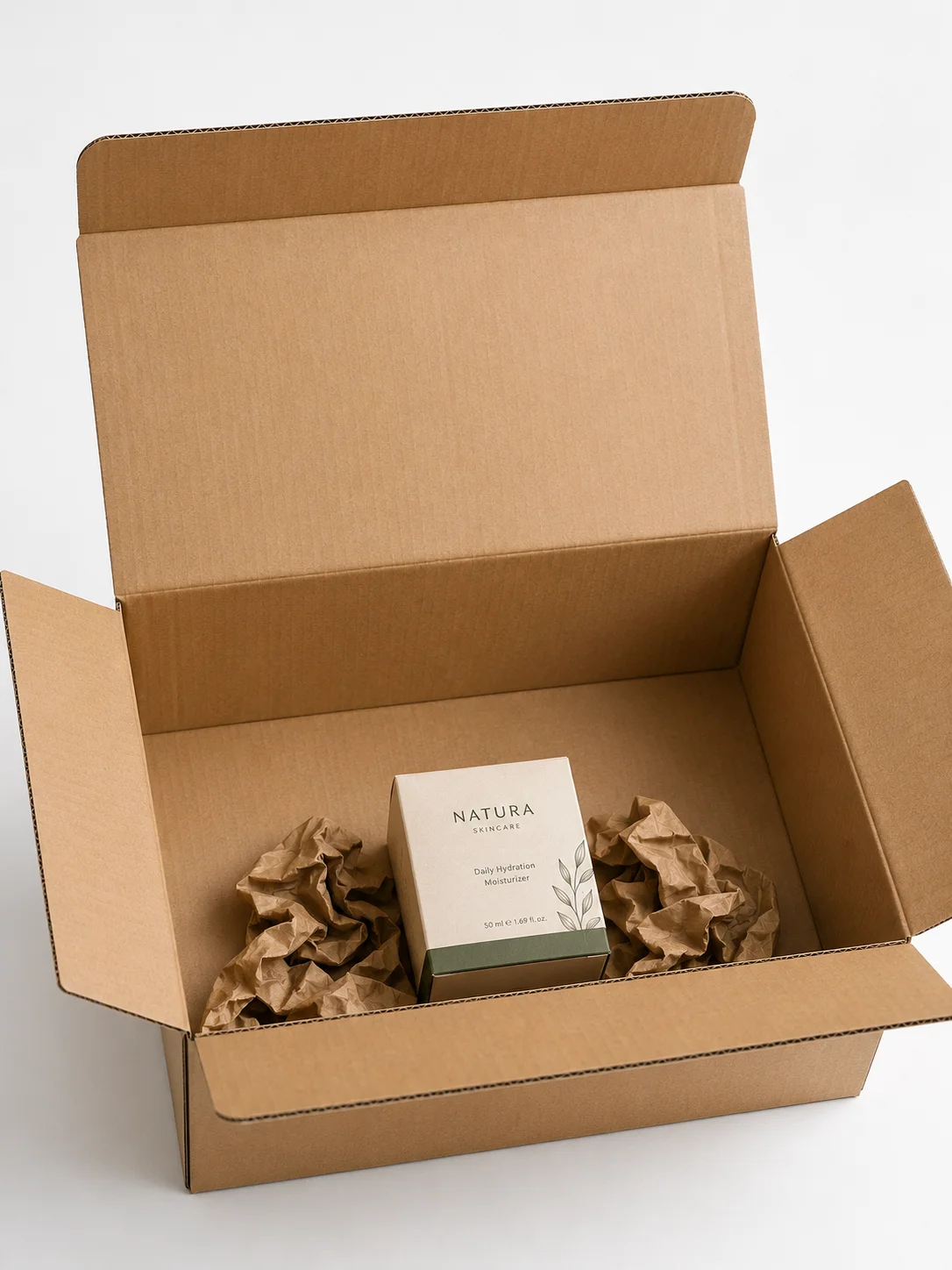
More empty space · more material · potentially more void fill
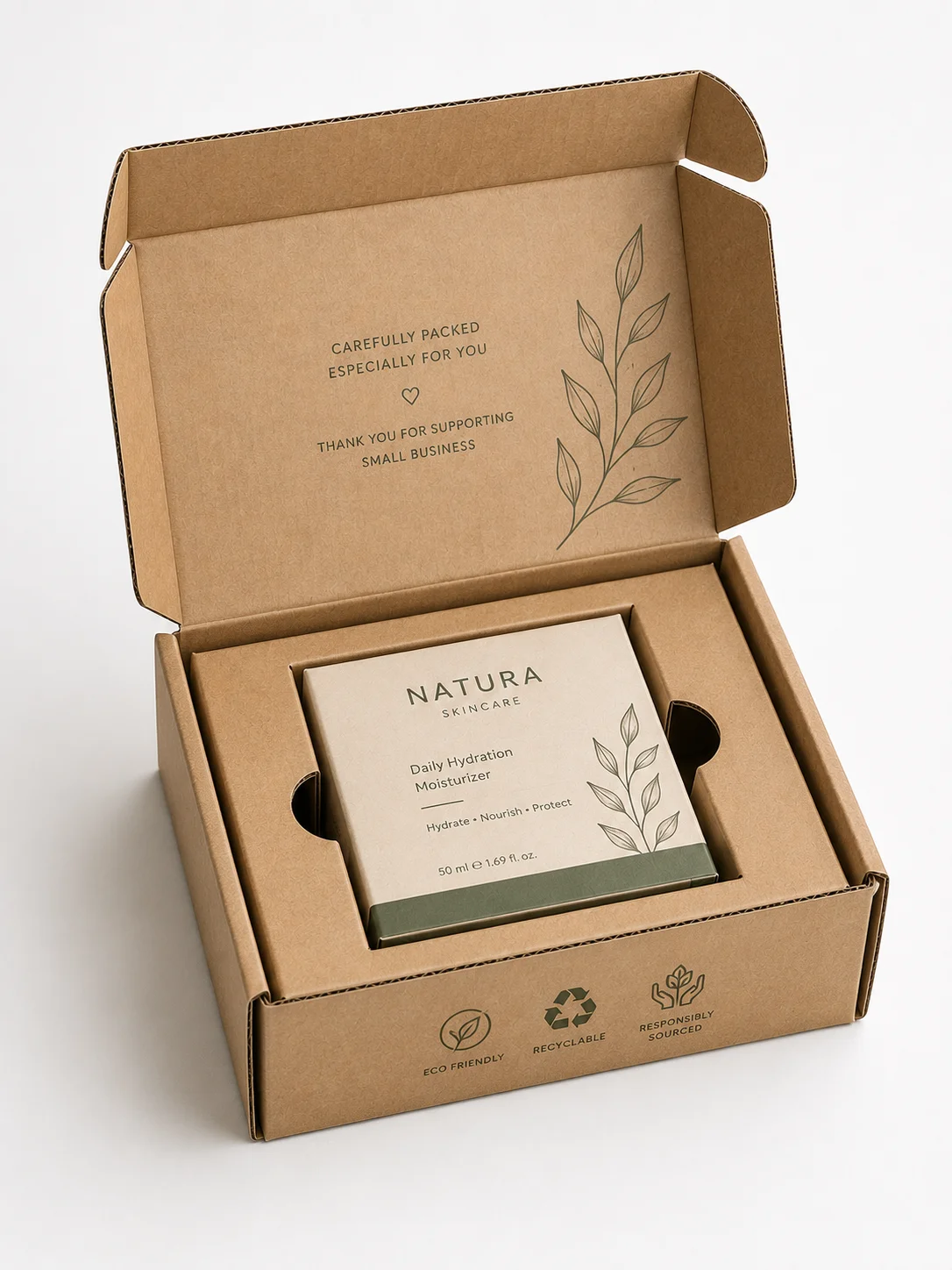
Closer fit · less excess · protection matched to the product
Build the dimensions around the finished product and required clearance rather than defaulting to unnecessary outer volume.
Use dividers or inserts where they control movement, then remove redundant layers or components that add no defined function.
Retain the agreed dimensions, board, dieline, inserts and artwork references for repeat orders where the product remains unchanged.
Review the specification when product size, weight, distribution, finishes or environmental requirements change.
Product dimensions, packed weight, distribution route, required protection, material preference, print requirements, inserts or barriers, quantity and the specific environmental attribute you want to support provide a practical starting point. For new structures, Packaging Design Services can help develop the specification.
Real packaging work produced for customer brands.
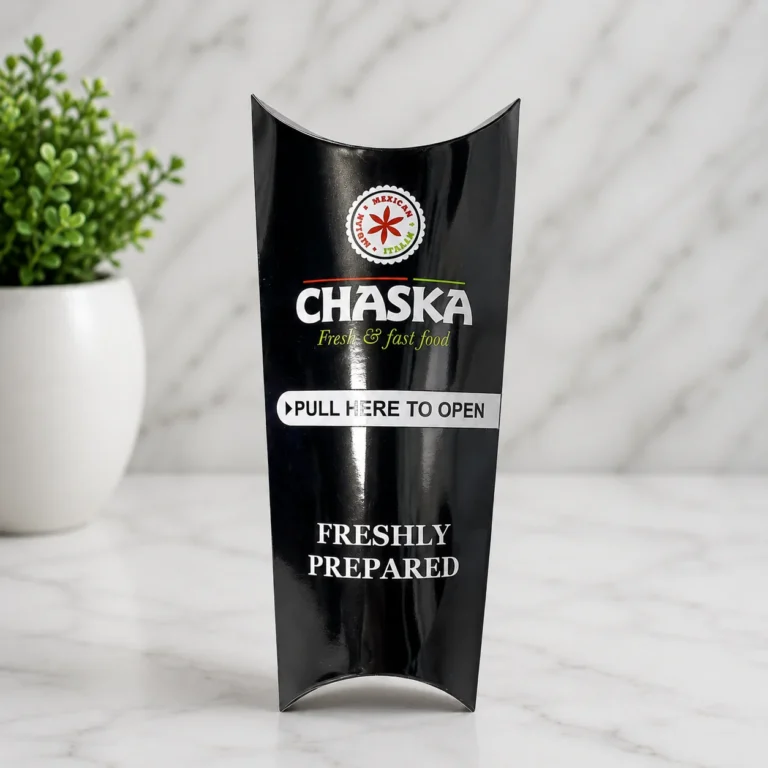
Healey Packaging produced custom pillow-style shawarma sleeves for CHASKA using 300gsm food-safe BSB card, full-colour CMYK...
View Case Study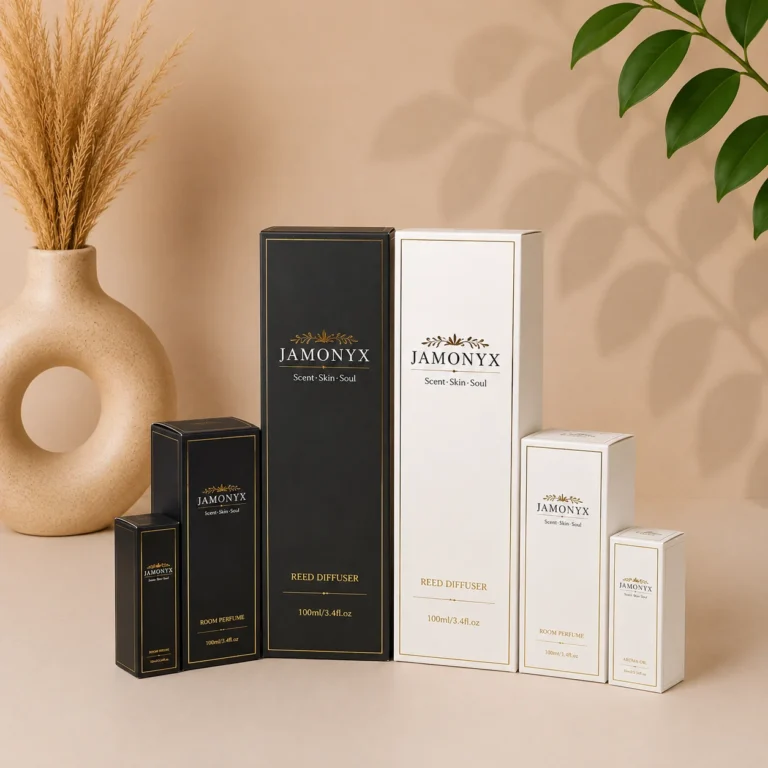
Healey Packaging produced 1,200 luxury reverse tuck boxes for JAMONYX across two black-and-white designs, three sizes,...
View Case Study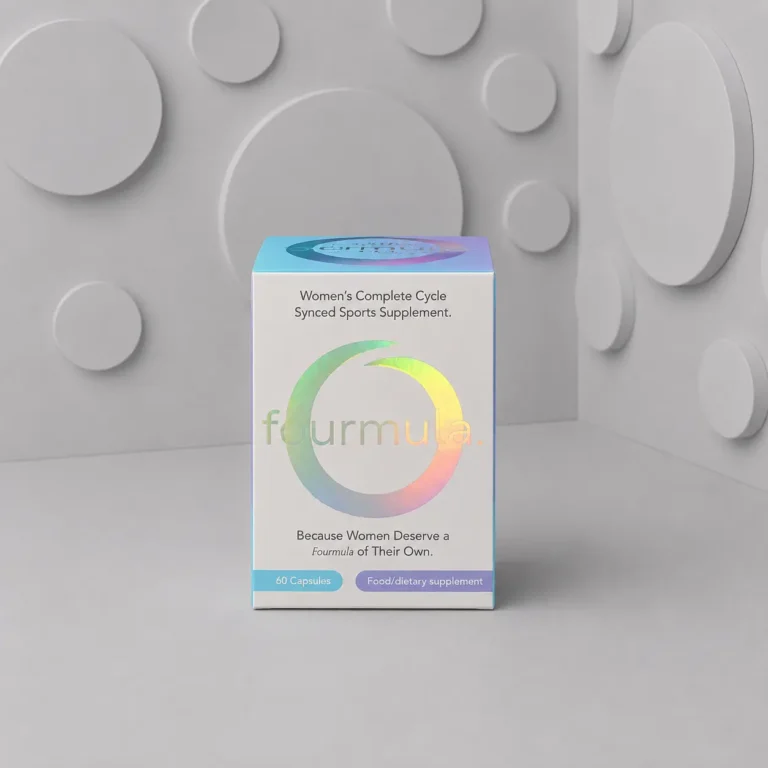
Fourmula started with 10 physical sample boxes for a compact supplement product, then moved toward a...
View Case StudyShare product size, quantity, use case and artwork status.
The right size, board and box style are reviewed.
A digital proof is prepared before production begins.
Boxes are printed, cut, folded and finished to specification.
Finished packaging is checked for structure and print quality.
Completed packaging is packed and delivered to your business.
We have been using Healey for years and are always impressed by the service, quality and speed.
Harry GeorgeThe packaging is of high quality, strong cardboard. I will definitely be using them again.
Amanda NewmanGreat communication, quick and good product. I really recommend.
JOON Plant Based AtelierEco-friendly packaging is packaging designed to reduce environmental impact through better material choices, efficient structural design and fewer unnecessary components. This can include recyclable paper-based materials, reduced material use, responsibly sourced fibre and packaging formats designed around the product to avoid excess waste.
Paperboard, kraft board and corrugated cardboard are among the most common materials used for eco-friendly packaging. The right option depends on the product weight, required protection, print needs, moisture exposure and whether the packaging is intended for retail presentation, ecommerce shipping or both.
Cardboard packaging can be a more environmentally responsible option when it is efficiently designed, appropriately sourced and compatible with local recycling systems. Its overall performance depends on factors such as material quantity, recycled content, coatings, adhesives, inserts and how the finished pack is disposed of after use.
FSC® certification relates to responsible forest management and chain-of-custody controls for forest-based materials. If FSC®-certified packaging is required, the specific board grade and supply chain used for the job should meet the relevant certification requirements before the claim is applied.
Yes. Sustainable packaging can still provide strong product protection when it is correctly specified. Corrugated board, right-sized carton dimensions and suitable inserts can all help protect products during transit. The goal should be to remove unnecessary material, not to reduce packaging strength below what the product and delivery route require.
Many packaging formats can be developed with little or no plastic by using paper-based structures, fibre-based inserts and suitable alternative coatings. Whether a fully plastic-free solution is practical depends on the product, barrier requirements, food-contact needs, moisture exposure and the level of protection required.
No. Recyclable packaging is designed to be collected and reprocessed through an appropriate recycling system. Biodegradable packaging is designed to break down under certain environmental conditions. These terms do not mean the same thing, and neither one automatically makes a packaging format the best environmental option for every product.
A practical starting point is to right-size the pack, remove unnecessary layers and select the lightest specification that still protects the product properly. After that, businesses can review recycled content, recyclability, fibre sourcing, coatings, inserts and print finishes. In many cases, reducing excess packaging can support both sustainability goals and cost control.
Yes. Eco-friendly packaging can be produced in a wide range of formats, including cartons, sleeves, corrugated mailers, retail boxes, shipping boxes and presentation packaging. The most suitable style depends on the product size, weight, handling requirements, branding goals and distribution route.
Healey Packaging offers no minimum order quantity, making eco-friendly packaging suitable for both smaller runs and ongoing business supply. Standard production is typically 7–10 working days after artwork approval, with UK-wide delivery available.
Share your product, size, material and quantity requirements. Our team will help you choose the right structure, print and finish.
Tell us your product, target look, and how you ship. We'll recommend the right board, print, and finish for performance.
 Apparel Packaging
 Bakery Packaging Boxes
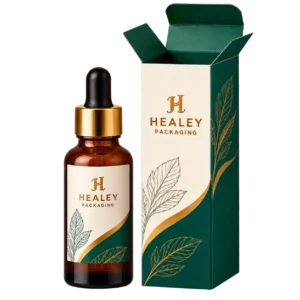 Bottle Packaging Boxes
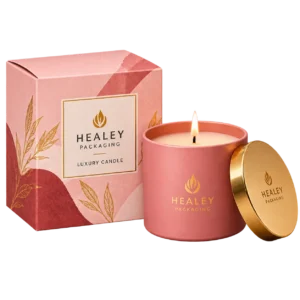 Candle Boxes
 CBD Packaging Boxes
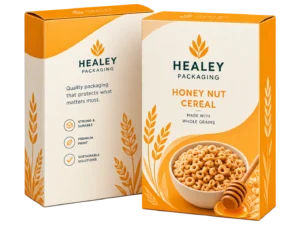 Cereal Packaging Boxes