

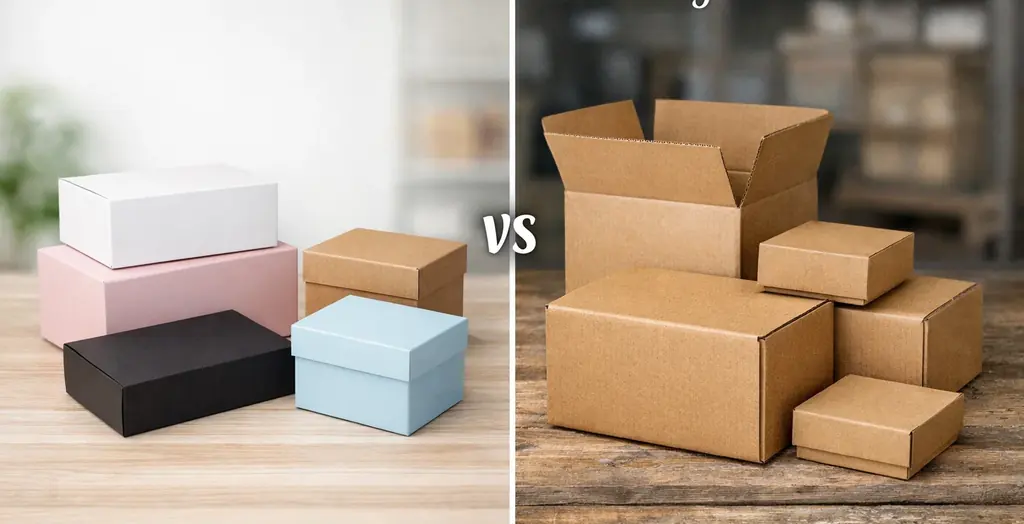
TL;DR – Cardstock vs Corrugated in Simple Terms
Cardstock boxes are lightweight, highly printable, and ideal for retail display. Corrugated boxes are stronger, shock-absorbent, and designed for shipping and storage. If branding and shelf presentation matter most, choose cardstock. If protection and durability are critical, choose corrugated. Many brands combine both for retail presentation and safe delivery.
Many businesses searching for cardstock boxes vs corrugated boxes assume they are interchangeable. They’re not.
Choosing the wrong material can lead to damaged products, unnecessary shipping costs, or overspending on packaging that doesn’t match your needs. Some brands use cardstock for shipping and face crushed cartons. Others use corrugated boxes for retail display and end up with excessive weight and cost.
Understanding the difference between cardstock and corrugated packaging helps you protect your products, optimise budgets, and maintain strong brand presentation.
This guide is designed for eCommerce brands, retailers, subscription businesses, and product manufacturers deciding which box material suits their packaging strategy.
What Are Cardstock Boxes?
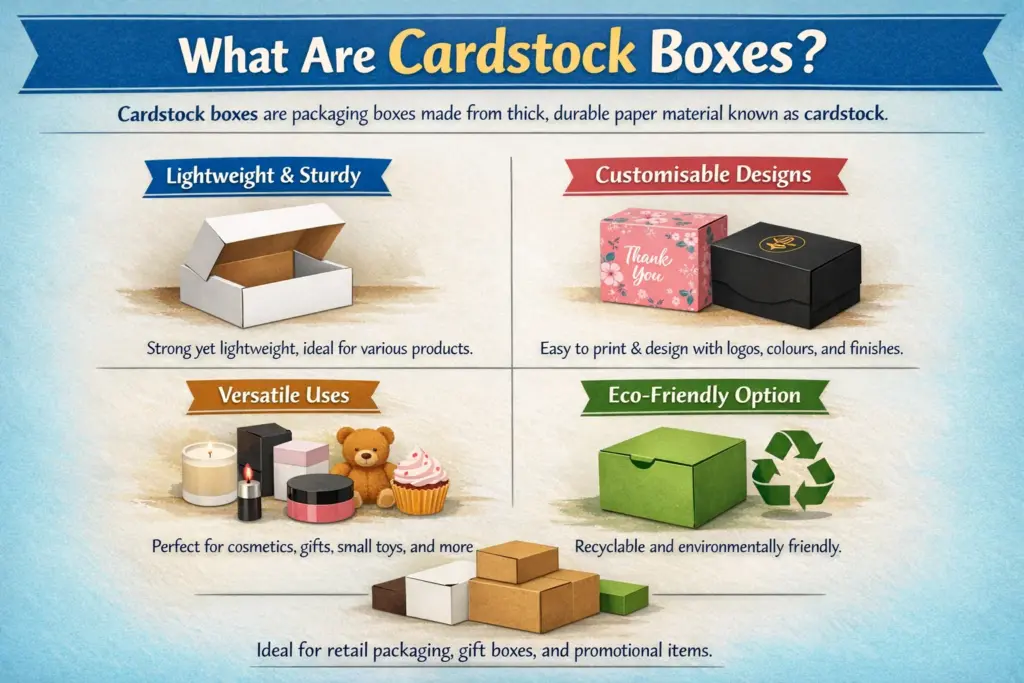
Cardstock boxes are made from thick paperboard, commonly known as folding carton material. These are the familiar smooth-surface retail boxes seen on shelves across supermarkets and beauty counters.
Often referred to as cardstock packaging boxes, they are lightweight and highly printable, making them ideal for branded retail packaging.
Common Uses
- Cosmetic packaging
- Dry food products
- Retail electronics
- Pharmaceutical packaging
- Supplements
Key Characteristics
- Lightweight
- Excellent print quality
- Smooth surface for premium finishes
- Designed for shelf display
Cardstock excels in presentation. It’s engineered for visual impact rather than heavy-duty protection.
What Are Corrugated Boxes?
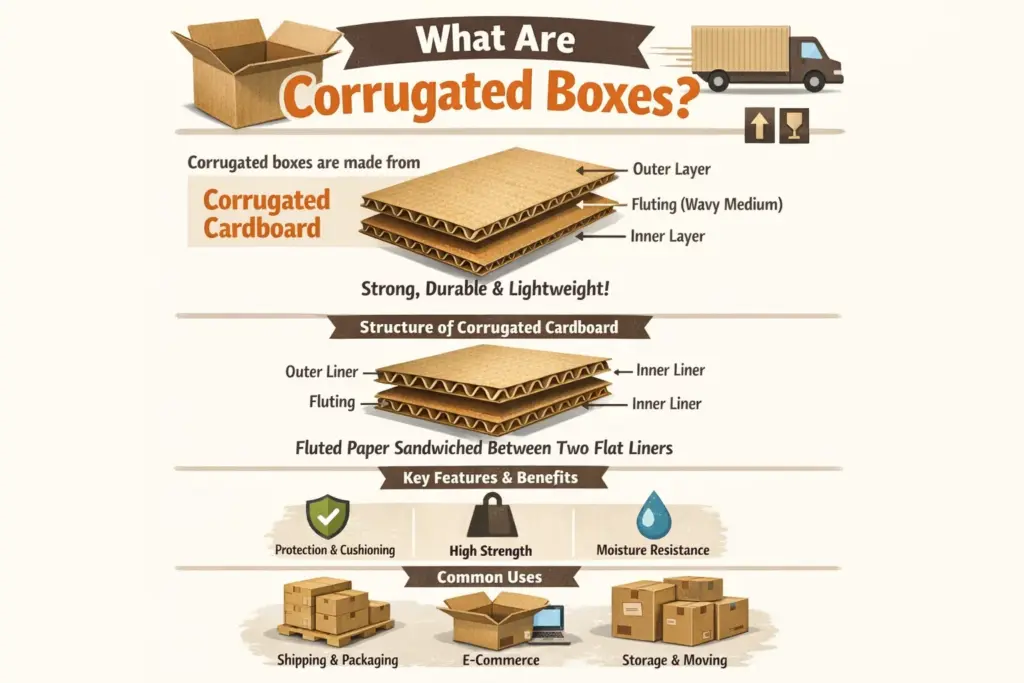
Corrugated boxes are made from fluted corrugated board, consisting of layered linerboard with a structured middle flute.
These corrugated packaging boxes are designed for strength, durability, and impact resistance.
Common Uses
- Shipping cartons
- Heavy product packaging
- Bulk storage
- Export packaging
- eCommerce fulfilment
Key Characteristics
- Strong and shock-absorbent
- Suitable for stacking
- Protective outer packaging
- Available in multiple flute strengths
Corrugated boxes are built for transport, not just display.
Structural Differences Explained
Material Composition
- Cardstock: Single-layer paperboard
- Corrugated: Linerboard + fluted middle layer + outer liner
The fluted layer in corrugated packaging creates cushioning and stacking strength.
Strength & Durability
Corrugated boxes provide structural integrity and shock absorption. Cardstock provides presentation and branding surface.
If protection during transit is your priority, corrugated wins. If visual appeal is the priority, cardstock excels.
Thickness Comparison
Cardstock thickness is measured in GSM (grams per square metre).
Corrugated board strength is determined by flute types such as:
- E-flute (thin, good print quality)
- B-flute (stronger, better cushioning)
- C-flute (heavy-duty shipping strength)
This distinction is central when comparing folding carton vs corrugated box solutions.
Cardstock vs Corrugated – Side-by-Side Comparison
| Feature | Cardstock Boxes | Corrugated Boxes |
|---|---|---|
Strength |
Light–Medium |
Medium–Heavy |
Weight |
Lightweight |
Heavier |
Printing Quality |
Excellent |
Good (varies by finish) |
Shipping Protection |
Low |
High |
Best For |
Retail display |
Shipping & transport |
Cost |
Lower for small runs |
Cost-effective for bulk |
This table summarises the difference between cardstock and corrugated materials in practical terms.
When to Choose Cardstock Boxes
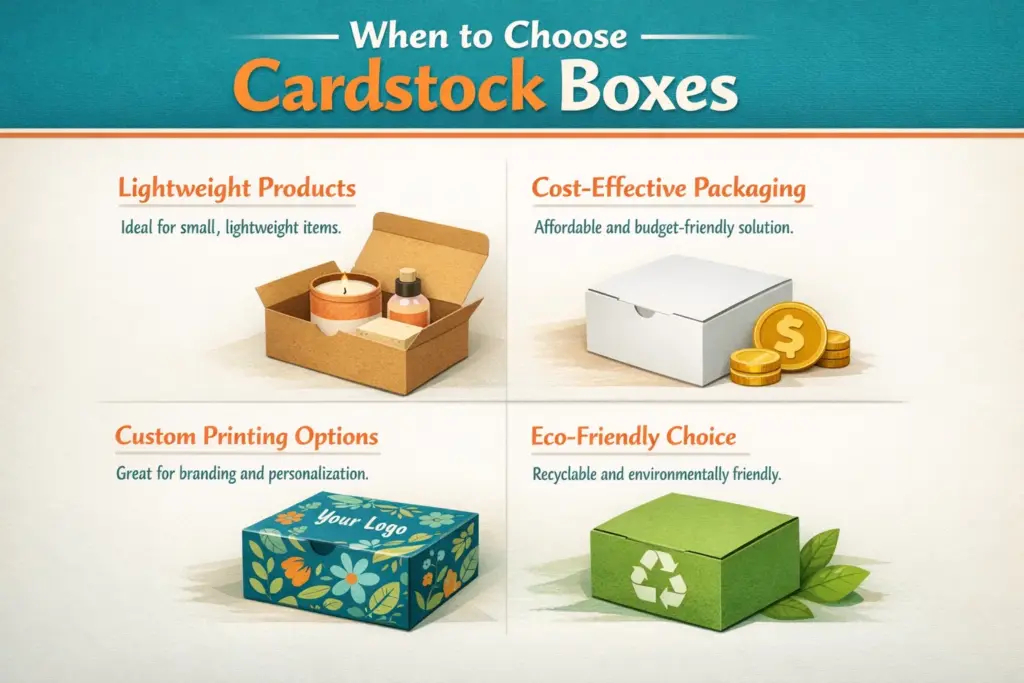
Choose cardstock when:
- Your product is lightweight
- Branding and shelf presentation matter most
- The product is sold in-store
- You require high-end finishes
- You need compact retail packaging
Industries using cardstock frequently include cosmetics, supplements, and small electronics.
For premium retail presentation, many brands invest in luxury packaging finishes applied to cardstock for enhanced impact.
When to Choose Corrugated Boxes
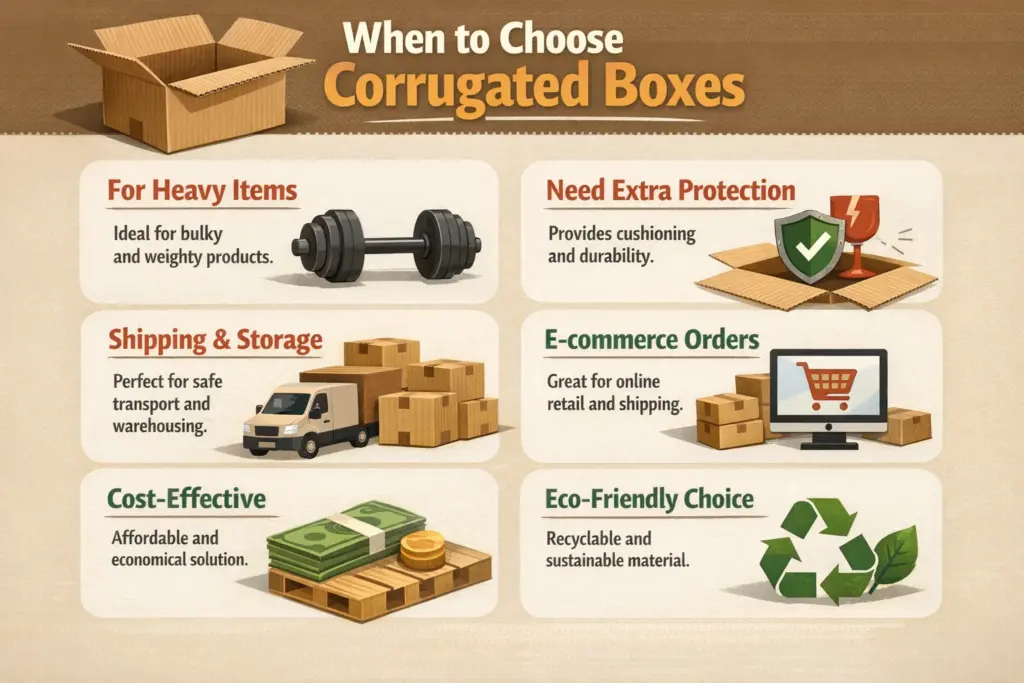
Choose corrugated when:
- Shipping heavy items
- Handling fragile goods
- Sending eCommerce orders
- Exporting internationally
- Storing products in warehouses
Corrugated is the foundation of corrugated shipping boxes, providing protection during transport.
If your packaging must withstand courier networks and stacking pressure, corrugated is essential.
Can You Combine Both?
Yes — and many successful brands do.
A common strategy:
- Cardstock inner retail box
- Corrugated outer shipper
This approach balances presentation and protection. Subscription brands frequently adopt this method for premium unboxing while maintaining shipping durability.
Cost Comparison – Which Is More Affordable?
Cardstock is often cheaper for small retail packaging runs.
Corrugated becomes more cost-effective when:
- Shipping in bulk
- Handling heavy goods
- Reducing damage rates
Long-term savings often come from choosing the correct strength initially. Using weak packaging increases product damage and return costs.
Shipping weight also affects courier pricing. Heavier corrugated boxes may increase cost, but they prevent losses from damaged goods.
Sustainability Comparison
Cardstock
- Recyclable in the UK
- Lower material weight
- Suitable for retail waste streams
Corrugated
- Highly recyclable
- Often manufactured from recycled fibres
- Stronger boxes reduce transit damage and waste
Both materials support sustainability goals when chosen appropriately. Many brands pair them with eco-friendly packaging solutions to meet UK environmental expectations.
Common Mistakes Businesses Make
- Using cardstock for shipping heavy goods
- Overspending on corrugated for simple retail display
- Ignoring product weight
- Failing to consider shipping methods
Understanding retail vs shipping boxes prevents costly errors.
Which Box Type Is Right for Your Business?
Ask yourself:
- Is your product heavy?
- Will it be shipped individually?
- Is branding your main priority?
- Do you need stacking strength?
- Are you selling online or in-store?
Retail-first brands typically favour cardstock. Shipping-first businesses require corrugated. Many brands need both.
Why Choose Healey Packaging for Custom Boxes?
Healey Packaging provides:
- Expert material consultation
- Custom cardstock and corrugated options
- High-quality printing capabilities
- UK-based production
- Fast turnaround times
Whether you need custom packaging UK solutions for retail or durable shipping cartons, our team helps you select the correct material for performance and presentation.
Secure Your Shipments with Confidence
Reliable packaging tape solutions for strong, damage-free deliveries across the UK.
Request a Quote