
Box Sizes and Dimensions at a Glance
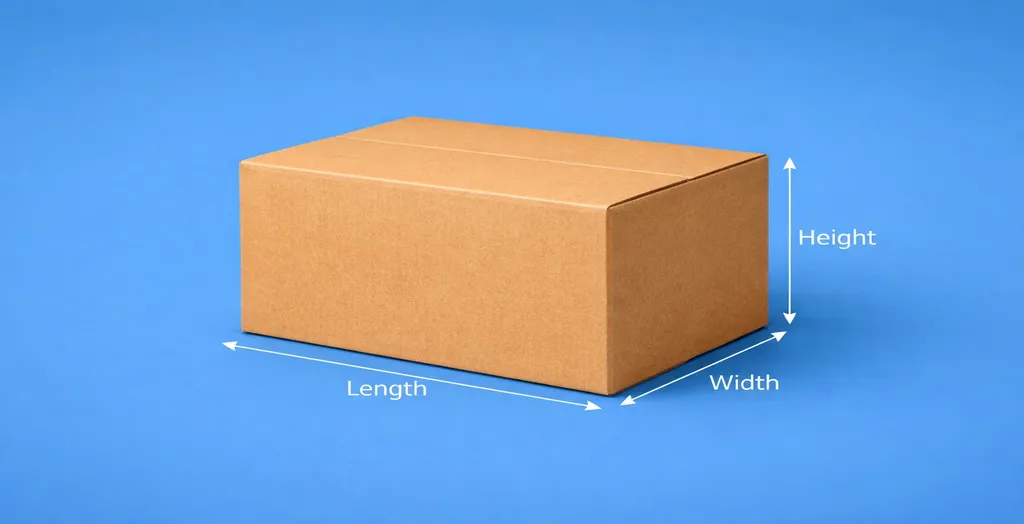
- Box dimensions are commonly written as Length × Width × Height, although suppliers may use slightly different terminology such as breadth or depth.
- Internal dimensions describe the usable space inside the box, while external dimensions are more relevant to storage and shipping.
- Allow enough room for the product, inserts and cushioning without creating unnecessary empty space.
- Oversized packaging can increase material use and may move a parcel into a different courier size or pricing category.
- Custom sizing can improve product fit, but its overall cost benefit depends on order quantity, production method and shipping requirements.
Box size is one of the most underestimated decisions in packaging. Many brands focus on artwork, materials, or price, but box sizes and dimensions directly affect shipping costs, product protection, and how a brand is perceived.
Choosing the wrong size often leads to wasted space, higher postage fees, damaged products, and poor unboxing experiences. Oversized boxes increase dimensional weight charges, while undersized boxes can crush products or compromise presentation.
For eCommerce and retail brands, correct packaging box dimensions are not just a technical detail. They influence fulfilment efficiency, customer satisfaction, and long-term costs. Getting box sizing right from the start prevents recurring issues as order volumes grow.
How Are Box Sizes and Dimensions Measured?
Packaging boxes are commonly specified as Length × Width × Height. For corrugated cases, these measurements are generally given as internal dimensions unless stated otherwise, because internal measurements determine the usable space for the product.
External dimensions are important for shipping, storage and courier size limits. Before ordering a box, confirm whether the measurements supplied are internal or external and allow enough space for inserts, cushioning and the thickness of the packaging material.
What Do Box Dimensions Mean?
Packaging dimensions are typically expressed as:
Length × Width × Height (L × W × H)
Length × Width × Height is a common packaging convention. For corrugated cases, FEFCO specifies internal Length × Breadth × Height measurements unless otherwise stated. Individual suppliers and couriers may use their own terminology, so confirm the convention before ordering or calculating postage.
Internal vs external box measurements
- Internal dimensions measure the usable space inside the box
- External dimensions measure the outside of the box, including material thickness
Packaging manufacturers primarily work with internal dimensions, because they determine whether a product fits correctly. Couriers, pallet planning, and storage calculations often rely on external dimensions.
Understanding the difference prevents costly sizing mistakes.
How to Measure a Box Correctly?
Measuring Internal Dimensions
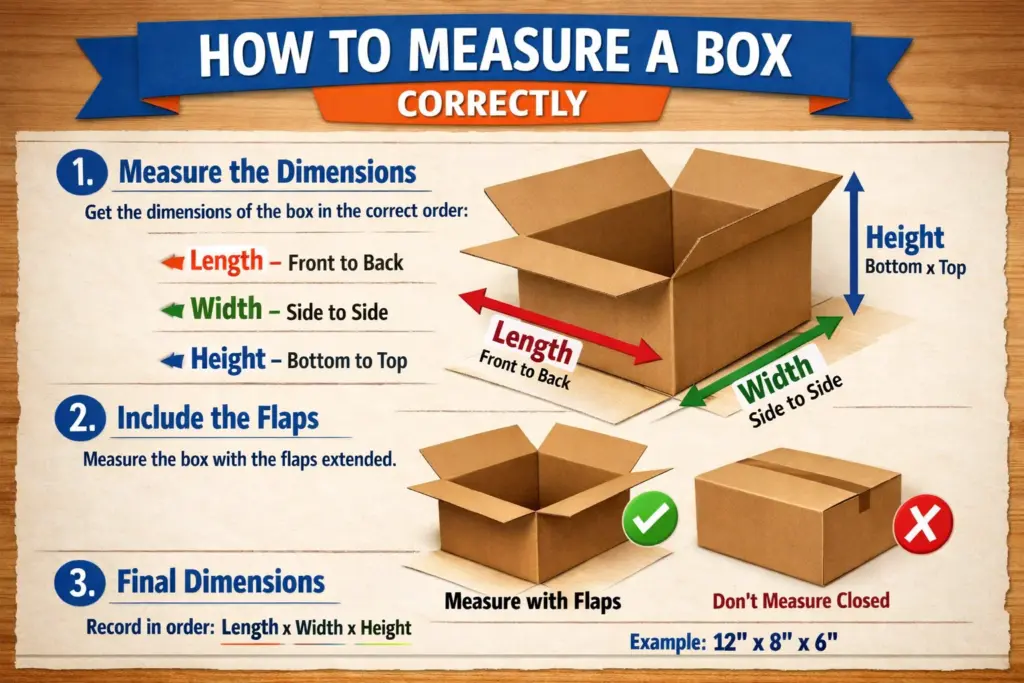
To measure box size correctly, always measure the inside of the box:
- Measure length (longest side on the opening)
- Measure width (shorter side on the opening)
- Measure height (from base to top)
Record measurements in millimetres for accuracy. Internal measurements ensure the product, inserts, and cushioning fit without pressure.
Measuring External Dimensions
External dimensions matter when:
- Calculating shipping costs
- Planning pallet loads
- Managing warehouse storage
External size includes cardboard thickness, which can significantly affect volume for corrugated boxes.
Common Measurement Mistakes
- Mixing up dimension order
- Measuring the outside when internal size is required
- Ignoring material thickness
- Forgetting space for inserts or protective padding
These mistakes often result in boxes that technically “fit” but perform poorly in real-world shipping.
Standard Box Sizes Used in Packaging
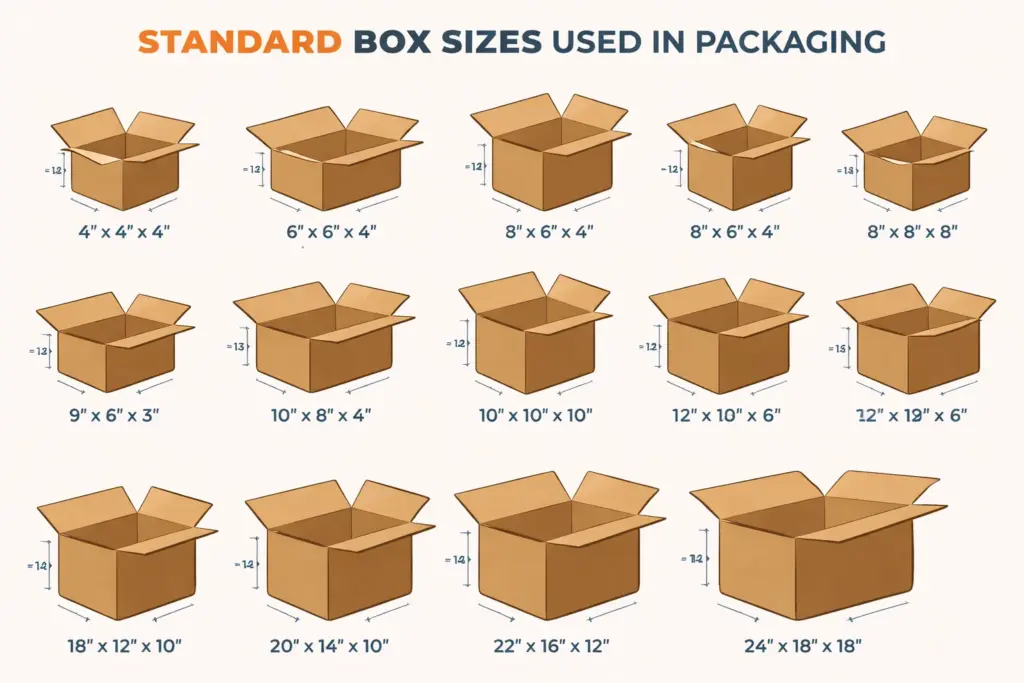
While there is no single universal sizing system, standard box sizes UK suppliers use generally fall into these categories.
| Box Size Category | Typical Dimensions | Common Uses | Key Consideration |
|---|---|---|---|
| Small Boxes | 100 × 80 × 40 mm | Cosmetics, jewellery and accessories | Useful where a compact fit is required |
| Medium Boxes | 300 × 200 × 100 mm | Apparel, bakery items and subscription products | Balances product space with manageable outer dimensions |
| Large Boxes | 600 × 400 × 300 mm | Larger products and shipping applications | Board grade and stacking requirements become more important |
| Mailer Boxes | Product-specific | E-commerce and subscription orders | Can be sized around the product and fulfilment process |
| Custom Boxes | Product-specific | Retail, gifting and specialist packaging | Designed around the actual product and presentation needs |
Note: Exact dimensions vary by material thickness and box style.
Box Sizes for Different Packaging Types
Mailer Boxes
Mailer boxes are popular for eCommerce because of their:
- Self-locking structure
- Flat-pack storage
- Easy assembly
Common shipping box sizes are optimised to fit courier size brackets and reduce dimensional weight.
Shipping Boxes
Shipping boxes are usually corrugated and chosen based on:
- Product weight
- Stacking requirements
- Transit distance
Correct flute selection and sizing prevent crushing and movement during transport.
Retail & Product Boxes
Retail packaging must consider:
- Shelf space
- Facing requirements
- Branding visibility
Box size directly impacts how products appear in-store and how many units fit on a shelf.
Custom Box Sizes vs Standard Sizes
When Standard Sizes Work Best
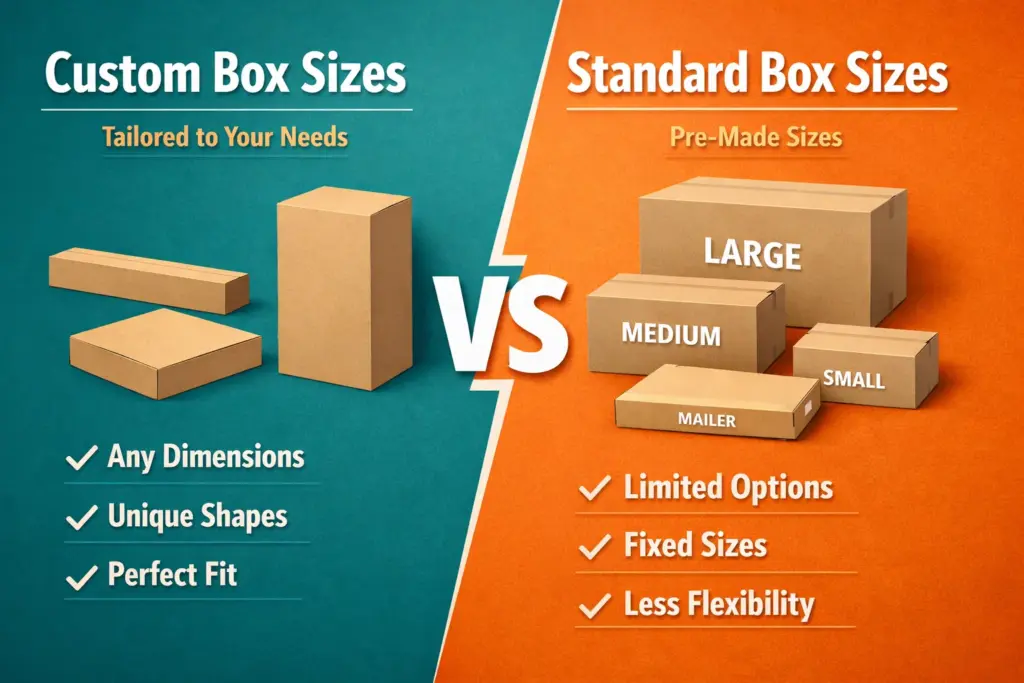
Standard sizes are suitable when:
- Products are uniform
- Volumes are high
- Speed and availability are priorities
They can be cost-effective for simple packaging needs.
When Custom Sizes Are More Cost-Effective
Custom sizing can reduce unused space and may improve packing efficiency, but the overall cost depends on production quantity, tooling, material, box construction and shipping requirements.
How Box Size Affects Shipping Costs?
Courier pricing is heavily influenced by dimensional weight, which considers box volume rather than actual weight.
Oversized boxes:
- Trigger higher postage fees
- Waste pallet and van space
Right-sized packaging reduces shipping spend without compromising protection.
Box Dimensions & Product Protection
Correct box dimensions help by:
- Preventing product movement
- Allowing space for inserts and cushioning
- Reducing impact damage
Poor sizing can allow excessive movement or create pressure on the product, increasing the risk of damage during handling and transit.
Choosing the Right Box Size for Your Product
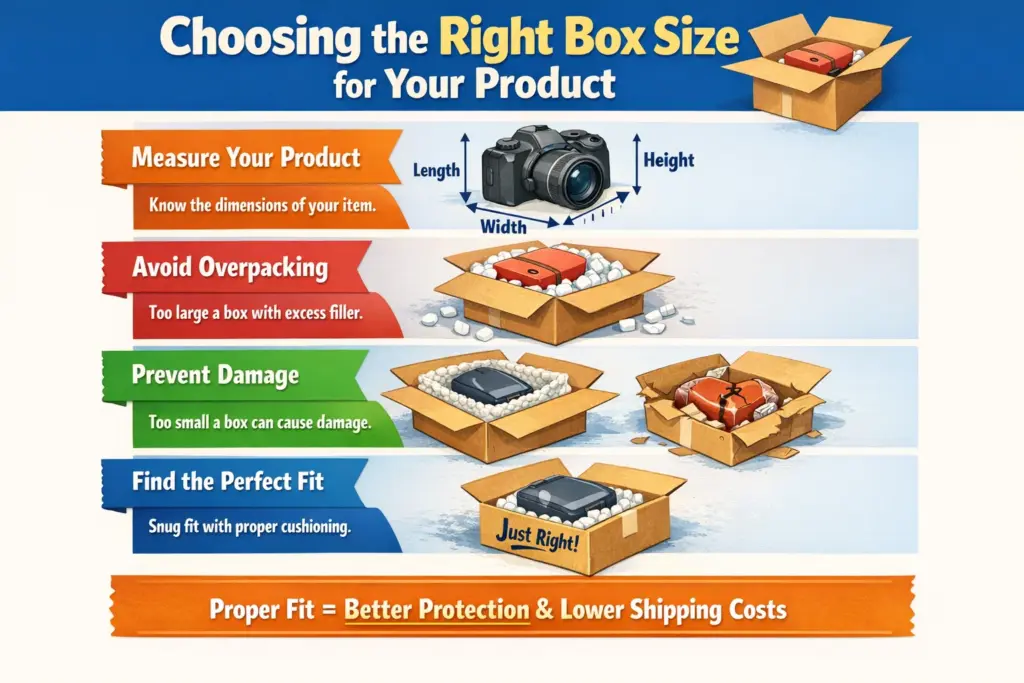
When selecting box dimensions, consider:
- Product size and weight
- Fragility
- Inserts or secondary packaging
- Storage and stacking requirements
A packaging size guide should always be built around the product, not convenience.
Box Size & Sustainability
Right-sized packaging supports sustainability by:
- Reducing material waste
- Lowering carbon emissions during shipping
- Minimising excess fillers
Custom sizing often delivers better environmental outcomes than oversized standard boxes.
Box Dimension Tips for eCommerce Brands
For eCommerce brands:
- Optimise sizes for fulfilment centre requirements
- Reduce returns caused by transit damage
- Improve unboxing consistency
Well-sized boxes improve both operational efficiency and customer perception.
Common Box Size Mistakes to Avoid
- Using oversized boxes “to be safe”
- Choosing boxes that are too tight
- Ignoring courier size limits
- Forgetting growth and reorder consistency
These mistakes scale quickly as order volumes increase.
Why Healey Packaging Helps You Choose the Perfect Box Size
Healey Packaging supports brands with:
- Expert sizing guidance
- Standard and custom packaging UK solutions
- High-quality materials
- UK-based production and fast delivery
Accurate sizing from the outset prevents repeat issues across future orders.
Getting Box Sizes Right: Common Questions
Clear answers about dimension order, internal measurements, shipping and custom box sizing.
What is the correct order of box dimensions?
A common packaging convention is Length × Width × Height. For corrugated cases, length normally refers to the longer dimension of the opening, width or breadth to the shorter dimension, and height to the distance from the opening to the base. Always confirm the supplier’s measurement convention before ordering.
Are box dimensions measured internally or externally?
Packaging manufacturers commonly specify internal dimensions because they describe the usable space available for the product. External dimensions include the board thickness and are important for courier limits, storage and pallet planning.
How do I choose the best box size for shipping?
Choose a box that safely accommodates the product, inserts and cushioning without excessive unused space. Then check the final external dimensions and packed weight against the current limits of the courier service you intend to use.
Does custom sizing increase packaging cost?
It depends on the box style, tooling, material, printing, quantity and production method. Custom sizing can sometimes reduce excess material or shipping volume, but it should be compared against standard-size alternatives using the complete packaging and fulfilment cost.
What is the difference between internal and external box size?
Internal dimensions measure the space available inside the box. External dimensions measure the finished outside of the pack and therefore include material thickness. The difference can become more noticeable with thicker corrugated constructions.
Should box dimensions be measured in mm or cm?
Millimetres are commonly used for packaging specifications because they allow greater precision. Centimetres can be useful for general size comparisons, but manufacturing dimensions should use the unit requested by the supplier.
Conclusion – The Right Size Saves Money & Protects Products
Correct box sizing is one of the most effective ways to control packaging costs, reduce damage, and improve customer experience. Understanding box sizes and dimensions helps brands make smarter decisions at every stage of fulfilment.
Whether you use standard sizes or custom packaging, choosing the right dimensions protects both your product and your margins.