
TL;DR – Recycled vs Recyclable Packaging
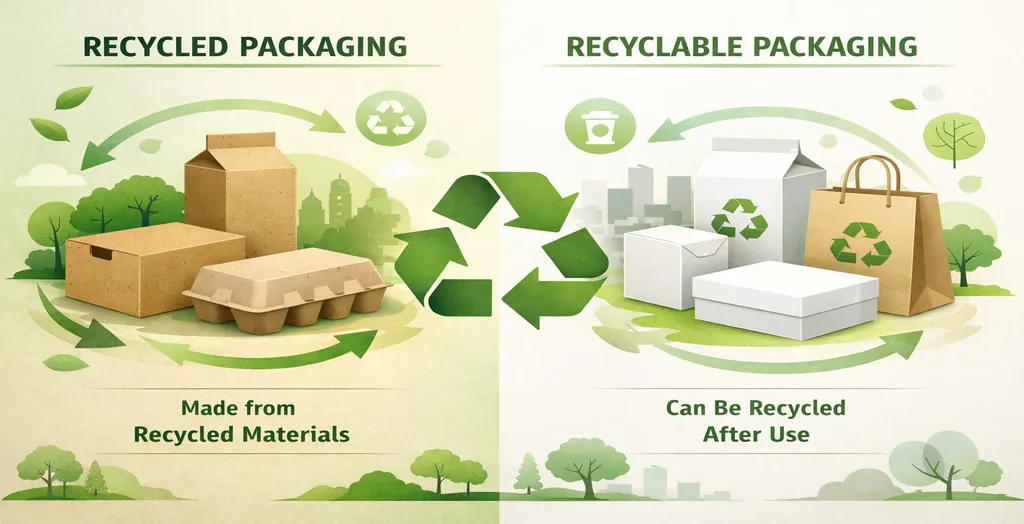
Recycled packaging is made from previously used materials, while recyclable packaging refers to materials that can be processed and reused after disposal. The best sustainable packaging solutions are both recycled and recyclable, helping reduce waste and support a circular economy.
Sustainable packaging is no longer just a trend. It’s become a requirement for modern businesses. Consumers are paying closer attention to how products are packaged, and governments across the UK are introducing stricter rules around packaging waste.
At the same time, there’s still a lot of confusion around common sustainability terms. One of the most misunderstood comparisons is recycled vs recyclable packaging. Many brands use these words interchangeably, even though they mean very different things.
That confusion can lead to poor packaging decisions, misleading claims, and missed opportunities to improve sustainability.
This guide breaks down what recycled and recyclable packaging actually mean, how they differ, and how businesses can choose the right option for their products.
What Does “Recycled Packaging” Mean?
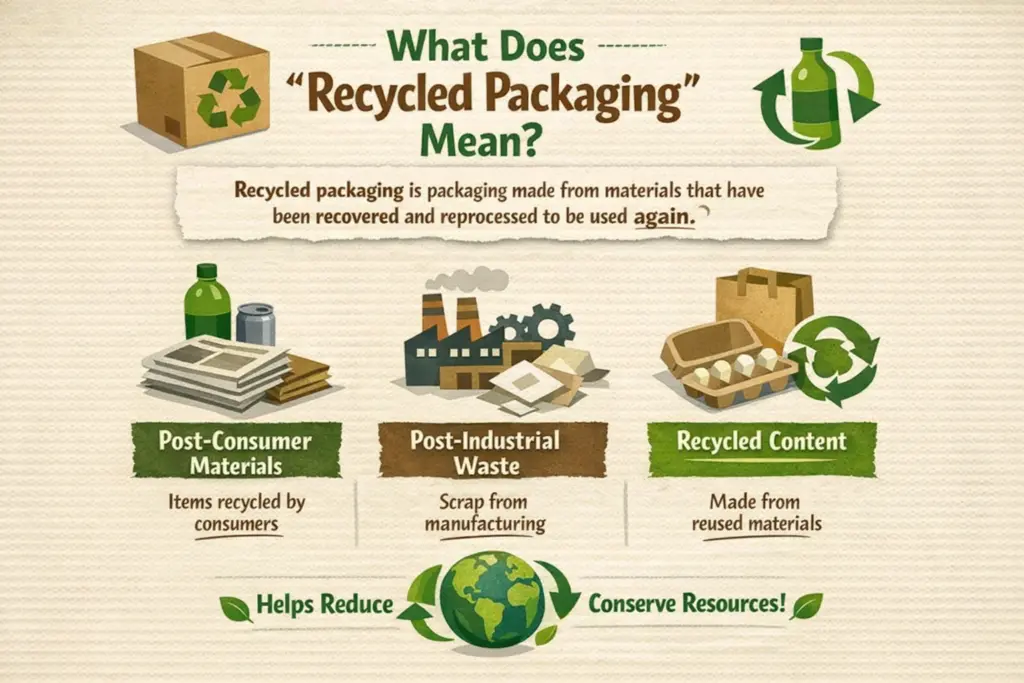
Recycled packaging refers to packaging made using materials that have already been used and processed.
Instead of relying on new raw materials, manufacturers reuse existing resources such as paper, cardboard, or plastics. This reduces demand for virgin materials and helps minimise environmental impact.
Examples of Recycled Packaging
- Recycled cardboard boxes
- Recycled kraft paper packaging
- Packaging made from post-consumer waste
Many businesses now use recycled packaging materials to align with sustainability goals and reduce their carbon footprint.
For example, kraft packaging boxes are often made using recycled fibres, making them a popular option for eco-conscious brands.
Key Benefits of Recycled Packaging
- Reduces landfill waste
- Lowers demand for raw materials
- Supports circular economy systems
- Decreases environmental impact of production
Recycled packaging focuses on how materials are sourced and produced.
What Does “Recyclable Packaging” Mean?
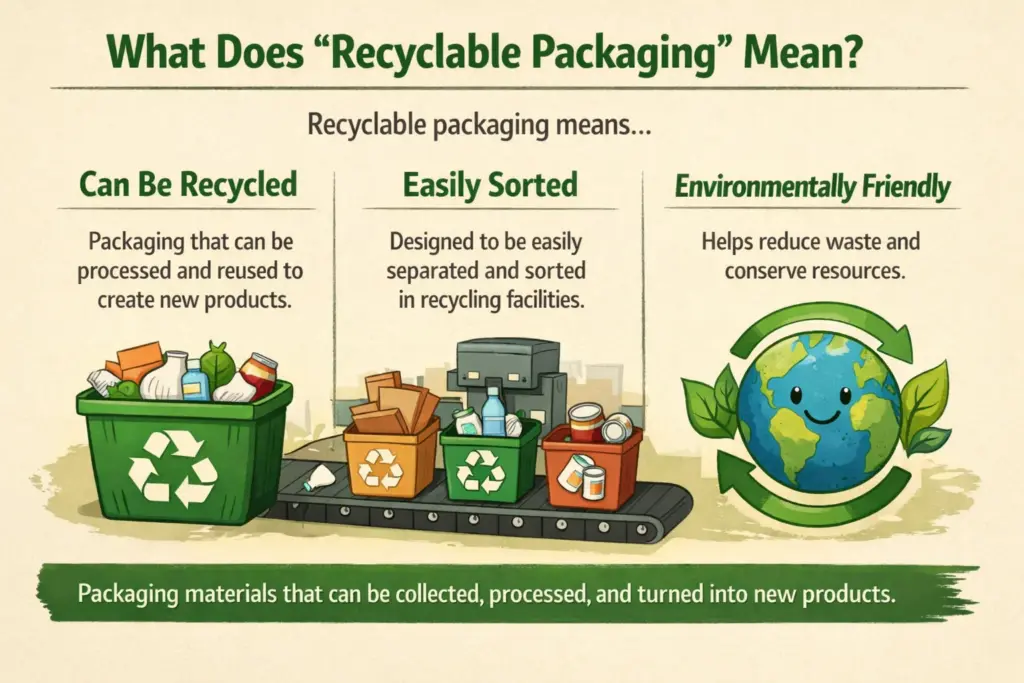
Recyclable packaging refers to materials that can be collected, processed, and reused after disposal.
It doesn’t necessarily mean the packaging is already recycled. Instead, it means it has the potential to be recycled after use.
Examples of Recyclable Packaging
- Corrugated boxes
- Paperboard cartons
- Certain plastics and metals
Materials like cardboard are widely used in corrugated boxes because they are easily recyclable within UK systems.
Key Benefits of Recyclable Packaging
- Encourages responsible disposal
- Reduces long-term waste
- Supports recycling infrastructure
- Widely accepted in UK recycling systems
Understanding the recyclable packaging meaning helps businesses make better end-of-life decisions.
Recycled vs Recyclable – Key Differences
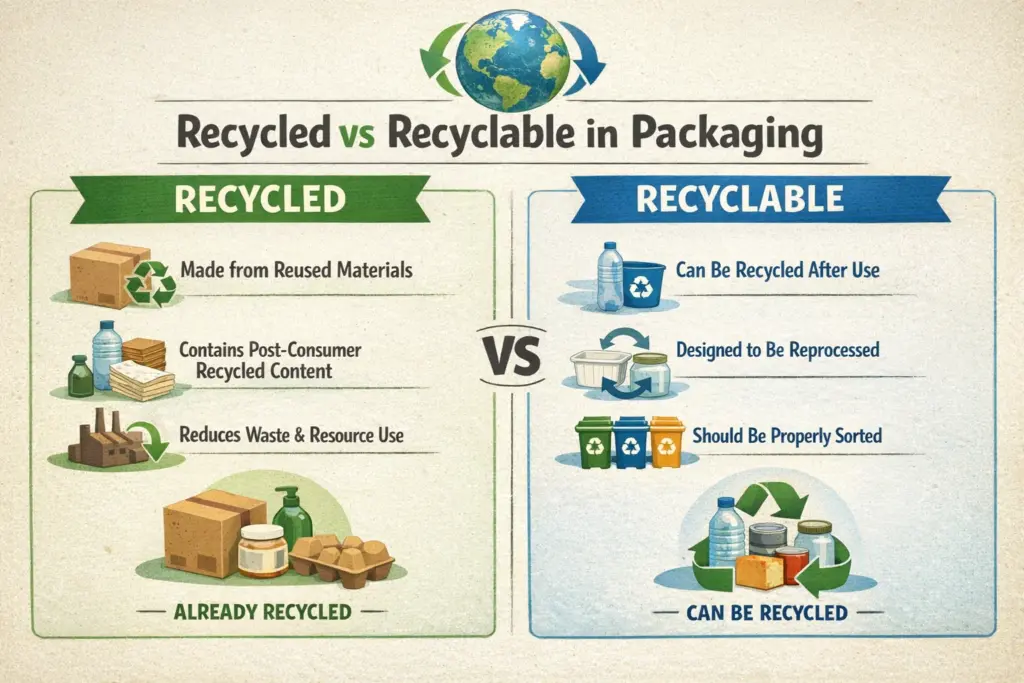
Although these terms sound similar, they refer to different stages of the packaging lifecycle.
| Feature | Recycled Packaging | Recyclable Packaging |
|---|---|---|
Meaning |
Made from reused materials |
Can be reused after disposal |
Focus |
Production stage |
End-of-life stage |
Environmental Benefit |
Reduces raw material use |
Reduces landfill waste |
Example |
Recycled cardboard box |
New box that can be recycled |
In simple terms:
- Recycled = where it comes from
- Recyclable = what happens after use
Why This Difference Matters for Businesses
Understanding the difference between recycled and recyclable packaging is important for several reasons.
Avoiding Misleading Claims
Using the wrong terminology can confuse customers and damage trust. For example, calling packaging “eco-friendly” without explaining whether it is recycled or recyclable can be misleading.
Meeting UK Packaging Regulations
Sustainability regulations in the UK are becoming stricter. Businesses are expected to be transparent about their packaging materials and environmental impact.
Building Customer Trust
Consumers are more informed than ever. They want to know exactly how packaging affects the environment.
Clear communication helps build trust and credibility.
Supporting Sustainability Goals
Businesses with environmental targets need to choose materials carefully. Understanding packaging terms ensures better decision-making.
Many brands are now investing in eco-friendly packaging to align with sustainability expectations.
Can Packaging Be Both Recycled and Recyclable?
Yes, and this is often the best option. Many packaging materials meet both criteria.
For example:
- Corrugated boxes made from recycled fibres
- Kraft packaging that can be recycled again after use
These materials support a closed-loop system, where packaging is reused multiple times throughout its lifecycle.
For businesses, choosing packaging that is both recycled and recyclable is one of the most effective sustainability strategies.
Recycled vs Recyclable vs Biodegradable
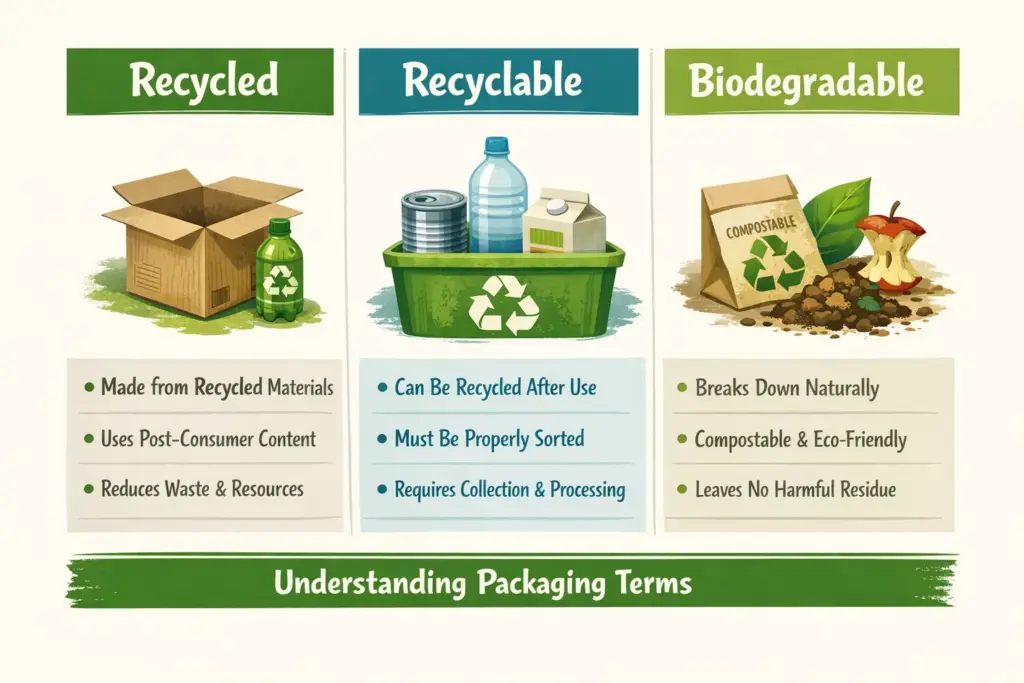
Another common area of confusion is how these terms compare to biodegradable packaging.
Key Differences
- Recycled → Made from reused materials
- Recyclable → Can be reused after disposal
- Biodegradable → Breaks down naturally over time
Biodegradable packaging doesn’t always mean recyclable, and recyclable packaging doesn’t always break down naturally.
Understanding these differences helps businesses avoid common sustainability misconceptions.
Common Mistakes Brands Make
Many businesses unintentionally make mistakes when choosing sustainable packaging.
Using “Recyclable” as a Buzzword
Some packaging is technically recyclable but rarely recycled in real-world conditions.
Not Specifying Recycled Content
Simply saying “recycled” is not enough. Brands should indicate how much recycled material is used.
Greenwashing Claims
Making sustainability claims without evidence can damage brand reputation.
Ignoring Local Recycling Systems
Not all materials are accepted in UK recycling systems. Packaging must be practical, not just theoretical.
UK Packaging Regulations & Sustainability Trends
Sustainability is becoming a major focus in UK packaging policy.
- Businesses are under pressure to reduce packaging waste
- Consumers prefer brands that use sustainable materials
- Regulations are encouraging recyclable and reduced packaging
According to UK waste data, paper and cardboard packaging achieve recycling rates above 80%, making them among the most sustainable materials available.
This is one reason why materials like kraft and corrugated board are widely used in sustainable packaging UK strategies.
How to Choose Sustainable Packaging for Your Business
Selecting the right packaging requires balancing several factors.
Product Type
Fragile products may require stronger materials, while lightweight items can use simpler packaging.
Target Audience
Eco-conscious customers expect clear sustainability messaging.
Shipping Requirements
Packaging must protect products during transport without excessive material use.
Environmental Impact
Choose materials that reduce waste and support recycling systems.
Cost vs Sustainability Balance
Sustainable packaging should also be cost-effective for your business.
Many brands choose custom packaging solutions to optimise both cost and sustainability.
Best Eco-Friendly Packaging Options
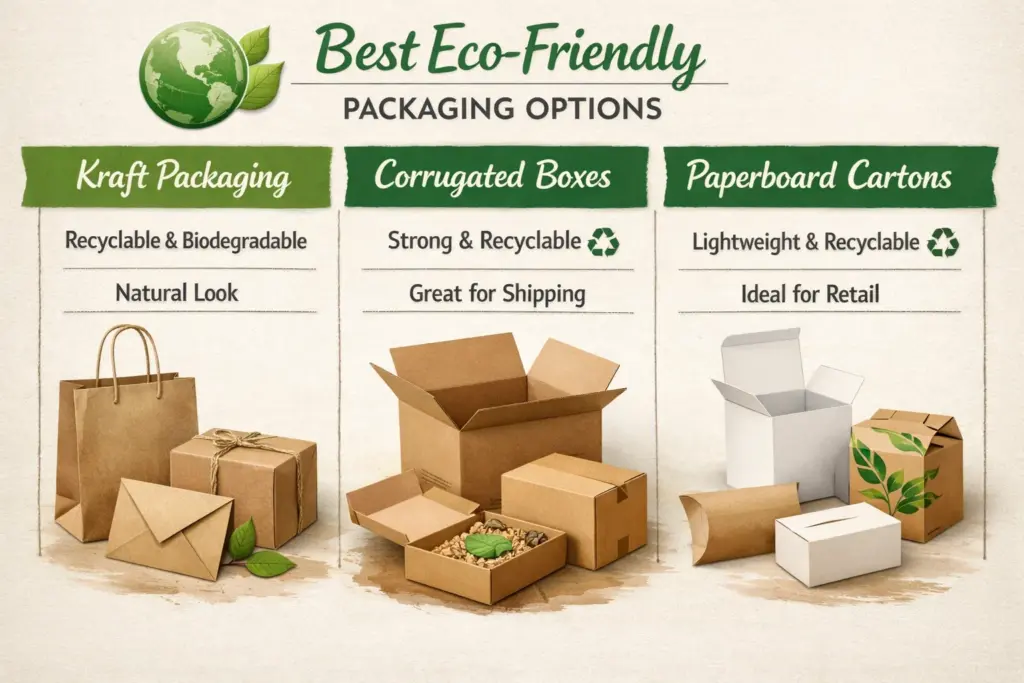
Several packaging materials offer strong environmental benefits.
Kraft Packaging
Kraft packaging is widely used because it is:
- recyclable
- biodegradable
- made from renewable resources
Corrugated Boxes
Corrugated packaging provides strength and recyclability, making it ideal for shipping.
Paperboard Cartons
Lightweight and printable, paperboard is commonly used in retail packaging.
Recycled Packaging Materials
Using recycled content reduces the need for new resources.
These materials form the foundation of modern sustainable packaging UK practices.
How Custom Packaging Supports Sustainability
Custom packaging plays an important role in reducing environmental impact.
Right-Sized Packaging
Custom sizing reduces material waste and shipping volume.
Reduced Damage and Returns
Better packaging design reduces product damage, lowering return rates and waste.
Clear Sustainability Messaging
Custom printing allows brands to communicate eco-friendly values directly on packaging.
Why Choose Healey Packaging for Sustainable Packaging
Healey Packaging supports businesses with environmentally responsible packaging solutions.
We offer:
- recyclable and recycled packaging materials
- eco-friendly packaging options
- custom packaging solutions tailored to your product
- reliable UK-based packaging expertise
Working with an experienced UK packaging supplier ensures your packaging meets both environmental and business requirements.
Make Smarter Sustainable Packaging Choices
Switch to packaging that’s recycled, recyclable, and built for your business.
Request a QuoteRecycled Content or Recyclable Design? We Answer
What is the difference between recycled and recyclable packaging?
Recycled packaging is made from reused materials, while recyclable packaging can be processed and reused after use.
Is recyclable packaging always eco-friendly?
Not always. It depends on whether the packaging is actually recycled in practice.
Can packaging be both recycled and recyclable?
Yes. Many materials like cardboard meet both criteria.
Which is better: recycled or recyclable?
The best option is packaging that is both recycled and recyclable.
Conclusion
Understanding the difference between recycled and recyclable packaging helps businesses make smarter decisions.
Recycled packaging reduces the need for new materials, while recyclable packaging ensures materials can be reused after disposal.
By choosing packaging that supports both principles, businesses can reduce environmental impact, meet customer expectations, and strengthen their brand image.