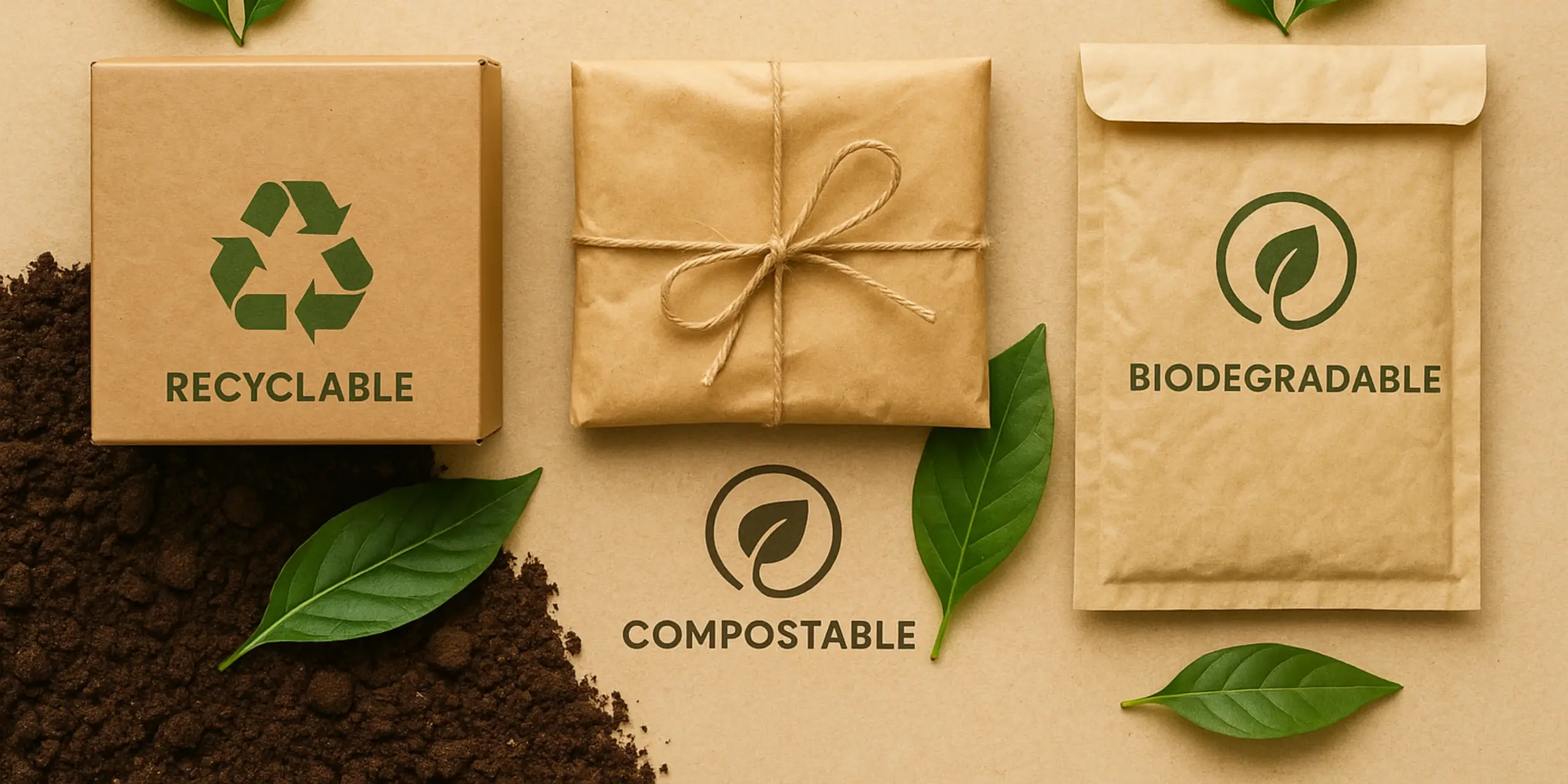
Recyclable, Compostable and Biodegradable at a Glance
- Recyclable packaging should be designed around a recycling stream that can actually collect, sort and reprocess the material.
- Compostable packaging requires defined composting conditions and should not be assumed to belong in normal recycling.
- Biodegradable does not automatically mean compostable, recyclable or suitable for disposal in the natural environment.
- Coatings, laminates, adhesives and mixed materials can change the end-of-life options of an otherwise paper-based pack.
- Businesses should consider product protection, material efficiency and the available disposal route together rather than choosing packaging from an environmental label alone.
Businesses are under increasing pressure to reduce unnecessary packaging waste while still protecting products throughout storage, retail and delivery. Recyclable, compostable and biodegradable materials are often discussed as alternatives, but the terms describe very different end-of-life routes. Understanding those differences is essential before making environmental claims or selecting a packaging material.
Unlike traditional plastic packaging that lingers in the environment for hundreds of years, these sustainable options offer hope by decomposing naturally or being reabsorbed into the production cycle. This blog explores the importance of transitioning to sustainable packaging, explains eco-friendly packaging solutions, and provides key insights into how businesses and industries can adopt these practices.
What Is the Difference Between Recyclable, Compostable and Biodegradable Packaging?
Recyclable packaging is designed so its materials can enter an appropriate recycling system. Compostable packaging is designed to break down under defined composting conditions and should be supported by the relevant certification where a compostable claim is made. Biodegradable is a broader term describing material that can be broken down biologically, but it does not tell you how quickly, under what conditions or through which waste stream.
The right option depends on the packaging material, product requirements and the collection or treatment route actually available after use.
What is Sustainable Packaging?
Sustainable packaging refers to materials and designs that minimise harm to the environment during production, usage, and disposal. Its objective is to reduce reliance on single-use plastics and non-renewable resources while promoting materials that can be reused, recycled, or composted.
Types of Sustainable Packaging
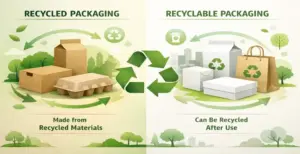
Recyclable Packaging
Fully recyclable materials, such as paper, glass, and certain plastics, can be reprocessed into new products. Recycling reduces the need for extracting raw materials and helps close the consumption loop.
Compostable Packaging
Made from natural and renewable resources like cornstarch and bamboo, compostable packaging is designed to break down under defined composting conditions. Whether it is suitable for industrial composting, home composting or both depends on the specific material and certification
Biodegradable Packaging
Biodegradable materials can be broken down by biological activity, but the rate, conditions and resulting residues depend on the material. The term alone does not mean the packaging can be safely discarded into the natural environment. However, some options may need specific conditions, such as industrial composting facilities, to fully break down.
While these solutions provide different approaches, their combined goal is to curb the negative impact of waste and create eco-friendly packaging options.
Benefits of Compostable and Biodegradable Packaging
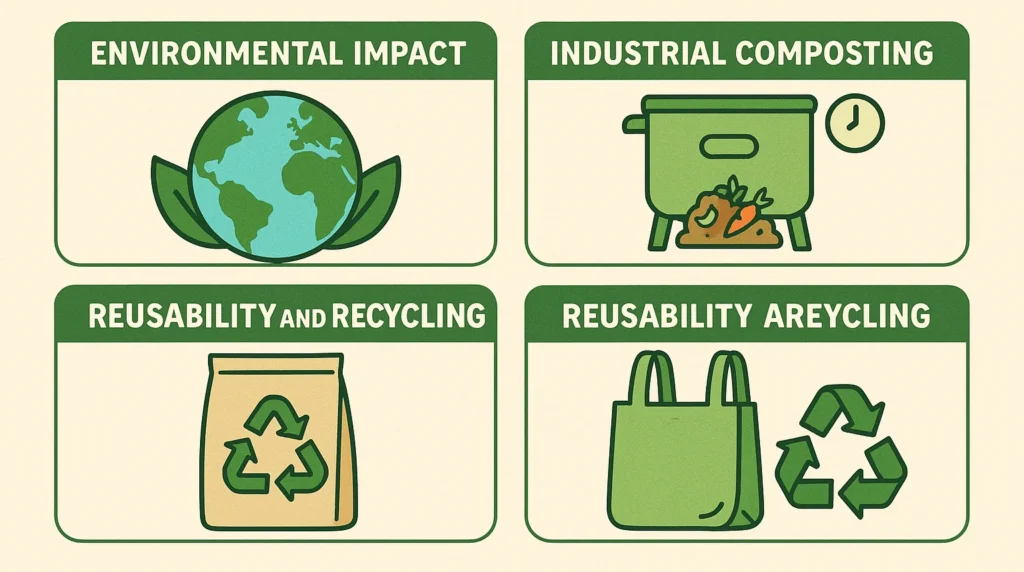
Environmental Impact
Traditional plastics release microplastics and toxic residue into the environment, contributing to pollution and climate change. By contrast, biodegradable and compostable packaging decomposes efficiently while reducing carbon dioxide emissions associated with manufacturing.
Industrial Composting
Not all biodegradable products break down naturally in a home setting. Many require industrial composting facilities, which provide high heat, moisture, and oxygen levels to accelerate decomposition. This makes industrial setups crucial for dealing with large-scale waste from takeaway containers, packaging inserts, and more.
Reusability and Recycling
Another significant advantage of sustainable packaging lies in its reusability and recyclability. For instance, recycled materials help reduce dependency on producing new packaging from virgin resources, while reusable options, such as durable mailers, cut down on total material consumption. Together, these approaches align with a circular economy perspective.
Key Packaging Materials
Biodegradable Plastic
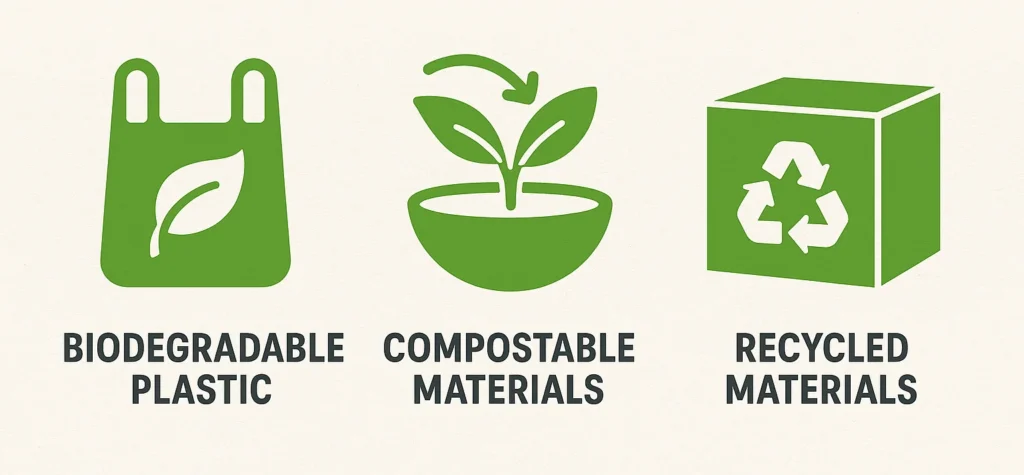
Biodegradable plastics are polymers designed to biodegrade under specified conditions. Some are made partly or wholly from renewable feedstocks, while others may be fossil-derived, so ‘bio-based’ and ‘biodegradable’ should not be treated as the same claim.
Compostable Materials
Materials such as bagasse, compostable polymers and some fibre-based structures may be suitable for composting when the finished packaging meets the relevant requirements and is processed through an appropriate system
Recycled Materials
Products made from recycled materials, such as cardboard, kraft paper, and aluminium, contribute significantly to reducing waste. These options not only minimise environmental impact but also conserve energy that would otherwise be spent producing new materials.
These packaging types ensure that packaging solutions meet both functional and environmental needs, allowing industries to transition seamlessly to sustainability.
Common Packaging Materials and Their Environmental Role
Environmental performance cannot be judged from the material name alone. Collection systems, coatings, contamination and the finished packaging construction all affect what can happen after use. The table below compares common materials by their likely end-of-life route rather than using fixed decomposition times.
| Material | Typical End-of-Life Route | Key Consideration | Example Packaging |
|---|---|---|---|
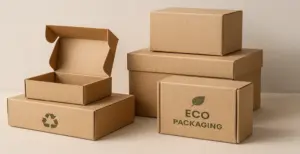
| Paper & Cardboard | Paper and board recycling where accepted | Laminations, coatings, contamination and mixed materials can affect recyclability | Shipping boxes, folding cartons and cereal packaging |
| Certified Compostable Packaging | Industrial or home composting according to its certification | Check the relevant certification and whether a suitable collection or composting route is available | Selected food-service packs, films and bags |
| Biodegradable Plastics | Depends on the specific polymer and certified disposal route | Biodegradable does not automatically mean home-compostable, industrially compostable or recyclable | Selected films, bags and food-service applications |
| Glass | Glass recycling where collected | Durable and recyclable, but heavier than paper-based packaging and unsuitable for many box applications | Bottles and jars |
| Expanded Polystyrene | Specialist recycling where facilities accept it | Collection and recycling availability can be limited, so local infrastructure should be checked | Protective packaging and insulated containers |
Industry Spotlight on Sustainable Packaging
The Global Food Industry
Restaurants and grocery stores are setting the standard for biodegradable and compostable products. For instance, bioplastics derived from cornstarch now replace Styrofoam trays.
E-Commerce
E-commerce companies, mindful of increasing waste, now use recyclable and biodegradable packaging materials for delivery boxes and fillers.
Consumer Goods
Cosmetic brands have shifted to sustainable packaging consisting of paper, glass jars, or post-consumer recycled materials.
Challenges and Solutions
Cost and Availability
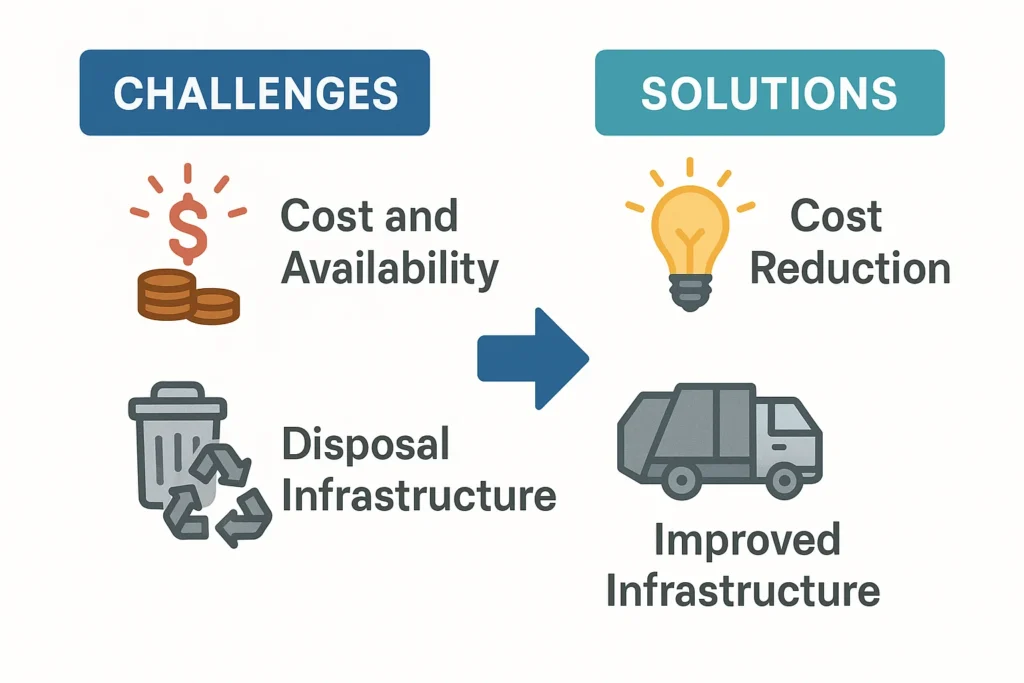
Sustainable packaging options are often pricier than their traditional counterparts due to the limited availability of raw materials and manufacturing facilities. Small businesses, in particular, may struggle to bear these costs.
Solution: Companies can explore packaging materials that combine recycled elements with innovative production designs, driving lower costs while maximising impact.
Disposal Infrastructure
A significant challenge remains in dealing with compostable and biodegradable packaging, which often requires specific disposal facilities. Many countries lack the infrastructure for large-scale industrial composting.
Solution: Governments and businesses must invest in expanding disposal sites and educate consumers on using compost bins or municipal pickup services.
By addressing these challenges head-on, businesses can amplify the benefits of eco-friendly packaging.
Redefine Your Brand with Conscious Packaging
Switching to sustainable packaging allows businesses to take bold steps toward reducing their ecological footprint without compromising on quality. From adopting biodegradable plastic for everyday use to leveraging recycle-driven designs, every choice counts. Healey Packaging offers packaging solutions that not only enhance your brand but protect the environment. Start today—because sustainable change begins with every conscious decision.
Common Questions About Recyclable and Compostable Packaging
Clear answers about recyclability, composting, biodegradable materials and choosing suitable packaging for UK businesses.
What is compostable packaging?
Compostable packaging is designed to break down under specified composting conditions into materials compatible with the composting process. Industrially compostable and home-compostable packaging are not the same, so businesses should check the relevant certification and intended disposal route.
How is biodegradable packaging different from compostable packaging?
Biodegradable is a broad description meaning a material can be broken down through biological activity. Compostable packaging has more specific requirements relating to the conditions and outcome of the composting process. A biodegradable product should therefore not be assumed to be compostable.
Does compostable packaging go in normal recycling?
Not automatically. Compostable packaging is intended for the disposal route stated by its certification and local collection system. Putting it into the wrong waste stream can cause contamination, so disposal instructions should be clear to the user.
What materials can be used for compostable packaging?
Compostable packaging can use materials such as suitable fibre-based substrates and certain compostable polymers. The material source alone does not prove compostability; the finished packaging should meet the relevant compostability requirements for the claim being made.
Is cardboard packaging always recyclable?
Many paper and cardboard packaging formats are widely recyclable, but not every construction is identical. Plastic laminations, barriers, coatings, adhesives, food contamination and other components can affect how the finished pack is collected and reprocessed.
How can businesses choose more sustainable packaging?
Start by using enough packaging to protect the product without unnecessary material. Compare recycled or responsibly sourced content, recyclability, reuse potential and any compostable options against the disposal infrastructure actually available to customers.