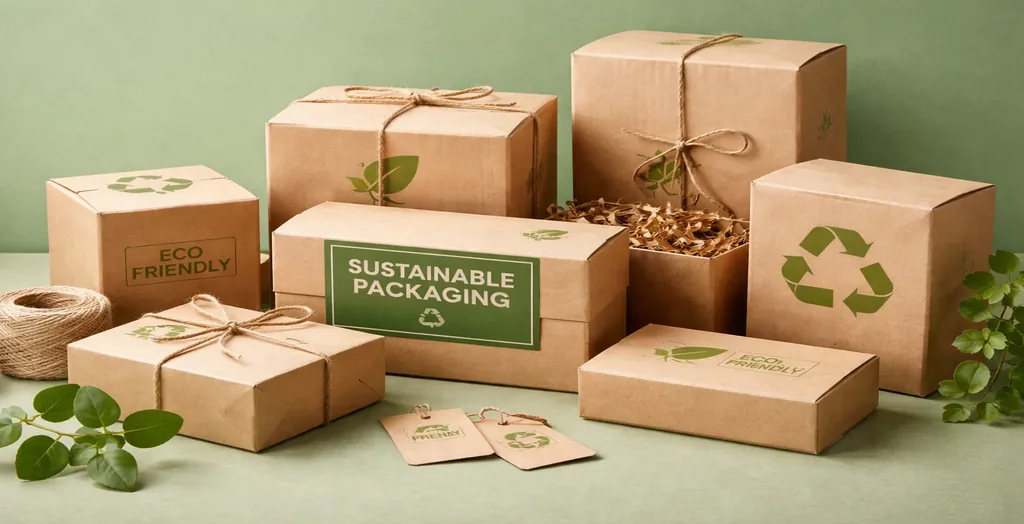
Sustainability requirements are increasingly influencing how businesses specify packaging materials, structures and end-of-life options. For paper-based packaging, this means looking beyond appearance and considering factors such as fibre source, recycled content, product protection and the complete finished construction.
Kraft packaging is widely used for retail cartons, ecommerce packaging and selected shipping applications because of its natural fibre appearance and range of available board constructions. However, kraft colour alone does not establish recycled content, recyclability or overall environmental performance. This guide explains where kraft boxes can fit within a packaging strategy and which material and sustainability factors should be checked before production.
Why Are Kraft Boxes Used in Sustainable Packaging?
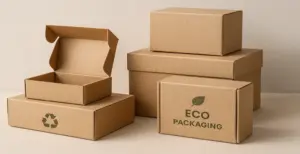
Kraft boxes are paper-based packaging with a natural fibre appearance that can be used for retail cartons, mailers, gift packaging and selected shipping applications. Their environmental properties depend on the actual board grade, fibre source, recycled content and finished construction.
Kraft appearance alone does not prove that a box is recycled, recyclable or lower-impact. Product protection, board strength, coatings, windows, inserts and the available end-of-life route should all be considered before making a sustainability claim.
What Are Kraft Boxes?
Kraft boxes are paper-based packaging made using kraft board or kraft-faced materials. Natural kraft commonly has a brown fibre appearance, although the exact colour, strength and composition depend on the selected board grade.
Key Characteristics
- Natural fibre appearance
- Available in folding-board and corrugated constructions
- Suitable for a range of retail, ecommerce and selected shipping applications
- Printable using suitable methods depending on the board and artwork
- Available with different fibre compositions and structural specifications
The correct kraft material should be selected around the product, printing requirements and intended handling conditions rather than sustainability assumptions based on colour alone.
Kraft Boxes at a Glance
- Kraft board provides a natural fibre appearance and can be used for retail, gift and ecommerce packaging.
- Kraft-coloured packaging is not automatically made from recycled fibre; check the actual board specification where recycled content matters.
- Folding kraft board and corrugated kraft packaging provide different levels of structural support and should not be treated as the same material.
- Natural brown board can change colour reproduction, so artwork should be designed with substrate tone and contrast in mind.
- Recyclability depends on the complete pack, including coatings, windows, adhesives, inserts and local collection routes.
- Choose kraft packaging around product weight, structure, print and distribution requirements rather than appearance alone.
Why Kraft Packaging Is Used in Sustainable Packaging Strategies
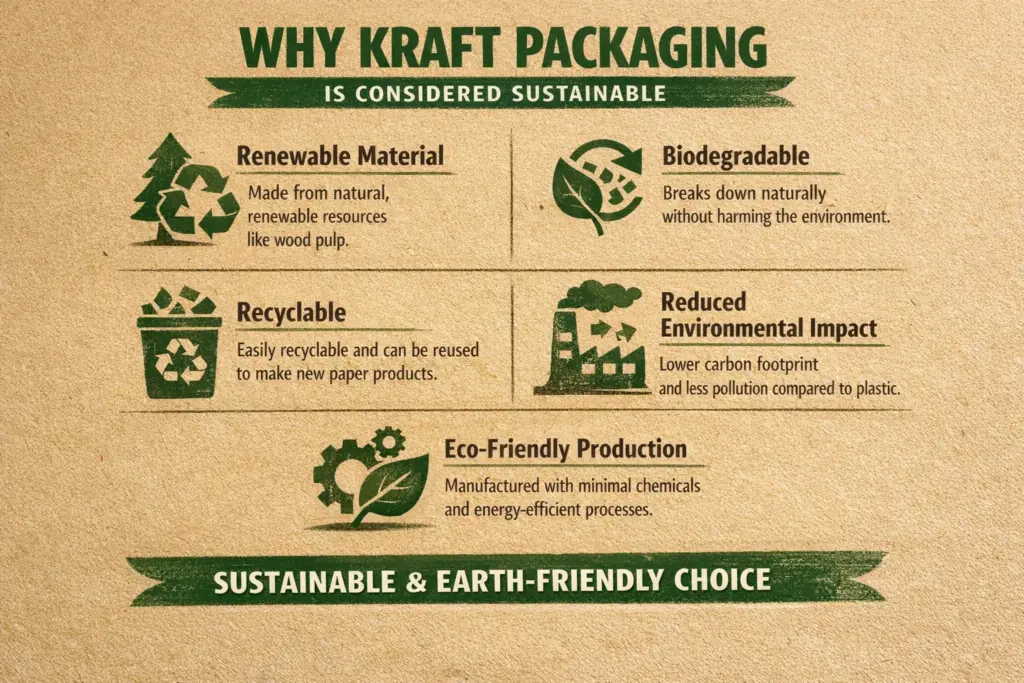
Kraft packaging is paper-based, which can make it relevant to packaging strategies focused on fibre sourcing, material efficiency and established paper recovery routes. However, a natural brown appearance should not be treated as proof that a pack is recycled, responsibly sourced or recyclable. Those attributes depend on the actual material and finished packaging specification. For businesses considering kraft packaging, the key is to separate visual appearance from verified environmental characteristics.
Related Sustainability Guide Understand Recyclable, Compostable and Biodegradable PackagingKey Benefits of Kraft Boxes for Businesses
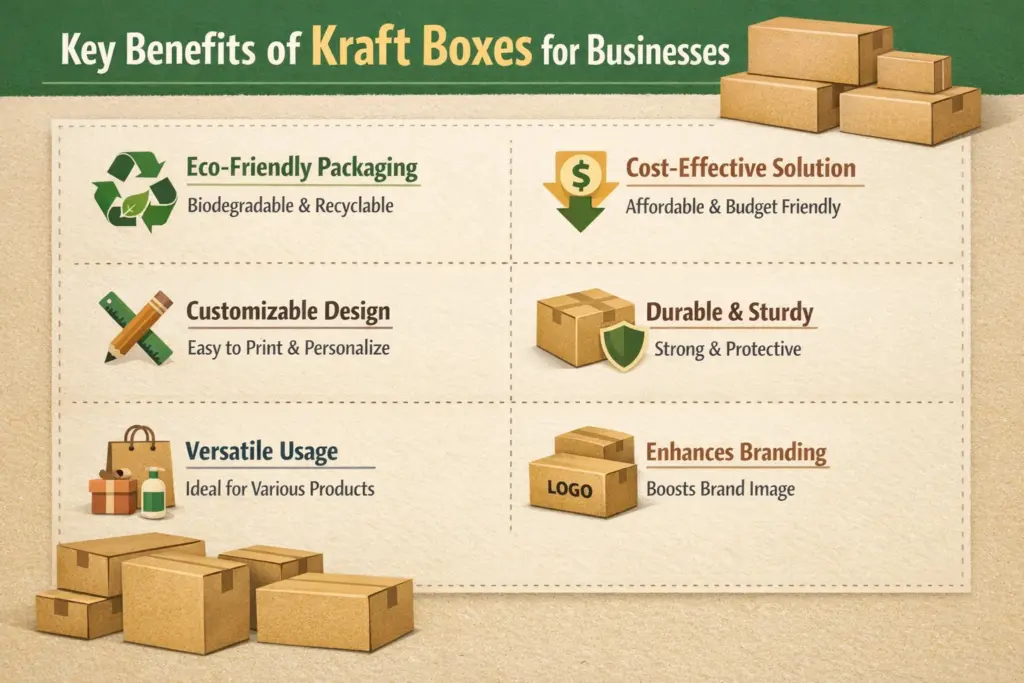
Kraft packaging can offer several practical advantages when the board grade, box structure and printing method are selected around the product. Its main benefits relate to appearance, structural flexibility, print options and the range of packaging formats available.
1. Natural Brand Presentation
Kraft board has a distinctive natural fibre appearance that can suit brands looking for a simple, understated or material-led packaging style.
The brown substrate can work particularly well with black, white or high-contrast artwork, although the final appearance depends on the selected board and printing method.
A natural kraft appearance should not be treated as proof that the packaging is recycled, recyclable or environmentally preferable. Any sustainability claim should be based on the actual material specification.
2. Suitable for Different Packaging Structures
Kraft materials are available in different constructions, including folding kraft board and kraft-faced corrugated board.
Folding kraft board can be used for selected retail cartons, sleeves and lightweight product packaging, while corrugated kraft constructions can provide additional structural support for suitable mailer and shipping applications.
The correct option should be selected according to product dimensions, packed weight, fragility and expected handling conditions rather than the kraft appearance alone.
3. Cost and Specification Flexibility
The cost of kraft packaging depends on the complete specification, including board grade, box dimensions, structure, quantity, printing method and finishing requirements.
Kraft should not automatically be assumed to cost less than white or coated paperboard. A simple printed kraft carton may require a relatively straightforward specification, while other projects may need white ink, inserts, specialist printing or additional finishes.
Comparing the complete packaging specification provides a more useful basis for pricing than comparing materials by appearance alone.
4. Printing and Branding Options
Kraft packaging can be customised with logos, product information, patterns and other brand graphics using suitable printing methods.
Depending on the board, artwork and production specification, printing options may include digital, flexographic or other suitable processes.
Because natural kraft board has a darker and warmer background than white paperboard, colour and contrast should be reviewed carefully. Lighter artwork may require a suitable white ink or another production approach where supported by the selected printing method.
Kraft boxes can also be combined with structural features such as die-cut windows, inserts or dividers where those elements are appropriate for the product and complete packaging specification.
Kraft Boxes vs Other Paper-Based Packaging
“Kraft” describes a board appearance and material family rather than one fixed box specification. Folding kraft board, white folding paperboard and kraft corrugated board can all serve different packaging jobs.
| Feature | Kraft Folding Board | White Folding Paperboard | Kraft Corrugated Board |
|---|---|---|---|
| Typical Use | Retail cartons, sleeves and smaller product boxes | Printed retail cartons and presentation packaging | Mailers, shipping boxes and protective structures |
| Surface Appearance | Natural brown fibre appearance | Bright white printing surface | Natural kraft liner with fluted construction |
| Print Consideration | Board tone affects colour and contrast | Suitable for detailed colour reproduction | Print method depends on liner, flute and artwork |
| Structural Role | Lightweight folding-carton applications | Lightweight folding-carton applications | Greater structural support for suitable distribution uses |
| Sustainability Check | Confirm fibre source, recycled content and finished construction | Confirm fibre source, coatings and finished construction | Confirm liners, recycled content and complete shipping pack |
Printing and Design Considerations for Kraft Boxes
Natural kraft board provides a darker, warmer background than white paperboard, so colours should not be expected to reproduce exactly as they do on a white screen preview or white carton.
When preparing artwork for kraft packaging:
- Use enough contrast between the artwork and the board colour.
- Review lighter colours carefully against the natural substrate.
- Keep fine text and small details readable.
- Discuss white ink or another suitable print approach where lighter artwork is required.
- Confirm printing and finishing compatibility before approving production.
Types of Kraft Boxes Used in Packaging
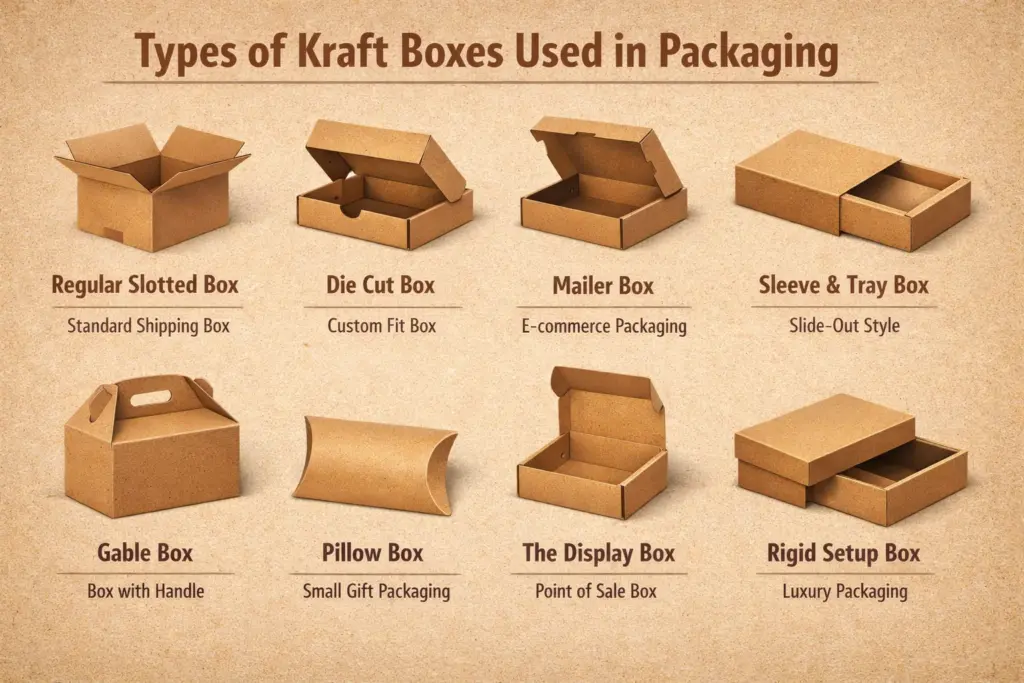
Different packaging applications require different types of kraft boxes.
Corrugated Kraft Boxes
Corrugated kraft boxes include a fluted middle layer that increases strength.
These boxes are commonly used for:
- Shipping cartons
- eCommerce packaging
- Heavy products
Kraft Folding Cartons
Folding cartons made from kraft board are often used in retail packaging. These cartons are lightweight and ideal for displaying products on store shelves.
Kraft Mailer Boxes
Mailer boxes are popular in the eCommerce industry because they provide secure packaging while while retaining the natural appearance of kraft-faced packaging.
Kraft Gift Boxes
Kraft gift boxes are widely used for:
- Gift and presentation packaging
- Boutique retail products
- Subscription packaging
Industries That Commonly Use Kraft Packaging
Kraft packaging is widely used across several industries.
Common users include:
- Food and beverage brands
- Organic product manufacturers
- Cosmetics and skincare companies
- eCommerce retailers
- Handmade and artisan brands
These industries may use kraft packaging for its natural appearance, structural options and suitability for selected retail and ecommerce applications.
Sustainability Considerations for Kraft Packaging
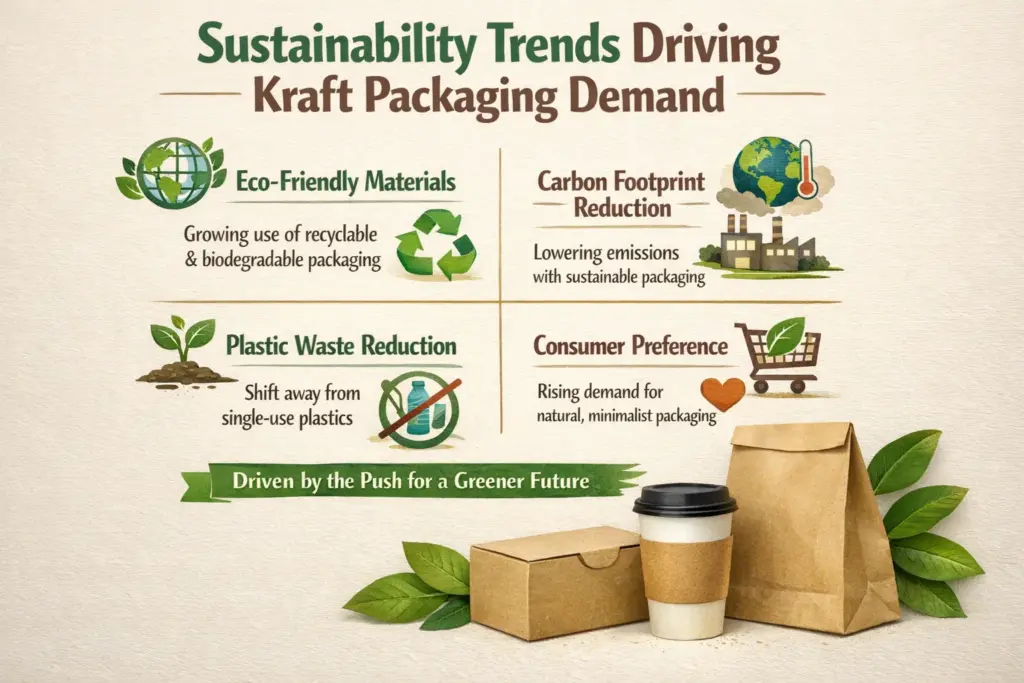
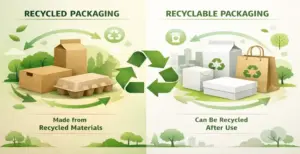
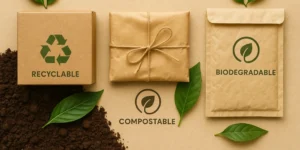
Kraft packaging can support specific environmental requirements, but those requirements should be stated precisely. Recycled content, fibre sourcing, recyclability, compostability and biodegradability describe different properties and should not be used interchangeably.
For a kraft packaging project, consider:
- The actual board grade and fibre composition.
- The percentage of recycled content where a quantified claim is required.
- FSC or other sourcing certification where specifically requested.
- Coatings, laminations, windows, adhesives and inserts.
- The realistic collection and recycling route available after use.
How to Customise Kraft Boxes for Your Brand
Although kraft packaging has a natural aesthetic, it can still be customised to reflect brand identity.
Customisation options include:
- Custom box sizes and shapes
- Branded printing
- Die-cut windows
- Inserts and dividers
These options allow brands to create distinctive packaging while retaining the selected kraft material and structural specification.
Common Mistakes When Choosing Kraft Packaging
- Choosing a folding-board grade that is too light for the packed product.
- Assuming every brown kraft board contains recycled fibre.
- Using artwork with insufficient contrast against the natural board tone.
- Ignoring moisture, grease or other exposure requirements.
- Assuming paper-based packaging is automatically recyclable regardless of coatings, windows or other components.
- Using folding kraft board for a shipping application that actually requires a corrugated construction.
Why Choose Healey Packaging for Kraft Boxes?
Healey Packaging can develop kraft packaging around the product dimensions, weight, structure, artwork and intended handling requirements rather than selecting the board from appearance alone.
- Custom sizes and box structures.
- Kraft folding board and corrugated kraft options where suitable.
- CMYK, Pantone and selected printing methods.
- Artwork review before production.
- No minimum order quantity.
- Sustainability requirements reviewed against the actual specification.
Common Questions About Kraft Boxes and Sustainability
Practical answers about recyclability, biodegradability, recycled fibre, shipping strength and kraft packaging specifications.
Are kraft boxes recyclable?
Many uncoated paper-based kraft boxes can be suitable for paper and cardboard recycling routes, but the complete construction matters. Coatings, laminations, plastic windows, adhesives, inserts and local collection conditions can affect the available recycling route.
Are kraft boxes biodegradable?
Kraft paper is fibre-based and may biodegrade under suitable conditions, but “biodegradable” does not explain how quickly this happens or provide a recommended disposal route. The finished box may also contain coatings, adhesives or other components that behave differently.
Are kraft boxes made from recycled paper?
Not necessarily. Natural brown colour does not prove that a board is made from recycled fibre. If recycled content is important, confirm the actual grade and percentage for the selected packaging material.
Are kraft boxes strong enough for shipping?
It depends on the construction. Folding kraft board may suit lighter retail products, while kraft corrugated board provides greater structural support for many mailer and shipping applications. Dimensions, packed weight, flute, liners and handling conditions should still be considered.
Why do brands use kraft packaging?
Kraft packaging provides a natural fibre appearance and can suit retail, gifting and ecommerce designs. It can also support specific fibre-sourcing, recycled-content or recycling objectives where the selected material and finished construction provide the required evidence.
Does kraft packaging print differently from white board?
Yes. The natural brown substrate changes the background beneath the artwork, which can affect perceived colour and contrast. Artwork should therefore be reviewed on the selected kraft board rather than judged only from a white-screen preview.
Can kraft packaging be FSC-certified?
FSC-certified board may be available for suitable projects where the relevant material and supply chain meet the certification requirements. Certification should be confirmed for the actual board before making the claim, and FSC certification does not by itself establish recyclability.
Final Thoughts: Specify Kraft Packaging Around the Product
Kraft packaging can be a practical option for retail, gift and ecommerce applications, but the natural brown appearance should not be treated as a complete sustainability specification. Board grade, fibre source, recycled content, structure and finished components all matter.
Start with the product dimensions, weight and handling requirements, then choose between folding kraft board, corrugated kraft or another suitable construction. If recycled content, sourcing certification or recyclability is important, confirm those requirements against the actual material before production.
Custom Kraft Packaging Request a Custom Packaging Quote