Packaging Board Grades at a Glance
- SBS provides a smooth, bright surface suited to premium printed cartons and high-quality finishes.
- FBB combines good stiffness, relatively low weight and a strong printing surface for folding cartons.
- WLC contains recycled fibre and is commonly used where cost and practical carton performance are important.
- Corrugated board uses fluted material between liners to provide greater cushioning and structural protection for transit packaging.
- Choose a board specification around product weight, box structure, printing, storage, distribution and required protection rather than selecting by board name alone.
The strength, appearance, and durability of packaging depend heavily on the board grade used to manufacture the box. While many businesses focus on design and printing, the material underneath those graphics plays a critical role in protecting products and shaping customer perception.
Yet many brands ordering custom packaging don’t fully understand the differences between packaging materials. Terms like SBS, FBB, WLC, and corrugated board are commonly used in the packaging industry, but they often sound technical or confusing to new buyers.
Choosing the wrong board grade can lead to unnecessary costs, poor print results, or even damaged products during shipping. Lightweight retail boxes may not survive courier networks, while overly strong materials can increase packaging costs without adding real value.
This guide explains board grades for packaging, the different types of packaging board, and how businesses can choose the right material for their products. Whether you are designing retail cartons, shipping boxes, or luxury packaging, understanding board grades helps you make better packaging decisions.
What Are Board Grades for Packaging?
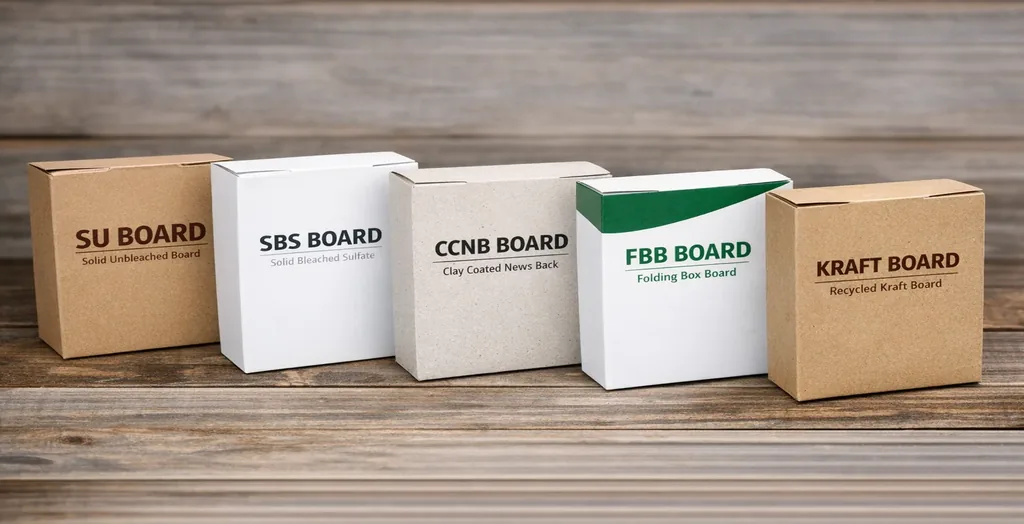
Packaging board grades describe different paperboard and corrugated materials used to manufacture cartons and boxes. Common options include Solid Bleached Sulphate (SBS), Folding Box Board (FBB), White Lined Chipboard (WLC) and corrugated board.
Each grade differs in fibre composition, surface quality, stiffness, thickness, printability and structural performance. The right choice depends on the product’s weight, required protection, print finish, shipping conditions and packaging format.
What Are Packaging Board Grades?
Packaging board grades refer to the type, composition, and structural strength of paper-based materials used to produce packaging boxes.
These materials are typically divided into two broad categories:
- Paperboard packaging – thin, smooth boards used for retail cartons
- Corrugated board – layered boards with a fluted structure designed for strength and cushioning
Each board grade offers different properties such as thickness, weight, durability, and print quality. Selecting the correct grade ensures that packaging performs well during storage, transportation, and retail display.
For businesses ordering custom packaging boxes, understanding board grades helps ensure that the packaging matches the product’s weight, fragility, and branding needs.
Key Factors That Define Board Grades
Several factors determine the performance and quality of packaging board.
Grammage and Thickness
Packaging board grammage is measured in grams per square metre (g/m² or GSM), while thickness is measured separately, commonly in micrometres or millimetres. Higher grammage may contribute to greater stiffness or strength, but board performance also depends on fibre composition, construction and thickness.
Layer Structure
Packaging boards can be:
- Paperboard may be manufactured using single- or multi-ply constructions, while corrugated board combines liner sheets with one or more fluted layers.
- Multi-layer boards (such as corrugated structures)
The number of layers affects strength and cushioning performance.
Strength and Compression
Board strength determines how well packaging can protect products during shipping or stacking.
Corrugated board, for example, provides compression resistance and shock absorption, making it ideal for shipping cartons.
Print Surface Quality
Smooth paperboard surfaces deliver high-quality printing results, which is why many retail cartons use coated paperboard materials.
Textured or fluted boards may reduce print clarity but increase structural protection.
Common Types of Packaging Board Grades
The packaging industry commonly uses several major board grades, each suited to different applications.
1. Solid Bleached Sulfate (SBS)
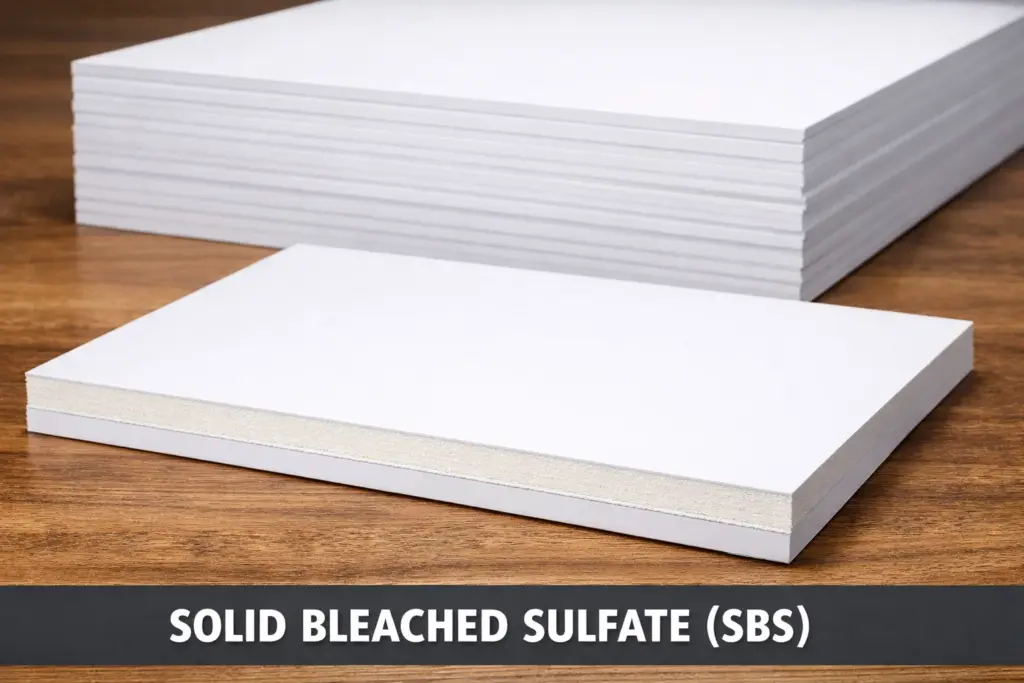
What Is SBS Board?
Solid Bleached Sulfate is a premium paperboard made from virgin wood pulp that has been chemically bleached to produce a bright white surface.
Because of its smooth finish and consistent quality, SBS is widely used in high-end retail packaging.
Key Characteristics
- Smooth, bright white surface
- Excellent printing quality
- Strong yet lightweight structure
- Suitable for premium packaging
Common Uses
SBS board packaging is commonly used for:
- Cosmetic packaging
- Pharmaceutical boxes
- Luxury retail packaging
- Food packaging
Brands producing luxury packaging often choose SBS because it supports detailed graphics and premium finishes such as foil stamping or embossing.
2. Folding Box Board (FBB)
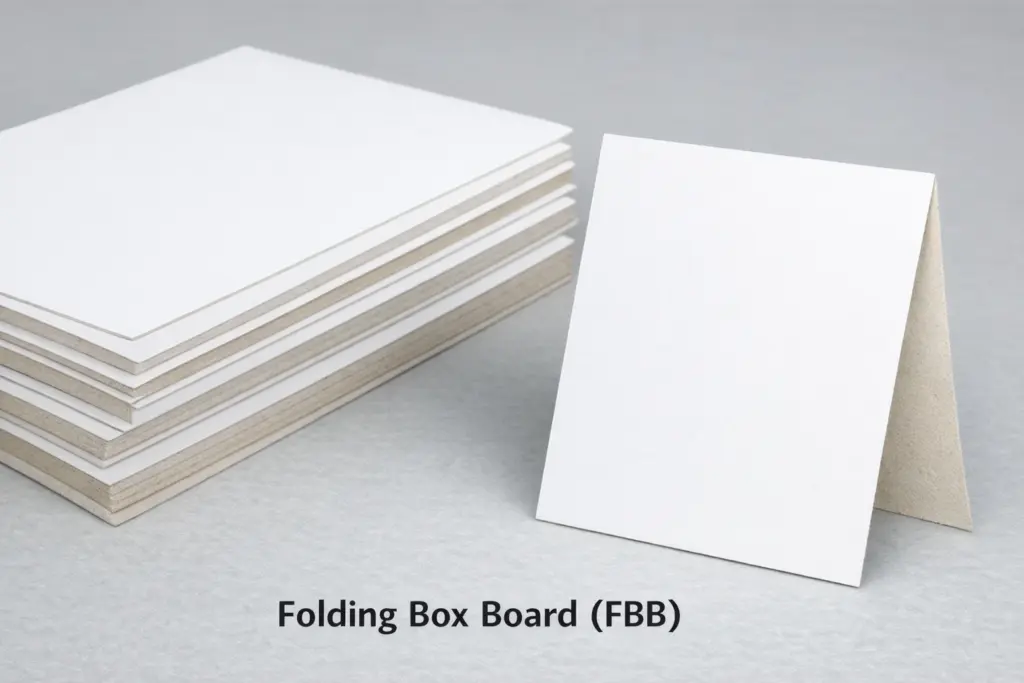
What Is FBB Board?
Folding Box Board is a multi-layer board with mechanical pulp in the middle and chemical pulp on the outer layers.
This structure provides a good balance between strength and weight.
Key Characteristics
- Lightweight yet durable
- Good printing surface
- More cost-effective than SBS
- Excellent folding properties
Common Uses
FBB packaging board is commonly used for:
- Food cartons
- Healthcare packaging
- Retail product boxes
Many brands choose FBB for retail packaging solutions where good printing quality and structural performance are required without the higher cost of SBS.
3. White Lined Chipboard (WLC)
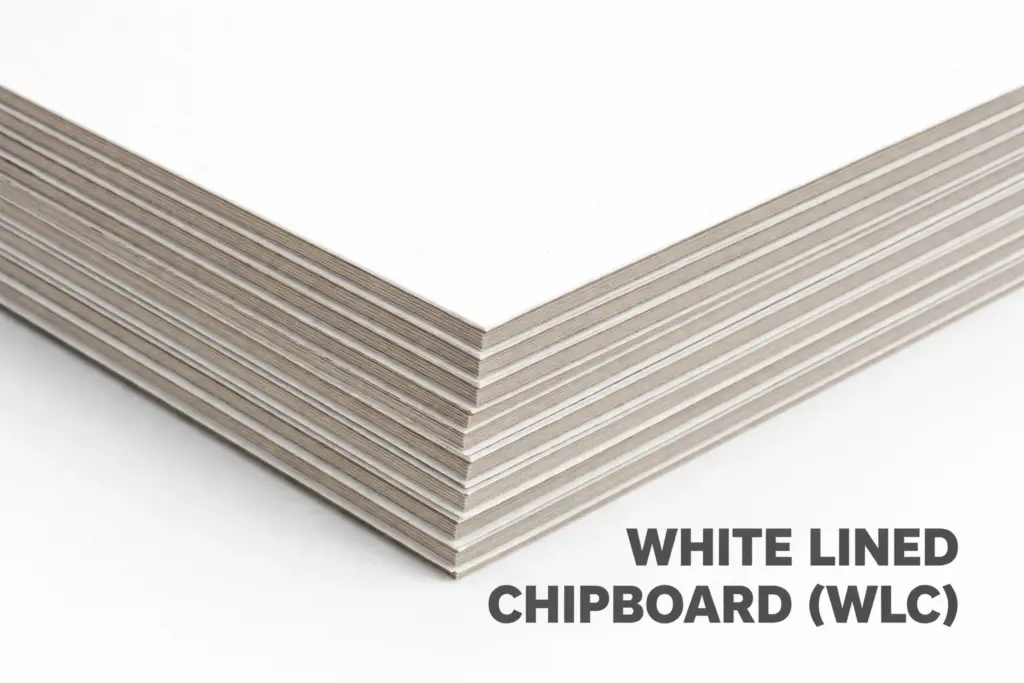
What Is WLC?
White Lined Chipboard is made primarily from recycled paper fibres. The outer layer is coated with white clay to improve printing quality. WLC is produced largely from recovered fibre, making recycled content one of its key material characteristics. Its overall environmental performance still depends on factors such as sourcing, coatings, design and end-of-life treatment.
Key Characteristics
- Made from recycled fibres
- Cost-effective packaging material
- White-coated printing surface
- Environmentally responsible option
Common Uses
Recycled packaging board is widely used for:
- Cereal boxes
- Frozen food packaging
- Household product packaging
WLC is particularly popular for brands prioritising eco-friendly packaging and cost-efficient production.
4. Corrugated Board
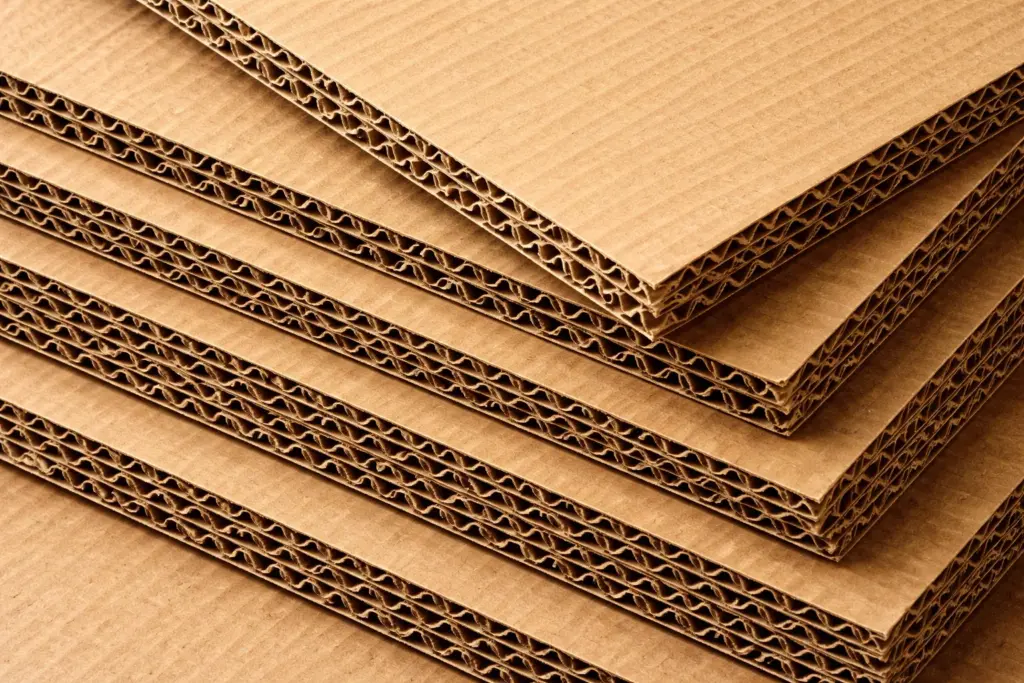
What Is Corrugated Board?
Corrugated board consists of three layers: an outer linerboard, an inner linerboard, and a fluted middle layer.
The fluted layer provides cushioning and strength, making corrugated packaging ideal for shipping and transportation.
Key Characteristics
- High structural strength
- Shock absorption
- Suitable for stacking
- Excellent product protection
Common Uses
Corrugated board packaging is commonly used for:
- Shipping cartons
- eCommerce packaging
- Protective outer boxes
Businesses shipping products regularly rely on corrugated shipping boxes because they provide durability during transportation.
Corrugated Board Grades Explained
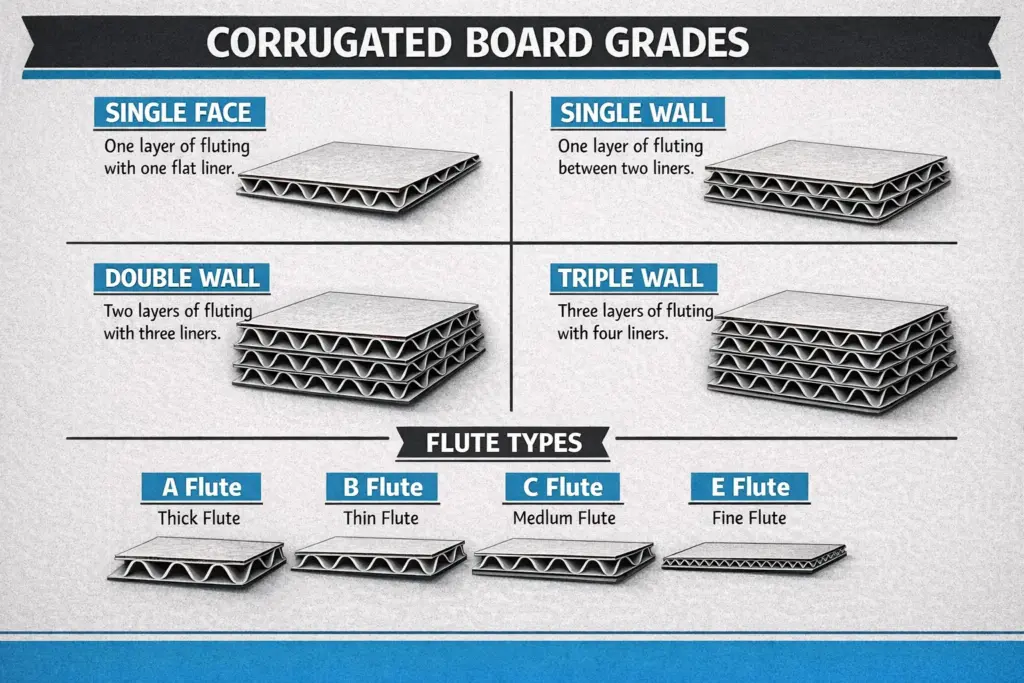
Corrugated board strength varies depending on the flute type, which refers to the shape and size of the fluted inner layer.
A Flute
Provides maximum cushioning and vertical compression strength. Often used for fragile products.
B Flute
Offers excellent stacking strength and good puncture resistance.
C Flute
Balances cushioning and compression strength, making it one of the most widely used flute types.
E Flute
A thinner flute used in retail packaging where printing quality and compact structure are important.
Paperboard vs Corrugated Board
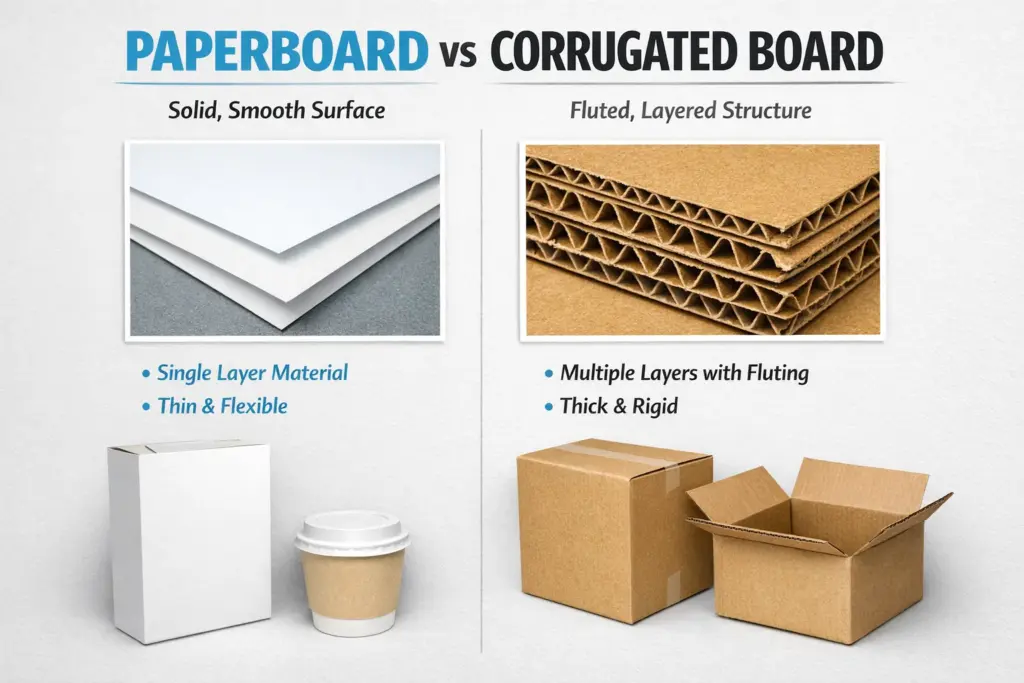
The choice between paperboard and corrugated board depends largely on whether packaging is intended for display or shipping.
| Feature | Paperboard | Corrugated Board |
|---|---|---|
| Structure | Solid or multi-ply paperboard | Fluted medium positioned between liner sheets |
| Typical Strength | Suited to lightweight and medium-duty cartons | Greater cushioning and compression performance |
| Print Surface | Smooth surface suited to detailed graphics | Varies by liner and printing method |
| Typical Use | Retail cartons and presentation packaging | Shipping, e-commerce and protective packaging |
Retail cartons often use paperboard materials, while shipping cartons rely on corrugated board.
How to Choose the Right Board Grade for Packaging
Selecting the correct board grade requires evaluating several factors.
Product Weight
Heavier products require stronger board materials, typically corrugated packaging.
Fragility
Delicate items may require additional cushioning provided by corrugated fluting.
Shipping Requirements
Products travelling long distances need stronger materials than items sold directly in retail stores.
Branding and Print Quality
If packaging design is central to brand identity, smoother boards such as SBS or FBB may be preferable.
Sustainability Goals
Many companies now prioritise recyclable and responsibly sourced materials.
Sustainability of Packaging Boards
Paper-based packaging materials are among the most widely recycled materials globally.
Many board grades support sustainability goals.
Recyclable Materials
Many paperboard and corrugated packaging formats are widely collected for recycling in the UK, although laminations, coatings and other components can affect recyclability.
Recycled Content
Materials such as WLC often contain high levels of recycled fibre.
Responsible Forestry
Virgin boards such as SBS are typically sourced from responsibly managed forests.
As environmental awareness grows, many businesses are choosing packaging materials that align with eco-friendly packaging trends.
Common Mistakes When Choosing Packaging Board
Businesses sometimes make avoidable mistakes when selecting board grades.
Common issues include:
- Using thin board for heavy products
- Ignoring shipping conditions
- Prioritising cost over protection
- Selecting materials unsuitable for printing requirements
These mistakes can lead to product damage, increased returns, or reduced brand perception.
Why Choosing the Right Board Grade Matters for Your Brand
The correct packaging material influences several aspects of your business.
Product Protection
Stronger board materials reduce the risk of product damage during shipping.
Customer Experience
High-quality packaging enhances the unboxing experience.
Brand Perception
Premium packaging materials create stronger brand impressions.
Reduced Shipping Damages
Selecting appropriate board grades can significantly reduce damage rates.
Why Choose Healey Packaging for Custom Packaging Boards
Healey Packaging supports businesses across the UK with expert packaging solutions.
Our services include:
- Expert material selection guidance
- High-quality board options
- Custom printing and finishing capabilities
- Reliable UK packaging supply
- Fast turnaround times
Whether you need premium retail cartons or durable shipping boxes, we help businesses choose the right materials for their packaging needs.
👉 Need help choosing the right packaging board? Contact Healey Packaging for expert advice and a custom quote.
Quick Answers About Packaging Board Grades
Common questions about paperboard grades, corrugated board, GSM, printing and material selection.
What are packaging board grades?
Packaging board grades are classifications of paperboard and corrugated materials based on factors such as fibre composition, construction, surface quality and performance. Common examples include SBS, FBB, WLC and corrugated board.
What is the strongest packaging board?
There is no single strongest board for every packaging application. Corrugated board is generally preferred for shipping and heavier products because its fluted construction provides cushioning and compression resistance. Actual strength depends on the liners, flute, number of walls, board specification and box design.
What is SBS board used for?
SBS is commonly used for high-quality folding cartons where a smooth white printing surface and premium presentation are important. Typical applications include cosmetics, healthcare products, confectionery and other branded retail packaging.
Are packaging boards recyclable?
Many paperboard and corrugated packaging formats can be recycled in UK paper and board streams. However, recyclability depends on the complete packaging construction, including laminations, coatings, barriers, adhesives and other non-paper components.
Is a higher GSM board always stronger?
No. GSM measures grammage, or mass per square metre, rather than strength itself. Board performance also depends on thickness, fibre composition, stiffness, construction and other material properties.
What is the difference between SBS and FBB?
SBS is typically made from bleached chemical pulp and is valued for its smooth white appearance and high-quality print surface. FBB uses a multi-ply construction, commonly with mechanical pulp in the middle layers, which can provide good stiffness at a relatively low weight.
Final Thoughts
Understanding board grades for packaging helps businesses choose the right materials for product protection, branding, and sustainability.
Whether using premium SBS for retail presentation or corrugated board for shipping durability, selecting the correct packaging material ensures products arrive safely while maintaining a strong brand image.