
Foil stamping is a decorative finishing process used to add metallic, coloured or holographic detail to selected areas of packaging. It is commonly applied to logos, borders, typography and small design accents where contrast is more important than covering the entire surface.
The result depends on more than the foil colour. Artwork detail, board surface, die quality, pressure, temperature and registration all affect the finished impression. This guide explains how foil stamping works, the main foiling methods and what to consider before adding foil to custom packaging.
What Is Foil Stamping in Packaging?
Foil stamping is a finishing process that transfers a thin decorative foil layer onto selected areas of packaging. Traditional hot foil uses a heated die and pressure, while other methods such as cold foil and digital foiling use different transfer systems.
Foil is commonly used on logos, typography, borders and other details to create metallic, coloured or holographic contrast. The best method depends on the substrate, artwork, run length, registration requirements and production process.
Introduction — Why Some Packaging Just Looks Expensive
Ever wondered why some product boxes catch the light like jewellery and feel luxurious to the touch? That’s the magic of foil stamping. More than just a pretty finish, foil stamping adds sophistication, brand prestige, and visual allure to packaging — making your products instantly stand out on the shelf.
From luxury rigid boxes to custom printed labels, this technique elevates both appearance and perceived value. In this guide, we’ll uncover how foil stamping works, explore the different types, and share expert tips for incorporating it into your packaging design.
What Is Foil Stamping?
Foil stamping is a specialised printing process that uses heat, pressure, and metallic foil to apply shiny, eye-catching designs to a surface. Unlike ink-based techniques, foil stamping transfers a thin film of metallic foil — usually gold, silver, or holographic — directly onto packaging materials like rigid boxes, coated boards, and kraft paper.
It’s often used for logos, borders, patterns, or accent elements to give packaging a high-end, luxurious appearance.
Foil Stamping at a Glance
- Hot foil stamping uses a heated die and pressure to transfer foil onto selected areas of the packaging.
- Foils are available in metallic, coloured, holographic and other decorative finishes, so the choice is not limited to gold or silver.
- Simple logos, typography and controlled graphic details generally provide more reliable foil results than extremely fine or crowded artwork.
- Cold foil and digital foiling offer alternative workflows where hot-die stamping is not the most suitable production method.
- Foil can be combined with embossing, debossing or other finishes when the artwork, substrate and production sequence are planned together.
- Recyclability should be assessed using the complete packaging construction rather than assuming every foil-decorated pack has the same end-of-life route.
How Foil Stamping Works (Step-by-Step)
1. Design Preparation
A vector-based artwork or logo is selected for foil application.
2. Foil Die Creation
A metal die (like a stamp) is engraved with the artwork for pressing the foil.
3. Foil Placement
A roll of coloured foil is layered between the die and the packaging material.
4. Heat and Pressure
The die presses down, using heat to activate the adhesive, transferring foil onto the material.
Types of Foil Stamping
| Foiling Method | How It Works | Useful For |
|---|---|---|
| Hot Foil Stamping | Uses a heated die and pressure to transfer foil to the substrate | Logos, typography and premium decorative details |
| Cold Foil | Uses an adhesive-based transfer process rather than a heated stamping die | Selected print workflows requiring inline or larger-area foil effects |
| Digital Foiling | Applies foil through a compatible digital embellishment process without a conventional stamping die | Short runs, prototypes and artwork that changes between jobs |
| Foil + Embossing | Combines foil with a raised impression | Logos and selected details requiring both metallic contrast and texture |
Common Foil Colours and Finishes
| Foil Effect | Appearance | Common Design Use |
|---|---|---|
| Gold Foil | Warm metallic reflection | Logos, gifting, cosmetics and premium retail details |
| Silver Foil | Cool metallic reflection | Minimal branding, technology and contemporary packaging |
| Rose Gold Foil | Warm pink-toned metallic finish | Beauty, gifting and decorative retail packaging |
| Holographic Foil | Multi-colour reflective effect that changes with light | Limited editions, promotions and high-contrast accents |
| Matte / Satin Foil | Lower-reflection metallic or coloured effect | Understated logos, typography and premium detailing |
Why Foil Stamping Elevates Packaging Value?
1. Creates a Premium Look
Foil-stamped elements make your packaging feel luxurious, even with simple box structures.
2. Enhances Brand Recognition
Foil can create stronger visual contrast around a logo or selected design element, helping it stand apart from the surrounding print.
3. Adds Texture and Depth
Combine with embossing or Spot UV to create a multi-sensory experience.
4. Increases Perceived Value
Foil is commonly used where a brand wants a more decorative or premium visual treatment, particularly on gifting, beauty and retail packaging.
5. Eco-Friendly Options Available
The environmental profile of foil-decorated packaging depends on the foil system, substrate, coverage and the complete finished construction. Sustainability claims should be checked against the actual specification.
Foil Stamping vs Other Finishes
| Finish | Main Effect | Surface Result | Best Used When |
|---|---|---|---|
| Foil Stamping | Metallic, coloured or holographic contrast | Decorative transferred foil layer | You want selected artwork to catch light or create metallic detail |
| Spot UV | Selective gloss contrast | Clear UV-cured coating on chosen areas | You want glossy contrast without adding metallic colour |
| Embossing | Raised detail | Physical relief in the board | You want tactile depth in logos, lettering or patterns |
| Lamination | Overall surface treatment | Matte, gloss or other laminated surface | You need an overall visual or protective surface rather than a small accent |
Popular Uses of Foil Stamping in Packaging
1. Rigid Gift Boxes
Perfect for perfumes, watches, and luxury items.
2. Folding Cartons
Used in chocolates, skincare, and candles.
3. Labels & Stickers
Adds brand flair to product jars and bottles.
4. Business Stationery
From foil-stamped envelopes to business cards.
5. Promotional & Seasonal Packaging
Ideal for holiday editions, subscription boxes, and event promotions.
Seasonal Packaging Explore Custom Christmas Packaging BoxesHow to Design for Foil Stamping (Pro Tips)
- Use bold, simple graphics (avoid thin lines).
- Submit files in vector format (AI, PDF, EPS).
- High contrast between the foil and surrounding artwork can make the foiled detail more prominent; the best colour combination depends on the brand design.
- Less is more — highlight only key design elements.
- Always request a foil proof or sample before mass production.
Mistakes to Avoid in Foil Stamping
- Overly detailed artwork that doesn’t stamp well
- Using lightweight paper that can warp under pressure
- Misaligned foil with embossed areas
- Low-quality foil film that peels or dulls quickly
Final Thoughts: Use Foil Where It Adds Something
Foil stamping works best as a controlled design detail rather than a finish added everywhere. Logos, typography, borders and selected graphic elements cangain metallic or coloured contrast while the rest of the packaging remains visually balanced.
The final result depends on the board, artwork, foil method and production setup, so these should be confirmed together before approval. At Healey Packaging, we can help compare foiling, embossing, Spot UV and other finishing options around your packaging structure and design.
Common Questions About Foil Stamping
Practical answers about foil methods, materials, artwork, embossing and recyclability for custom packaging.
What is foil stamping used for?
Foil stamping is commonly used to highlight selected packaging elements such as logos, typography, borders and patterns. It can create metallic, coloured or holographic contrast without applying the effect across the entire box.
What is the difference between hot foil and cold foil?
Hot foil stamping uses a heated die and pressure to transfer foil. Cold foil uses an adhesive-based transfer process without the same heated stamping method. Which option is more suitable depends on the substrate, artwork, equipment, production run and required finish.
Can foil stamping be combined with embossing?
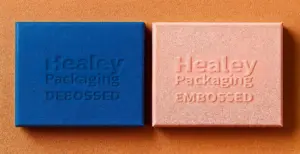
Yes. Foil and embossing can be combined so selected artwork has both metallic contrast and raised depth. Accurate registration is important because the foil and embossed impression need to align correctly.
What packaging materials can be foil stamped?
Foiling can be used on many paperboard, rigid-board, coated-card and kraft-based packaging materials. Suitability depends on the surface, coating, texture, foil type and production method, so the exact board should be tested or approved before production.
Does foil stamping affect packaging recyclability?
It can, depending on the foil system, coverage, substrate and other components in the finished pack. Recyclability should therefore be assessed using the complete packaging construction rather than assuming all foil-decorated packaging has the same recycling route.
What artwork works best for foil stamping?
Clear vector artwork with controlled line weights and enough spacing between elements generally gives the printer a stronger starting point. Foil artwork should be supplied on its own editable finishing layer and checked against the final dieline.
Do I need a proof before foil stamping?
Proofing is important for checking artwork placement and finishing areas before production. Depending on the project, a digital proof, sample or production reference may be used to confirm the design and specification.