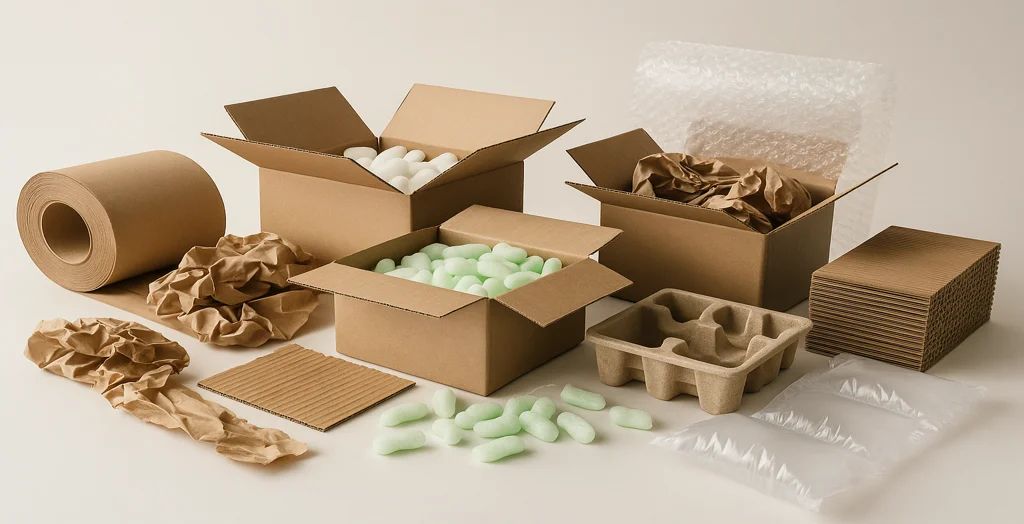
Protective packaging is the combination of box structure, internal support, cushioning and void control used to reduce product movement and help goods withstand storage, handling and delivery. The right solution depends on what the product actually needs protection from, such as impact, vibration, compression, abrasion or moisture.
There is no single protective material that works best for every shipment. Product weight, fragility, dimensions, distribution route and the outer box all need to be considered together. This guide compares common protective packaging options and explains where each one can be useful.
What Is the Best Protective Packaging for Safe Delivery?
The best protective packaging is the one designed around the product and expected distribution conditions. Corrugated inserts and dividers can control movement, paper cushioning can fill voids, foam can provide precise cushioning, and moulded fibre can form protective product cavities.
The outer box, internal protection and closure should be evaluated as one packaging system. Fragility, packed weight, product shape and likely handling conditions should guide the specification rather than choosing a material from its name alone.
Your Product’s First Line of Defense: Protective Packaging
Imagine this: A customer excitedly opens their parcel only to find a shattered candle jar or a leaking lotion bottle. Frustrating, right? That one moment can undo months of brand-building. In the age of eCommerce, protective packaging isn’t just an option—it’s your product’s personal bodyguard.
From fragile glassware to premium skincare, the right protective packaging prevents damage, reduces returns, and enhances customer trust. Whether you’re a cosmetics startup or a subscription box service, this guide will help you choose the best materials for safe, stylish delivery.
What Is Protective Packaging?
Protective packaging includes any material or structural support designed to keep your product safe during storage, handling, or shipping. It shields against:
- Physical impact (drops, bumps)
- Vibrations in transit
- Moisture or temperature fluctuations
Protective packaging applies across primary (product-level), secondary (retail/display), and tertiary (shipping) packaging layers.
Protective Packaging at a Glance
- Protective packaging should be selected around product weight, fragility, dimensions and the hazards expected during distribution.
- Corrugated inserts, paper cushioning, foam, moulded fibre and inflatable systems perform different protective functions.
- Void fill is not a substitute for structural support when a heavy or fragile product needs to be held securely in position.
- More packaging is not automatically safer; excessive empty space or poorly positioned cushioning can still allow damaging movement.
- Recyclability and compostability depend on the actual material, construction and available waste route rather than broad “eco-friendly” claims.
- Test the complete packed product under conditions that reasonably represent its intended delivery route before approving the final design.
Why It’s Crucial for Safe Delivery?
- Product Safety: No one wants scratched bottles or smashed jars.
- Customer Experience: A pristine unboxing boosts satisfaction.
- Brand Reputation: Broken products = bad reviews.
- Cost Efficiency: Less damage = fewer replacements.
- Sustainability: Reusable or recyclable options reduce landfill waste.
Key InsightEffective protection comes from controlling product movement and managing the hazards expected during distribution, not simply adding more cushioning material.
Types of Protective Packaging Materials
Here’s a breakdown of the most common protective packaging types and when to use each:
1. Bubble Wrap
- Lightweight cushioning for fragile items
- Perfect for: glassware, electronics, candles
- ✅ Available in recyclable variants
2. Foam Inserts & Sheets
- Precision-cut to fit specific products
- Perfect for: perfumes, tech devices, jars
- Comes in EPE, EVA, PU foam
3. Air Pillows & Inflatable Cushions
- Void fill that reduces box movement
- Perfect for: bulkier or boxed items
- ✅ Look for biodegradable options
4. Paper Cushioning
- Includes kraft paper, honeycomb wraps
- Offers padding + recyclability
- Ideal for: eco-conscious brands, ceramics, books
5. Corrugated Inserts & Dividers
- Adds internal support in larger boxes
- Prevents item movement in multi-product kits
6. Packing Peanuts
- Fills awkward spaces
- Choose: biodegradable starch-based versions
7. Molded Pulp Packaging
- 100% compostable
- Excellent shock absorption
- Perfect for: electronics, fragile retail
8. Stretch & Shrink Wrap
- Secures bulk shipments or pallets
- Moisture-resistant
Choosing the Right Material for Your Product
| Product Requirement | Options to Consider | Key Consideration |
|---|---|---|
| Fragile Glass or Ceramics | Fitted inserts, corrugated dividers, paper cushioning or foam | Restrict movement and protect vulnerable edges and contact points |
| Multi-Product Sets | Corrugated dividers, die-cut inserts or moulded trays | Keep individual products separated during handling |
| Heavy Products | Strong corrugated construction with fitted blocking or supports | Internal protection should be capable of supporting the packed load |
| Electronics | Fitted cushioning with appropriate static-control materials where required | Assess both impact protection and electrostatic sensitivity |
| Irregular Shapes | Custom inserts, moulded fibre, foam or controlled void fill | Prevent the product moving into unsupported areas of the box |
| Lightweight Boxed Products | Paper void fill or inflatable cushioning where suitable | Fill unnecessary voids without overpacking the shipment |
Eco-Friendly Protective Packaging Options
Sustainability and safety can go hand in hand:
- Recyclable bubble wrap
- Corrugated honeycomb pads
- Biodegradable air pillows
- Molded pulp trays and inserts
How Protective Packaging Enhances Brand Image?
Protective doesn’t mean plain. Today’s smart brands combine:
- Custom-printed foam inserts
- Eco fillers with custom branding
- Tissue wraps + thank-you notes
Protective packaging can also support presentation when inserts, dividers and internal components are designed to hold the product neatly in position. Protection should remain the primary function.
Mistakes to Avoid
- Overpacking – adds cost and waste
- Ignoring eco options
- No product testing before rollout
- Choosing the wrong board grade or void fill
Final Thoughts: Design Protection Around the Product
Protective packaging works best when the outer box and internal components are developed as one system. The aim is to control movement, cushion vulnerable areas and provide enough structural support for the conditions the product is likely to experience during storage and delivery.
Avoid selecting materials simply because they are described as protective or sustainable. Product dimensions, packed weight, fragility, distribution requirements and end-of-life considerations should all form part of the specification. At Healey Packaging, we can help compare box structures, inserts and materials around the actual product and shipping requirements.
Common Questions About Protective Packaging
Practical answers about fragile products, cushioning materials, sustainability, shipping costs and protective packaging design.
What is the best protective packaging for fragile items?
There is no single best material for every fragile product. Fitted foam, corrugated dividers, moulded fibre and paper cushioning can all be useful depending on the product’s weight, shape, fragility and distribution route. The aim is to restrict movement and protect vulnerable areas without creating damaging pressure points.
Is bubble wrap recyclable?
Some bubble-wrap materials may be recyclable through suitable plastic film collection routes, but acceptance varies by material and local infrastructure. Do not assume that a recyclable plastic will be accepted in every household collection system.
What are paper-based protective packaging options?
Options can include corrugated dividers, die-cut cardboard inserts, kraft paper cushioning, honeycomb paper structures and moulded fibre trays. Their suitability depends on the protection required and the complete packaging construction.
Is moulded pulp packaging compostable?
Some moulded fibre packaging may be recyclable or compostable, depending on its fibre composition, additives, coatings and relevant certification. The finished product should be checked rather than assuming every moulded-pulp format has the same end-of-life route.
How do I design protective packaging for my product?
Start with the product dimensions, packed weight, fragility and likely distribution hazards. Then select the outer box and internal protection together, allowing for inserts, dividers or cushioning where required. The complete packed product should be checked before full production.
Does protective packaging affect shipping costs?
It can. Added material increases packed size or weight, while a better-fitted packaging system may reduce unnecessary void space. Final shipping cost depends on the parcel dimensions, packed weight, courier and service used, so protection and transport efficiency should be considered together.
Can protective packaging be recyclable?
Yes, depending on the materials and finished construction. Paper-based inserts and corrugated components may have established recycling routes, while mixed materials, coatings and some plastics can require different collection systems. Assess each packaging component against the waste route available to the user.