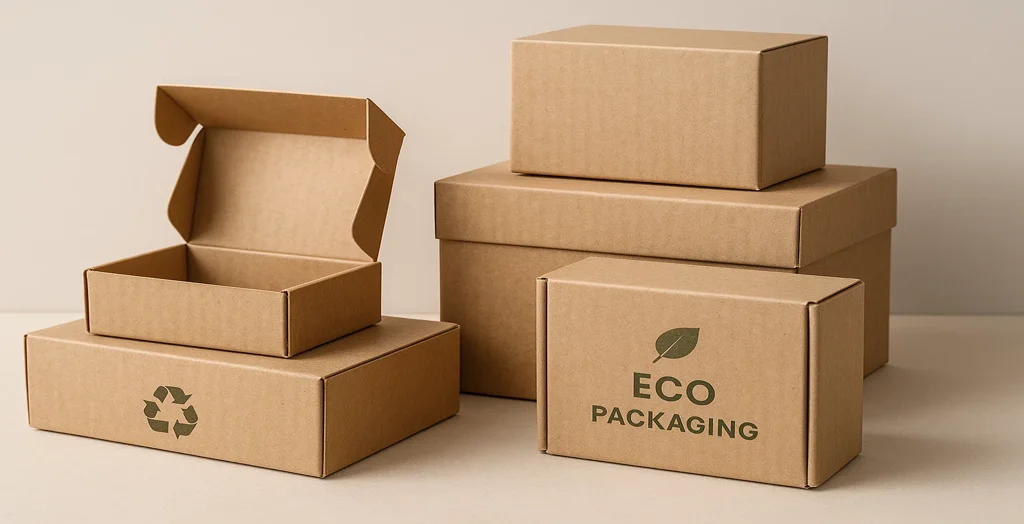
Sustainability isn’t just a buzzword anymore — it’s a buying decision. Today’s customers are actively seeking brands that align with their values, and eco-friendly packaging is one of the most visible indicators of your environmental commitment.
In the UK and globally, there’s growing pressure on businesses to reduce waste, carbon emissions, and reliance on plastic. Eco-friendly cardboard boxes have emerged as a reliable, scalable, and affordable packaging solution for businesses of all sizes.
In this guide, we explore the key benefits of using eco cardboard boxes, how they can elevate your brand, and how Healey Packaging can help you go greener without compromising on quality or aesthetics.
What Are the Benefits of Eco-Friendly Cardboard Boxes?
Eco-friendly cardboard boxes can combine product protection, printability and efficient material use with a relatively straightforward end-of-life route. Paper and cardboard packaging can often enter established recycling streams when the finished pack is clean and does not contain problematic mixed-material components.
Businesses can also specify recycled or responsibly sourced fibres, right-size the box around the product and avoid unnecessary coatings or laminations. The environmental performance of the finished packaging still depends on its complete construction, sourcing, production, transport and disposal route.
What Makes a Cardboard Box “Eco-Friendly”?
Not all cardboard is created equal. Assess the finished packaging against its intended use and disposal route. Useful checks include:
- Made from recycled fibres or responsibly sourced virgin pulp (FSC®-certified)
- A realistic recycling route for the finished pack; biodegradability requires separate evidence
- Inks and coatings selected for the intended use and assessed as part of the finished pack
- Avoiding unnecessary coatings, laminates and mixed-material components
- Reusable structural design
No single feature proves that a box is environmentally preferable. Support specific claims with evidence about the finished specification.
Eco-Friendly Cardboard Boxes at a Glance
- Paper and cardboard packaging is widely collected for recycling, although coatings, laminations, contamination and mixed materials can affect the finished pack’s recyclability.
- Boxes can be specified with recycled fibres or responsibly sourced virgin fibre where suitable for the required performance.
- Right-sized cardboard packaging can reduce unnecessary material and empty space while still providing the protection the product requires.
- Corrugated board can provide additional structural protection for heavier or shipped products, while paperboard suits many lighter retail packs.
- Cardboard offers strong printing and customisation options, but finishes should be selected with both appearance and end-of-life requirements in mind.
- “Eco-friendly” is not a single technical specification, so material sourcing, box construction and disposal guidance should be considered together.
1. Recyclability Depends on the Finished Pack
One of the biggest advantages of cardboard packaging is its recyclability. Many clean paper and cardboard packs are collected for recycling, but local acceptance and the complete construction matter. For brands, that means:
- A potential route to recycling where suitable collection and processing are available
- Clear disposal guidance based on the actual finished pack
- Reduced mixing of materials to support practical recycling
2. Recycled Fibre Can Reduce Demand for Virgin Material
Recycled fibre can reduce demand for virgin pulp. Energy, water use and carbon impacts vary by mill, fibre source and production process; a comparison needs product-specific lifecycle evidence.
When specifying cardboard boxes, assess:
- CO₂ emissions from manufacturing
- Deforestation pressure from unsustainable pulp sourcing
- Overall lifecycle waste
This helps you align with broader sustainability goals and corporate responsibility commitments.
3. Lightweight Yet Strong — Reduces Shipping Costs
Cardboard is deceptively strong. While being lightweight (reducing courier fees and emissions), it still offers impressive product protection — especially when using corrugated or fluted styles.
Great for:
- eCommerce deliveries
- Subscription boxes
- Retail shipping
4. Versatile for Any Industry
From artisan candles to luxury skincare or children’s toys, cardboard packaging works across almost every sector. Whether you need rigid drawer boxes, sleeve boxes, or tuck-end retail cartons, cardboard is adaptable.
5. Customisation With the End-of-Life Route in Mind
Printing and finishing affect material use and disposal. Options to assess include:
- Print with soy-based inks
- Use embossing or debossing instead of plastic foils
- Add die-cut windows without lamination
- Maintain a natural aesthetic with uncoated kraft finishes
These features help you create a premium unboxing experience while staying true to your green values.
6. Cost-Effective for Large and Small Businesses
Cost depends on board grade, dimensions, print, finishing and order quantity. Compare complete quotations and packed shipping costs; recycled content does not automatically make a pack cheaper.
Ideal for:
- Small business owners
- B2B wholesale orders
- Startups launching new product lines
7. Specify Materials for the Intended Product
Cardboard can be specified for different products, but suitability depends on materials, inks, coatings, liners and intended conditions of use. Applications include:
- Food products
- Natural skincare
- Candles
- Children’s toys
For direct food contact, confirm suitability for the particular food, contact time and temperature. Paper-based construction or an environmental label alone does not establish food safety.
8. Helps Brands Meet Sustainability Standards
Choosing cardboard does not automatically establish regulatory compliance or permission to display certification marks. When specifying packaging, businesses should:
- Check whether EPR registration, reporting or fee obligations apply to their activities
- Confirm certification and authorised use before displaying FSC® marks; substantiate any recyclability claim
- Keep evidence of material specifications, environmental claims and applicable obligations
See GOV.UK guidance on EPR obligations and the CMA Green Claims Code checklist.
Practical Applications to Assess
These are possible packaging applications, rather than measured customer results:
- A candle brand can assess custom kraft mailer boxes with suitable inserts for fit and protection.
- A skincare brand can compare recycled-board options for presentation, product fit and handling performance.
- A bakery can test corrugated outer boxes with suitable food-contact packaging for its delivery conditions.
How to Choose the Right Eco-Friendly Cardboard Box?
Here’s a quick checklist:
- Box style: Mailer, tuck-end, rigid, sleeve, or shipping
- Material: Kraft, white, or fully recycled cardboard
- Structure: Corrugated or solid board (based on product weight)
- Finishing: Water-based inks, soy inks, no lamination
- Custom options: Cut-outs, inserts, reusable lids
Common Questions About Eco-Friendly Cardboard Boxes
Practical answers about recyclability, recycled board, strength, printing and choosing more sustainable cardboard packaging.
Are cardboard boxes recyclable?
Many paper and cardboard boxes can be recycled through established paper and board recycling streams. However, the complete construction matters. Plastic laminations, certain coatings, contamination, windows, adhesives and mixed-material components can affect how the finished packaging is collected and processed.
What makes a cardboard box more eco-friendly?
Useful considerations include right-sizing the box, reducing unnecessary material, using recycled or responsibly sourced fibres where appropriate, avoiding unnecessary mixed-material components and designing the finished pack around a realistic recycling or reuse route.
Are recycled cardboard boxes strong enough for shipping?
They can be, but recycled content alone does not determine strength. Packaging performance depends on factors such as board grade, flute profile, liner specification, wall construction, box design, product weight and distribution conditions.
Is eco-friendly cardboard packaging more expensive?
Not necessarily. Cost depends on the board specification, box style, dimensions, printing, finishes and quantity. A simple right-sized cardboard structure may be economical, while specialist certified materials or additional finishing processes can change the price.
Can eco-friendly cardboard boxes be custom printed?
Yes. Cardboard packaging can support a wide range of printing methods and branded artwork. The most suitable process depends on the board, print quantity, colour requirements and finish. Any coatings or additional materials should also be considered when assessing the finished pack’s end-of-life route.
Are cardboard boxes suitable for food packaging?
Cardboard can be used for many food-packaging applications, but any material that directly contacts food should be suitable for its intended food-contact use. Grease resistance, moisture barriers, liners and the specific food product may affect the required construction.
How can businesses reduce packaging waste with cardboard boxes?
Start by sizing the box around the actual product and required protection rather than using unnecessary empty space. Businesses can also review board weight, inserts, coatings and secondary packaging to identify material that can be removed without reducing packaging performance.
Final Thoughts: Better for the Planet, Better for Business
Select cardboard packaging using evidence about the complete pack and its intended use. Before ordering:
- Compare total packaging and shipping costs
- Confirm material sourcing and support environmental claims with evidence
- Give customers accurate disposal guidance