
Check These Symbols Before Printing Your Packaging
- Packaging symbols can communicate recycling, handling, food-contact, material and regulatory information.
- Not every packaging symbol is legally required; requirements depend on the product, material, market and applicable regulations.
- The Green Dot relates to participation in a packaging recovery system and does not mean that the packaging itself is recyclable.
- FSC® trademarks require the appropriate certification, licensing and authorisation before they are used on packaging.
- Symbols should be accurate, clearly positioned and supported by the actual properties or certification of the packaging.
Packaging symbols are more than small icons printed on a box. They are a universal communication system that tells customers, couriers, retailers, and regulators how a product should be handled, stored, recycled, or used safely.
In the UK, packaging symbols play a critical role in consumer safety, environmental responsibility, and legal compliance. From recycling symbols on packaging to food safety marks and regulatory icons, these symbols help prevent damage, reduce waste, and protect brands from costly compliance issues.
Ignoring or misusing packaging symbols can lead to confused customers, damaged goods, or even regulatory penalties. For brands operating in eCommerce, retail, or food sectors, understanding packaging symbols is no longer optional, it’s a business requirement.
What Do Packaging Symbols Mean?
Packaging symbols communicate important information about recycling, handling, food contact, materials and regulatory compliance. Some are voluntary guidance symbols, while others relate to specific legal or certification requirements.
The correct symbols depend on the product, packaging material, intended market and how the pack will be used. Brands should therefore confirm the requirements that apply before adding recycling, FSC®, food-contact or regulatory marks to printed packaging.
What Are Packaging Symbols?
Packaging symbols are standardised visual icons used on packaging to communicate essential information quickly and clearly, without relying on language.
Definition and purpose
Packaging symbols explain:
- How a product should be handled
- Whether packaging is recyclable
- If a product is food safe
- Whether regulatory standards are met
Who uses them
Packaging symbols are used by:
- Manufacturers
- Retailers
- eCommerce brands
- Logistics and warehouse teams
- Waste management providers
Mandatory vs optional symbols
- Mandatory symbols are required by law for certain products, materials, or industries
- Optional symbols are not legally required but strongly recommended to improve clarity, safety, and trust
Categories of Packaging Symbols
Packaging symbols generally fall into four main categories:
- Recycling & environmental symbols
- Handling & shipping symbols
- Food & safety symbols
- Regulatory & compliance symbols
Understanding which category applies to your product is essential for packaging compliance in the UK.
Recycling & Environmental Packaging Symbols (Most Common)
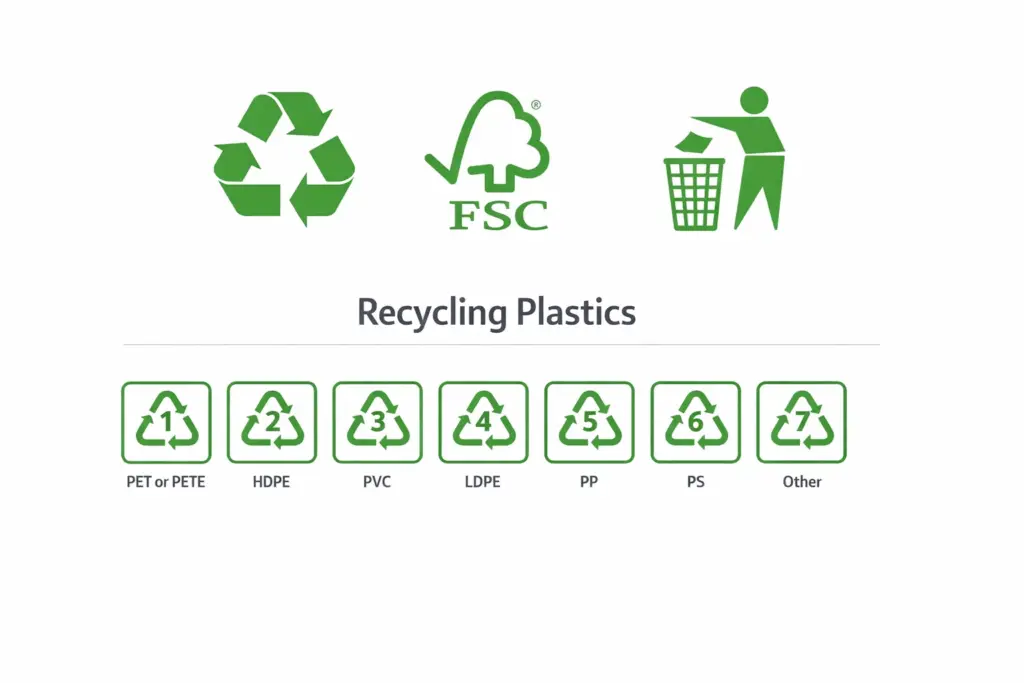
Mobius Loop (Recyclable Symbol)
The Mobius Loop is one of the most recognised recycling symbols on packaging. It indicates that packaging can be recycled, depending on local facilities.
This symbol is most commonly seen on eco-friendly packaging materials, where clear disposal guidance helps consumers recycle correctly and reduces contamination in recycling streams.
Important distinction
- Recyclable does not always mean made from recycled material
- The symbol alone does not guarantee local recycling acceptance
Green Dot Symbol
The Green Dot is often misunderstood. It does not mean packaging is recyclable. Instead, it shows the producer has contributed to a packaging recovery scheme.
Using the Green Dot incorrectly alongside sustainability claims can undermine trust, especially when brands promote sustainable packaging solutions without clarity.
Usage in the UK & EU
- Still used across Europe
- Not mandatory in the UK, but recognised
Misusing the Green Dot as a recycling claim can result in misleading eco messaging.
FSC® Certification Symbol
The FSC® symbol confirms paper-based packaging is sourced from responsibly managed forests.
Brands using FSC-certified cardboard packaging benefit from:
- Verified sustainability credentials
- Increased consumer trust
- Stronger alignment with eco-conscious buying behaviour
FSC® trademarks can only be used under the applicable FSC certification or licensing requirements, and trademark use must be properly authorised.
Paper, Plastic & Material Identification Codes
These symbols help identify packaging materials.
How consumers use them
- Assist with correct waste sorting
- Reduce contamination in recycling streams
Why they matter
- Improves recycling efficiency
- Supports local council waste guidelines
Handling & Shipping Symbols Explained
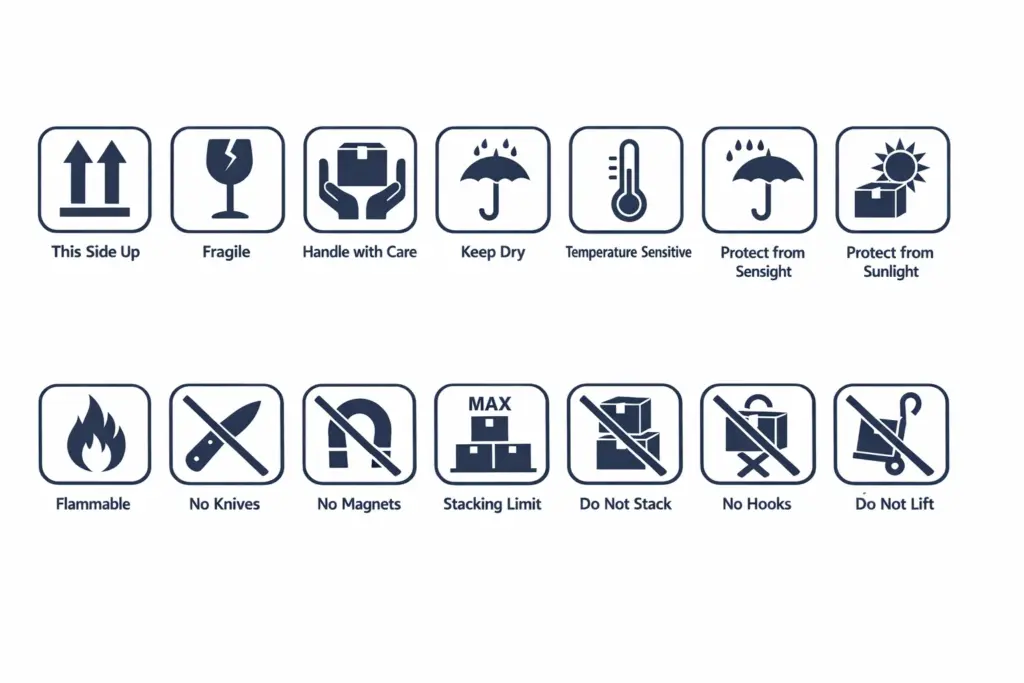
Handling symbols communicate essential instructions during storage and transit.
These symbols are particularly important for brands using corrugated packaging for shipping, where products may pass through multiple warehouses and courier networks.
Common handling symbols include:
- Fragile
- This Way Up
- Keep Dry
- Do Not Stack
Clear placement reduces damage and improves logistics efficiency.
Fragile Symbol
Used to indicate products that require careful handling.
When to use
- Glass items
- Electronics
- Cosmetics
- Delicate retail goods
While not a guarantee, it reduces rough handling during transit.
This Way Up / Orientation Arrows
These arrows show the correct upright position.
Why they matter
- Prevent leaks
- Protect internal structure
- Reduce transit damage
Essential for liquid, stacked, or precision products.
Keep Dry / Temperature Sensitive Symbols
Used for products affected by moisture or heat.
Common use cases
- Food packaging
- Pharmaceuticals
- Cosmetics
- Electronics
Do Not Stack / Handle With Care
Important for warehouse and logistics safety.
Benefits
- Prevents crushing
- Reduces employee injury risk
- Protects packaging integrity
Food Packaging Symbols & Safety Marks
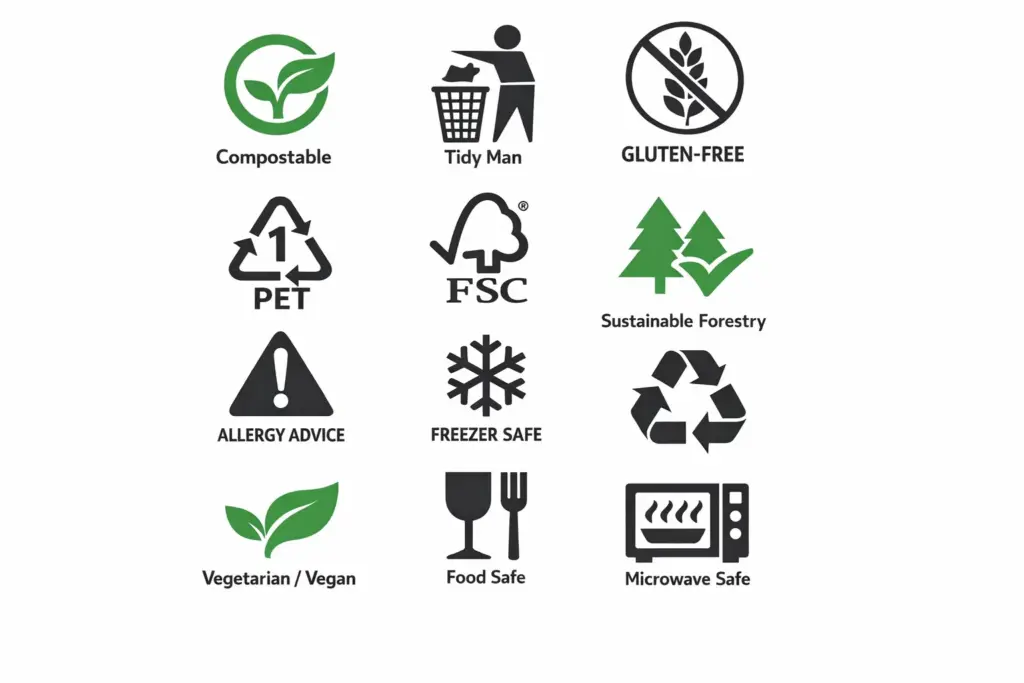
Food packaging symbols protect consumers and ensure legal compliance.
The food safe (glass & fork) symbol is essential for food-safe packaging boxes, confirming materials are suitable for direct food contact. Clear allergen, storage, and date icons are especially critical for brands using custom food packaging across retail and takeaway environments.
Food Safe Symbol (Glass & Fork)
Indicates packaging is safe for direct food contact.
Legal relevance
- Food-contact materials must meet the applicable safety requirements. The glass-and-fork symbol is commonly used to identify materials intended for food contact, although the exact labelling requirements depend on the material, article and applicable food-contact rules.
- Ensures compliance with food safety regulations
Use By / Best Before Icons
Critical for consumer safety.
- Use By: Safety-related, must not be exceeded
- Best Before: Quality-related, food may still be safe
Incorrect use can result in compliance issues.
Allergen & Storage Symbols
Clear allergen and storage symbols:
- Protect consumers
- Reduce liability
- Improve transparency
Essential for food brands and retailers.
Regulatory & Compliance Symbols
CE Marking
When it applies
- When packaging is part of a regulated product (toys, electronics, medical devices)
Common mistakes
- Applying CE to packaging alone
- Using it as a marketing badge
UKCA Mark
Introduced post-Brexit for UK market compliance.
Key considerations
- UKCA and CE marking requirements depend on the regulated product sector. Great Britain currently recognises CE marking for many product categories alongside UKCA, so brands should check the rules for their specific product before preparing packaging artwork.
- Packaging must support correct marking where applicable
Hazard & Warning Symbols
Used for:
- Chemicals
- Industrial products
- Cosmetics with active ingredients
Incorrect symbols can lead to serious regulatory breaches.
Are Packaging Symbols Legally Required?
Some symbols are mandatory, others are optional.
Mandatory symbols
- Food safety marks
- Hazard warnings
- Regulatory compliance symbols (where applicable)
Optional but recommended
- Recycling symbols
- Handling icons
- Sustainability indicators
UK vs EU differences
- Post-Brexit rules differ for CE and UKCA
- Exporting brands must check destination regulations
Common Packaging Symbol Mistakes Brands Make
- Using symbols incorrectly
- Assuming symbols are universal
- Missing mandatory compliance icons
- Making misleading eco claims (greenwashing)
These mistakes can damage brand credibility and lead to enforcement action.
How to Choose the Right Symbols for Your Packaging
Choosing the right packaging symbols depends on:
- Product type
- Target market
- Material and disposal method
- Retail vs eCommerce handling
Brands investing in custom packaging solutions benefit from symbol placement that is accurate, compliant, and visually balanced.
Packaging Symbols & Sustainability Branding
Packaging symbols strongly influence buying decisions.
Benefits
- Builds consumer trust
- Supports sustainability claims
- Improves brand transparency
The key is balance, clear symbols without cluttering the design.
Why Healey Packaging Helps You Stay Compliant
Healey Packaging supports brands with:
- Expert guidance on UK and EU packaging symbols
- Custom packaging designed for compliance
- Eco-friendly, responsibly sourced materials
- Packaging solutions for food, retail, and eCommerce
As UK-based packaging experts, we help ensure your packaging is compliant, practical, and brand-ready.
Common Questions About Packaging Symbols
Clear answers to common questions about recycling, FSC®, handling and compliance symbols used on UK packaging.
Are recycling symbols mandatory in the UK?
Not all recycling symbols are mandatory. The requirements depend on the packaging, producer obligations and applicable regulations. Recycling information should only be used where it accurately reflects how the packaging can be handled or recycled.
What does the Green Dot symbol mean?
The Green Dot indicates that a financial contribution has been made to a participating packaging recovery system where the scheme operates. It does not by itself mean that the packaging is recyclable, recycled or environmentally preferable.
Can I put the FSC® logo on any cardboard box?
No. FSC® trademarks are controlled marks. On-product use normally requires an appropriate FSC chain-of-custody arrangement and authorised trademark use. Brands should confirm eligibility with their certified supplier or FSC before including the mark in artwork.
Are handling symbols such as Fragile legally required?
Common shipping symbols such as Fragile, Keep Dry and This Way Up are generally used as handling instructions rather than universal legal requirements. Whether additional markings are required depends on the product and the regulations governing its transport or sale.
Do small businesses need packaging compliance symbols?
Business size alone does not determine which symbols are required. Requirements depend on factors such as the product, packaging, business role and target market, and some regulatory schemes also have thresholds or exemptions. Small businesses should therefore check the rules that apply to their specific products.
Can I use CE or UKCA markings on the packaging?
Only where the relevant product regulations permit or require the conformity marking. CE and UKCA marks relate to regulated products, not ordinary packaging as a general quality badge. The applicable marking also depends on the product sector and market.
Conclusion – Clear Symbols, Stronger Brands
Packaging symbols protect both your customers and your brand. They communicate safety, responsibility, and professionalism at a glance.
Investing in correct packaging symbols reduces risk, improves trust, and strengthens compliance. If you’re unsure which symbols apply to your packaging, expert guidance makes all the difference.