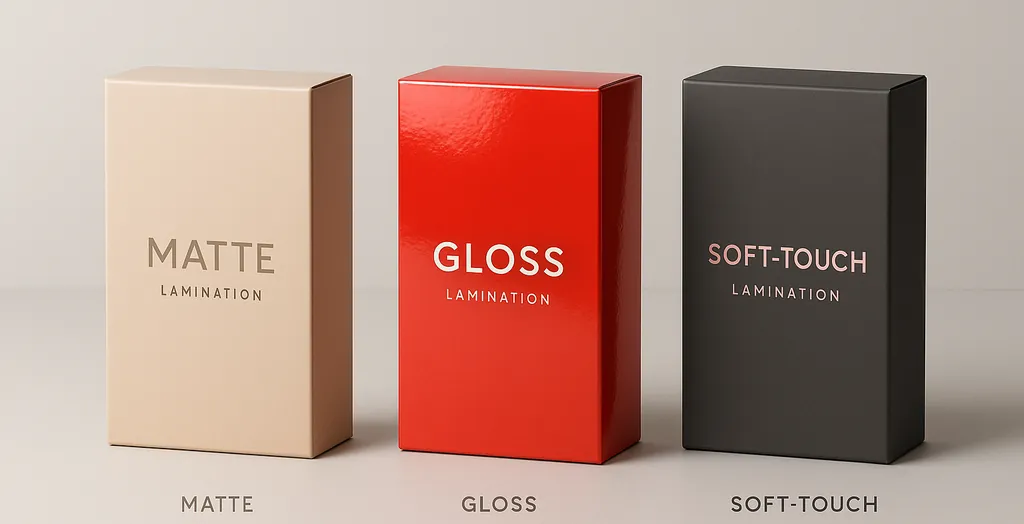
Lamination changes both the appearance and surface behaviour of printed packaging. A gloss film can create a brighter, more reflective surface, matte can reduce glare, and soft-touch can add a more tactile finish.
The right choice depends on more than appearance. Board type, artwork, handling, additional finishes and end-of-life requirements should all be considered before specifying a laminate. This guide compares gloss, matte and soft-touch options and explains where each can be useful.
Which Packaging Lamination Should You Choose?
Gloss lamination creates a reflective surface that can strengthen visual contrast, while matte lamination provides a lower-gloss, more understated appearance. Soft-touch lamination adds a distinctive tactile surface where handling feel is an important part of the presentation.
None is automatically better for every box. Choose according to the artwork, board, product positioning, expected handling, compatible finishes and the complete packaging specification.
What Is Lamination in Packaging?
Packaging lamination typically involves bonding a thin film to the printed surface of paperboard, cardboard or another suitable substrate. Depending on the film and application, it can change the level of gloss, surface feel and resistance to everyday handling.
Lamination should not be confused with liquid-applied finishes such as varnishes or water-based coatings. These can create similar visual effects in some applications but use a different finishing process.
What Can Lamination Change?
- The amount of gloss or surface reflection.
- The tactile feel of the packaging.
- How printed colours and contrast appear.
- Surface behaviour during handling.
- Compatibility with finishes such as foil or Spot UV.
Gloss, Matte and Soft-Touch at a Glance
- Gloss lamination creates a shiny, reflective surface and can increase perceived colour contrast.
- Matte lamination creates a lower-gloss surface for a more restrained visual finish.
- Soft-touch lamination adds a distinctive tactile surface where touch and presentation are important.
- Scratch, scuff and fingerprint performance varies by film, board, printing process and handling conditions.
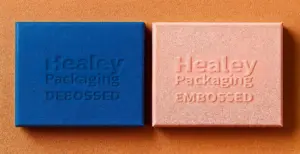
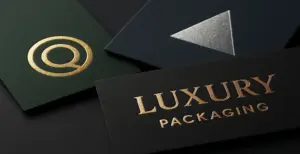
- Lamination can be combined with selected finishes such as foil, embossing or Spot UV where the production specification allows.
- If recyclability is a priority, assess the exact film and complete packaging construction rather than relying on the finish name alone.
Common Lamination Methods:
- Thermal Lamination – Applied using heat and pressure
- Cold Lamination – Applied with adhesive without heat (used for sensitive materials)
You’ll find lamination on everything from rigid gift boxes and folding cartons to luxury labels and custom printed boxes.
Types of Packaging Laminations
Let’s explore the three main types of laminations used in premium packaging.
Gloss Lamination – Bright and Reflective
Gloss lamination adds a smooth, reflective film over the printed surface. It can strengthen visual contrast and make photographs, illustrations and high-colour artwork appear more vivid.
Often Considered For:
- Retail cartons with image-led artwork.
- Cosmetics and personal-care packaging.
- Electronics and consumer-product boxes.
- Packaging where a bright, polished finish suits the design.
Points to Consider:
- The reflective surface can create more visible glare.
- Fingerprints and handling marks may be noticeable on some films.
- Surface protection depends on the laminate specification and use.
Matte Lamination – Lower Gloss and Understated
Matte lamination creates a smoother, lower-gloss surface with reduced reflections compared with gloss lamination. It is often chosen where the artwork is intended to feel restrained rather than highly reflective.
Often Considered For:
- Skincare and perfume cartons.
- Gift and presentation packaging.
- Minimal or typography-led artwork.
- Designs that use foil or selective gloss contrast.
Points to Consider:
- Printed colours may appear less glossy than under a gloss laminate.
- Scuff and fingerprint behaviour depends on the specific film.
- Matte should not automatically be described as anti-scuff.
Soft-Touch Lamination – Tactile Surface Finish
Soft-touch lamination uses a film designed to create a distinctive smooth, velvet-like feel. It is commonly considered for packaging where tactile presentation forms an important part of the design.
Often Considered For:
- Rigid gift boxes.
- Premium cosmetics and skincare packaging.
- Presentation sets.
- Packaging designed to combine tactile and decorative finishes.
Points to Consider:
- The tactile effect varies by film and supplier specification.
- Scuff and fingerprint performance should be checked for the actual film.
- Compatibility with foil, Spot UV and other finishes should be confirmed.
Matte vs Gloss vs Soft-Touch Lamination — Quick Comparison
| Feature | Gloss | Matte | Soft-Touch |
|---|---|---|---|
| Surface Appearance | Shiny and reflective | Lower gloss with reduced reflection | Low-gloss appearance with tactile emphasis |
| Colour Effect | Can strengthen perceived contrast and saturation | Creates a more subdued visual surface | Depends on film, print and substrate |
| Touch | Smooth | Smooth | Soft, velvet-like feel |
| Handling Marks | Can make some fingerprints more visible | Performance varies by film | Performance varies by film |
| Common Design Use | Bright, image-led retail artwork | Minimal and understated designs | Tactile presentation and premium gift packs |
| Additional Finishes | Confirm compatibility for the selected finish | Often paired with foil or selective gloss effects | Can be paired with compatible foil or Spot UV processes |
How Lamination Changes the Look and Feel of Packaging
Lamination contributes to the visual and tactile character of a pack, but no finish carries one universal brand meaning. Its effect depends on the artwork, colours, box structure, product category and other finishes used alongside it.
- Gloss can support bright imagery and stronger reflections.
- Matte can create a quieter visual surface and reduce glare.
- Soft-touch adds tactile differentiation where handling experience forms part of the presentation.
Choose the finish that supports the intended design rather than assuming a particular laminate automatically makes packaging look premium.
Packaging Finishes Compare Laminations, Coatings, Foils and Add-OnsHow to Choose the Right Lamination
Compare the finish against the complete packaging specification rather than choosing from appearance alone.
- Artwork: decide whether the design benefits from strong reflection, reduced glare or tactile contrast.
- Board: check how the film will appear on the selected paperboard or cardboard surface.
- Handling: consider scuffing, fingerprints and repeated handling under the actual use conditions.
- Additional finishes: confirm compatibility with foil, Spot UV, embossing or other embellishments.
- Budget: compare the complete production specification rather than assuming one lamination always costs more than another.
- End-of-life: assess the specific film and complete pack if recycling is part of the brief.
Sustainability Considerations for Laminated Packaging
A finish should not be described as sustainable simply because it is matte, gloss or soft-touch. If environmental performance is part of the brief, identify the exact film or coating and assess it as part of the complete packaging construction.
Questions worth checking include:
- Is lamination necessary for the required handling and presentation?
- What film material and adhesive are being specified?
- How does the laminate affect the intended recycling route?
- Can a suitable varnish or water-based coating achieve the required effect?
- Are windows, inserts and other mixed-material components also present?
Water-based coatings can be considered as an alternative for selected applications, but they are a different finishing process and should not be described as lamination.
Sustainability Guidance Learn How Finishes Affect Packaging RecyclabilityCommon Questions About Matte, Gloss and Soft-Touch Lamination
Practical answers about lamination types, durability, finishes and recycling considerations for custom packaging.
What is lamination in packaging?
Packaging lamination typically involves bonding a thin film over a printed surface to change its appearance, surface feel or handling characteristics. It is different from liquid-applied varnishes and coatings, although both are packaging finishing methods.
What is the difference between matte and gloss lamination?
Gloss lamination creates a shinier, more reflective surface and can strengthen perceived colour contrast. Matte lamination produces a lower-gloss surface with reduced reflections. The best option depends on the artwork, board and intended presentation.
What is soft-touch lamination?
Soft-touch lamination uses a film designed to provide a distinctive smooth or velvet-like tactile surface. It is often considered for gift, cosmetic and presentation packaging where touch forms part of the design.
Is soft-touch lamination durable?
Its performance depends on the specific film, substrate, printing process and handling conditions. If scuffing or repeated handling is important, confirm the required performance with the packaging specification rather than relying on the finish name alone.
Which lamination is best for luxury packaging?
There is no single finish that automatically makes packaging luxurious. Matte and soft-touch are often considered for understated or tactile presentation, while gloss can work well with bold, high-contrast designs. The artwork, material and box structure matter just as much as the laminate.
Can lamination be combined with foil or Spot UV?
Yes, selected laminate and finishing systems can be combined with foil, Spot UV and other embellishments. Compatibility should be confirmed for the specific film, artwork and production method before final approval.
Is laminated packaging recyclable?
It depends on the exact film, adhesive, board and available recycling route. Matte, gloss and soft-touch describe the surface finish rather than recyclability, so the complete finished packaging should be assessed before making a recycling claim.
Are there alternatives to lamination?
Yes. Depending on the required visual effect and surface performance, varnishes or selected water-based coatings may be worth considering. They use a different finishing process, so suitability should be checked against the artwork, board and handling requirements.
Final Thoughts: Choose Lamination Around the Specification
Gloss, matte and soft-touch laminations create different visual and tactile results, but the finish should support the wider packaging design rather than be selected in isolation. Artwork, board, handling requirements and additional finishes can all influence how the laminate performs and appears.
If sustainability or recyclability is part of the brief, assess the exact film and complete packaging construction before making an environmental claim. At Healey Packaging, we can compare lamination, coatings and other finishing options around the product, artwork and intended use.
Plan Your Packaging Finish Explore Packaging Finishes & Add-Ons