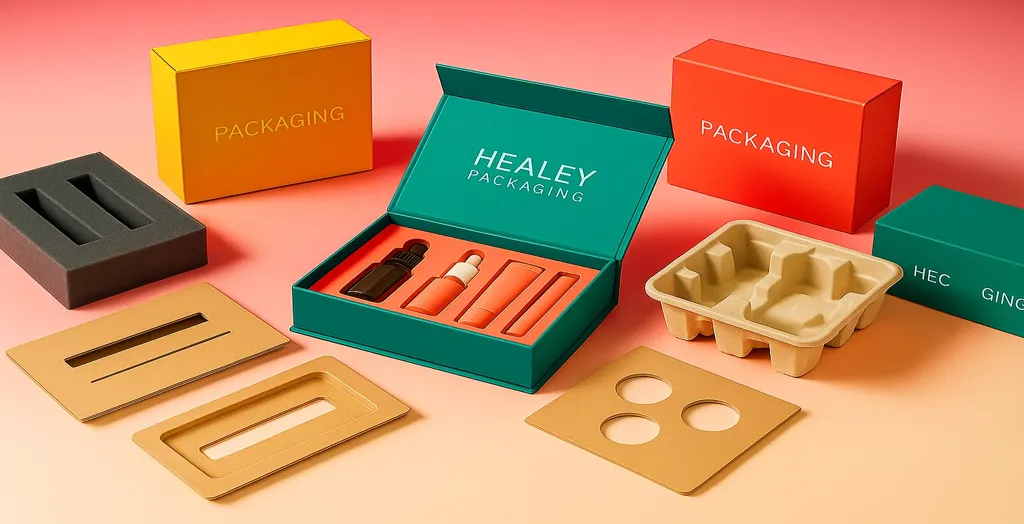
Packaging Inserts at a Glance
- Packaging inserts help hold products in position, separate components and improve presentation inside a box.
- Paperboard and corrugated inserts suit many lightweight and retail applications, while foam can provide additional cushioning for fragile or high-value products.
- Moulded pulp can provide a formed fibre-based fit where cushioning and paper-based material recovery are priorities.
- The insert should be designed around the actual product dimensions, weight, fragility and outer box rather than selected by appearance alone.
- Custom inserts can also organise accessories, instructions and multi-product sets while keeping the presentation controlled.
Packaging isn’t just about the box — it’s what’s inside that counts, too. Packaging inserts, once overlooked, are now essential for brands seeking to improve product presentation, customer satisfaction, and protection. Whether you run a boutique jewellery shop or ship electronics across the UK, inserts can transform how your products arrive — and how customers perceive your brand.
This guide explains what packaging inserts are, why they matter, which types suit different products, and how to make them work for your business.
What Are Packaging Inserts?
Packaging inserts are fitted components placed inside a box to hold, separate, support or present products. They can be made from paperboard, corrugated board, moulded pulp, foam and other materials, depending on the product and level of protection required.
A well-designed insert can reduce unwanted movement, organise multiple items and improve presentation. The right insert should be selected around product dimensions, weight, fragility, distribution conditions and the structure of the outer box.
What Are Packaging Inserts?
Packaging inserts are custom-fitted structures placed inside a box to hold and protect the product. They’re usually die-cut or moulded to match the shape, size, and weight of your item. Inserts can be made from various materials — from kraft board to foam or pulp — and are tailored to your brand’s needs.
Where inserts are commonly used:
- E-commerce packaging: For shipping fragile, premium, or multiple items
- Retail packaging: For display value and presentation
- Luxury boxes: Jewellery, perfumes, electronics
- Food and beverage: Chocolate trays, bottle carriers
Why Are Packaging Inserts Important?
- Product Retention: A fitted insert can reduce unwanted movement and help protect products during handling and transport.
- Enhanced Presentation: Elevates the perceived value of your product.
- Premium Feel: Structured organisation communicates quality.
- Reduced Movement: Better product retention can help limit movement-related damage, although overall transit performance depends on the complete packaging system.
- Professional Unboxing: Customers feel the care in every layer.
Types of Packaging Inserts
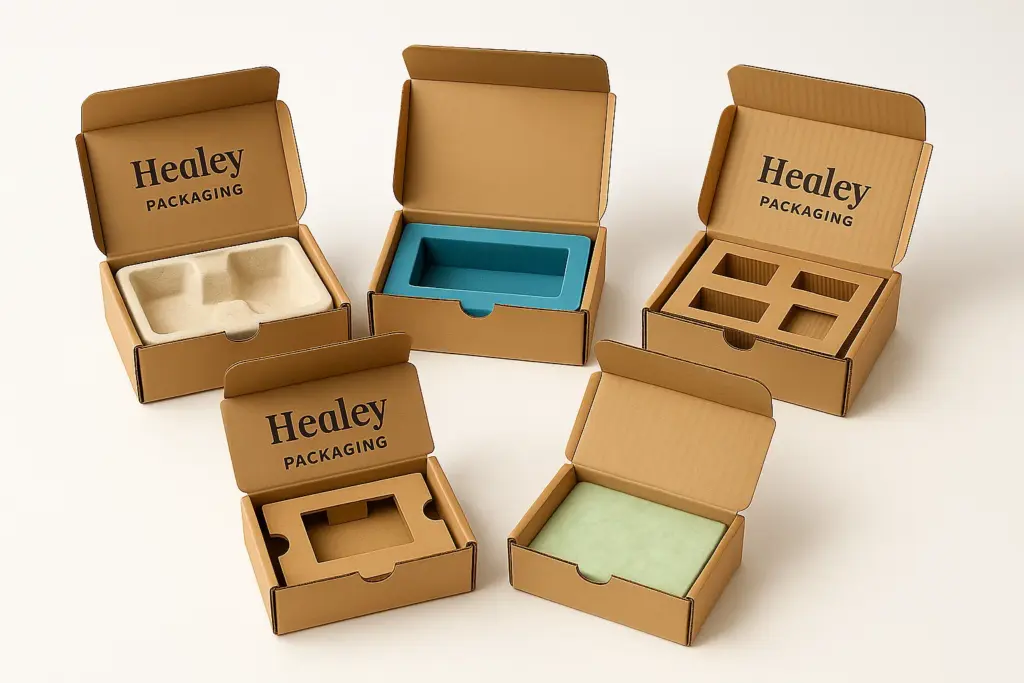
Packaging inserts are available in different materials and structures, each suited to different products and protection requirements. The comparison below gives a quick overview before we look at each option in more detail.
| Insert Type | Common Uses | Key Consideration |
|---|---|---|
| Paperboard Inserts | Cosmetics, accessories and lightweight retail products | Lightweight, printable and suitable for die-cut structures |
| Corrugated Inserts | Shipping, e-commerce and heavier products | Provides greater separation and structural support |
| Moulded Pulp Inserts | Protective trays and formed product cavities | Fibre-based option with moulded cushioning |
| Foam Inserts | Electronics, glassware and high-value products | Useful where precise cushioning and retention are required |
| Plastic Inserts | Retail display and precision-fit applications | Material and end-of-life requirements should be considered |
| Custom Die-Cut Inserts | Product kits, accessories and bespoke shapes | Can be engineered around multiple components and exact fit |
1. Foam Inserts
- Ideal for: Fragile, high-end items like electronics, watches, glassware
- Benefits: Cushions shocks, cut to exact shape, luxurious finish
- Customisable: Available in black, white, or custom-coloured foam
2. Cardboard Inserts
- Ideal for: Lightweight items like skincare, clothing accessories
- Benefits: Paper-based and printable, with recyclability depending on the complete insert construction, coatings and other components.
- Best used for: Eco-conscious or minimalist packaging
3. Paper Pulp Inserts
- Ideal for: Organic products, natural skincare, eco packaging
- Benefits: Biodegradable, moulded, rustic appeal
- Great for sustainable brand storytelling
4. Blister & Plastic Inserts
- Ideal for: Retail display products, electronics, hardware
- Benefits: High visibility, precision fit, tamper evidence
- Often used in combination with PET windows or clear lids
5. Fabric & Velvet Inserts
- Ideal for: Jewellery, premium gift boxes, commemorative items
- Benefits: Adds a tactile luxury element
- Custom colour options available
6. Custom Die-Cut Inserts
- Ideal for: Any product with unique shape or premium branding goals
- Benefits: Precision fit, can include cutouts for cables, leaflets, or multi-product layout
- Highly brandable with colours, textures, and print
Main Benefits of Using Packaging Inserts
Product Protection
Inserts create a snug, secure cavity for your item, minimising movement and absorbing shock during transport.
Improved Unboxing Experience
Everything is neatly presented, which enhances the moment your customer opens the box. This is critical in influencer marketing and online reviews.
Branding & Marketing Value
Custom inserts can include your logo, brand colours, product instructions, or even a message. They turn the interior into a canvas.
Cost Savings
Fewer damages = fewer returns. Inserts also reduce the need for excess fillers and bubble wrap.
Versatility
Inserts can be designed for:
- Single-item boxes
- Subscription kits
- Bundled products (e.g. bottle + glass, cream + brush)
How Packaging Inserts Improve Customer Experience?
A well-designed insert:
- Feels intentional and thoughtful
- Keeps items aligned and tidy
- Reinforces quality and attention to detail
- Adds tactile and visual layers to the unboxing
- Makes a product “feel worth more” — before it’s even used
Packaging Inserts for eCommerce Brands
In eCommerce, your packaging is the storefront. Inserts:
- Prevent movement during courier handling
- Help maintain product presentation across long distances
- Show your brand values — even if you’re not there in person
- Can include compartments for leaflets, returns slips, and freebies
How to Choose the Right Insert for Your Product?
- Product weight & fragility: Foam for electronics, cardboard for beauty
- Brand style: Kraft pulp for rustic; velvet for luxury
- Material preference: Compare paperboard, corrugated, moulded pulp, foam and other options based on protection requirements, material use and the intended end-of-life route.
- Budget & MOQ: Choose scalable solutions
- Insert function: Structural support, branding, or both
Design Tips for Effective Packaging Inserts
- Use branded colours or contrast for pop
- Keep it clean: minimal text and structured layout
- Add texture for a luxury feel
- Make sure it fits snugly with minimal wiggle room
- Incorporate printing: logo, taglines, usage instructions
Custom Packaging Inserts vs. Stock Inserts
Stock Inserts:
- Pre-made, standard sizes
- Lower cost but limited flexibility
Custom Inserts:
- Tailored to fit your product
- Better for branding, protection, and customer impression
- Worth the investment for premium, fragile, or gift items
Real Examples of Brands Using Inserts Successfully
- Jewellery Brands: Velvet insert trays with logo embossing
- Beauty Startups: Kraft die-cut inserts holding serum + dropper
- Gifting Companies: Chocolates arranged in pulp trays with ribbon wraps
- Tech Brands: Foam inserts holding power banks, cords, manuals in separate slots
Why Custom Packaging Inserts Are Worth the Investment?
- Save on damages and returns
- Leave a lasting impression
- Improve reviews and repeat purchases
- Make your brand feel more high-end
- Flexible enough for holiday, promo or standard runs
Why Order Packaging Inserts from Healey Packaging?
- Fully custom options for any product or industry
- Eco-friendly kraft, pulp, and recyclable materials
- Low MOQs for startups and scaling brands
- Free design help and dieline guidance
- Premium UK print quality and fast delivery
Common Questions About Packaging Inserts
Practical answers about insert materials, product protection, customisation and choosing the right structure.
What is the purpose of a packaging insert?
A packaging insert holds, separates or supports products inside the outer box. It can reduce unwanted movement, organise multiple items and improve how the product is presented when the box is opened.
Which material is best for packaging inserts?
There is no single best material. Paperboard works well for many lightweight retail products, corrugated board provides additional structural support, moulded pulp offers a formed fibre-based option, and foam can provide cushioning for fragile or high-value items.
Can packaging inserts be custom made?
Yes. Custom inserts can be designed around the dimensions and shape of the product, with cut-outs, compartments and support points added where required. The insert should also be developed to fit the dimensions of the outer box.
Do packaging inserts help protect products during shipping?
They can. A correctly designed insert can restrict movement and help separate the product from other items or the outer walls of the box. The required level of protection still depends on product fragility, packaging material and distribution conditions.
Are cardboard packaging inserts recyclable?
Many paperboard and corrugated inserts can be suitable for paper and board recycling streams, but the complete construction matters. Laminations, coatings, adhesives and mixed-material components can affect the available end-of-life route.
How do I choose the right insert for my product?
Start with the product’s dimensions, weight and fragility, then consider how it will be packed, stored and transported. The insert material, thickness and structure should provide enough retention and protection without creating unnecessary material or complexity.
Conclusion
Packaging inserts are the secret ingredient to secure, elegant, and impactful packaging. Whether you’re launching a new line or upgrading your customer experience, investing in the right insert can help elevate your brand, reduce costs, and build loyalty.