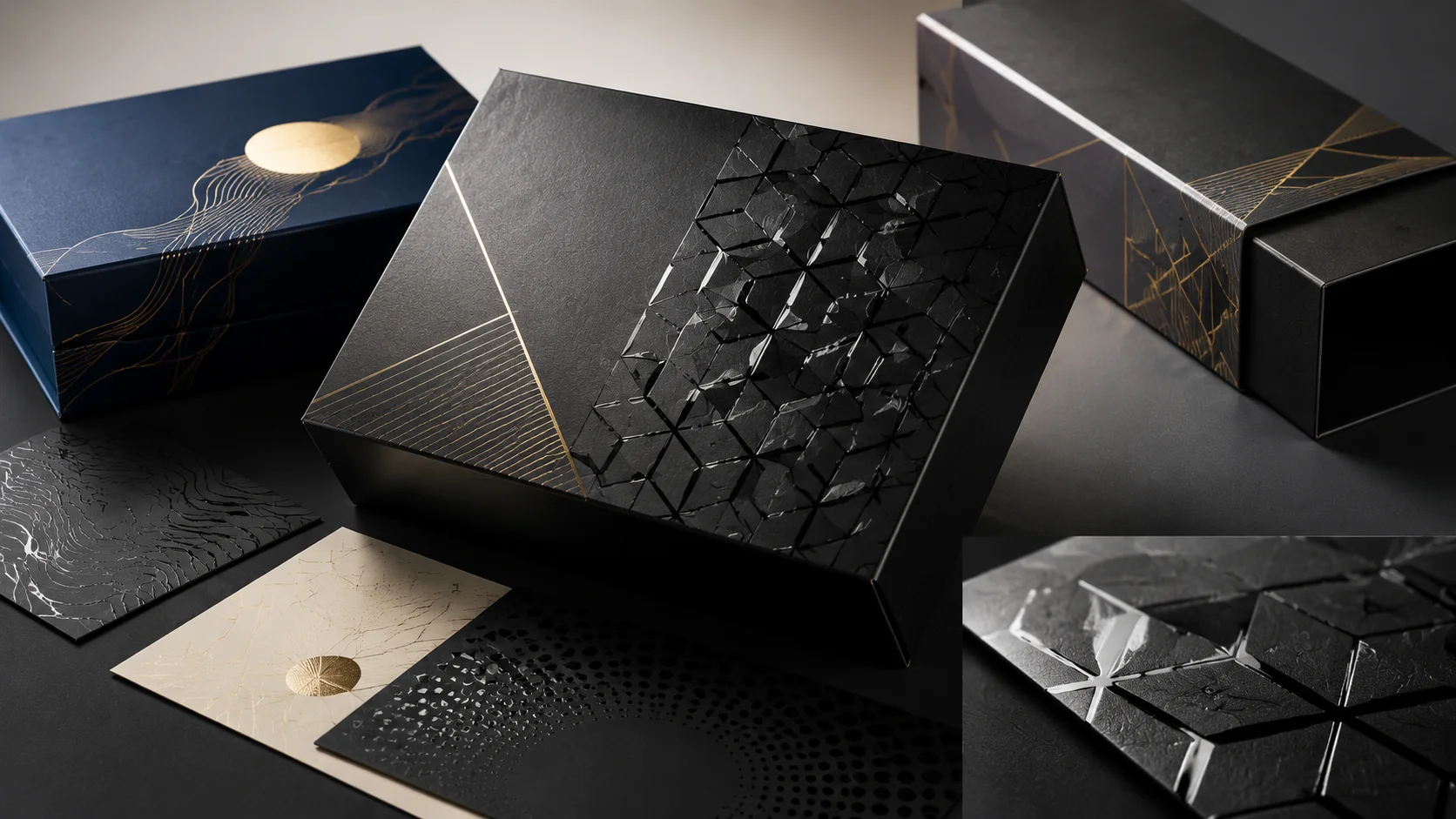
Packaging is often the first physical interaction a customer has with a product. Before they assess the quality of the item inside, they notice the box, its colours, texture, print quality, and finishing details. For brands competing on crowded retail shelves or delivering products directly to customers, these details can influence how the product is perceived.
Spot UV printing is a premium finishing technique used to add selective areas of high gloss to printed packaging. It can highlight a logo, product name, pattern, illustration, or other design element without covering the entire box in a glossy coating.
When applied thoughtfully, Spot UV creates contrast between glossy and matte surfaces, adds tactile interest, and helps important brand elements stand out. This guide explains what Spot UV printing is, how the production process works, the different types available, suitable packaging materials, design considerations, costs, sustainability issues, and when brands should consider using it.
Want Packaging That Gets Noticed? Spot UV Could Be the Detail You’re Missing
- Spot UV printing applies UV-cured varnish to selected areas of packaging rather than coating the entire surface.
- It works particularly well over matte or soft-touch surfaces, where the contrast makes logos, typography and patterns more noticeable.
- Raised Spot UV adds physical depth as well as gloss, creating a more tactile premium finish.
- Spot UV can be used on paperboard, rigid boxes, coated papers and some corrugated packaging, but results depend on the substrate and surface preparation.
- The finish is most valuable when used selectively. Excessive coverage can increase cost and reduce the visual impact that makes Spot UV effective.
Spot UV printing is a finishing process that applies a clear UV-curable varnish to selected areas of a printed surface and cures it using ultraviolet light.
Unlike full UV coating, which covers most or all of the printed surface, Spot UV highlights specific design elements such as logos, typography, patterns or images. The result is a contrast in gloss, texture and light reflection that can give packaging a more premium appearance.
What Is Spot UV Printing?
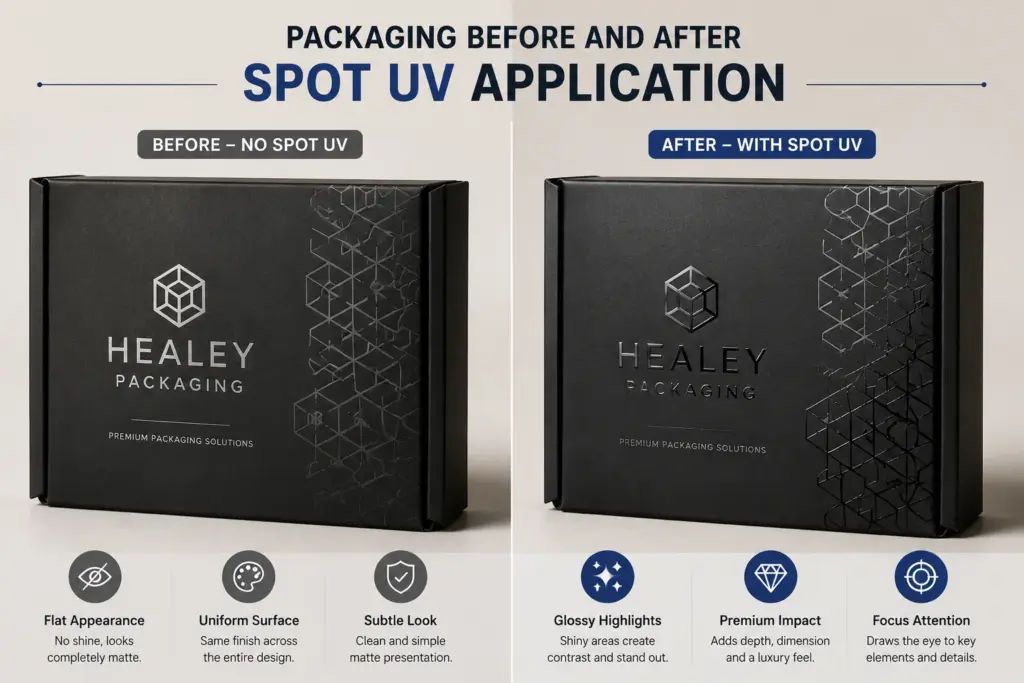
Spot UV is not usually a printing method in the same sense as offset, digital, or flexographic printing. It is a post-print finishing process applied after the base artwork has been printed.
A clear liquid coating is deposited onto predetermined areas of the packaging surface. Ultraviolet light then cures the coating rapidly, creating a hard, glossy finish.
The word “spot” refers to the selective placement of the varnish.
For example, a cosmetics brand might use a matte black carton with Spot UV applied only to its logo and a subtle background pattern. Under normal lighting, the box remains understated. When the surface catches the light, the glossy elements become visible.
This selective contrast is the main reason brands choose Spot UV for premium packaging.
What Is the Difference Between UV Coating and Spot UV?
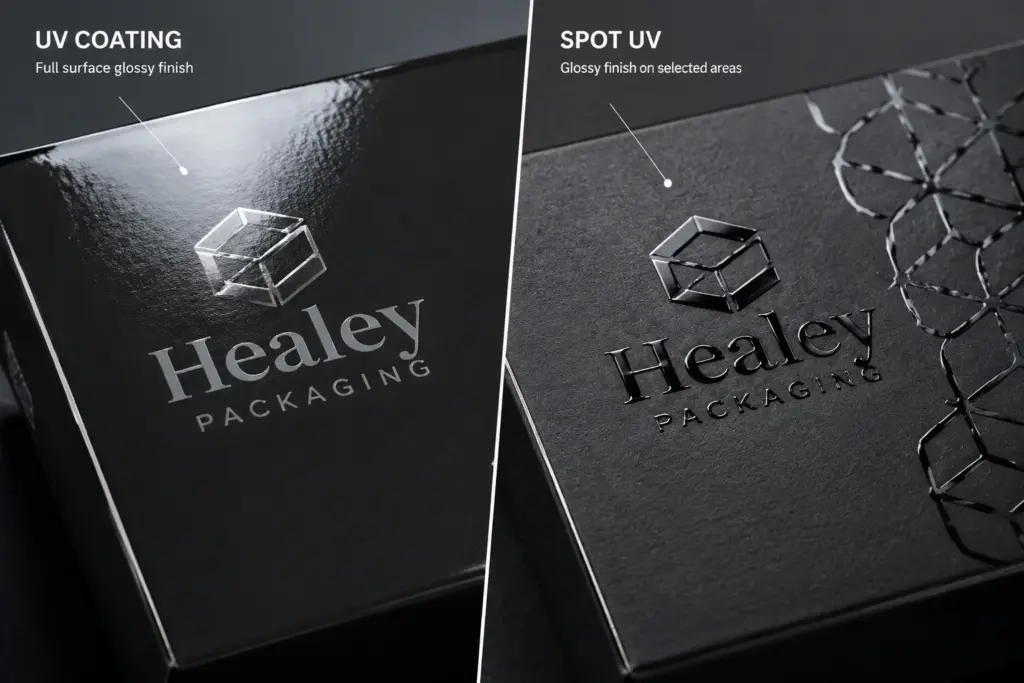
A full UV coating is applied across most or all of the printed surface. It creates a consistent glossy finish and can provide additional surface protection.
Spot UV is applied only to specified areas. This allows packaging designers to control exactly where the viewer’s attention is directed.
How Spot UV Printing Works
The quality of UV spot printing depends on more than applying varnish to a finished box. Accurate artwork preparation, printing, registration, coating application, and curing all affect the final result.
Artwork Preparation
The process starts with production-ready artwork.
The designer creates a separate Spot UV layer showing exactly where the varnish should appear. This layer is typically prepared as vector artwork using a clearly defined spot colour.
The Spot UV artwork should align accurately with the printed design underneath.
Fine details, registration tolerances, folds, cutting lines, and the distance between Spot UV areas and other finishing processes must be considered before production begins.
Printing the Base Design
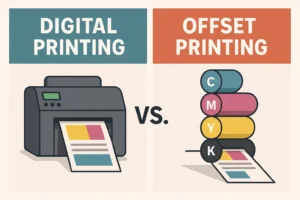
The packaging artwork is printed using a suitable production method, such as offset or digital printing.
The appropriate method depends on:
- order quantity;
- board material;
- colour requirements;
- artwork complexity;
- turnaround time; and
- production budget.
Applying the UV Varnish
After the base print is prepared, a clear UV-curable varnish is applied selectively to the areas specified in the artwork.
Depending on the equipment and required effect, the varnish may be applied using screen-based, plate-based, or digital systems.
Accurate registration is essential. Poor alignment between the printed artwork and varnish layer can make logos, typography, and patterns appear blurred or incorrectly positioned.
UV Light Curing
The applied varnish passes beneath ultraviolet lamps or another UV curing system.
The UV energy causes the coating to cure rapidly, producing the finished gloss effect.
This rapid curing process allows the coating to reach its intended surface characteristics without relying on conventional air drying.
How Does Spot UV Printing Work?
Spot UV printing works by printing the base artwork, applying a clear UV-curable varnish to selected design areas, and exposing the coating to ultraviolet light so it cures rapidly.
A separate artwork layer controls where the varnish appears, allowing specific logos, text, patterns or images to receive a glossy finish.
Spot UV Printing vs Full UV Coating
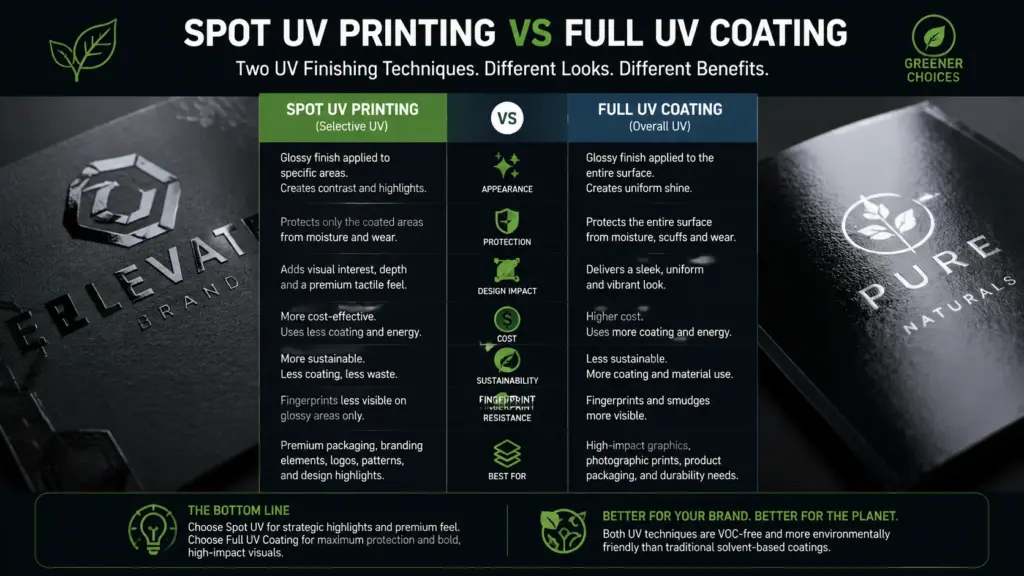
The main difference between Spot UV and full UV coating is the amount of the packaging surface covered.
| Feature | Spot UV | Full UV Coating |
|---|---|---|
| Coverage | Selected design areas | Most or all of the surface |
| Appearance | Gloss contrast | Uniform glossy finish |
| Main Purpose | Visual emphasis and premium detailing | Overall appearance and surface protection |
| Design Flexibility | High | More limited |
| Tactile Potential | Smooth or raised effects | Generally uniform |
| Best For | Luxury and branded packaging | Printed packaging requiring an overall gloss finish |
Neither option is automatically better.
Choose Spot UV when you want selected elements to attract attention. Consider full UV coating when a consistent glossy appearance across the printed surface is more important.
Types of Spot UV Printing
The term Spot UV covers several production techniques and visual effects. Understanding the differences can help brands choose the right finish for their packaging.
Traditional Spot UV
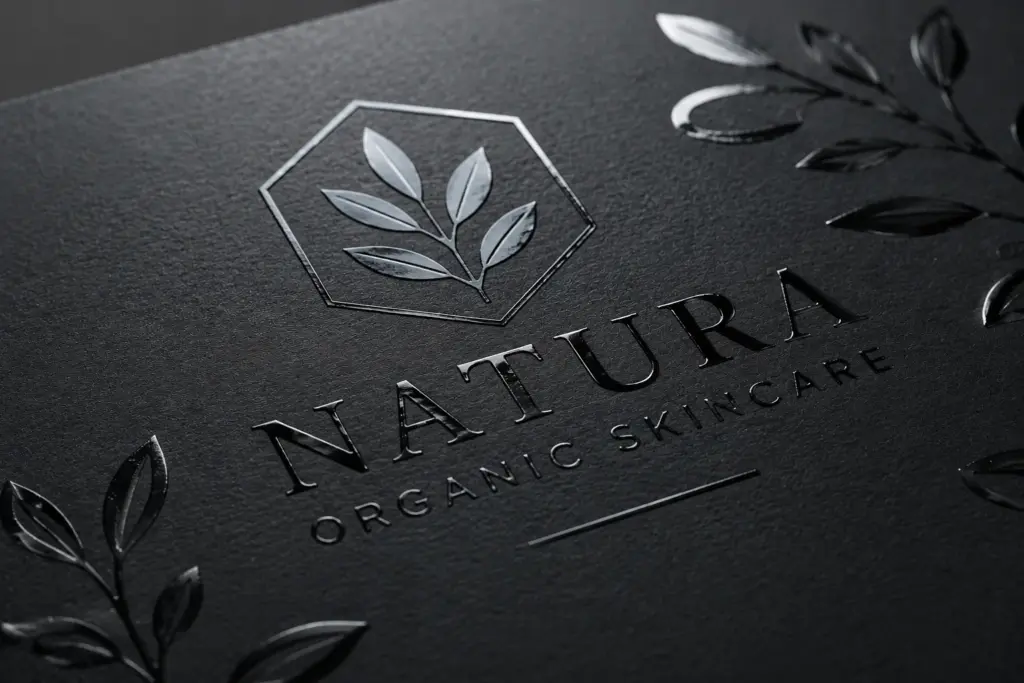
Traditional Spot UV applies clear varnish selectively to areas of a printed surface.
Common applications include:
- logos;
- brand names;
- product illustrations;
- geometric patterns;
- background graphics; and
- selected typography.
It is widely used where subtle gloss contrast is required without adding significant surface depth.
Raised Spot UV Printing
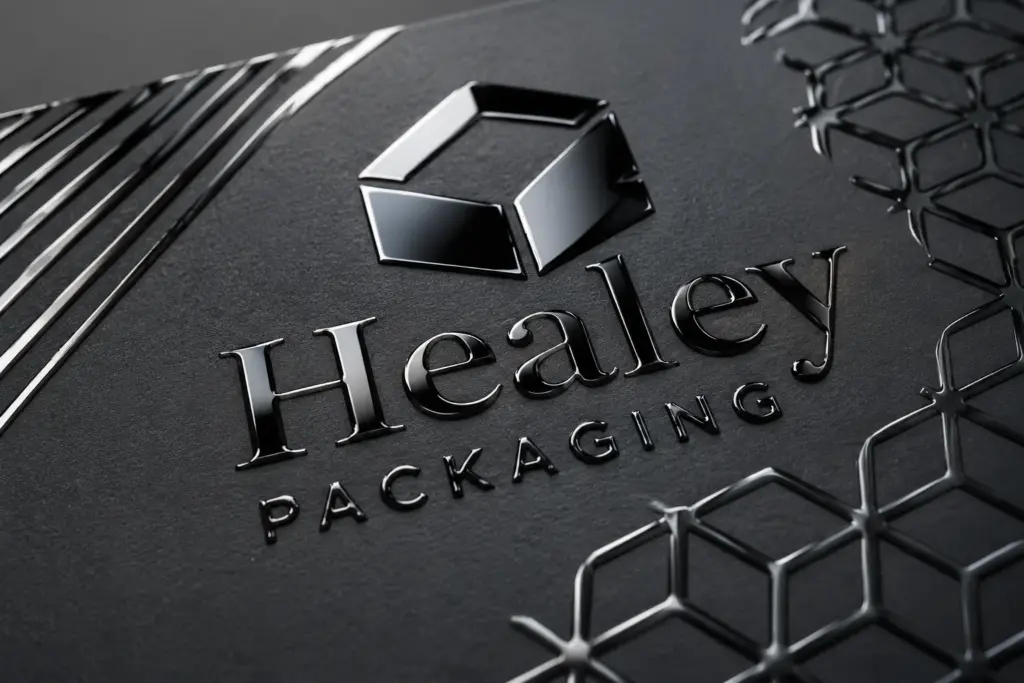
Raised Spot UV printing uses a thicker varnish deposit to create a noticeable three-dimensional effect. The finished area can be both seen and felt.
Raised Spot UV is commonly used for:
- luxury logos;
- decorative patterns;
- premium typography;
- monograms; and
- limited-edition packaging.
Because the coating has physical depth, artwork complexity, line thickness, registration, folding areas, and abrasion during distribution need careful consideration.
What Is Raised Spot UV Printing?
Raised Spot UV printing applies a thicker layer of UV-cured varnish to selected design areas, creating a glossy finish with noticeable physical depth.
It is commonly used to emphasise logos, patterns and typography on luxury packaging where both visual and tactile impact are important.
UV Spot Gloss Printing
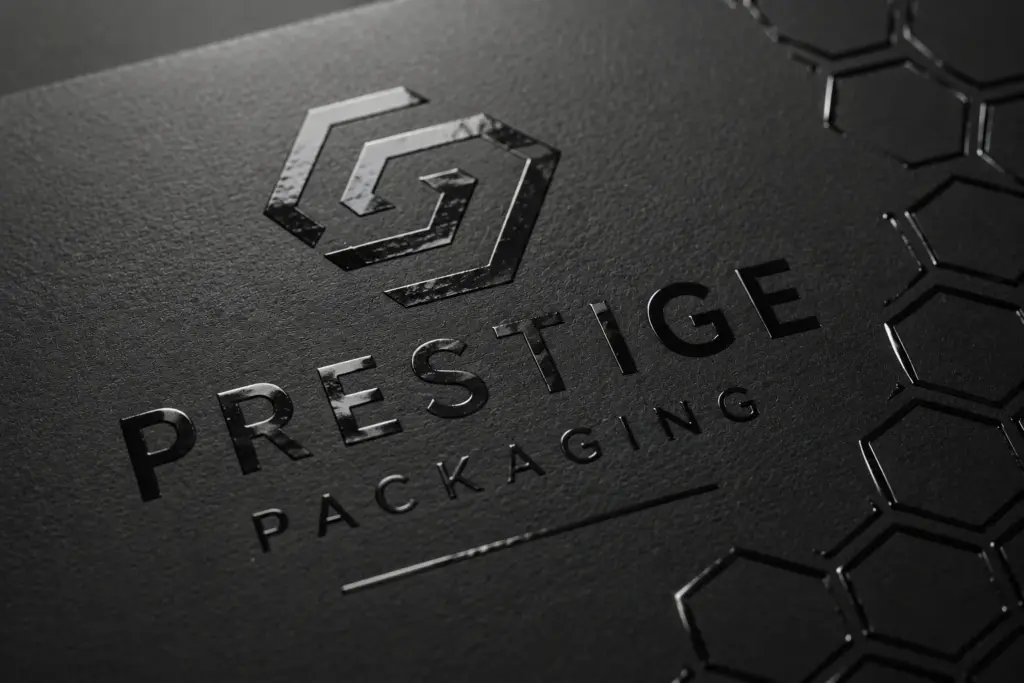
UV spot gloss printing focuses on creating a highly reflective finish over selected areas. It is particularly effective when combined with a contrasting matte background.
For example, a black soft-touch rigid box could feature a black Spot UV logo. The design remains understated from one angle but becomes clearly visible when light reflects across the surface.
Spot UV Digital Printing
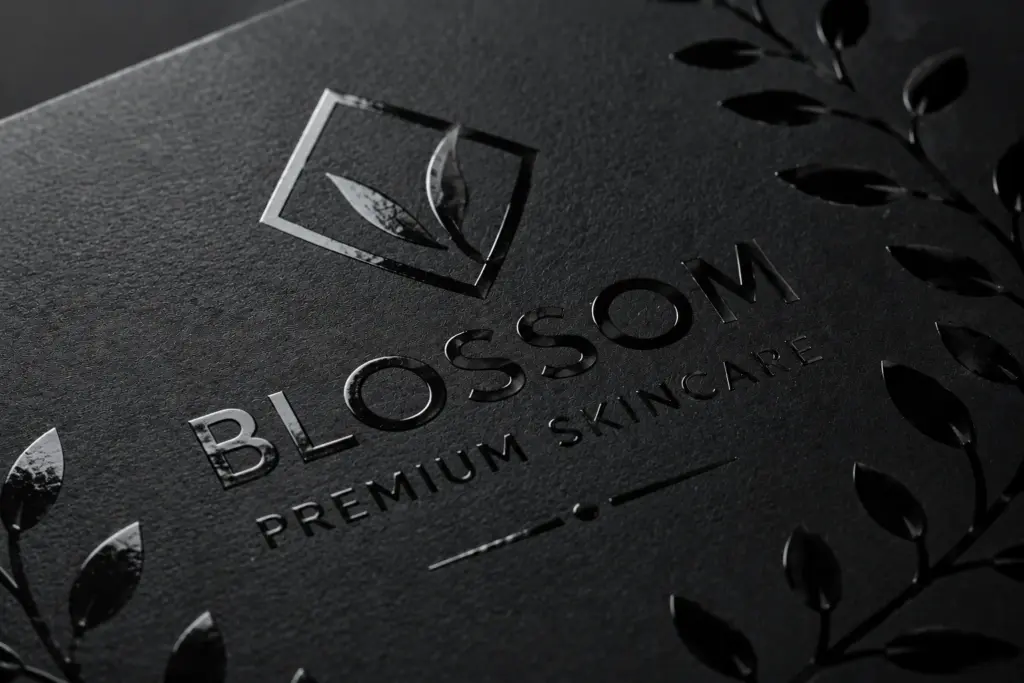
Modern digital finishing systems can apply selective UV effects without some of the traditional tooling requirements associated with conventional processes.
Spot UV digital printing can be suitable for:
- short production runs;
- packaging prototypes;
- promotional campaigns;
- limited editions;
- personalised packaging; and
- frequently changing artwork.
However, capabilities vary between machines and suppliers. Minimum line widths, coating height, registration accuracy, substrate compatibility, and maximum sheet size should be confirmed before production.
Benefits of Spot UV Printing for Packaging
Increased Shelf Appeal
Retail products compete for attention within seconds. Selective gloss can help packaging stand out by creating contrast and movement as light passes across the box.
Creates Premium Branding
Spot UV can add a premium finish without requiring the entire packaging design to be highly decorative. A simple logo or pattern applied over a matte surface can produce a restrained luxury appearance.
Enhances the Customer Experience
Packaging is both visual and tactile. Raised or textured Spot UV encourages customers to touch the box, creating another interaction with the brand before the product is opened.
Draws Attention to Key Design Elements
Spot UV can direct attention towards:
- logos;
- brand names;
- product names;
- illustrations;
- patterns;
- ingredient details; and
- selected promotional messages.
The strongest designs usually prioritise one or two important elements rather than applying Spot UV everywhere.
Improves Perceived Value
Premium finishes can influence how customers interpret the positioning of a product. A carefully executed finish may make packaging feel more considered, distinctive, and appropriate for a premium price point.
However, Spot UV cannot compensate for poor structural design, weak materials, low-resolution artwork, or inconsistent printing. It should support the wider packaging design rather than replace it.
Packaging Products That Commonly Use Spot UV
Spot UV can be applied across a wide range of consumer packaging categories. Common applications include:
- luxury packaging
- cosmetic boxes
- perfume boxes
- chocolate packaging
- premium gift boxes
- electronics packaging
- CBD packaging
- jewellery boxes
- rigid boxes
- presentation boxes
- subscription packaging
For example, a skincare brand might use Spot UV to highlight a product name on an otherwise minimalist carton. A jewellery company could combine a rigid box, soft-touch lamination, and Spot UV monogram. A premium confectionery brand might use selective gloss to emphasise product illustrations.
Best Design Practices for Spot UV Printing
Create Strong Contrast
Spot UV is usually most noticeable when applied over a contrasting surface.
Popular combinations include:
- Spot UV over matte lamination;
- Spot UV over soft-touch lamination;
- gloss patterns over dark backgrounds; and
- clear Spot UV over solid brand colours.
Keep the Design Selective
Applying varnish to too many areas can reduce its visual impact. Before adding Spot UV, ask:
Which part of the design should the customer notice first?
Use the finish to support that hierarchy.
Highlight Important Brand Elements
Strong candidates include:
- logos;
- product names;
- typography;
- illustrations;
- geometric patterns; and
- subtle background artwork.
Consider the Finished Box Structure
Artwork should be evaluated on the assembled packaging, not only on a flat dieline.
Avoid placing critical Spot UV details too close to:
- fold lines;
- glue areas;
- cutting edges;
- creases; and
- areas subject to repeated abrasion.
Spot UV vs Other Premium Packaging Finishes
Spot UV is one of several finishing options available to brands.
| Finish | Appearance | Texture | Best For |
|---|---|---|---|
| Spot UV | Selective gloss | Smooth or raised | Luxury packaging and visual emphasis |
| Foil Stamping | Metallic or pigmented | Usually smooth | Premium logos and decorative details |
| Embossing | Three-dimensional | Raised | Logos and tactile branding |
| Debossing | Subtle depth | Recessed | Minimalist premium packaging |
| Soft-Touch Lamination | Low-gloss matte | Velvety | Luxury boxes and premium presentation |
Spot UV can also be combined with other finishes.
For example, foil stamping can create metallic emphasis while embossing adds physical depth and Spot UV introduces selective gloss.
Before combining processes, discuss production tolerances, artwork requirements, material suitability, and costs with your packaging supplier.
Spot UV Printing and Digital Printing
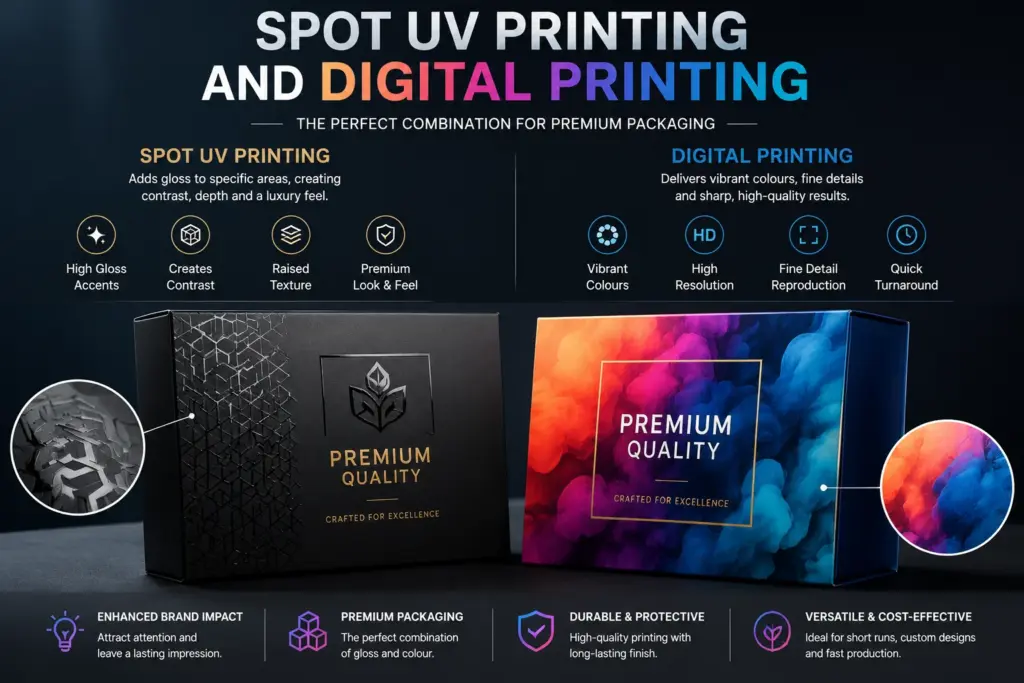
Traditionally, selective varnish effects were associated with longer production processes and dedicated tooling.
Modern digital finishing equipment has expanded the options available for digital printing with Spot UV.
Potential benefits include:
- reduced setup requirements for suitable projects;
- faster production of short runs;
- easier artwork changes;
- variable data capabilities on compatible systems; and
- more accessible prototypes and limited editions.
Digital Spot UV is particularly relevant to start-ups, seasonal campaigns, personalised products, and brands testing new packaging designs.
However, traditional processes may remain more economical or suitable for larger volumes.
The right method should be selected based on the project rather than assuming digital or conventional production is universally better.
Is Spot UV Suitable for Every Packaging Material?
No. Spot UV results depend heavily on the substrate, coating system, artwork, and production process.
Paperboard
Coated paperboards are among the most suitable substrates for Spot UV because they provide a smooth surface and controlled varnish application.
Rigid Boxes
Wrapped rigid boxes are frequently combined with Spot UV, particularly when using printed papers with matte or soft-touch finishes.
Art Paper
Coated art papers generally provide strong gloss definition and detailed reproduction.
Kraft Paper
Spot UV can be applied to some kraft materials, but the natural, absorbent, and textured surface can reduce gloss uniformity. Testing is recommended before production.
Corrugated Board
Direct application to rough corrugated surfaces may not provide the same finish quality achieved on smooth paperboard.
Premium corrugated packaging may instead use a printed and finished lithographic liner laminated to the corrugated board.
Sustainability Considerations for Spot UV Printing
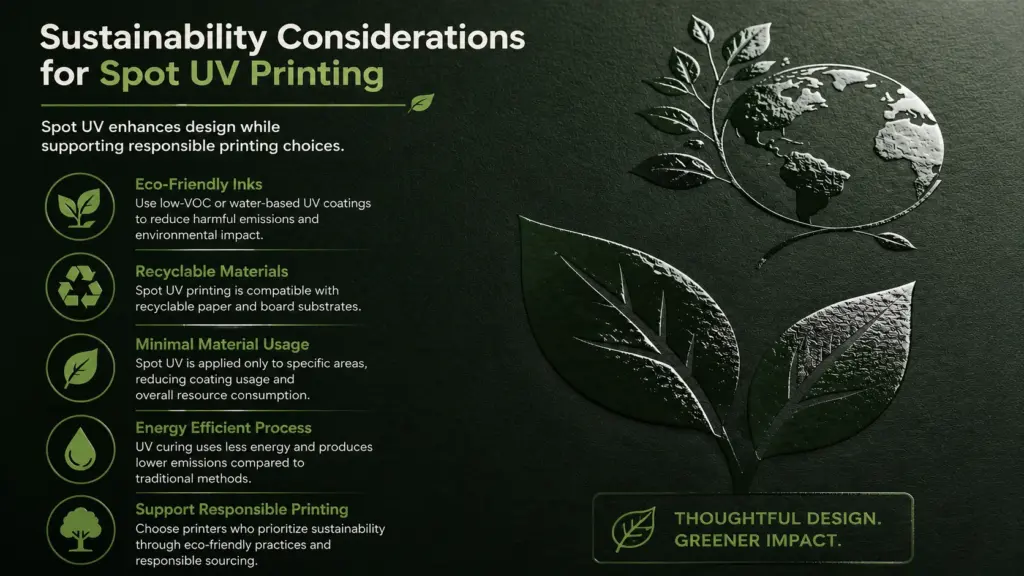
Spot UV should not automatically be described as sustainable or unsustainable. The environmental impact depends on the coating formulation, curing technology, substrate, coverage level, manufacturing process, and local recycling infrastructure.
UV curing can offer production benefits because coatings cure rapidly and some UV systems use formulations with lower volatile organic compound emissions than certain solvent-based alternatives.
However, adding coatings and finishes can affect the simplicity of the material stream. For packaging designed with recyclability in mind:
- use Spot UV selectively;
- avoid unnecessary coating coverage;
- minimise mixed-material components;
- choose recyclable board materials where appropriate;
- ask your supplier about coating and substrate compatibility; and
- avoid making environmental claims that cannot be substantiated.
Common Spot UV Printing Mistakes to Avoid
Applying Spot UV to Very Small Text
Fine lettering and extremely thin lines may not reproduce reliably.
Confirm minimum line widths with the manufacturer.
Poor Artwork Registration
Misalignment between the base print and Spot UV layer can make the finished design look unprofessional.
Using Too Much Gloss
Covering large areas can reduce contrast and increase production costs. Selective application usually creates a stronger result.
Supplying Low-Resolution Artwork
Raster graphics, poorly prepared files, and incorrect artwork layers can create production problems. Where possible, prepare Spot UV elements as clean vector artwork.
Ignoring Surface Contrast
Gloss-on-gloss designs may produce very little visible difference. The base finish should be considered when planning Spot UV.
Choosing the Wrong Substrate
Absorbent, rough, or unsuitable surfaces can reduce gloss definition and registration quality. Request material samples or production prototypes when the finished result is critical.
Frequently Asked Questions About Spot UV Printing
Find clear answers to common questions about Spot UV finishes, materials, production costs and combining Spot UV with other packaging enhancements.
What is Spot UV printing?
Spot UV printing is a finishing technique that applies clear UV-curable varnish to selected areas of printed packaging. The coating is cured using ultraviolet light to create contrast, gloss and sometimes texture.
Is Spot UV the same as lamination?
No. Lamination generally applies a film across the packaging surface, while Spot UV varnish is applied selectively to specific design areas.
What is raised Spot UV?
Raised Spot UV uses a thicker coating deposit to create a glossy three-dimensional effect that customers can see and feel.
Can Spot UV be used on kraft packaging?
It can be applied to some kraft substrates, but the natural texture and absorbency of kraft paper can affect gloss definition. Testing the material and finish combination is recommended.
Does Spot UV increase packaging costs?
Usually, yes. Spot UV introduces additional artwork preparation, production stages, equipment requirements and quality-control considerations. The final cost depends on order quantity, coverage area, substrate, finish type and manufacturing method.
Is Spot UV suitable for small print runs?
Digital Spot UV systems can make selective UV finishing more accessible for prototypes and shorter production runs. Availability and pricing depend on the supplier’s equipment and project specifications.
Can Spot UV be combined with foil stamping?
Yes. Spot UV and foil stamping can be combined to create contrasting gloss and metallic effects. Accurate artwork preparation and production planning are essential when multiple finishes are used.
Why Choose Healey Packaging for Spot UV Printed Packaging?
Premium finishes are most effective when the material, box structure, printing process, and finishing techniques are planned together.
Healey Packaging works with businesses looking for bespoke packaging solutions that balance presentation, protection, and production requirements.
Depending on the project, packaging options can include:
- custom box dimensions and structural designs;
- paperboard and corrugated materials;
- rigid packaging formats;
- custom printed boxes;
- Spot UV and other premium finishing options;
- packaging for retail, cosmetics, gifts, and luxury products; and
- practical guidance on materials, printing, and finishing selection.
Rather than selecting Spot UV simply because it looks premium, the finish should be assessed against the product, artwork, substrate, order quantity, budget, and intended customer experience.
Conclusion: Is Spot UV Printing Right for Your Packaging?
Spot UV printing is most effective when it has a clear design purpose. It can highlight important brand elements, create contrast between matte and glossy surfaces, introduce tactile details, and help packaging communicate a more premium position. Raised Spot UV and digital Spot UV production provide additional options for brands seeking texture, shorter runs, prototypes, or distinctive visual effects.
However, the best results depend on suitable materials, accurate artwork preparation, controlled registration, and selective use of the finish.
If you’re developing new packaging or considering an upgrade to an existing design, compare Spot UV with alternative finishes and assess how each option supports your product, brand positioning, budget, and production requirements.