TL;DR – Greeting Card Size Guide
The most common greeting card sizes are A2, A6, and A7, with A7 (5″ × 7″) considered the industry standard for retail greeting cards. Choosing the correct card size improves mailing efficiency, envelope compatibility, packaging protection, and retail presentation. Businesses should also consider rigid mailers, cello sleeves, and eco-friendly packaging to prevent damage during shipping.
Greeting cards may look simple, but size plays a major role in how they are printed, packaged, displayed, and mailed. Choosing the wrong dimensions can increase postage costs, create packaging issues, or even cause cards to bend during shipping.
For stationery brands, Etsy sellers, and greeting card businesses, selecting the correct card size helps ensure professional presentation while keeping mailing costs under control. Standard sizing also makes it easier to source envelopes, protective packaging, and retail display solutions.
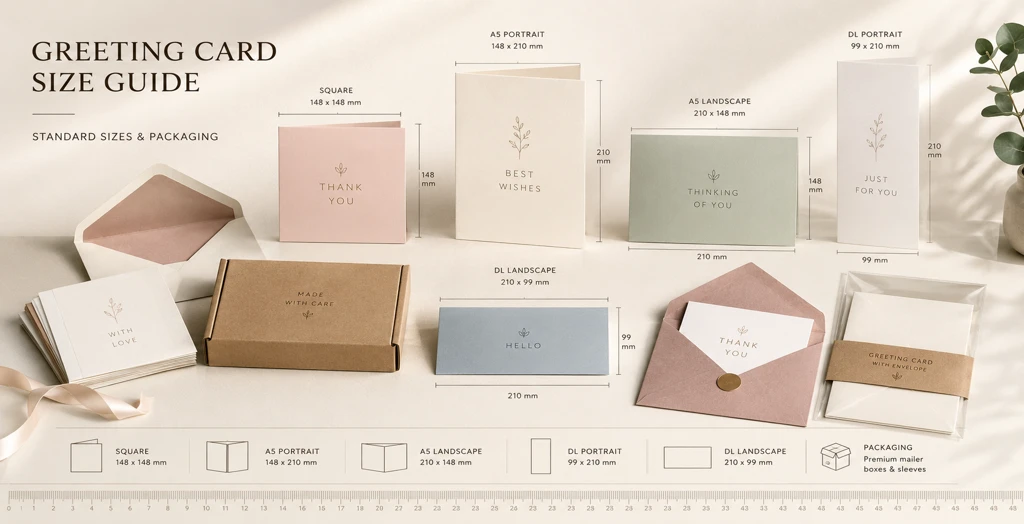
Whether you are selling handmade cards online or producing custom greeting cards collections, understanding standard dimensions is essential. This greeting card size guide explains the most common card sizes used in the UK, their ideal applications, packaging considerations, and the best ways to protect cards during mailing and retail display.
Why Greeting Card Size Matters
Greeting card dimensions affect much more than appearance.
Printing Layout and Design
Card size determines how artwork, text, and layouts are positioned. Smaller cards may limit design space, while larger cards allow more detailed graphics and messaging.
Mailing Costs
Card dimensions directly influence postage rates.
Oversized or thick cards often cost more to ship, particularly when using Royal Mail standard letter categories.
Envelope Compatibility
Using standard greeting card sizes makes it easier to source envelopes and packaging materials.
Tight-fitting envelopes can damage card corners, while oversized envelopes may increase movement during shipping.
Retail Shelf Presentation
Card size also affects how products are displayed in retail stores.
Larger cards often stand out more visually, while compact cards are easier to merchandise in high-volume retail environments.
Standard greeting cards commonly use sizes such as A2, A6, and A7.
Standard Greeting Card Sizes Explained
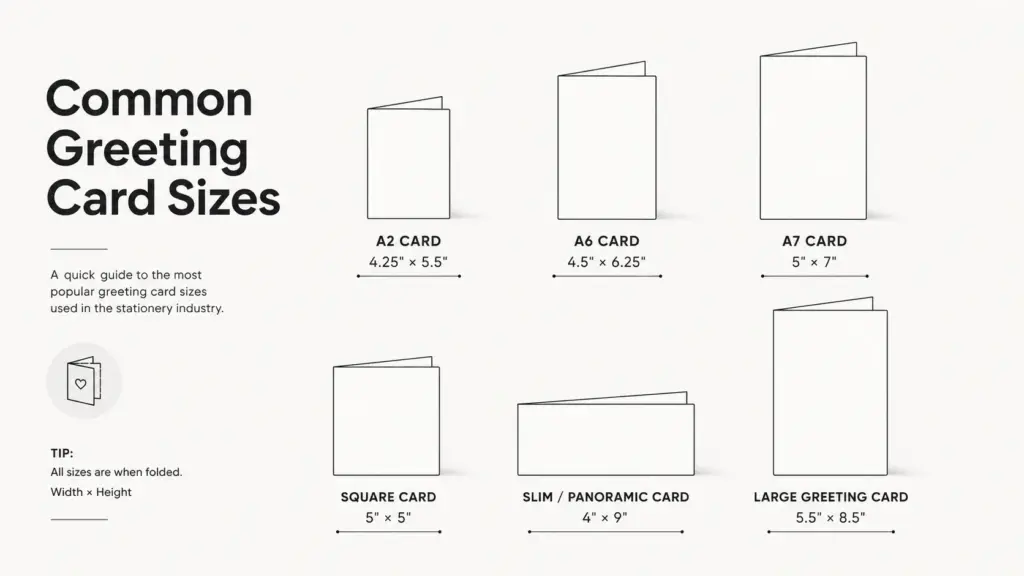
1. A2 Greeting Cards
Dimensions
- 4.25″ × 5.5″
- Approximately 108 × 140 mm folded
Best For
- Thank you cards
- RSVP cards
- Small greeting cards
Packaging Considerations
A2 cards work well with:
- compact mailers
- cello sleeves
- lightweight packaging
A2 is considered one of the most common greeting card sizes because it is compact, affordable to mail, and easy to package.
2. A6 Greeting Cards
Dimensions
- 4.5″ × 6.25″
- Sometimes 4.75″ × 6.5″
Best For
- Photo cards
- Event invitations
- Premium greeting cards
Mailing Benefits
A6 cards provide a strong balance between:
- visual presentation
- mailing efficiency
- manageable postage costs
Many stationery businesses prefer A6 because it offers slightly more design space without dramatically increasing shipping expenses.
3. A7 Greeting Cards
Dimensions
- 5″ × 7″
- Approximately 127 × 178 mm
Best For
- Birthday cards
- Holiday cards
- Retail greeting cards
Why It’s Popular
A7 is widely considered the most popular standard greeting card size because it:
- fits common envelopes
- works well for retail display
- provides enough space for detailed artwork and messaging
For many retailers, A7 represents the ideal balance between presentation and practicality.
4. Square Greeting Cards
Common Sizes
- 5″ × 5″
- 6″ × 6″
Advantages
Square cards offer:
- modern appearance
- strong shelf appeal
- distinctive presentation
Disadvantages
However, square cards may:
- require extra postage
- need custom envelopes
- increase mailing costs
Square greeting cards are popular for boutique brands and luxury stationery collections.
5. Slimline Greeting Cards
Dimensions
- Approximately 4″ × 9″
Best For
- Luxury stationery
- Minimalist greeting cards
- Promotional mailers
Slimline cards create a premium appearance and are commonly used for modern or elegant stationery designs.
Greeting Card Size Comparison Table
| Card Size | Folded Dimensions | Best For | Common Envelope |
|---|---|---|---|
|
A2 |
4.25" × 5.5" |
Thank you cards |
A2 Envelope |
|
A6 |
4.75" × 6.5" |
Invitations & photo cards |
A6 Envelope |
|
A7 |
5" × 7" |
Standard greeting cards |
A7 Envelope |
|
Square |
5" × 5" |
Boutique cards |
Square Envelope |
|
Slimline |
4" × 9" |
Luxury designs |
Slimline Envelope |
Most greeting card formats follow standard A-series sizing systems.
Choosing the Right Envelope Size
Envelope Fit Guidelines
Envelopes should always be slightly larger than the folded card.
This prevents:
- bent corners
- surface scratching
- tight-fitting damage
Common Envelope Types
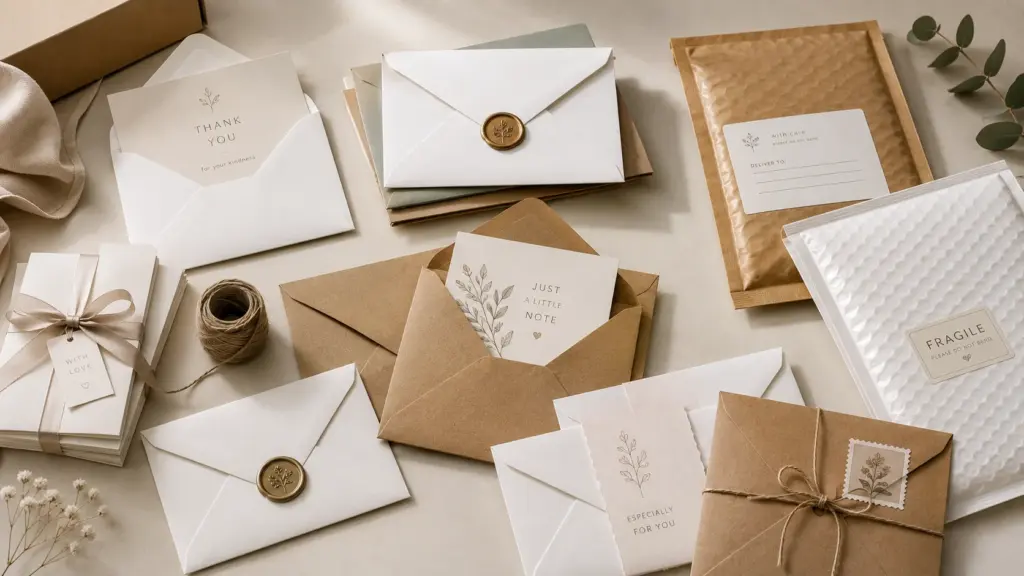
Paper Envelopes
Most commonly used for standard greeting cards.
Kraft Envelopes
Popular for eco-conscious stationery brands and handmade products.
Many brands pair greeting cards with kraft packaging boxes to maintain a natural retail presentation.
Padded Mailers
Used for premium greeting cards or fragile stationery products.
Packaging Options for Greeting Cards
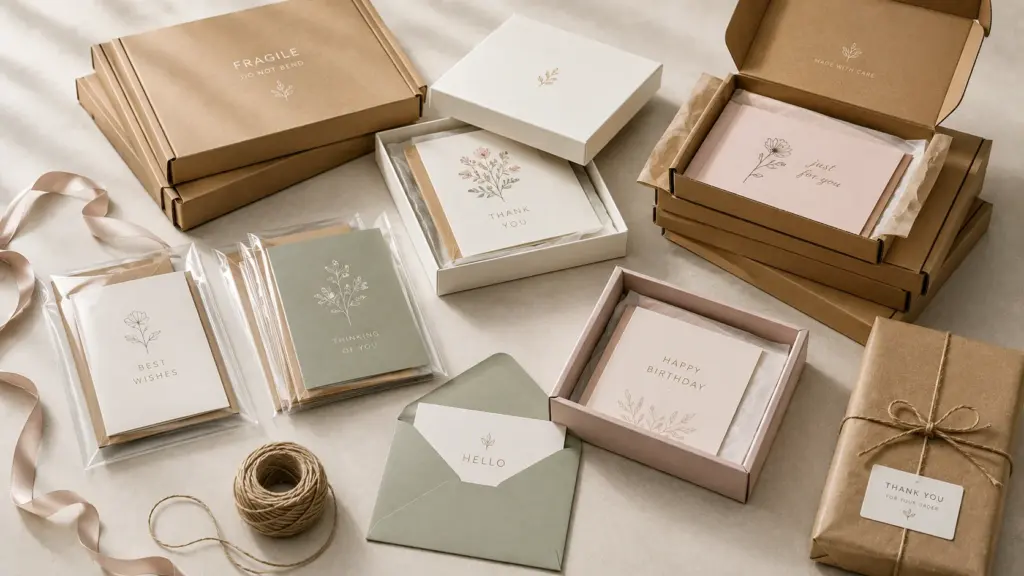
Proper packaging helps prevent damage while improving presentation.
Cellophane Sleeves
Benefits
Cello sleeves provide:
- dust protection
- moisture resistance
- retail-ready presentation
Individual greeting cards are often packaged in protective sleeves before retail display or shipping.
Rigid Mailers
Best For
Rigid mailers are ideal for:
- online orders
- premium cards
- protecting against bending
Why They Matter
Rigid packaging significantly reduces transit damage.
Many stationery businesses use rigid mailer boxes to protect cards during eCommerce shipping.
Greeting Card Boxes
Common Uses
Greeting card boxes are often used for:
- retail display
- boxed greeting card sets
- subscription stationery products
Packaging Features
Popular features include:
- inserts
- dividers
- custom printing
Many retailers use custom retail packaging to improve presentation and shelf visibility.
Mailing Greeting Cards Safely
Tips for Shipping
- use protective sleeves
- avoid oversized packaging
- include backing boards for support
- use rigid mailers for valuable cards
Royal Mail Considerations
Royal Mail pricing is heavily influenced by:
- card thickness
- dimensions
- shape
Oversized or square greeting cards may cost more to mail. This is one reason why many businesses choose standard greeting card sizes.
Greeting Card Packaging for eCommerce Brands
eCommerce greeting card businesses face additional packaging challenges.
Important Factors
- lightweight shipping
- protective packaging
- attractive unboxing experience
Popular Packaging Choices
Common solutions include:
- kraft mailers
- rigid envelopes
- branded sleeves
Many online brands also use eco-friendly packaging to appeal to environmentally conscious customers.
Common Mistakes to Avoid
Several packaging mistakes can increase costs or damage products.
Common Problems
- choosing non-standard card sizes without checking postage
- using weak packaging materials
- oversized envelopes that allow movement
- insufficient protection for premium cards
Careful sizing and packaging selection help avoid these issues.
Sustainable Packaging for Greeting Cards
Sustainability has become increasingly important in stationery packaging.
Eco-Friendly Options
Popular sustainable solutions include:
- recyclable kraft mailers
- paper sleeves instead of plastic
- FSC-certified board materials
Why Sustainability Matters
Consumers increasingly prefer recyclable and environmentally responsible packaging. Using sustainable packaging can also strengthen brand image and reduce packaging waste. Many brands now choose custom packaging solutions that balance sustainability with product protection.
How to Choose the Right Greeting Card Size
The best greeting card dimensions depend on several factors.
Consider:
- purpose of the card
- mailing costs
- packaging requirements
- retail display needs
- branding and artwork size
Businesses should balance appearance, practicality, and shipping efficiency when selecting card dimensions.
Why Choose Healey Packaging for Greeting Card Packaging
Healey Packaging supports stationery brands with custom packaging solutions designed for greeting cards and printed products.
We offer:
- custom greeting card packaging solutions
- protective mailers and retail boxes
- eco-friendly packaging materials
- custom printed packaging options
- reliable UK packaging expertise
Whether you need retail-ready presentation packaging or protective mailers for eCommerce shipping, our team can help develop packaging tailored to your products.
Greeting Card Sizing & Mailing FAQs
What is the standard greeting card size?
The most common standard greeting card size is A7 (5″ × 7″).
What size envelope fits a 5×7 greeting card?
A7 envelopes are designed specifically for 5″ × 7″ greeting cards.
Do square greeting cards cost more to mail?
Yes. Square greeting cards often require additional postage due to non-standard dimensions.
What packaging is best for mailing greeting cards?
Rigid mailers and protective sleeves help prevent bending and shipping damage.
Conclusion
Choosing the correct greeting card size improves presentation, reduces mailing issues, and helps protect cards during delivery.
Whether you sell handmade greeting cards, stationery products, or premium invitation sets, proper packaging plays a major role in customer experience and product protection.
Using suitable envelopes, rigid mailers, and protective packaging ensures cards arrive safely while maintaining a professional presentation.
Need Packaging for Greeting Cards?
Protect and present your stationery products with custom greeting card packaging designed for retail and mailing.