
 Popular
CUSTOM STICKERS AND LABELS Packaging Solutions
Custom Stickers and Labels for Products & Packaging
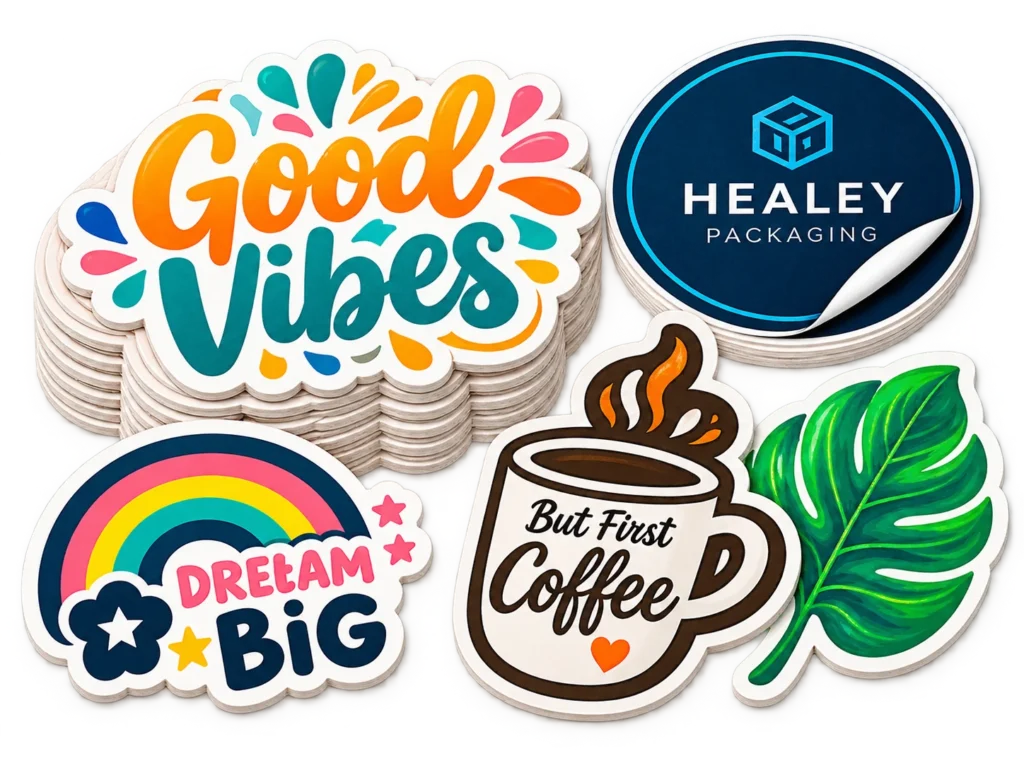
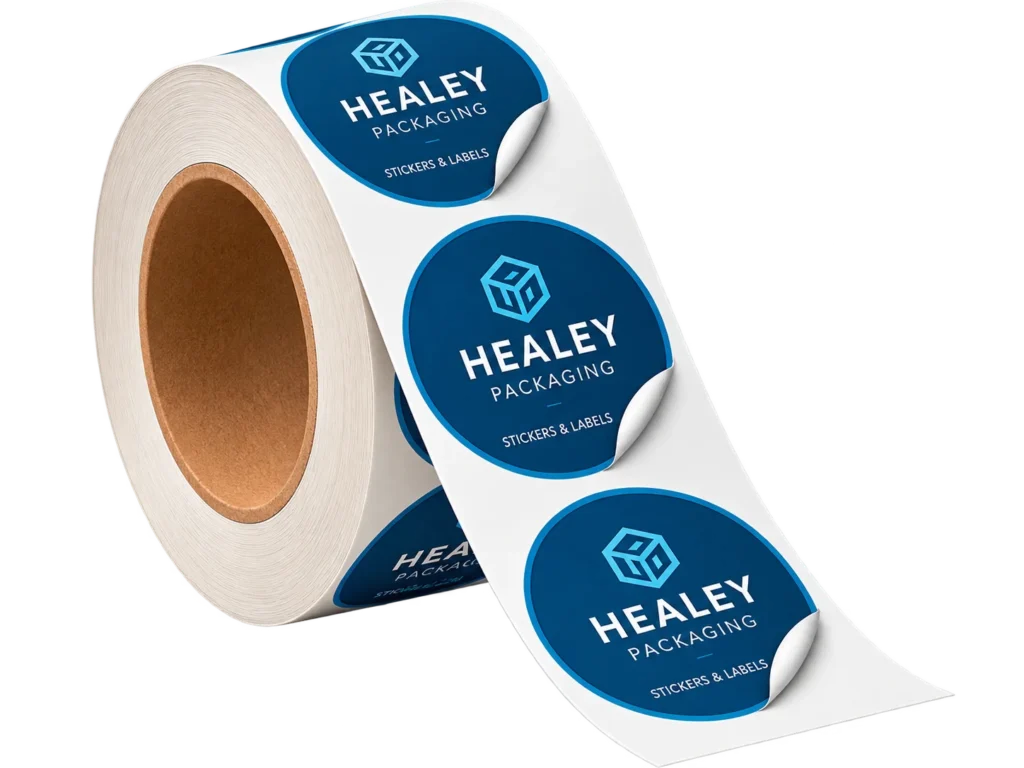
Create custom stickers and labels for bottles, jars, boxes and product packaging. Choose bespoke sizes, shapes, materials, adhesives, printing and finishes specified around your application surface, branding and packing requirements.
Protects ProductsSecure structure for packing and delivery
SustainableRecyclable and responsible options
High Quality PrintCMYK, Pantone and premium finishes
Strong & ReliableDurable materials for safe delivery
Healey Packaging company reviews on Trustpilot
7+
Packaging
Solutions
Solutions
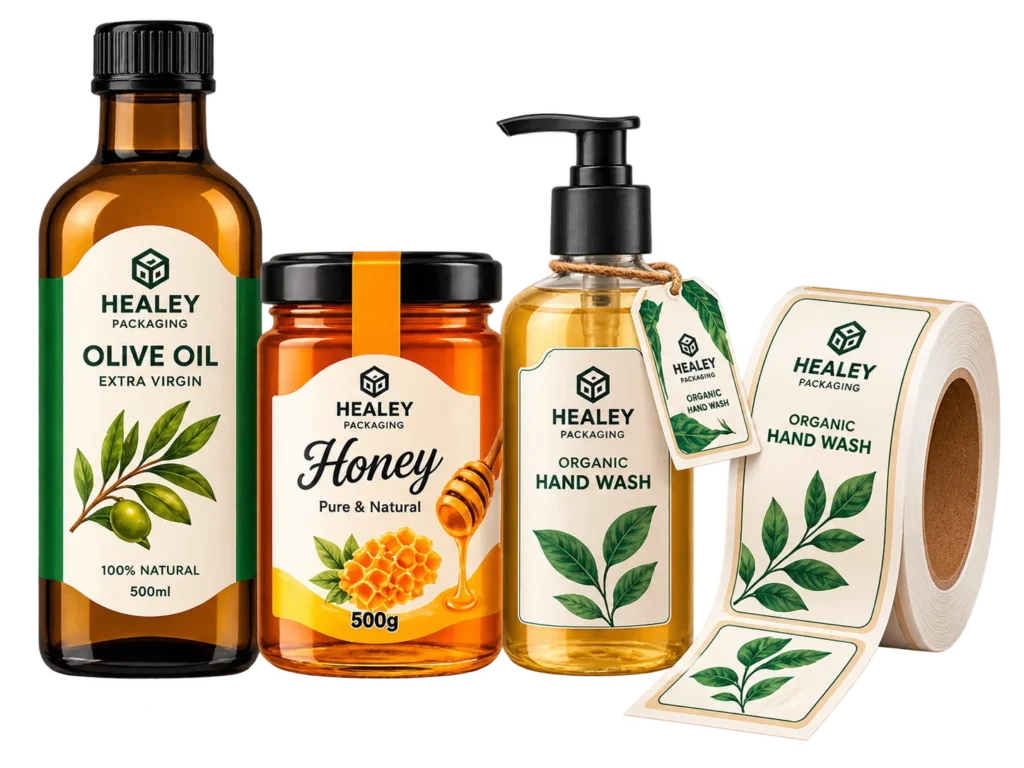
Not sure which packaging is right for you?
Our team can help match the structure to your product, brand and budget.
Speak to an Expert
Custom DimensionsMade to fit your product precisely.
No Minimum OrderNo minimum order quantity.
Printed to Your BrandCMYK, Pantone and specialist finishes.
Fast Turnaround7-10 working days after artwork approval.
Stickers & Labels Range
Explore Stickers and Labels by Application
Browse custom stickers and labels for branding, sealing, product information and packaging decoration.
Popular
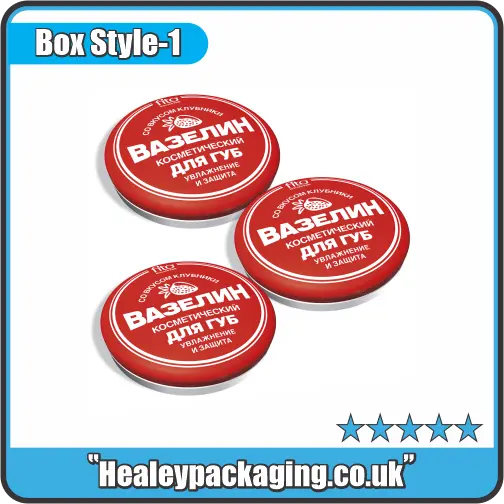 Best Seller
Custom Coasters Printing
Coasters are usually picked up, moved around and left under cold or...
View Custom Coasters Printing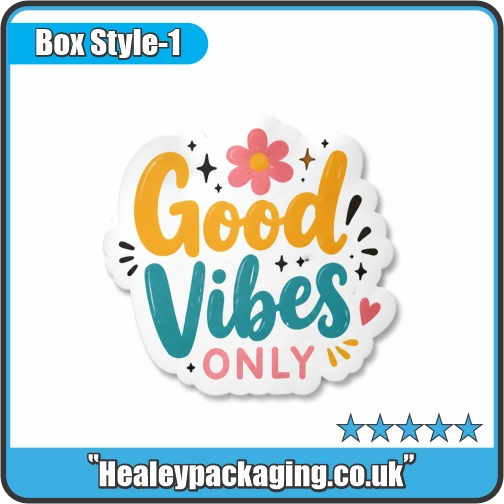 Most Ordered
 Custom
Custom Paper Stickers
Paper stickers are usually applied to product packaging, jars, envelopes or retail...
View Custom Paper Stickers Premium
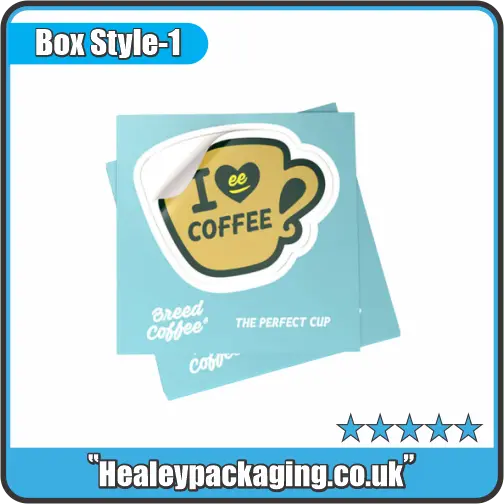
Custom Sticker Printing
Stickers are often the last thing applied to a product, but they...
View Custom Sticker Printing
Application First
Choose Stickers and Labels Around Where They Will Be Applied
A label should be specified around the surface, handling conditions and information it needs to carry. The same artwork can behave very differently on a carton, curved bottle or repeatedly handled container.
Boxes & Cartons
Product Labels & Packaging Seals
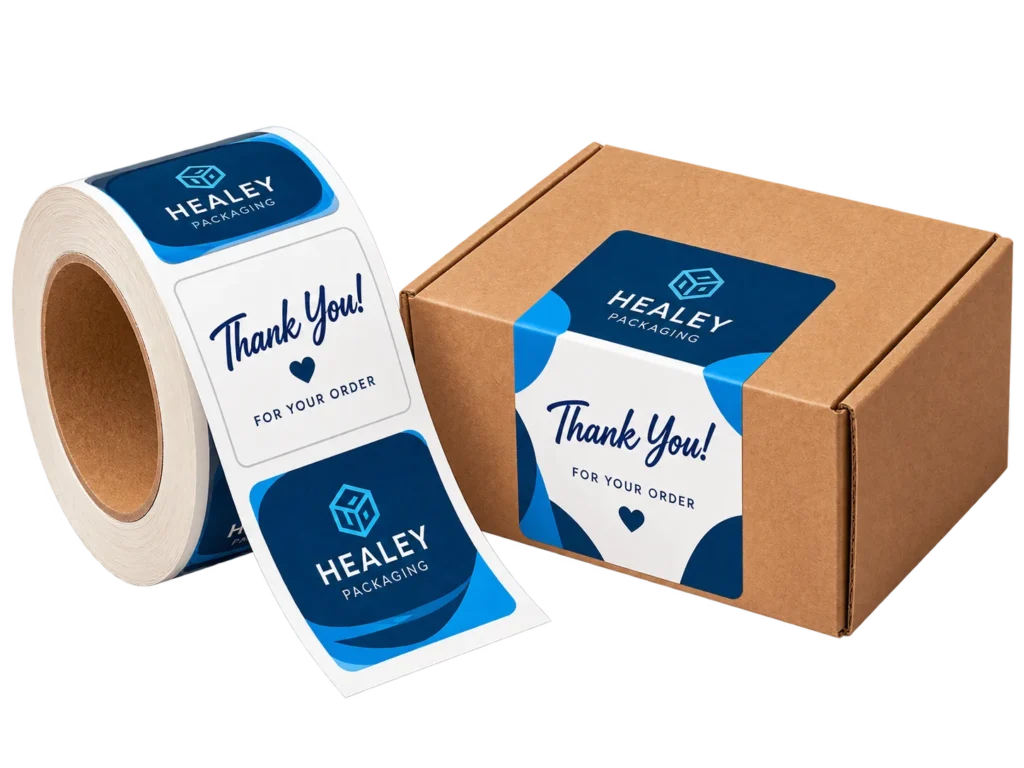
Use labels for branding, product identification, closures and campaign messaging on cartons, bags, tissue and other secondary packaging.
Containers
Bottles & Jars
Dimensions, adhesive and face material should follow the actual container surface, diameter, profile and expected handling.
Food & Drink Packs
Product & Identification Labels
Plan the label around the packaging surface, approved product information and any moisture or refrigeration conditions it may face.
Beauty & Personal Care
Cosmetic & Skincare Labels
Small jars, bottles and tubes need a clear information hierarchy and a label that fits the usable surface without lifting at the edges.
Retail & Campaigns
Promotional & Branded Stickers
Custom shapes and short campaign artwork can support launches, seasonal ranges, product variants and promotional activity.
Operations
Shipping & Identification Labels
Labels can also support order identification, handling, internal references and repeat packing workflows where placement needs to stay consistent.
Supply Format
Choose the Label Format Around How It Will Be Applied
Quantity matters, but application method matters just as much. Manual packing, repeat production, promotional use and machine-assisted application can favour different supply formats.
01
Roll Labels
Useful for repeat labelling, organised dispensing and higher-volume packing where labels are supplied on a roll.
Best considered for: repeat application and regular production
02
Sheet Labels
Multiple labels supplied on flat sheets can work well for manual packing, easy storage and smaller production batches.
Best considered for: hand application and flexible selection
03
Individually Cut Stickers
Separate pieces suit giveaways, order inserts, events and applications where each sticker is handled on its own.
Best considered for: promotions and standalone pieces
04
Die-Cut & Kiss-Cut Formats
Custom cutting can follow standard or bespoke shapes, with the backing format selected around peeling, handling and presentation.
Best considered for: custom shapes and easier handling
Performance Specification
Match Surface, Adhesive and Material to Real Use
Label performance depends on the complete construction, not the face material alone. Build the specification in sequence: surface, environment, adhesive, then material.
01SurfaceWhat will it stick to?
→
02EnvironmentWhat will it face?
→
03AdhesiveHow should it hold?
→
04MaterialWhich face stock fits the job?
Surface
Glass, Plastic, Cartons & Other Packs
Smooth glass, coated cartons and different plastics can require different adhesive behaviour. Container shape and surface condition matter as well.
- Check
- Surface material, coating, curvature and condition
Environment
Dry, Moist or Repeatedly Handled
Refrigeration, condensation, outdoor exposure or frequent handling can change the required material, adhesive and protective finish.
- Check
- Storage, moisture, temperature changes and handling frequency
Adhesive
Permanent or Removable Where Available
Permanent adhesives suit labels expected to remain attached through normal handling. Removable systems may suit temporary uses where available.
- Check
- Required hold, removal expectation and application surface
Face Material
Paper, Kraft & Synthetic Options
Paper can suit many dry indoor uses, kraft provides a natural appearance, and suitable synthetic options may offer greater resistance where required.
- Check
- Print surface, flexibility, exposure and required appearance
Size & Fit
Specify Label Size and Shape on the Actual Pack
A label should fit the usable application area, carry the required information and sit correctly on the real product. Curves, seams, closures and tapered surfaces can all reduce the space available.
Specification View
Measure the Usable Application Area
Measure the usable flat or curved area rather than assuming the label can occupy the complete face of the product or pack.
Custom Dimensions
Set width and height around the available surface and the information the label needs to display.
Edges, Seams & Closures
Keep the label clear of features that can lift, crease or interfere with consistent placement.
Curved or Tapered Containers
Check circumference and container profile because flat artwork may not sit correctly on a three-dimensional surface.
Artwork Safe Area
Keep logos, small text and essential information away from cut edges and other production-sensitive areas.
Shape Options
Choose Shape After the Fit Is Defined
Standard and bespoke shapes can be planned around the available space, branding and information requirements.
Round
Square
Rectangle
Oval
Custom Die-Cut
Print & Information
Print and Finish Labels Around the Material and Information Hierarchy
Print and finish should support legibility, brand recognition and practical use. Colour reproduction and decorative effects need to be considered together with the selected material and label size.
CMYK Printing
Suitable for full-colour artwork, photography, gradients and detailed branded graphics where the production specification supports it.
Pantone / Spot Colours
Can be considered where a defined brand colour needs more specific reference within the selected print method and material.
Matt & Gloss Surfaces
Surface finish changes sheen, handling and visual character, so it should be chosen around the application rather than appearance alone.
Foil & Specialist Details
Selected decorative effects may be available where the material, artwork and production method support them without compromising legibility.
YOUR BRAND
Product Name
Variant / size / range
Supporting information
Information Hierarchy
Make the Label Easy to Recognise and Easy to Read
01
Brand Identity
Logo, colour and typography should connect the label to the wider product range.
02
Product & Variant
Keep product names, sizes, scents, flavours or other variants easy to distinguish.
03
Identification
Allocate practical space for barcodes, references or other approved identifiers.
04
Supporting Information
Use the remaining area for instructions or product details required by the approved artwork.
Complete Specification
Check Performance, Product Information and the Complete Pack Together
Labels are only one part of the finished packaging system. Product information, direct-contact requirements, coatings, adhesives and the substrate being labelled can all affect the final specification.
Specify Resistance Around the Real Conditions
Moisture, condensation, repeated handling and temperature changes should be considered when selecting the face material, adhesive and finish.
Avoid blanket “waterproof” claims unless the complete specification has been verified for that use.Approve Required Copy Before Print
Labels can reproduce branding, barcodes and product information supplied in the artwork. The business placing the product on the market should confirm any regulated wording before approval.
If a label or adhesive will directly contact food, confirm suitability for that intended use.Consider the Label as Part of the Complete Pack
A paper face stock does not by itself determine the end-of-life route. Adhesive, release liner, coatings, laminates and the pack substrate can all matter.
Environmental claims should be based on the complete finished specification.1Face Material
+
2Adhesive
+
3Release Liner
+
4Coating / Finish
+
5Pack Substrate
Repeat Business Supply
Plan Labels as a Repeatable SKU and Packing System
Repeat label supply is easier when the fixed specification is separated from the artwork details that change by SKU, season or campaign. The packing method should be part of that reference as well.
Keep Consistent
Core Specification
01
Dimensions & Shape
Retain the approved size while the application area remains unchanged.
02
Material & Adhesive
Keep the agreed construction where surface and use conditions remain the same.
03
Supply Format
Maintain roll, sheet or individual format around the established packing process.
04
Core Brand System
Use approved colour references, typography and recurring artwork rules.
Change When Required
SKU & Campaign Artwork
01
Product Names & Variants
Update flavours, scents, sizes or other SKU-specific details.
02
Barcodes & References
Control identifiers separately where each product needs unique data.
03
Seasonal Artwork
Change campaign or limited-edition artwork without rebuilding the complete specification.
04
Order Quantity
Plan quantities around stock, usage, number of designs and expected artwork changes.
ApplicationManual, roll-dispensed or packing-equipment use
StorageKeep stock conditions appropriate for the agreed label construction
PositioningDefine consistent placement on repeat products and packs
OrderingNo Minimum Order
ProductionTypically 7–10 working days after artwork approval
DeliveryUK-wide delivery
Useful quotation brief
Share the Details That Change the Label Specification
Application surface, label dimensions, quantity, number of designs, supply format, expected exposure, material preference, adhesive requirement, print and finish requirements and artwork status provide a practical starting point for a quotation.
Recent Packaging Projects
Real packaging work produced for customer brands.
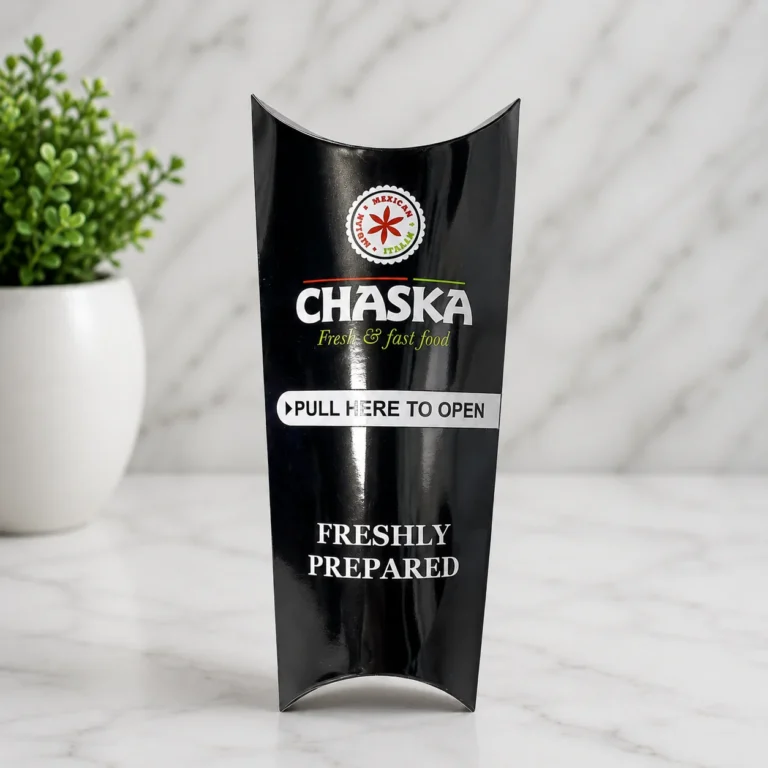
CHASKA Custom Pillow-Style Shawarma Sleeves with Food-Safe 300gsm Card
Healey Packaging produced custom pillow-style shawarma sleeves for CHASKA using 300gsm food-safe BSB card, full-colour CMYK...
View Case Study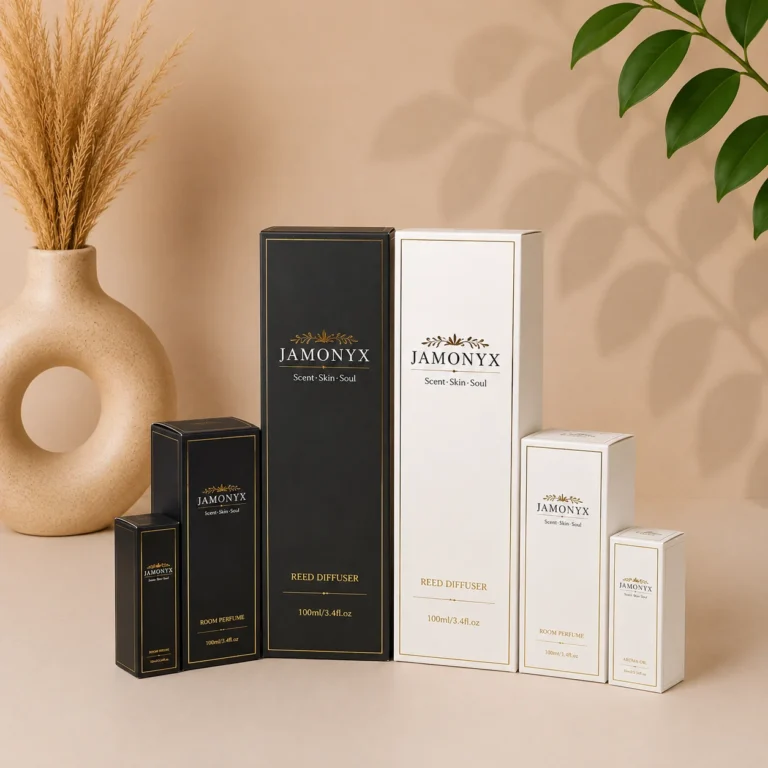
JAMONYX Custom Reverse Tuck Boxes in 350gsm SBS Card with Gold Foil
Healey Packaging produced 1,200 luxury reverse tuck boxes for JAMONYX across two black-and-white designs, three sizes,...
View Case Study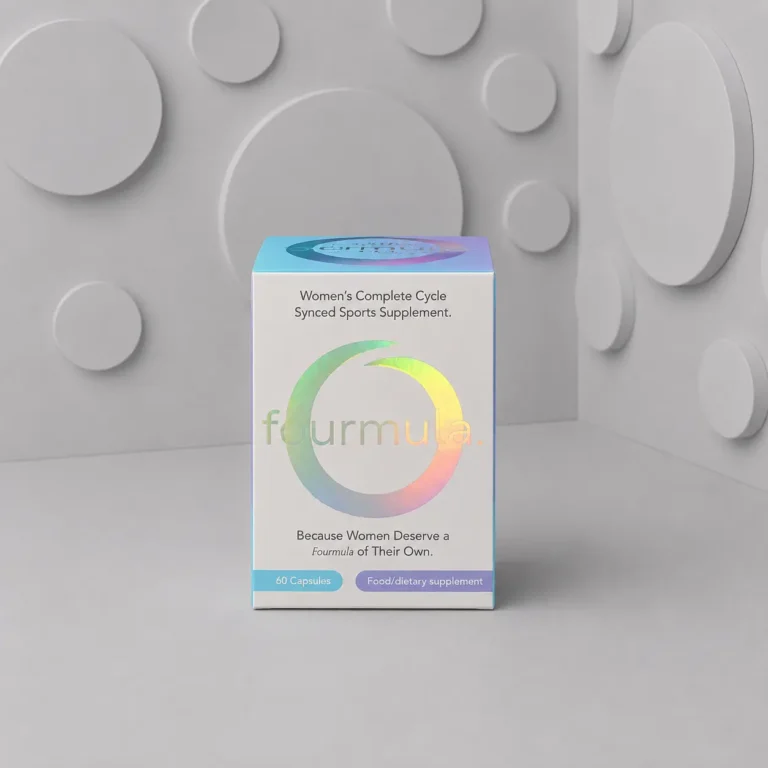
Fourmula Custom Supplement Boxes with Lamination and Holographic Finish
Fourmula started with 10 physical sample boxes for a compact supplement product, then moved toward a...
View Case StudyHow Your Packaging Is Produced
Requirements
Share product size, quantity, use case and artwork status.
Structural Planning
The right size, board and box style are reviewed.
Artwork and Proofing
A digital proof is prepared before production begins.
Production
Boxes are printed, cut, folded and finished to specification.
Quality Control
Finished packaging is checked for structure and print quality.
Delivery
Completed packaging is packed and delivered to your business.
What Customers Say
We have been using Healey for years and are always impressed by the service, quality and speed.
Harry GeorgeThe packaging is of high quality, strong cardboard. I will definitely be using them again.
Amanda NewmanGreat communication, quick and good product. I really recommend.
JOON Plant Based AtelierFrequently Asked Questions
Stickers and labels are both adhesive-backed printed products, but their typical uses can differ. Product labels commonly carry branding, product information, barcodes or identification on bottles, jars, containers and packaging. Stickers are often used for branding, packaging seals, promotions or decorative applications. The intended use should guide the material, adhesive, size, shape and finish.
The best material depends on the application surface, environment and expected handling. Paper can suit many dry indoor packaging applications, kraft provides a natural appearance, and suitable synthetic materials may be better where greater moisture or handling resistance is required. The adhesive and protective finish should be considered alongside the face material.
Some label constructions can be specified for moisture-resistant or more demanding applications, but waterproof performance depends on the complete specification. Face material, adhesive, printing, protective finish, application surface and exposure conditions all matter. Standard paper labels should not automatically be treated as waterproof.
Labels and stickers can be produced in round, square, rectangular, oval and custom die-cut shapes. The final dimensions should be based on the usable application area, required artwork, product information and the shape of the bottle, jar, box or other surface.
The adhesive should match both the application surface and the conditions the label will experience. Glass, plastic, paperboard and coated surfaces can behave differently, while moisture, refrigeration, temperature changes and frequent handling may also affect performance. Permanent or removable adhesive options can be considered where suitable and available.
Yes. Roll labels can suit repeat product labelling and higher-volume packing, while sheet labels or individually cut stickers can be more practical for manual application, promotions or smaller batches. The right format depends on quantity, storage and how the labels will be applied.
Yes. Custom labels can include logos, brand colours, product names, approved product information, barcodes, references and other artwork. CMYK printing can support full-colour graphics, while Pantone colour references may be used where the selected print method and material support greater colour control.
Yes, but the label dimensions and material should be planned around the actual container profile. Bottle diameter, curvature, taper, seams and surface condition can all affect how the label sits and whether the edges remain securely applied.
Healey Packaging offers no minimum order requirement for custom stickers and labels. The most suitable production method and supply format can still depend on the label size, number of designs, material, adhesive, finish and total quantity required.
Standard production is typically 7–10 working days after artwork approval. The final schedule can vary depending on the material, number of designs, print method, finishing requirements and any specialist specification needed for the application.
 Apparel Packaging
 Bakery Packaging Boxes
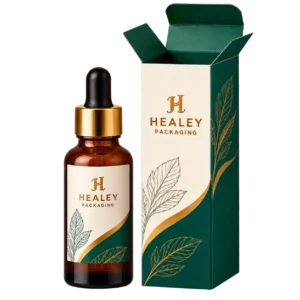 Bottle Packaging Boxes
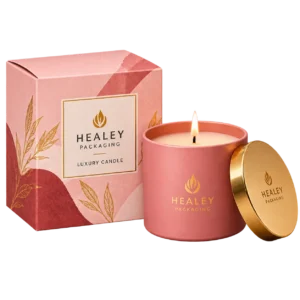 Candle Boxes
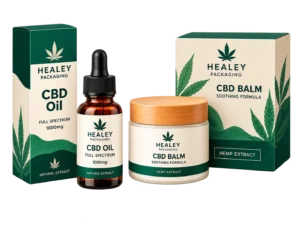 CBD Packaging Boxes
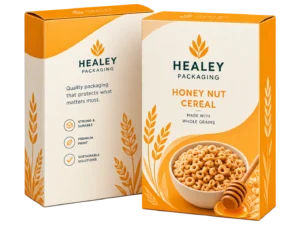 Cereal Packaging Boxes
Ready to Create Packaging Built Around Your Product?
Share your product, size, material and quantity requirements. Our team will help you choose the right structure, print and finish.
Free Design Support
No Minimum
Digital Proof
UK Delivery