Check These Details Before Ordering Custom Boxes
- Start with the product dimensions, weight and distribution method before choosing a box style.
- Select board according to protection, printing and structural requirements rather than GSM alone.
- Allow space for inserts, cushioning and accessories when confirming the internal box dimensions.
- Check whether tooling, specialist finishes, sampling and delivery are included in the quotation.
- Review and approve the dieline, artwork and proof before production begins.
- Confirm the production schedule and delivery requirements for your specific packaging specification.
Why Most Businesses Fail When Ordering Custom Boxes?
Ordering custom packaging seems simple — until it goes wrong. Many UK businesses fall into the same traps: rushing into a bulk order without sampling first, picking the wrong material for their product weight, or being blindsided by extra costs for printing or die-cuts. If you’re planning your first (or next) custom packaging order, this guide will help you avoid expensive mistakes.
Let’s walk through everything you need to know — from box types to material selection, artwork, sizing, and supplier red flags.
What Should You Check Before Ordering Custom Boxes?
Before ordering custom boxes, confirm the product dimensions, packed weight, box style, board specification, printing, finishes, quantity, artwork requirements and delivery needs. You should also establish whether the quoted dimensions are internal or external.
Ask for a clear proof and itemised quotation before production begins. This helps confirm the structure, artwork placement and specification before committing to the finished packaging.
Step 1 – Understand What Type of Box You Actually Need
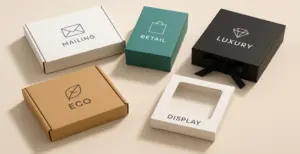
Popular Custom Box Types in the UK
Your product, delivery method, and brand goals determine your box style. Here’s a breakdown of the most common types:
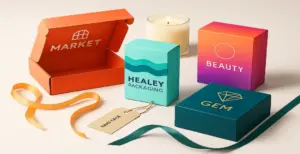
- Mailer Boxes – Great for eCommerce and subscription boxes; self-locking, presentation-friendly.
- Product Boxes – Lightweight cartons for cosmetics, candles, or small goods.
- Shipping Boxes – Corrugated and durable; ideal for bulk or fragile deliveries.
- Rigid Boxes – High-end packaging used for gifts, electronics, or premium items.
- Kraft Boxes – Eco-conscious and rustic; suitable for artisan and food products.
- Eco-Friendly Packaging – Made from recyclable or compostable materials.
- Promotional Boxes – Designed for events, launches, or seasonal gifting.
How to Pick the Right Style Based on Your Product?
- Fragile items? Go for corrugated or rigid boxes with inserts.
- Lightweight retail goods? Product boxes or tuck-flap cartons work well.
- Want a premium experience? Rigid or fully printed mailer boxes are ideal.
Step 2 – Material Mistakes That Cost You Money
Cardboard vs. Corrugated vs. Kraft Material
- Cardboard – Good for retail packaging, but not ideal for shipping.
- Corrugated – Stronger and crush-resistant; ideal for eCommerce and shipping.
- Kraft – Strong paper or board commonly associated with a natural brown appearance, although kraft materials can also be bleached or coated. Suitability depends on the required structure, print and finish
GSM & Flute Guide (Don’t Choose Blindly!)
- GSM measures grammage, or material mass per square metre. Thickness, stiffness and structural performance should be assessed separately because a higher GSM does not automatically mean a stronger box.
- E-Flute: Fine corrugation; best for printed mailers and retail packaging.
- B-Flute: Thicker and stronger; ideal for shipping heavier items.
- Double Wall: Two layers of corrugation; used for fragile or high-value items.
Step 3 – Order the Correct Size (Box Size Guide)
Getting the wrong size is one of the most common and costly errors.
- Too big and you waste material, pay more for shipping, and risk damage from rattling.
- Too tight and the product may not fit or can get crushed.
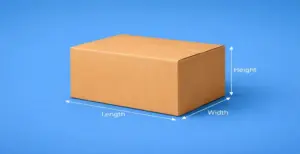
✔ Always measure the product’s width, depth, and height.
✔ Account for any protective inserts, padding, or branded cards.
✔ Ask your supplier for help with dieline layout.
Step 4 – Understand Printing Options
Digital, Offset & UV Printing Explained
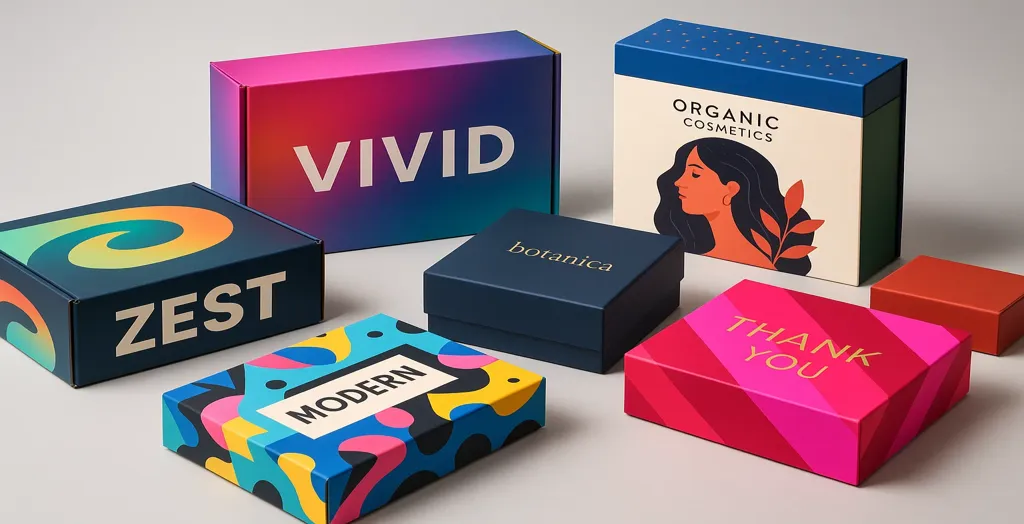
- Digital Printing – Ideal for low-volume, high-colour designs; fast turnaround.
- Offset Printing – Best for large volumes; gives crisp, consistent print quality.
- UV printing uses ultraviolet light to cure ink rapidly on suitable substrates. Spot UV is a separate finishing process used to create selected high-gloss areas over printed artwork
Artwork Requirements Buyers Ignore
- Use CMYK colour mode (not RGB).
- Include 3mm bleed and safe zones in your design file.
- Accepted file formats: AI, PDF, EPS (vector preferred).
⚠ Skipping these steps causes delays or distorted prints.
Step 5 – Hidden Costs No One Talks About
Don’t get caught out. Some of the most expensive mistakes are hidden in the fine print.
- Tooling or Die-Line Charges – Custom shapes or windows can incur setup fees.
- Finishing Costs – Matte/gloss lamination, spot UV, embossing, and foiling all add to the price.
- Delivery Charges – Bulkier boxes or rush orders can rack up shipping fees.
- MOQ Misunderstandings – Minimum order quantity may be higher than you expected.
- Colour Matching Fees – Especially for Pantone or brand-specific colours.
Step 6 – Always Request These Before Ordering
Protect your investment by asking your supplier for:
✔ Ask what proofing and sampling options are included in the quotation
✔ Material proof (especially if you’re testing strength)
✔ Printed colour proof (to verify artwork)
✔ Final all-inclusive quote
Transparency now saves time and money later.
Step 7 – Red Flags When Choosing a Custom Box Supplier
Don’t settle for the cheapest quote without asking key questions. Look out for:
🚩 No reviews or portfolio
🚩 Extremely low prices (often too good to be true)
🚩 Unclear business details, poor communication or no reliable UK customer support
🚩 Vague lead times
🚩 No design or dieline help
Why Healey Packaging Is a Trusted Custom Box Supplier in UK?
We’ve helped hundreds of UK brands avoid costly packaging mistakes. Here’s what we offer:
✅ Fast turnaround on UK orders
✅ Low MOQs, perfect for small businesses
✅ Free dieline support with every quote
✅ Eco-friendly board options
✅ Full-colour print, foil, embossing and more
✅ 5-star rated by small and large businesses alike
Quick Answers Before You Order Custom Packaging
Practical answers about quantities, proofing, lead times, samples and choosing packaging for ecommerce.
What is the minimum order quantity for custom boxes?
Healey Packaging currently offers custom packaging with no minimum order requirement. The most practical quantity can still depend on the box style, material, printing, finishing and overall project specification.
How long does it take to produce custom boxes?
Production time depends on the box structure, material, print method, finishes, quantity and sampling requirements. The agreed turnaround should be confirmed in your quotation and normally begins after the artwork and final specification have been approved.
Will I receive a proof before production?
Yes. Healey Packaging provides a digital proof so you can review artwork position, text, colours and overall layout before production. Production should begin only after the final proof and specification have been approved.
Can I order a physical sample before full production?
Sampling options can include plain structural samples, digitally printed prototypes or production samples depending on the packaging style and project. Availability, pricing and timing should be confirmed when requesting the quotation.
What type of box is suitable for ecommerce?
Mailer boxes and corrugated shipping cartons are common ecommerce options. The best structure depends on product size, packed weight, fragility, fulfilment method and whether additional inserts or cushioning are required.
What information should I send for an accurate packaging quote?
Provide the product type, required box dimensions, quantity, preferred material, printing and finishing requirements, delivery location and artwork status. Product photos, samples or an existing box can also help clarify the specification.
Final Advice – Order Smart, Not Fast
Before ordering, double check:
- You’ve selected the right box type for your product
- You understand the material specs and GSM
- Your artwork is properly formatted
- You’ve accounted for all extra costs
- Your supplier is UK-based and transparent
📦 Need help planning your next packaging order? Talk to our team for tailored advice.